NR | 1h 31m | Drama, War | 1950
Glenn Ford was one of the most adaptable stars of Hollywood’s Golden Age. Whether saddling up in a Western, charming his way through romances, or nailing comedic timing, Ford owned the screen. His performances felt natural, even when the material wasn’t.
“The Flying Missile” (1950) might be the strangest detour in his career. This black-and-white Cold War oddity tries to do it all: patriotic military drama, high-tech weapons demo, and Navy buddy comedy, all rolled into one brisk package.
Ford delivers some of the most gloriously awkward dialogue of his career as if it were Shakespeare. The scriptwriters clearly forgot what tone they were aiming for, but Ford sails through the choppy seas with surprising gusto.
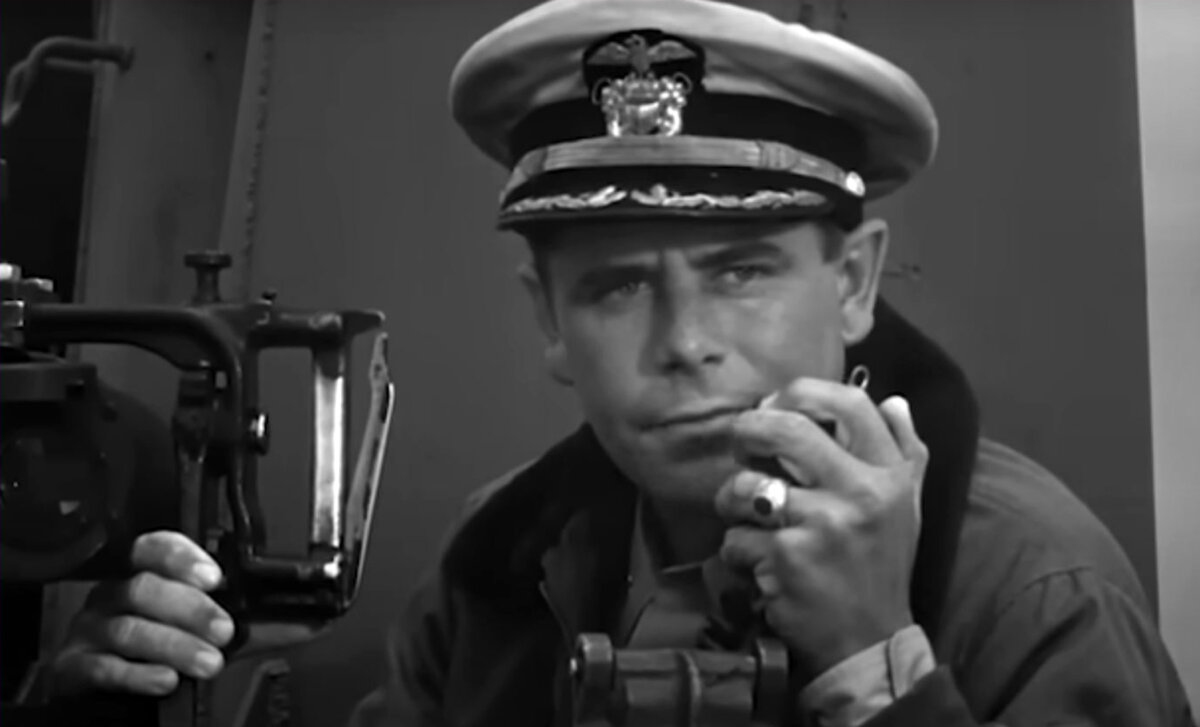
The plot centers on his submarine commander obsessed with launching missiles from underwater, and features some seriously silly dialogue throughout its 91-minute running time. Half the fun comes from Ford delivering these zingers while his crew bounces off each other like a cast rehearsing for a military vaudeville act.
Then there’s the title: “The Flying Missile.” Really? What else would a missile be doing? Hovering? Perhaps hitchhiking? It perfectly captures the film’s unintentionally charming mix of serious and silly.
Despite the tonal whiplash, watching the narrative swing from solemn speeches to locker-room antics is oddly engaging as is trying to sell Cold War innovation tech with a straight face. It’s a fascinating glimpse at how disparate components of a film can sometimes come together with unintentionally amusing consequences.
The Man and the Missile
Cmdr. William Talbot (Ford) is a submariner who isn’t interested in playing it safe with sonar and standard strategy. After witnessing a V-2 rocket launch from the deck of an aircraft carrier, he’s convinced submarines should do more than just sit quietly underwater; they should be missile launchers—with his sub, naturally.
The only problem is that the Navy brass isn’t so convinced. To them, Talbot sounds like a man who’s been inhaling too many diesel fumes or maybe he’s read too much pulp sci-fi (they actually do mention Flash Gordon).
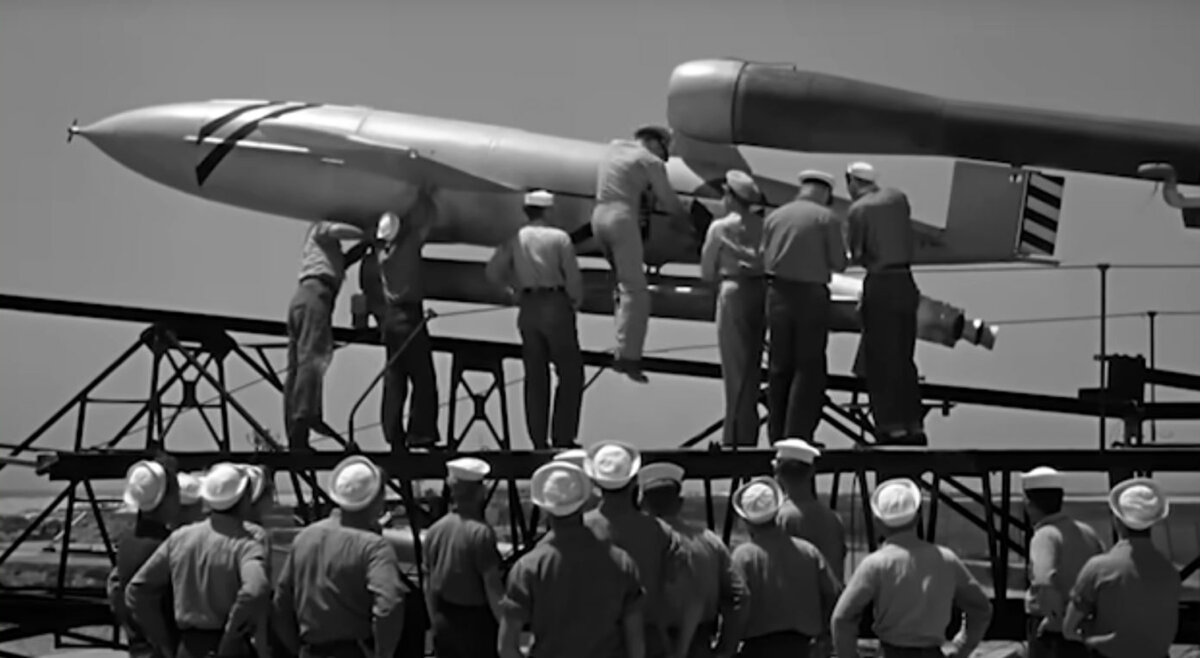
Talbot sets his sights on the JB-2 Loon, a high-tech (for the times) radar-guided American clone of Germany’s V-1 flying bomb. Talbot is convinced that if his sub had a guided missile, his last run at the carrier would’ve been a slam dunk.
His boss, curious but cautious, passes the idea along, and it turns out the Navy’s been noodling on the same thought. So, the Bluefin and her crew are sent off to a missile test training at Naval Air Station Point Mugu.
Along the way, Talbot and his crew accidentally snag a bunch of fishing nets owned by Lars Hansen (John Qualen), a local fisherman who’s about as pleased as you’d expect when his catch gets collateral damage from a surface-traveling submarine.

At the training center, the crew quickly grows restless with the slow drills and protocols. Not ones to sit idle, they take matters into their own hands by coming up with a plan to “acquire” gear from a restricted area. Think of it as a midnight shopping spree, minus the receipts. But the base’s security has other plans, and their covert ops hit some unexpected hiccups.
Love, Larceny, and Launches
Viveca Lindfors plays Karin Hansen, Talbot’s obligatory love interest, whose main dramatic purpose is to remind us that not everyone is thrilled about turning submarines into missile platforms.

Her pacifist father adds a dash of conflict as he happens to be Lars, the fisherman whose nets were ruined by Talbot’s sub. However, the romance is like a thin layer of frosting on an already flimsy Cold War cake.
Submarine films are usually tense, claustrophobic adventures with little room for sentimental distractions or silliness. This one, though, veers straight off into comic territory. The crew resorts to pilfering Navy equipment to dodge bureaucratic delays, all the while cracking jokes and giving the whole ordeal the feel of a military sitcom.
A soggy romance with the cranky fisherman’s daughter and what seems to be a serious military docudrama, is a curious mix.
The actors try their best to do what they can with the script, and there is some funny, cheesy dialogue to enjoy here and there, but the movie feels like several different films stitched together.
For Glenn Ford fans who want to see one of his lesser efforts, “The Flying Missile” is watchable, but don’t expect an epic.
“The Flying Missile” is available on YouTube.
‘The Flying Missile’
Director: Henry Levin
Starring: Glenn Ford, Viveca Lindfors, Henry O’Neill
Not Rated
Running Time: 1 hour, 31 minutes
Release Date: Dec. 24, 1950
Rated: 2 1/2 stars out of 5
What arts and culture topics would you like us to cover? Please email ideas or feedback to features@epochtimes.nyc