



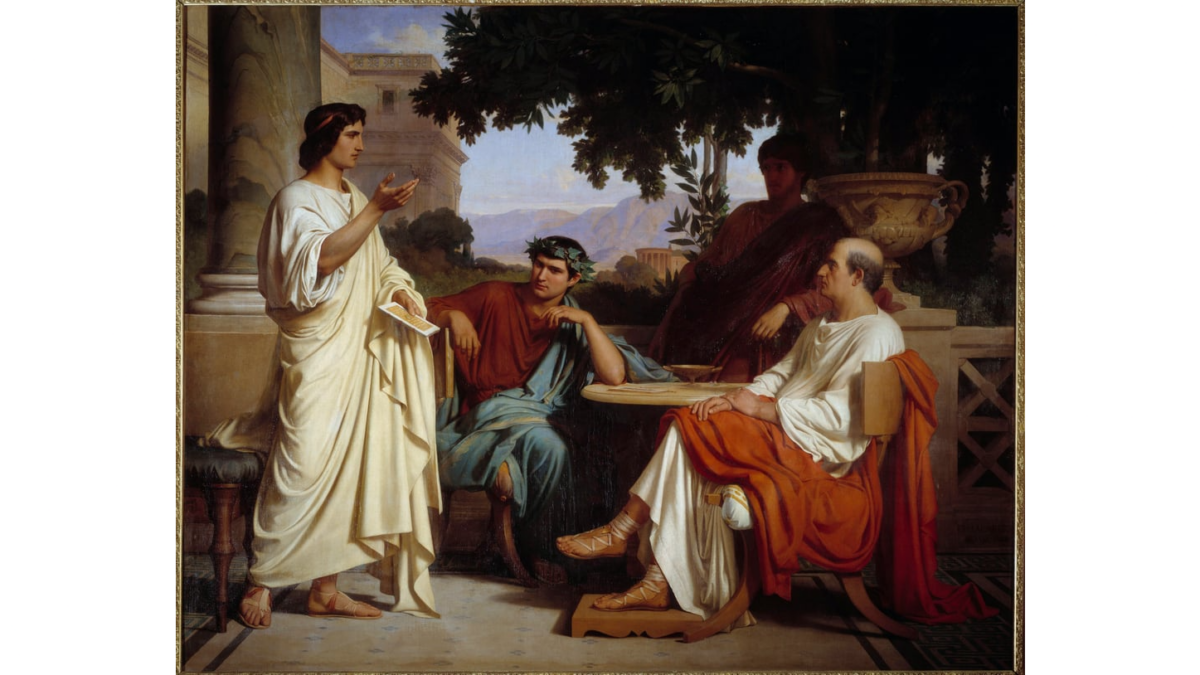
One thing truer than human beings finding work unpleasant is that work is a great gift to us. The ancient Roman poem by Virgil, “Georgics,” wrestles with this paradox. While its first 29 lines may look like a random list of gods, goddesses, and different kinds of country matters, it’s actually a summary of three themes that the rest of the poem will meditate on: that work is a gift, that work is painful, and that this pain is somehow necessary for higher gifts.
The First Lines of ‘Georgics’
What makes the cornfield smile; beneath what star
Maecenas, it is meet to turn the sod
Or marry elm with vine; how tend the steer;
What pains for cattle-keeping, or what proof
Of patient trial serves for thrifty bees;-
Such are my themes.
O universal lights
Most glorious! ye that lead the gliding year
Along the sky, Liber and Ceres mild,
If by your bounty holpen earth once changed
Chaonian acorn for the plump wheat-ear,
And mingled with the grape, your new-found gift,
The draughts of Achelous; and ye Fauns
To rustics ever kind, come foot it, Fauns
And Dryad-maids together; your gifts I sing.
And thou, for whose delight the war-horse first
Sprang from earth’s womb at thy great trident’s stroke,
Neptune; and haunter of the groves, for whom
Three hundred snow-white heifers browse the brakes,
The fertile brakes of Ceos; and clothed in power,
Thy native forest and Lycean lawns,
Pan, shepherd-god, forsaking, as the love
Of thine own Maenalus constrains thee, hear
And help, O lord of Tegea! And thou, too,
Minerva, from whose hand the olive sprung;
And boy-discoverer of the curved plough;
And, bearing a young cypress root-uptorn,
Silvanus, and Gods all and Goddesses,
Who make the fields your care, both ye who nurse
The tender unsown increase, and from heaven
Shed on man’s sowing the riches of your rain.
Work Is a Gift
The poem begins by listing basic human tasks: raising crops, tending to fruit trees and vines, raising animals, and beekeeping. While these first lines are about what humans do, they are followed by a much longer section describing what gods do—and what human beings receive. It is almost as if Virgil was rushing to this point. Since he knows that even the mention of work is often distasteful, he does so only to immediately challenge this human attitude and then propose a higher perspective.
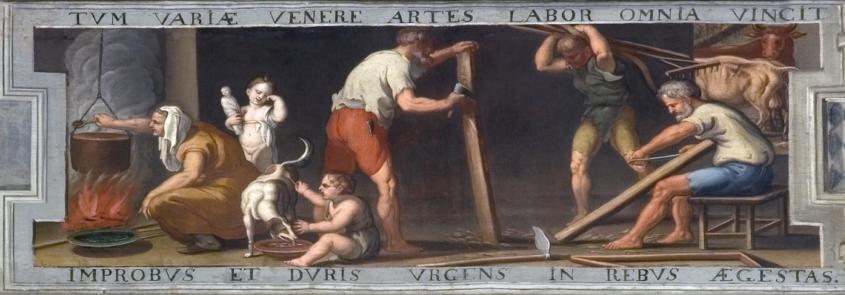
He speaks of the cornfields, the direct result of a farmer’s hard labor, and then, a few lines later, thanks Ceres, the Roman goddess of agriculture, for giving this crop to mankind. There’s no need to believe in Roman gods to accept the underlying point: Men do not make corn; they only grow it. Corn itself is a divine gift, and strangely enough, the work of growing corn is, therefore, also a gift.
The same applies to wine. Tending to vines and crushing grapes and all the paraphernalia of wine-making are work, but the grape and fermentation process are not the work of man but given to him, and this makes our participation in the process a gift.
What has been said about the gifts and the givers of wine and bread, can be applied to the rest of the list of gods and goddesses. Horses, sheep, groves, the fertility of the earth in general, each and every one of these are gifts to us as well as our responsibilities. Yet the responsibilities themselves are gifts.
Work Is Painful
Although humans should be grateful for work, Virgil remains a realist. After all, one cannot really appreciate the joy of work without appreciating the suffering it entails. Farming requires watchfulness and worry for what one has invested so much in—it’s “care,” “trial,” and “pains.”
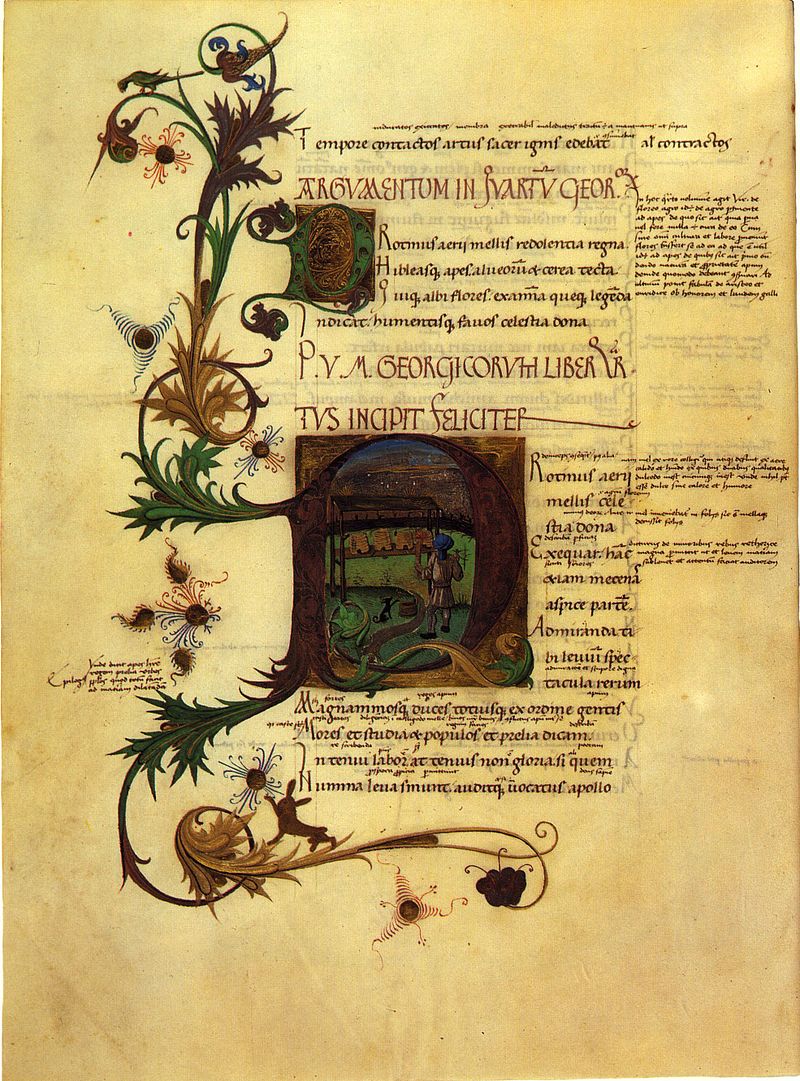
Later in the poem, Virgil suggests that much of this pain is self-inflicted. In war, men destroy the land which are required for living. Moreover, not only wars, but individual wrongdoing reaps its punishment in painful work, such as in the story that concludes “Georgics.” Aristaeus, a mythical farmer and beekeeper, brings about the death of an innocent woman. His bees die as a punishment, and he has to make amends by sacrificing some of his livestock.
Still, human evil is not a complete explanation for the pain of work; work would be painful in any case. Even though men must toil to enjoy the fruits of work, those fruits are still not a sure thing, but subject to the risks of storms, pests, and drought.
Pain, Gifts, and Gratitude
Life would be so much better if everything were bestowed as a gift, just pleasure, just satisfaction. Virgil addresses this issue in his invocation of Liber (another name for Bacchus, the god of wine) and Ceres by hearkening to the myth of the Golden Age: Once upon a time, human beings fed on acorns and water (the Achelous was a river in Greece famed for its purity), without any need for labor.

However, there was no bread or wine either. There was no cultivation at all, and since there was no cultivation, there was no culture. Men enjoyed no celebrations or even true meals, eaten in community. Virgil implies that this situation cried out for divine help, and that help came in the form of work.
Higher gifts require pain. If humans ate only acorns and water, they would have it easy. … However, they also could not attempt the beautiful, risky, and painful task of forming and maintaining communities.
Everything is a gift, but human work allows a participation in this giving. There are greater and deeper joys in working for these gifts than in just receiving them.
Would you like to see other kinds of arts and culture articles? Please email us your story ideas or feedback at features@epochtimes.nyc
