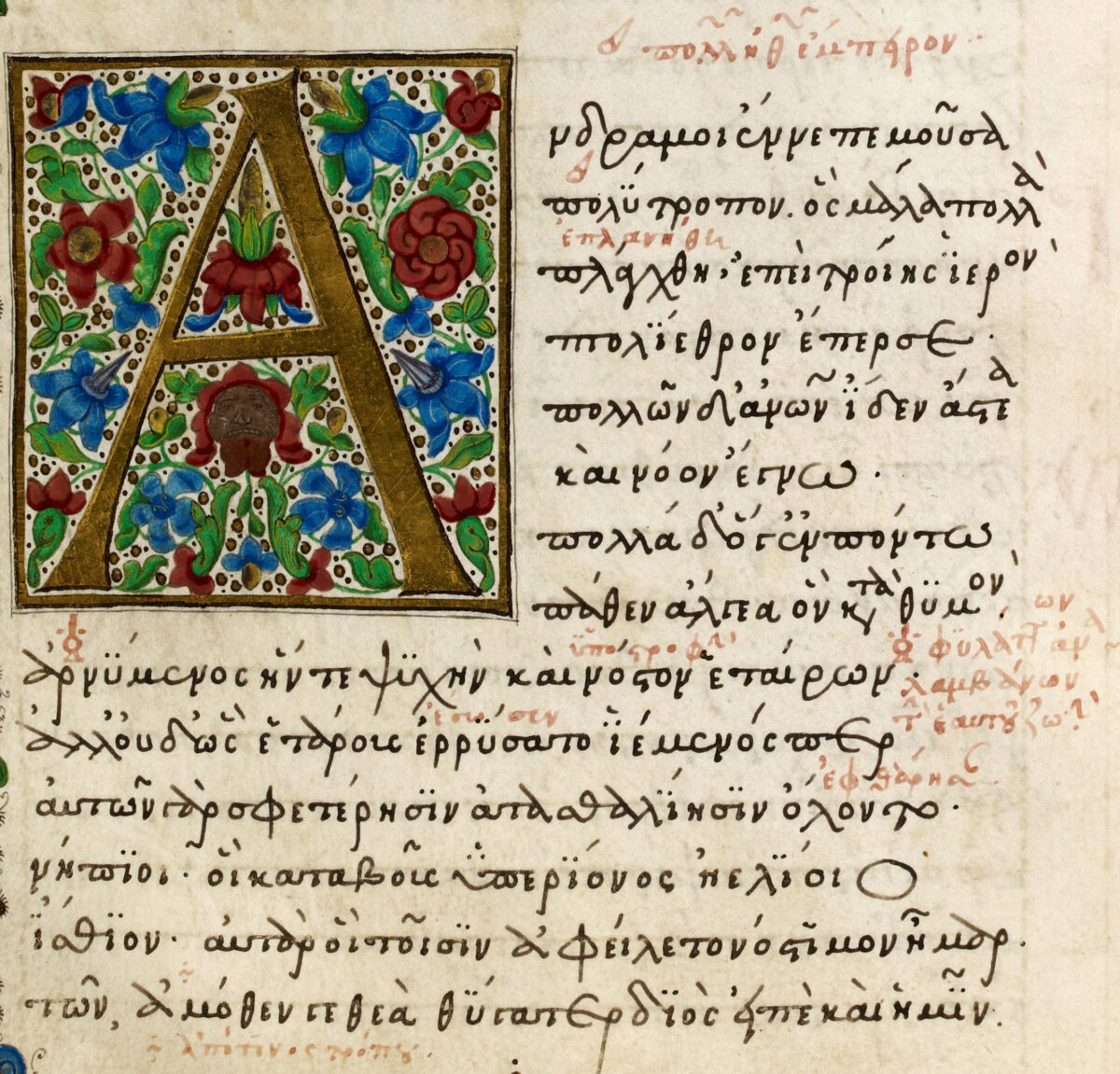
There are nine Muses of poetry, daughters of Zeus and Mnemosyne, goddess of memory—that strange divinity who binds together the past and the future. Of these nine, the most important is Kalliope, she of the “lovely voice,” the muse of epic poetry; and she is rightly regarded, by Hesiod and others, as the greatest of them all.
Epic poetry is, in truth, the supreme expression of poetry—its highest mountain peak. It is so great and so difficult that the proof of its greatness lies precisely in its rarity.
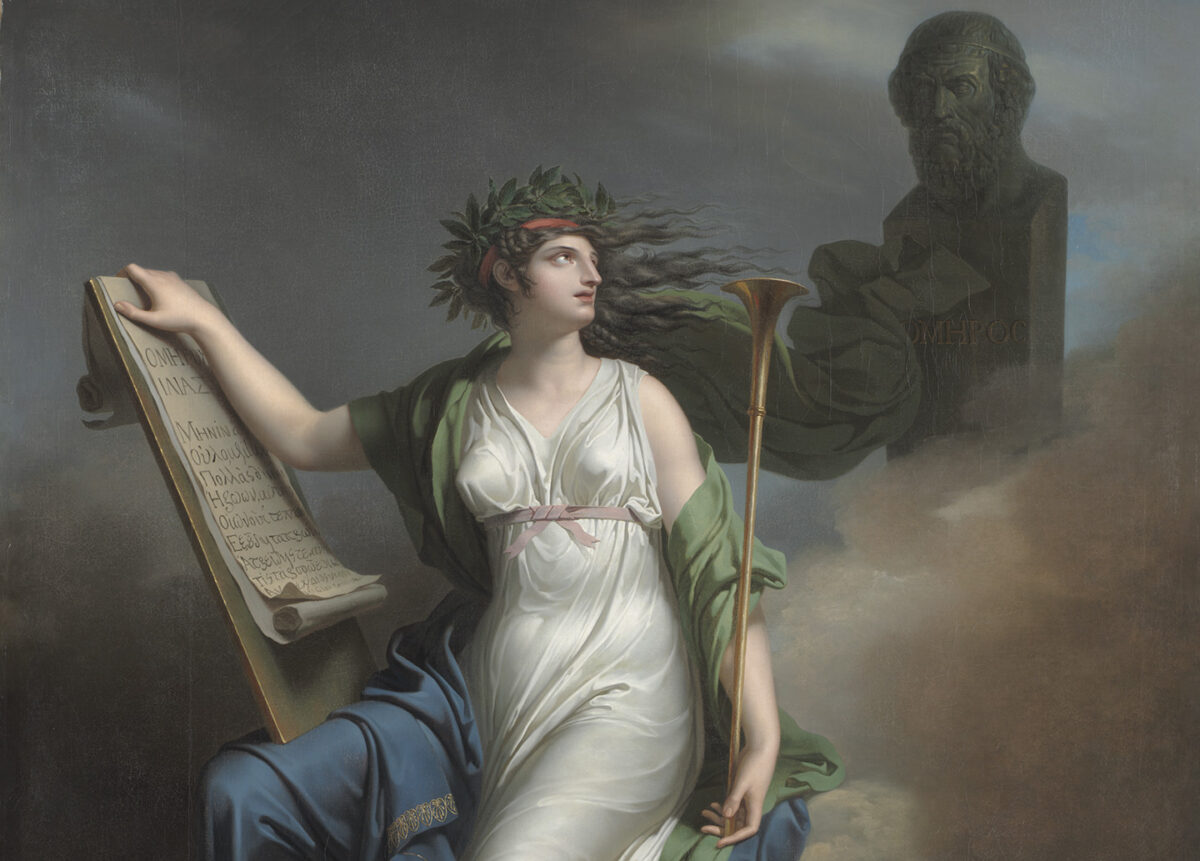
In the Western tradition, there are only a handful of true epic poets we return to again and again: Homer, Virgil, Dante Alighieri, John Milton. Perhaps we might add Edmund Spenser or Johann Wolfgang von Goethe, but beyond these, the lineage thins out alarmingly.
The modern age, however, is full of poets who claim to be epic poets—a claim as large and perilous as that of standing before the burning bush. To say one is a poet is already to lay claim to a divine vocation; to call oneself an epic poet is to assume a burden almost beyond mortal capacity.
The Soul Against the Cosmos
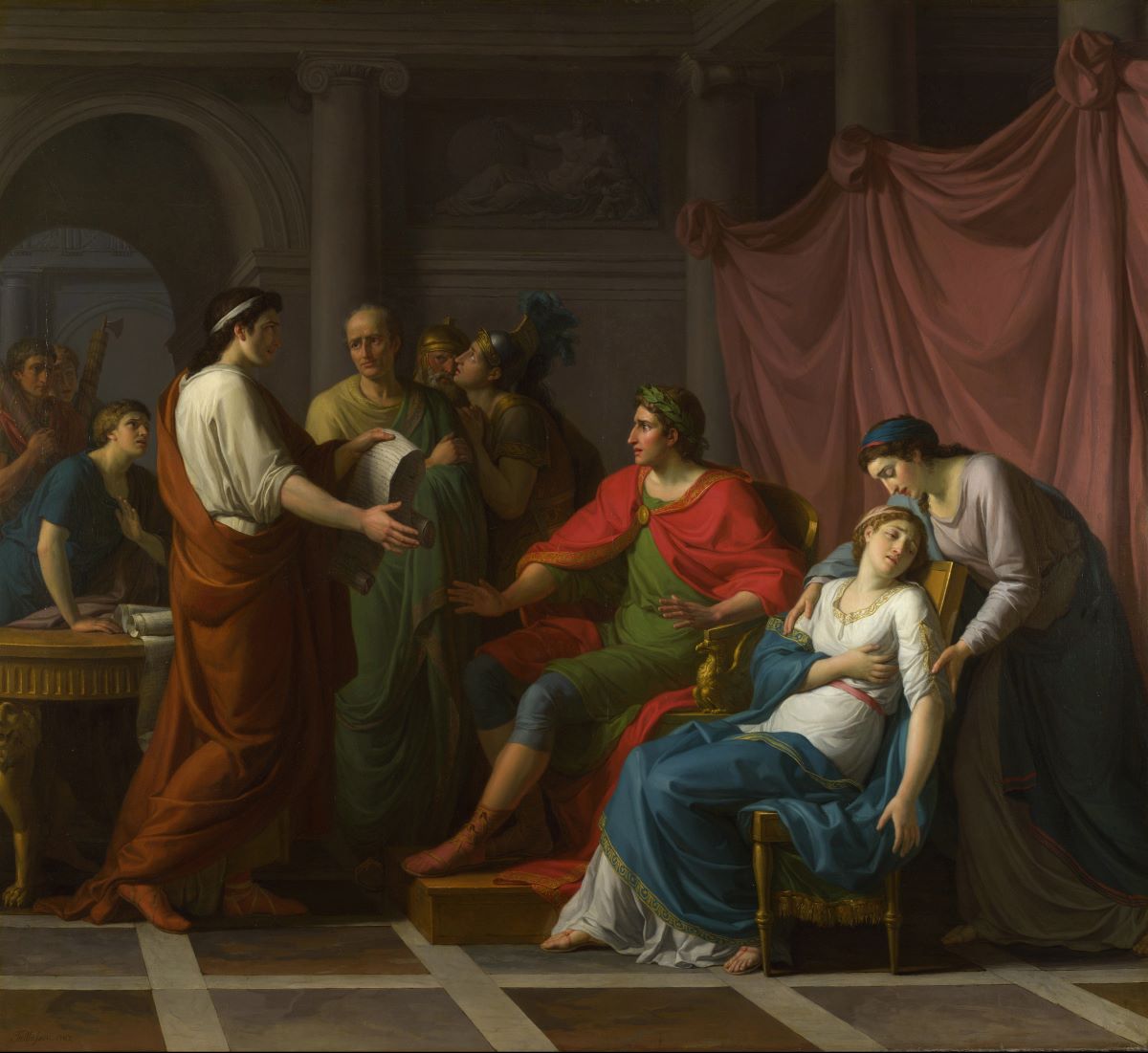
It is not enough for an epic to be long, nor for it to deal with wars, empires, or the fate of worlds. The true epic is centered on a hero—not a crowd, not a collective, but one human soul whose journey mirrors the destiny of mankind. Without such a figure, the poem may be grand, but it is not epic. Gilgamesh, Achilles, Odysseus, Aeneas, Dante’s Pilgrim, Milton’s Adam (and perhaps his Satan!)—each embodies the individual’s struggle for meaning, salvation, or destiny.
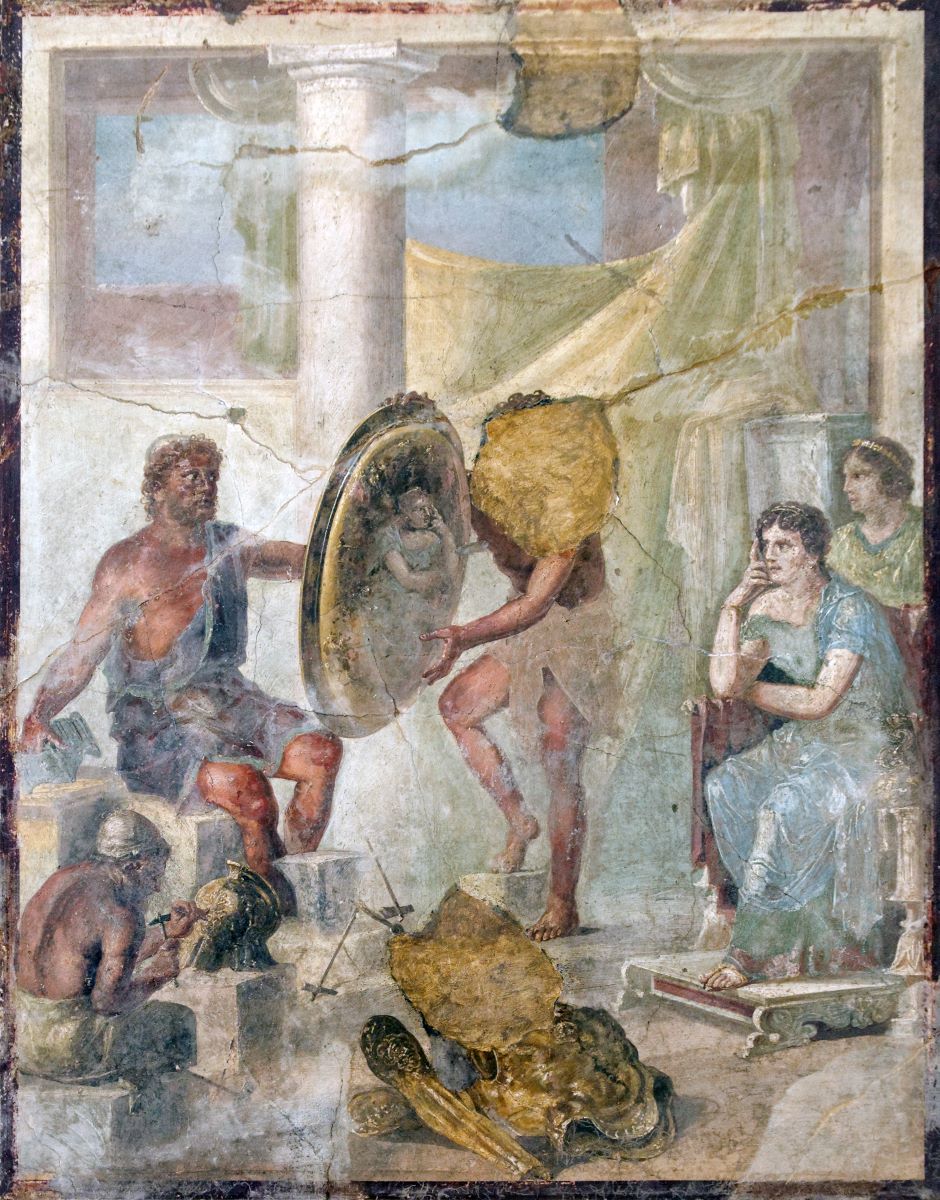
It is the story of one, through whom many are redeemed. So in that sense and from a Western perspective, one might claim that the Gospel of John is an epic, although, of course, it is not presented as a poem per se.
The epic must also wrestle with transcendence. All great epics, in their own ways, contend with the gods or with God. The hero’s striving brings him to the limit of human potential, where he is both ennobled and bounded. The secular imagination, by contrast, is too often content with humanity saving itself—with a kind of technological or collective apotheosis. Yet this humanist “epic” lacks the very thing that gives the genre its grandeur: the confrontation with the divine. Without transcendence, the epic collapses into sociology or science fiction; it ceases to be a revelation of what lies beyond us.
For this reason, the greatest epics are never merely humanist. They are human and divine, exploring that perilous frontier between mortality and the infinite. Milton knew it, Dante knew it, Homer and Virgil knew it. To set the soul against the cosmos—that is the measure of the form. It is why the epic is the most spiritual of literary kinds, even when written by poets who do not subscribe to any particular religion.
When a Poem Is Epic
A poem is truly epic if it achieves what can be summed up in one word: sublimity. English writer Samuel Johnson disliked Milton for many reasons: Johnson was a monarchist, Milton a republican; he was an Anglican and Milton a Puritan; and Johnson was committed to marriage and considered Milton’s advocacy of divorce—he was married three times—to be self-serving. Nonetheless, Johnson admired Milton and said, “Whoever flew so high for so long?”
This point is the same that Charles Williams (a friend of C.S. Lewis and J.R.R. Tolkien) made in “The English Poetic Mind” when he said: “It is possible, almost anywhere, to stop reading Paradise Regained whereas it is almost impossible to stop reading Paradise Lost, once one has begun. This may be why comparatively few people begin.”
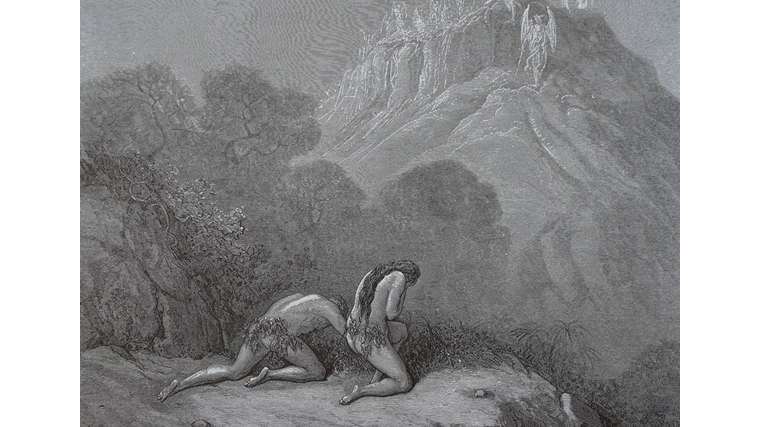
The sublime is that moment when we are arrested by awe, when motion ceases and breath is held. It is the “And there was light” of Genesis, the cry of Achilles on the plains of Troy, the stars at the end of Dante’s “Paradiso.” The sublime is not simply beauty or grandeur; it is the sense that we stand at the edge of the eternal. Without it, no matter how accomplished the technique, the poem cannot be called an epic.
Alfred, Lord Tennyson, in “Idylls of the King,” and Henry Wadsworth Longfellow, in “Hiawatha,” believed themselves to be writing epics, and their poems have many virtues. Yet they do not achieve sublimity. They remain admirable, not awe-inspiring. The sublime cannot be contrived; it arises from the poet’s encounter with ultimate reality—moral, metaphysical, or divine. It is an effect more than a technique, and only the greatest poets attain it.
Language, too, is crucial. The epic demands an elevated style—not archaic or pompous, but dignified, musical, and clear. The diction must be proportionate to the theme; it must bear the weight of the sublime without buckling. This is why even the finest blank verse can fail to achieve epic stature, because sublimity is not a matter of meter but of spirit. To handle the language of the gods, the poet must first have conversed with them.
And, finally, the epic must be rooted in a value system that transcends the poet’s own time. Epics do not merely mirror the fashions or anxieties of their age; they judge them. They present a vision of what is enduring in human experience—a struggle, a fall, a redemption—that speaks to all ages.
The modern temptation is to make the epic “relevant,” to fill it with contemporary data, brands, and technologies. But the true epic does not record our moment; it transforms it. The poet must look beyond the flicker of our digital age to the eternal patterns that underlie human life: love, death, honor, pride, loss, faith. Without those, the poem may be vast, but it is not deep.
Perhaps that is why genuine epics are so rare. They require of the poet not only genius but also humility; not only craft but also vision. They require the poet to stand, as it were, between heaven and earth, hearing both the cry of man and the whisper of the gods. To write an epic is to attempt to speak with Kalliope’s own voice—the “lovely voice” that remembers all things, past and future. She remembers, of course, because she is the daughter of Mnemosyne, the Titaness of memory.
In an age that worships immediacy, irony, and fragmentation, the epic remains an act of faith: faith that the human soul still matters, that it is still possible to wrestle with the divine, that memory and meaning have not been drowned in data. If we are to have new epics, they must be born not from our technologies but from our transcendence. The true epic does not save the planet; it saves the soul.
What arts and culture topics would you like us to cover? Please email ideas or feedback to features@epochtimes.nyc