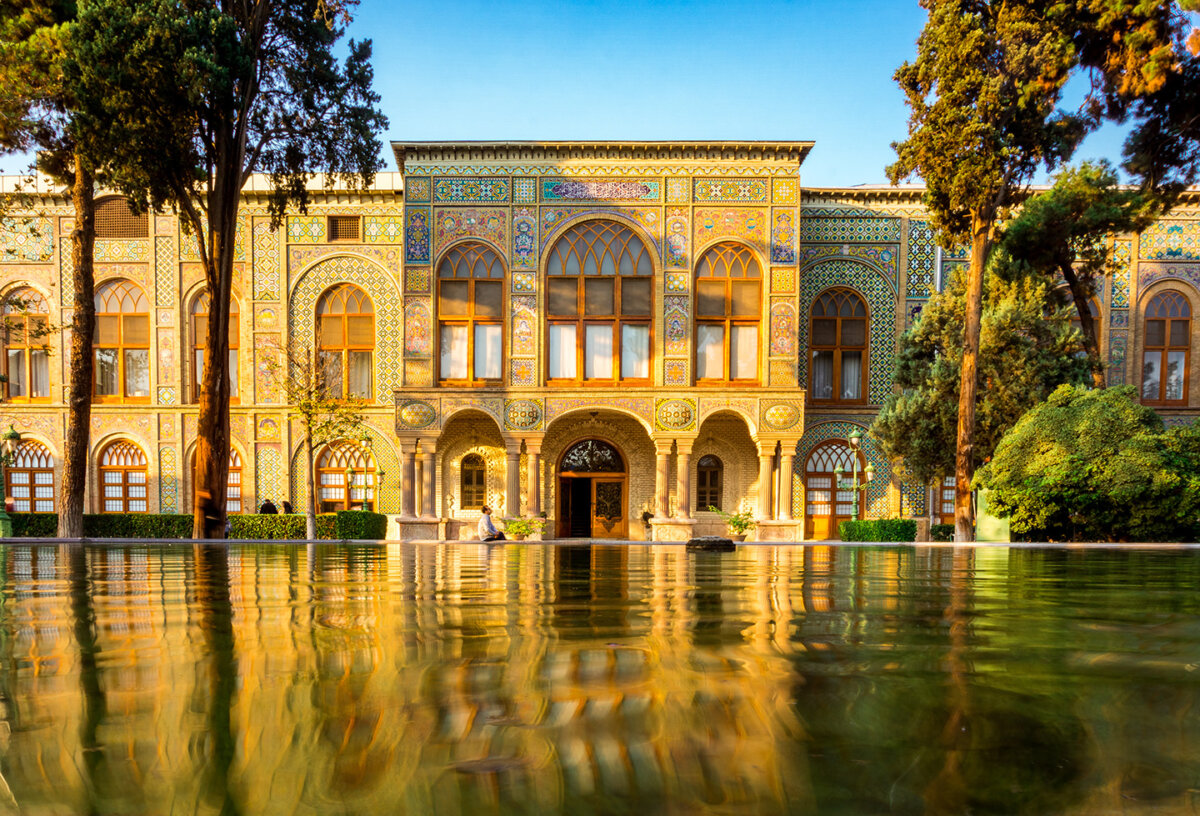
The Salam Hall (Reception Hall) at Golestan Palace exemplifies Qajar architecture with intricate tile work, multiple arches, and ornate windows. The large pool outside the complex, coupled with the lush greenery, is one of the most universal features of a traditional Persian courtyard. (Uwe Seidner/Shutterstock)
Serving for centuries as a royal palace for Persian shahs (kings), the Golestan Palace is one of Iran’s most magnificent architectural works and among the oldest historic monuments in the city of Tehran.
Literally meaning “Rose Garden Palace” in Farsi, Golestan began its transformation into a royal palace with the construction of a citadel during Tahmasp I Shah’s reign (1524–1576). The eponymous walled garden was added during the reign of Abbas the Great (1587–1629). In 1789, Agha Mohammad Shah established the Qajar dynasty and made Tehran the national capital, with Golestan as his primary residence.
Featuring a mixture of traditional Persian and classical European architectural influences, the palace exemplifies Qajar-style aesthetics and reflects the cultural exchanges during the dynastic period (1781–1925). Extensive mid-19th-century renovations elevated Golestan to that style’s apogee.
Key features of Qajar architecture include colorful interior and exterior tiles, which are arranged in intricate floral and geometric patterns; Orsi windows (Persian stained glass); hozkhanes, or enclosed springhouses; intricate stucco; and mirror mosaics. Palace courtyards, which include gardens, fountains, and pools, serve as the main focal point while bringing architectural balance to the overall complex.
Qajar architecture enhanced and elevated national styles through an encounter with classical Western culture. European influences, particularly Rococo and Baroque, informed the interior decor’s chandeliers, window curtains, and furniture, while also influencing the palace’s height and the number of expansive windows.
The complex consists of 17 structures, including palaces, museums, and halls—primarily built during the Qajar dynasty—and three main archives: the photographic archive, the library of manuscripts, and the archive of documents. Known today as the Golestan Heritage Museum Palace, it became a UNESCO World Heritage Site in 2013.
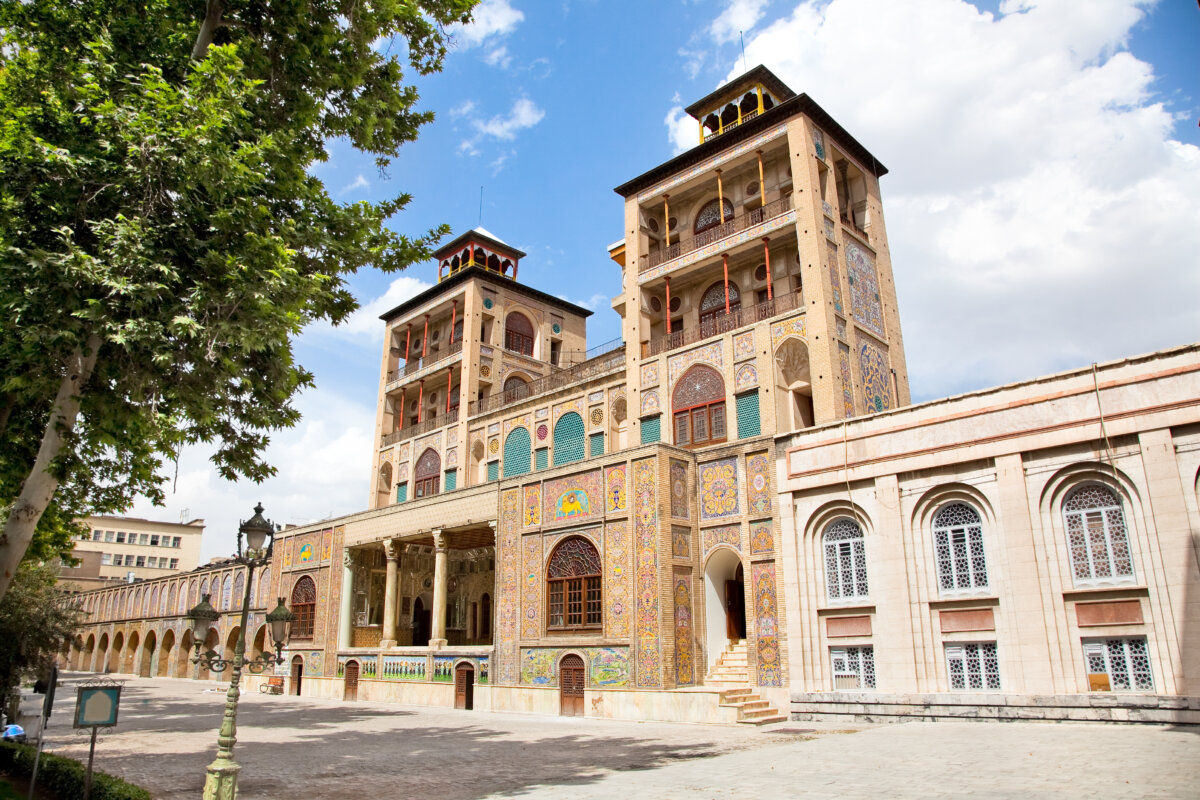
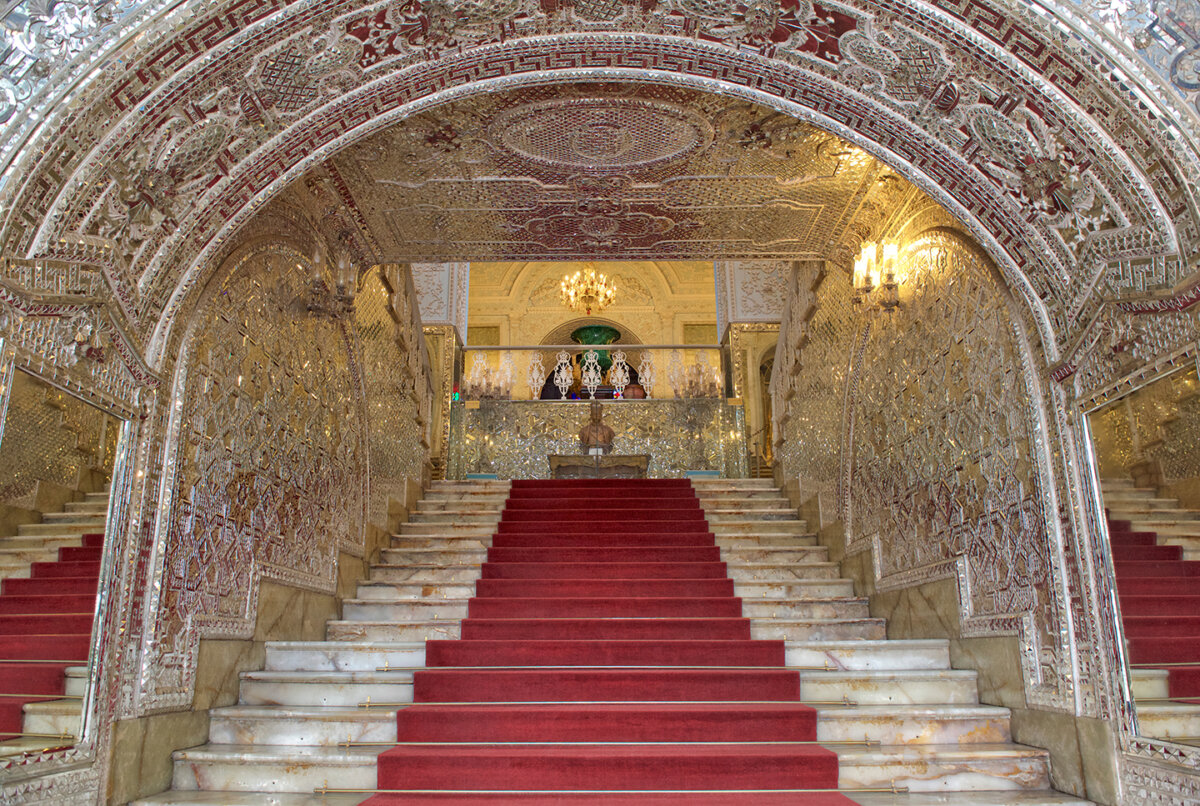
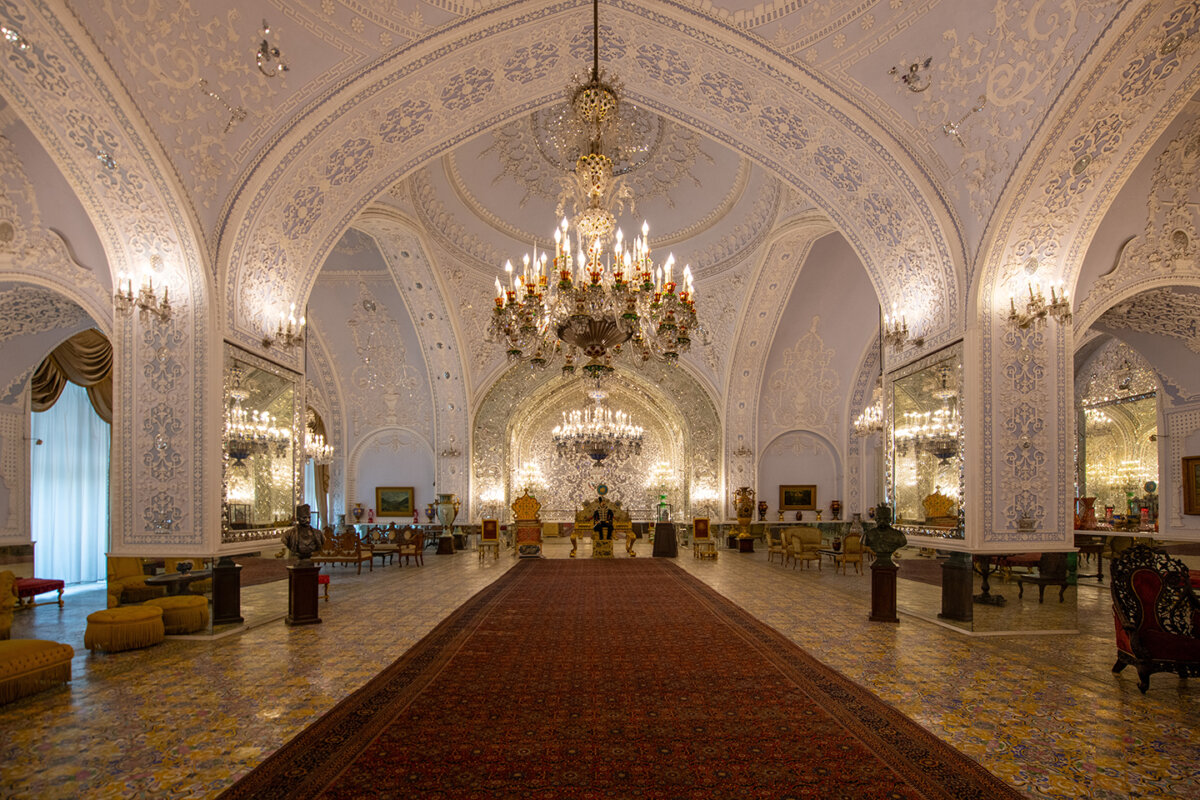
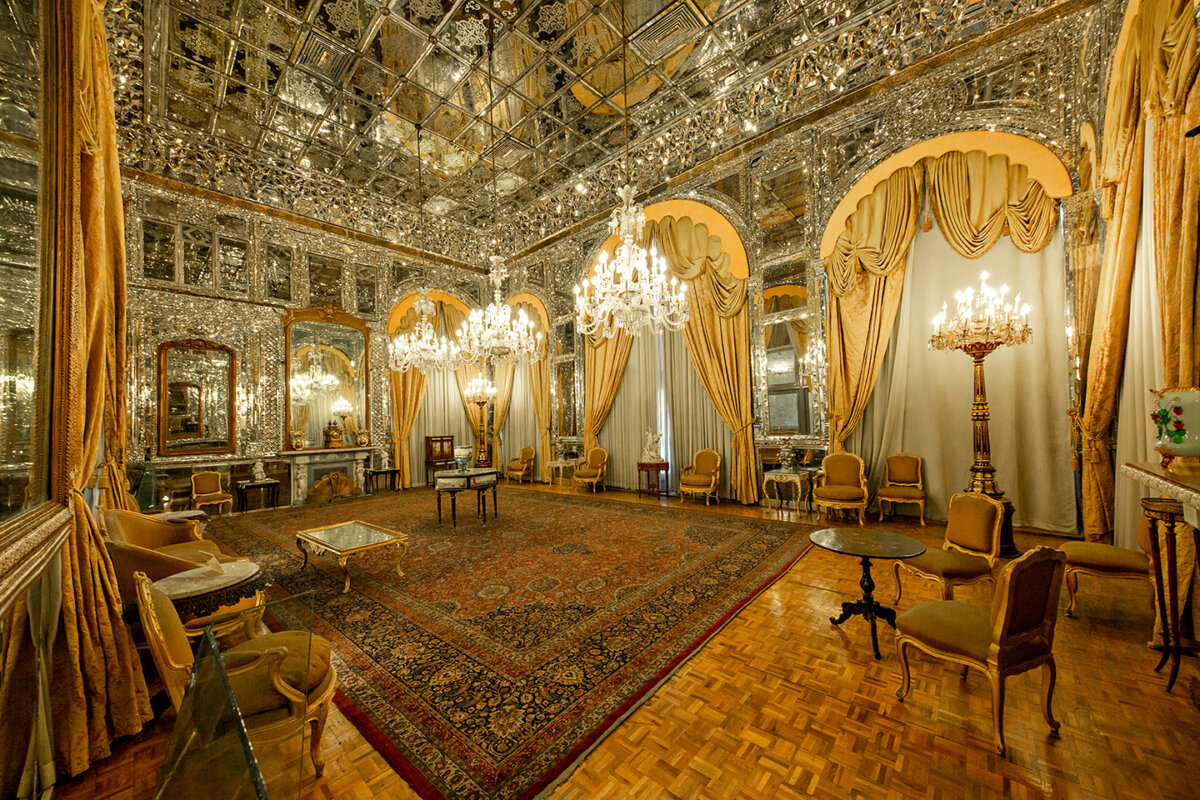
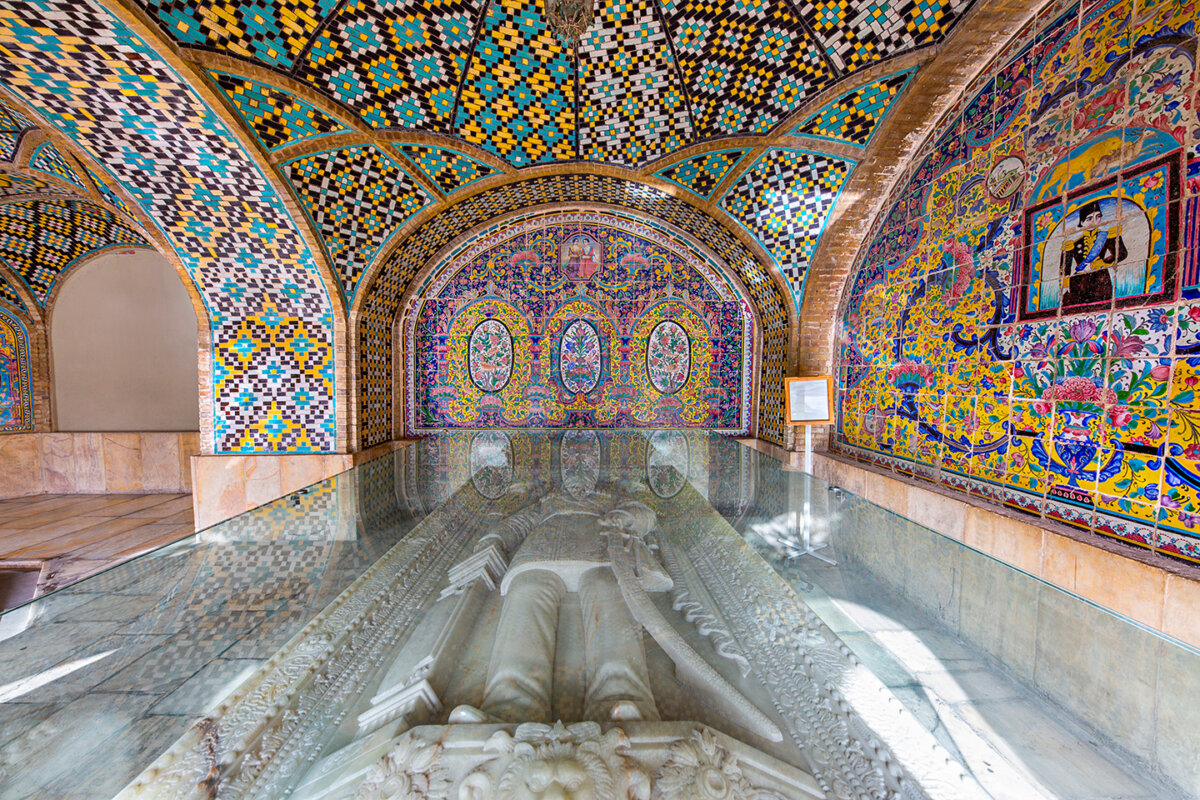
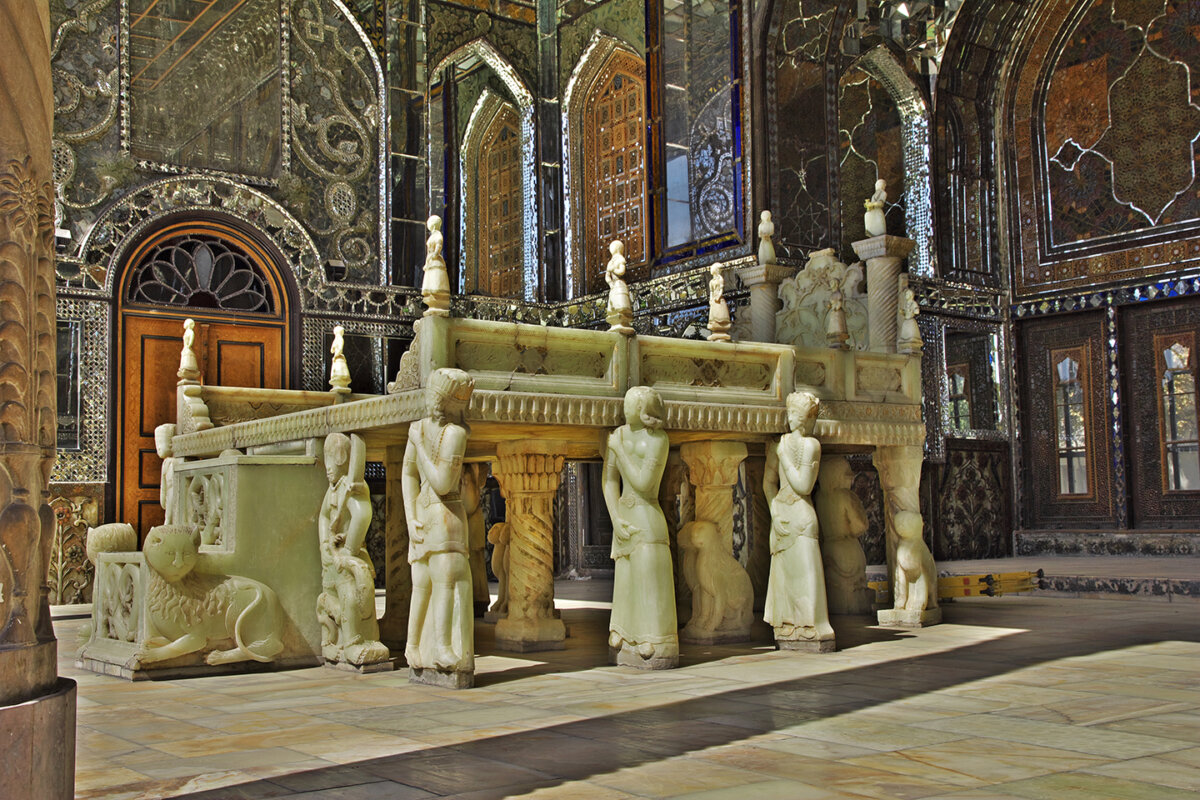
The Shams-ol-Emareh (translated as “the Edifice of the Sun”) is one of the most prominent and distinctive buildings in the complex. The five-floor, 115-foot-tall structure was Tehran’s tallest building when it was first completed in 1867—an innovation inspired by European architecture. With pillars made of cast iron, it was the first Iranian building to use metal in its construction. Qajar-style seven-color tiling and Orsi windows, which decorate the façade, exemplify Iranian tradition. Queen Victoria gifted Naser al-Din Shah the clock mounted between the two towers. (Aleksandar Todorovic/Shutterstock) The arched staircase leading to the Salam Hall features mirror mosaics in geometric and flower designs. The marble stairs incorporate intricately carved marble handrails. (Renata Apanaviciene/Shutterstock) Originally built to be a museum, Salam Hall, or Reception Hall, became the site for royal ceremonies. Aside from the distinct Eastern-style arches—reminiscent of onion domes with curved sides and points—the hall features European-style stucco patterns on the walls and ceilings. The European-designed mosaics on the floor are made from traditional Persian tiles. (Altug Galip/Shutterstock) The Hall of Mirrors, renowned for its stunning mirror mosaics that cover the walls and ceiling, is one of the most famous halls in Golestan Palace. Designed by Sanie-ol-Molk, the exquisite mosaic is a prime example of aineh-kari, an intricate art that combines mirror mosaics with traditional Persian craftsmanship. Aside from the mirrors and the Persian carpet, the room is reminiscent of European Baroque aesthetics with its ornate furnishings and 17th-century French parquet floors. (MehmetO/Shutterstock) Dating from the 18th century, the Karim Khani Nook is among the oldest and least altered parts of Golestan Palace. The small pavilion features a fountain and is decorated with brightly colored floral- and geometric-patterned tiles that exemplify classical Iranian tradition. Today, the pavilion houses the marble sarcophagus of Karim Khan Zand (founder of the Zand dynasty), whose portrait is tiled on the wall beside it. (MehmetO /Shutterstock) The marble throne, located in an iwan (a three-walled, vaulted pavilion), is one of the palace’s most iconic structures. The 19th-century throne, modeled after Persepolis, was made from 65 pieces of yellow marble quarried from the Yazd Province of Iran. The throne’s legs, which are sculptured figures that resemble people carrying a seated monarch, resemble Iranian paintings, while the carved detailing exemplifies classical Baroque influences. (Sergey-73/Shutterstock)
What arts and culture topics would you like us to cover? Please email ideas or feedback to features@epochtimes.nyc.
James Baresel is a freelance writer who has contributed to periodicals as varied as Fine Art Connoisseur, Military History, Claremont Review of Books, and New Eastern Europe.