Abraham Lincoln and Supreme Court Justice Clarence Thomas have much in common: Both grew up in extreme poverty, both were self-motivated individuals who successfully improved their lives and careers by staying true to their convictions, and both have left indelible marks on history through their government service.
Unfortunately, both have also been reviled for their words and actions while serving their country.
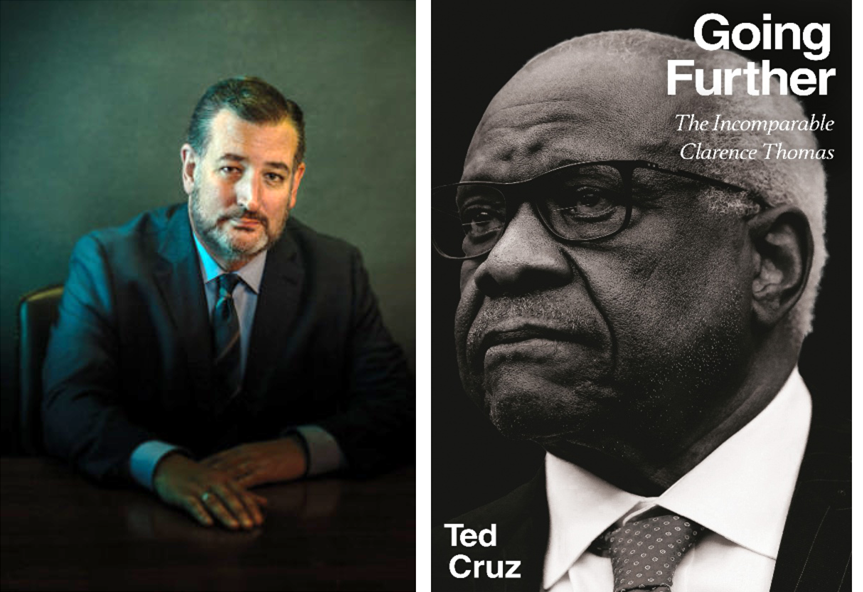
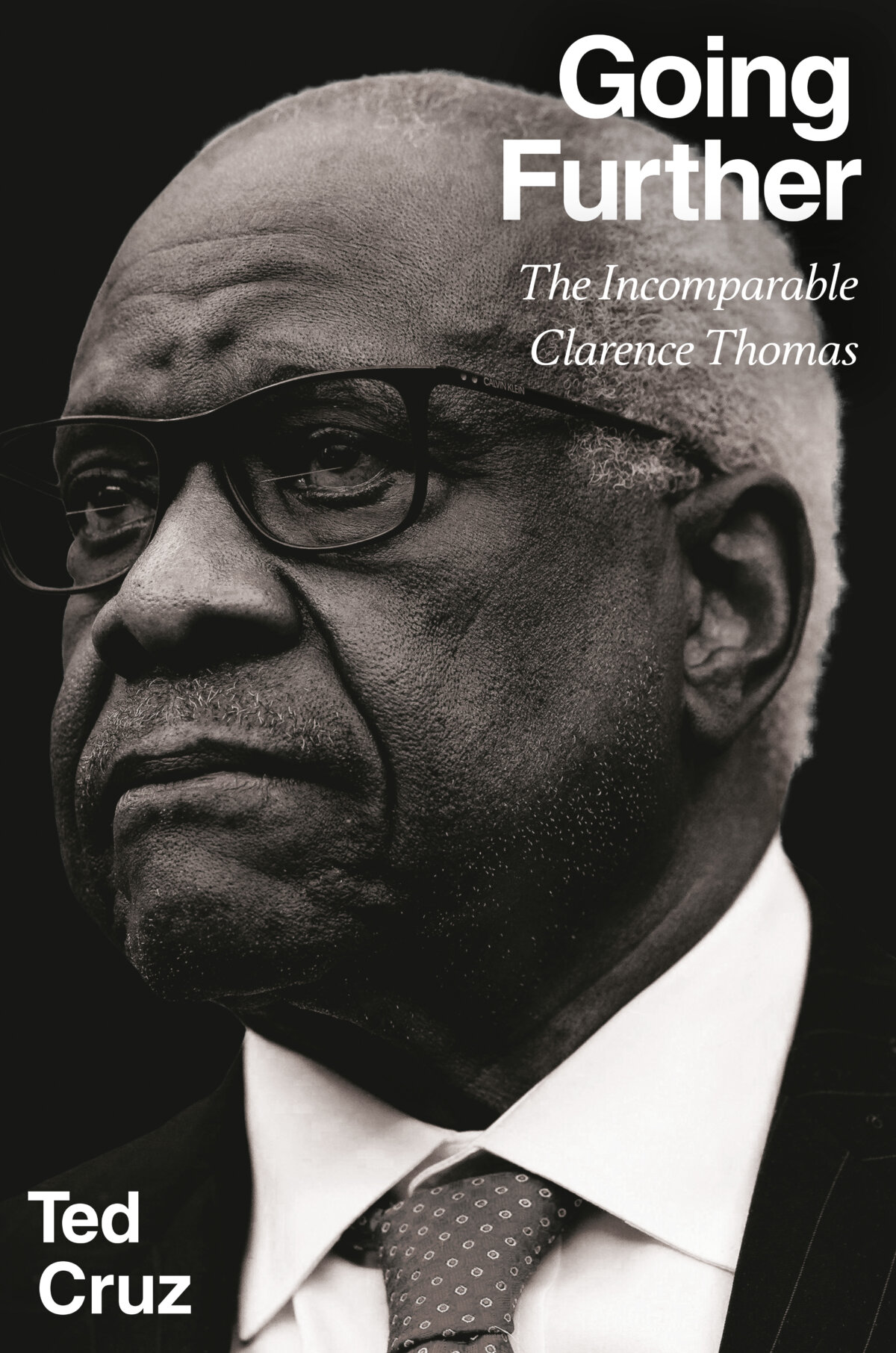
Justice Thomas’s inspiring story is told in Texas Sen. Ted Cruz’s superb biography, “Going Further: The Incomparable Clarence Thomas.” Cruz has known Thomas for more than 30 years, first meeting him when clerking for Chief Justice William Rehnquist.
In his book, based on nine-and-a-half hours of personal interviews with Justice Thomas, the author details the people, places, and experiences that molded him into one of the most consequential justices in Supreme Court history.
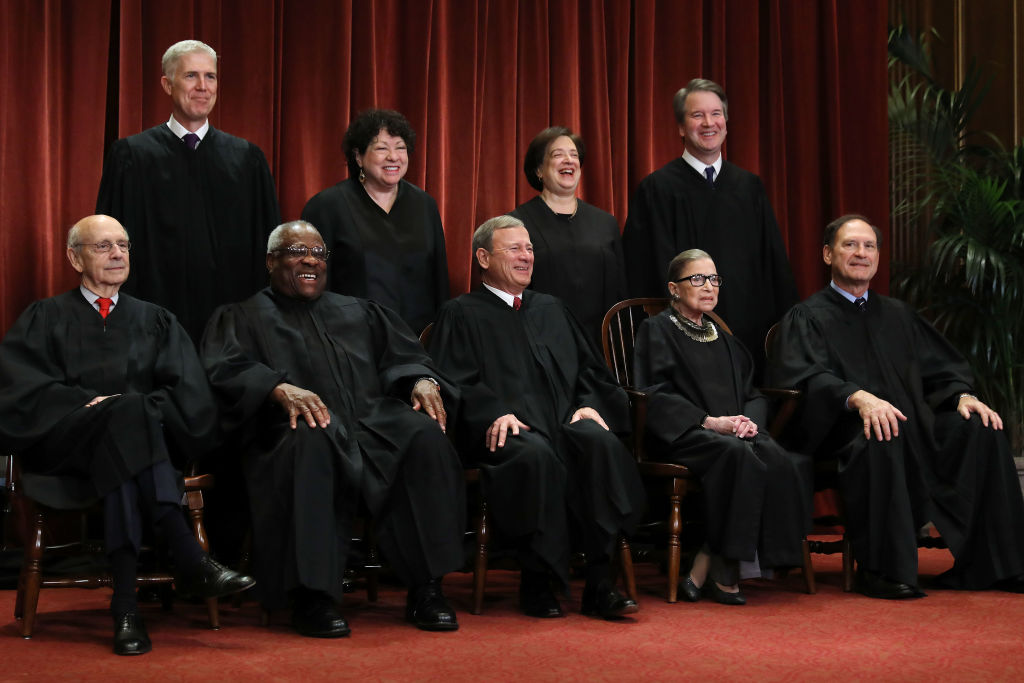
Cruz presents a fascinating portrayal of a man who rose to the pinnacle of American jurisprudence through perseverance, courage, and the conviction of his beliefs.
Rising Up
Pin Point, Georgia, a small coastal community near Savannah, is an unlikely place to produce a federal judge, let alone a Supreme Court justice. Justice Thomas credits the influence of the grandparents who raised him and his younger brother. His grandfather, Myers Anderson, shaped his character through rigorous discipline, self-reliance, faith, and old-fashioned hard work.
Anderson could barely read, and his wife, Christine, had only a sixth-grade education, so seeing that their two grandsons were educated was important to them. As Justice Thomas told the author, whenever he and his brother were caught messing around, his grandparents told them, “We don’t have no education and no chance, but you boys are going to have a chance. We’re going to devote the rest of our lives to you boys.”
His grandfather was such a significant influence on the future Supreme Court justice that Justice Thomas’s 2007 memoir was titled “My Grandfather’s Son: A Memoir.”
Evolution of a Justice
Readers may be surprised to learn that arguably the most conservative Supreme Court justice was once an embittered, angry campus radical who went to seminary to become a Catholic priest and attended Black Panther meetings.
Cruz succinctly details the disillusionment Justice Thomas experienced when his fellow seminarians made it clear he wasn’t welcome, excluding him from pickup basketball games and twice vandalizing a St. Jude statue he won in a Latin Bee.
Justice Thomas abandoned his plans for the priesthood, turning instead to radical elements of the civil rights movement.
Sadly, quitting the seminary and joining these activist groups led to a 20-year estrangement between his grandfather and Justice Thomas over their political differences. The two didn’t reconcile until shortly before his grandfather’s unexpected death in 1983.
It didn’t take long, however, for Justice Thomas to realize his grandfather was right: Education was his ticket to a better life, and law was the vocation he chose.
Judicial Philosophy
Cruz notes that Justice Thomas’s classes at Yale Law School weren’t what shaped his judicial philosophy; it was his extracurricular reading. A voracious reader, Justice Thomas pored over the Constitution, the Federalist Papers, and other foundational writings. He wanted to learn why the Founders chose to form a constitutional republic rooted in natural law.
Justice Thomas recalls that the Founders’ simple, direct prose inspired him to communicate his law school arguments in a straightforward, easily understood style. He follows that same practice today when writing opinions.
“He believed in clear writing and clear thinking,” Cruz wrote. “He believed that the law, more than anything else, existed to preserve the rights given to people by God. With every book he consumed about the United States and its founders, he became more convinced than ever that his grandfather’s ideas about the world had been correct all along.”
Constitution Originalist
Like Justice Thomas’s own judicial writings, “Going Further” is written clearly, concisely, and avoids any pretense and legalese. Populated with fascinating biographical detail, it also analyzes some of Justice Thomas’s more prominent dissents and concurrences. Both illustrate his longstanding refusal to view the Constitution as “a living document” open to modern interpretation, but rather argues that the Founders meant what they wrote.
As a Constitutional originalist, Justice Thomas believes in procedural due process that requires the government to use fair procedures before depriving individuals of life, liberty, or property. That runs counter to those who believe in substantive due process that recognizes rights not specifically addressed in the Constitution, including abortion, birthright citizenship for illegal aliens, and an expansive definition of marriage.
“Since law school, he had abhorred this kind of jurisprudence, which misread the Due Process Clause of the Fourteenth Amendment and applied it to areas of life that the people who wrote that amendment had never intended it to cover,” Cruz wrote.
Behind the Scenes
“Going Further” also provides insights into internal Court dynamics. Threats were received earlier this decade when the “Dobbs vs Jackson Women’s Health Organization” decision leaked, and home addresses of conservative justices were doxed.
Cruz also provides entertaining anecdotes about the friendships Justice Thomas enjoyed with justices whose judicial philosophies opposed his, including Justice Ruth Bader Ginsburg and Justice Stephen Breyer.
Justice Thomas has been a lightning rod for progressive activists since his contentious confirmation hearing in 1991. Love him or not, this past May, Justice Thomas passed the 34-year service mark to become the most senior current justice of the U.S. Supreme Court. Barring retirement or health issues, he will pass Justice William O. Douglas and become the longest-serving justice in the Court’s history on May 20, 2028.
‘Going Further: The Incomparable Clarence Thomas’
By Ted Cruz
Sentinel: Aug. 25, 2026
Hardcover, 336 pages
What arts and culture topics would you like us to cover? Please email ideas or feedback to features@epochtimes.nyc