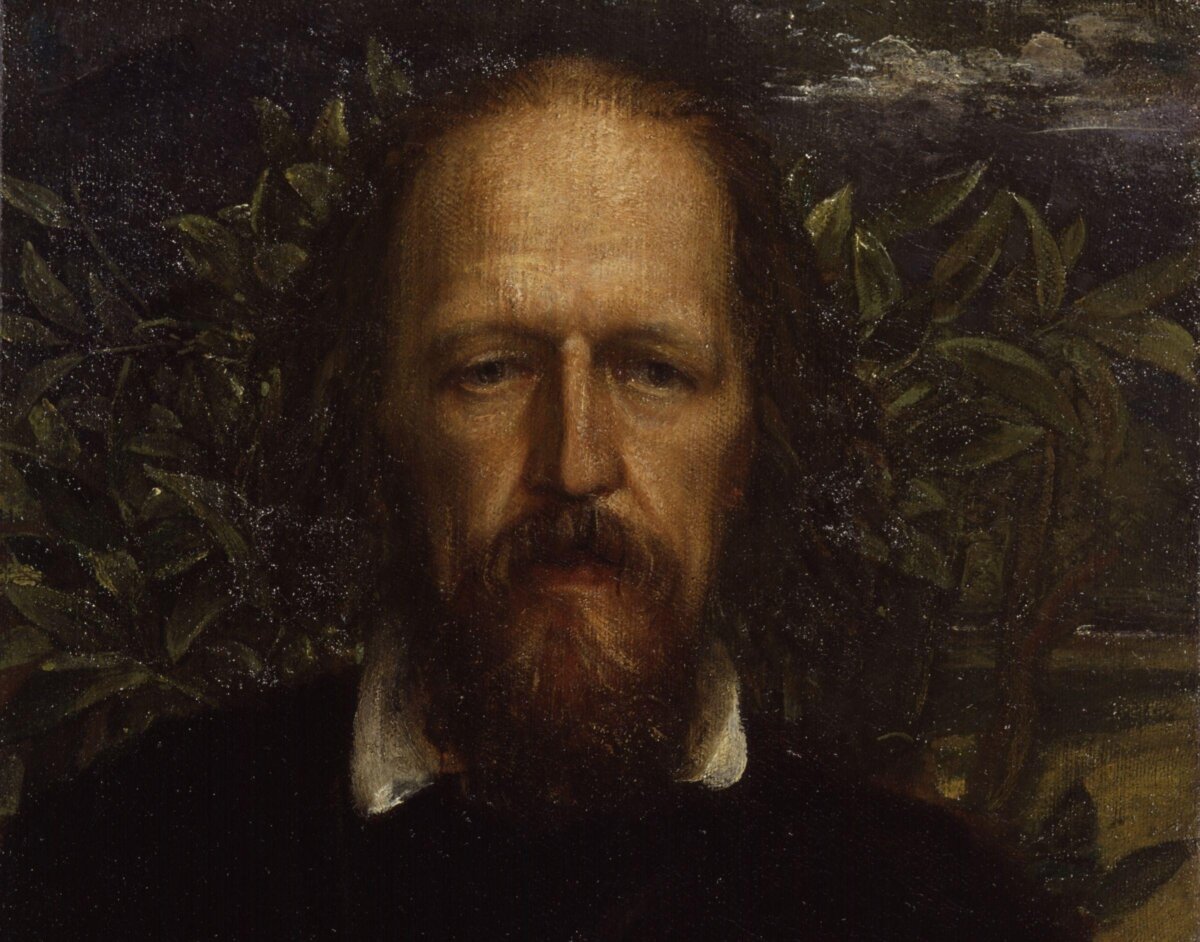
Titles such as “The Lady of Shalott,” “The Charge of the Light Brigade,” “Ulysses,” and “In Memoriam A.H.H.” gild the pages of countless poetry anthologies. These poems have helped engrave Tennyson’s name among those of our greatest poets. These and other classic poems have earned him laurels as England’s national poet during his lifetime as well as an undying literary legacy since.
But this poet—who lived to be 83 and wrote during most of his long life—has a large body of work that extends much further than these oft-repeated poems. Tennyson’s complete works reveal a world full of unsounded depths and untapped riches. His work glimmers with life and variety—from fantastical fairy-tale ballads to quiet pastorals to reflections on the emergent modern world to deeply personal remembrances of failed loves and lost faces.
Of course, it’s impossible to capture all of his works in one brief article. But it can nevertheless introduce readers to some of Tennyson’s lesser-known poems. These off-the-beaten-path poetic byways are well worth lingering over.
‘The Oak’
The first entry on this list is short enough to be reprinted in its entirety:
Live thy Life,
Young and old,
Like yon oak,
Bright in spring,
Living gold;
Summer-rich
Then; and then
Autumn-changed
Soberer-hued
Gold again.
All his leaves
Fall’n at length,
Look, he stands,
Trunk and bough
Naked strength.
In this simple, powerful poem, the seasonal transformations of an oak tree reflect the stages of human life. In childhood and youth, we’re full of life, like the springtime oak and the “living gold” of its leaves. Sunlight can turn the glossy edges of intensely green spring leaves into an almost glittering color. As summer wears on, the foliage matures to a softer, deeper green, until the leaves are gold again in the fall.
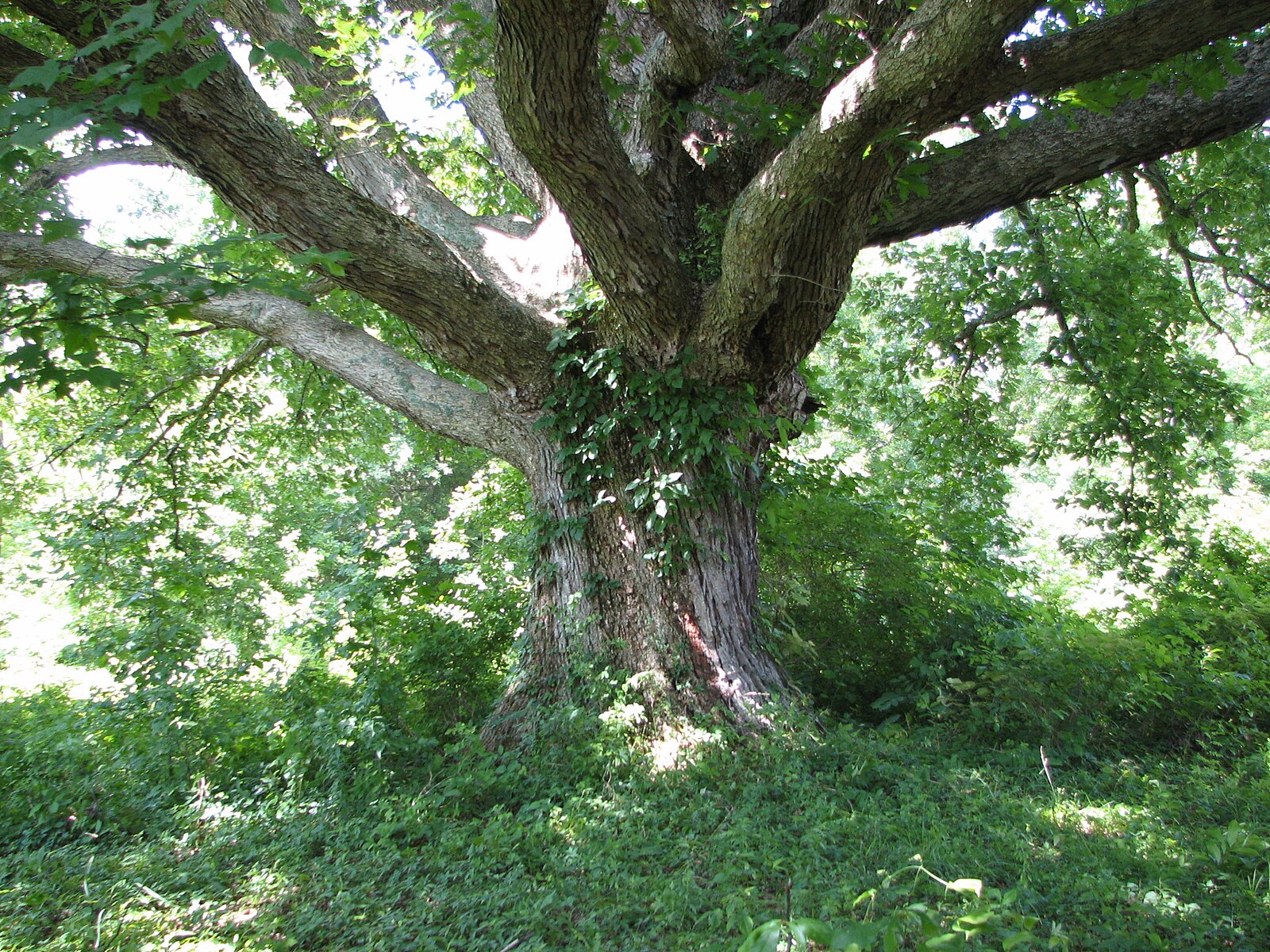 An ancient oak tree spreads its branches at Big Oaks National Wildlife Refuge, Ind. (Innotata/CC BY-SA 2.0)
So, too, each stage of human life gives way to the next, with youthful energy tempering into middle-aged maturity—less vibrant, yet deeper.
In Tennyson’s rendition, in the autumn of life, we perhaps recover something of the vitality of youth. With most of our life’s work accomplished, we move into a more tranquil and golden stage. Finally, little by little, life takes away our foliage—perhaps we lose loved ones and our health as old age overtakes us, just as the oak in Tennyson’s poem sheds its leaves. But at the end, once it’s stripped of all this external beauty, we see the oak’s underlying structure—its trunk and branches—that withstood the changing seasons.
Similarly, in old age, our inner self emerges more and more the inner strength that carried us through life’s changes—“Look, he stands/ Trunk and bough/ Naked strength.”
Tennyson’s choice of an unusual meter—with each line containing a pattern of accented, unaccented, and accented syllables—creates a heavy, deliberate feel. It reflects the solidity and stability of the oak remaining ever itself despite seasonal shifts.
Visually, the short lines stacked on top of each other appear on the page in the shape of a tree trunk.
‘Buonaparte’
Alfred Tennyson became England’s poet laureate in 1850. This position of great honor came with certain expectations. A poet laureate serves as a representative national or regional poet and is expected to write poems for state occasions and dignitaries. He might have to write in other ways to honor the country and its government. Due in part to his role as laureate, Tennyson wrote many patriotic poems.
One of these is the sonnet “Buonaparte,” addressed to the would-be French world-conqueror. Though some might criticize the poem for its triumphalist tone, it contains vivid, flashing imagery that makes urgently present to us the colossal conflict of the Napoleonic wars:
He thought to quell the stubborn hearts of oak,
Madman! to chain with chains, and bind with bands
That island queen who sways the floods and lands
From Ind to Ind, but in fair daylight woke,
When from her wooden walls,–lit by sure hands,–
With thunders and with lightnings and with smoke,–
Peal after peal, the British battle broke,
Lulling the brine against the Coptic sands.
We taught him lowlier moods, when Elsinore
Heard the war moan along the distant sea,
Rocking with shattered spars, with sudden fires
Flamed over: at Trafalgar yet once more
We taught him: late he learned humility
Perforce, like those whom Gideon schooled with briars.
The “stubborn hearts of oak” referenced in the first line refer to the unyielding British people and their military. Tennyson likely chose “oak” to describe them because of the power of the British navy, which played a crucial role in the war.
The “island queen” is, of course, Britain. Tennyson evokes the naval battles in which the British defeated Napoleon using alliterative language that sounds like the repeated booming of canons: “Peal after peal, the British battle broke.” With a kind of poetic smirk, the Tennyson highlights the way the British humbled their opponent: “We taught him lowlier moods … late he learned humility.”
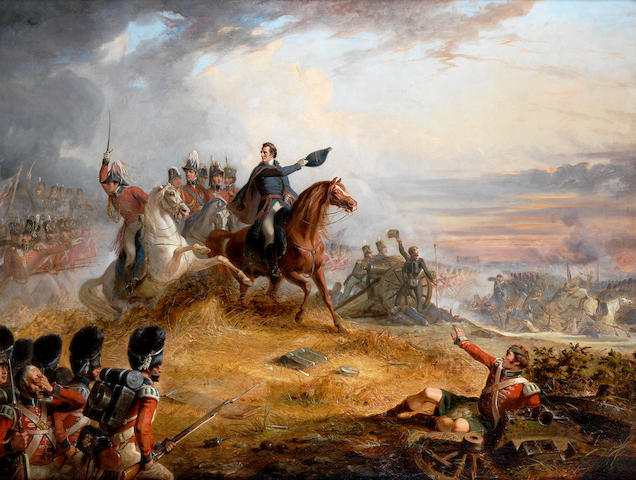 “The Battle of Waterloo” by Thomas Jones Barker. This painting depicts the decisive moment that marked the end of the Napoleonic Wars. (Public Domain)
 ‘Claribel’
A notable early poem of Tennyson’s, “Claribel” dwells languidly in natural imagery, using it as a backdrop for (and maybe distraction from) the death of the titular character. The poem describes the gravesite of a man’s lost beloved in rich and imaginative language:
Where Claribel low-lieth
The breezes pause and die,
Letting the rose-leaves fall:
But the solemn oak-tree sigheth,
Thick-leaved, ambrosial,
With an ancient melody
Of an inward agony,
Where Claribel low-lieth.
At eve the beetle boometh
Athwart the thicket lone:
At noon the wild bee hummeth
About the moss’d headstone:
At midnight the moon cometh,
And looketh down alone.
Her song the lintwhite swelleth,
The clear-voiced mavis dwelleth,
The callow throstle lispeth,
The slumbrous wave outwelleth,
The babbling runnel crispeth,
The hollow grot replieth
Where Claribel low-lieth.
This poem reveals the poet’s sensitivity to the beauty of the natural world and his early mastery of sensory language and satisfying layered sounds. Take, for instance, the accumulation of “eth” endings throughout the second stanza and especially in the final lines, which pile one on top of the other like dirt, suggesting the gentle sleep of the deceased and the soft earth and moss in which she lies.
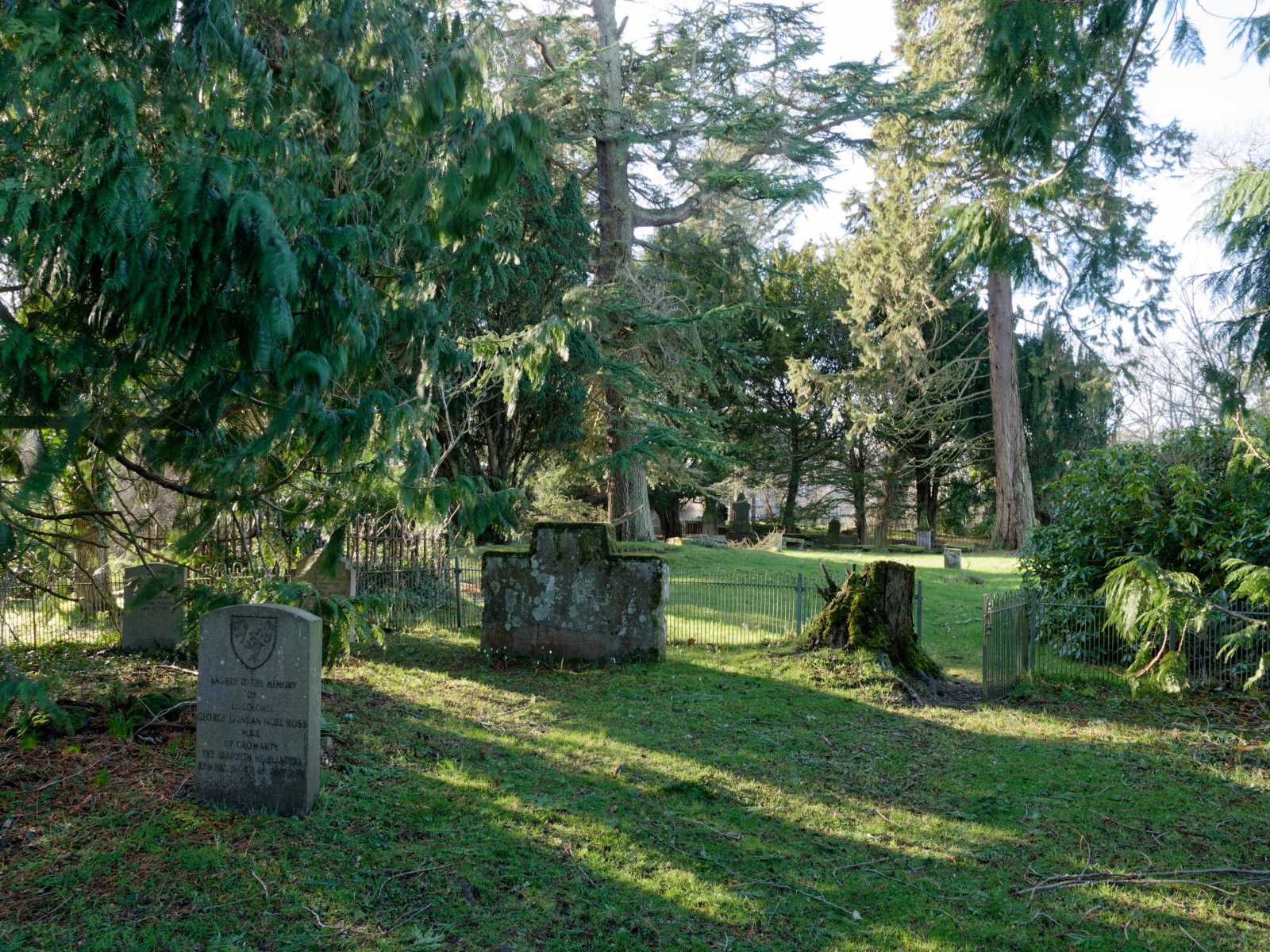 The graves in the St. Regulus graveyard have been at rest for hundreds of years. (Julian Paren/CC BY-SA 2.0)
Emotionally, the grief over this mysterious Claribel is effectively expressed through understatement and avoidance. A lot of the meaning is communicated through what is not said. The speaker’s grief is projected onto the natural landscape, especially the oak tree’s “ancient melody / Of an inward agony.” Through these techniques, the poem captures the peace and sweet melancholy of country cemeteries.
‘The Mermaid’
A work of astoundingly rich imaginative power, “The Mermaid” follows an unnamed speaker’s fantasy about what it would be like to live beneath the waves. The speaker imagines singing in an underwater hall as she combs her hair with a comb of pearl, until her hair, waving in the water, looks like “a fountain of gold/ Springing alone.”
So beautiful is the mermaid’s song and appearance that even the great sea-serpent awakes and is enchanted. The serpent, which the speaker envisions as a “he,” looks in through the gate “with his large calm eyes for the love of [her].”
And all the mermen under the sea
Would feel their immortality
Die in their hearts for love of me.
The speaker continues in the reverie, imagining the romantic pursuit of the mermen.
We would run to and fro,
and hide and seek
On the broad sea-wolds in the crimson shells
Tennyson translates the traditional features of pastoral poetry—featuring amorous shepherds and shepherdesses dancing and pursuing each other through the woods and fields—to an underwater setting, with potent effect. Many of the poem’s lines and images are quite haunting:
And if I should carol aloud, from aloft
All things that are forked, and horned, and soft
Would lean out from the hollow sphere of the sea
All looking down for the love of me.
The poem renders a dream-world of watery wonders and beauty so poignant it almost crushes the soul. Here, Tennyson wonderfully elicits the longing in the human heart for another world and another way of being, a longing we can scarcely articulate and only poorly understand.
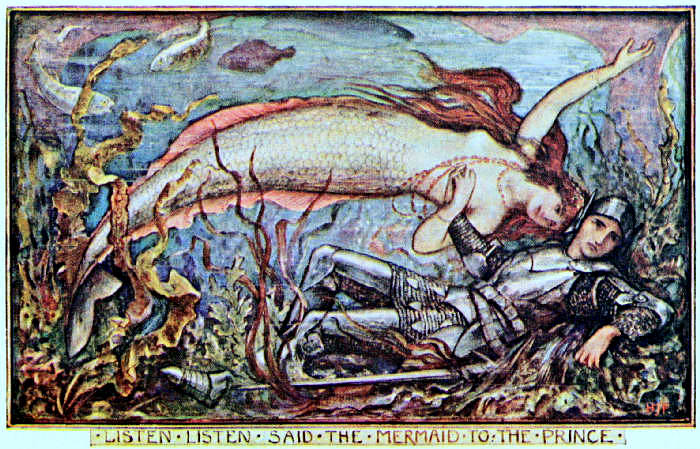 “Mermaid” by H.J. Ford, published in “The Brown Fairy Book” by Andrew Lang. (Public Domain)
‘Merlin and the Gleam’
Another poem about longing is Tennyson’s “Merlin and the Gleam.” Written in his old age, this poem stands as a kind of poetic testament, a summing up, in Tennyson’s own view, his poetic work and what he was trying to do with it.
The poem is addressed to a “Young Mariner” from the perspective of Merlin, the great enchanter. The speaker, who, I think we can assume, is mostly Tennyson himself, says “I am Merlin/ And I am dying/ I am Merlin/ Who follow The Gleam.”
This isn’t the first time a great poet associates his artistic powers with the magical powers of a mythical figure. Shakespeare arguably did the same with the enchanter Prospero in “The Tempest,” an old man who surrenders his “potent art” in a speech widely considered to be Shakespeare’s own farewell to the stage.
Tennyson chose Merlin as his artistic alter ego, and that choice alludes to his extensive poetic work based on the Arthurian legends.
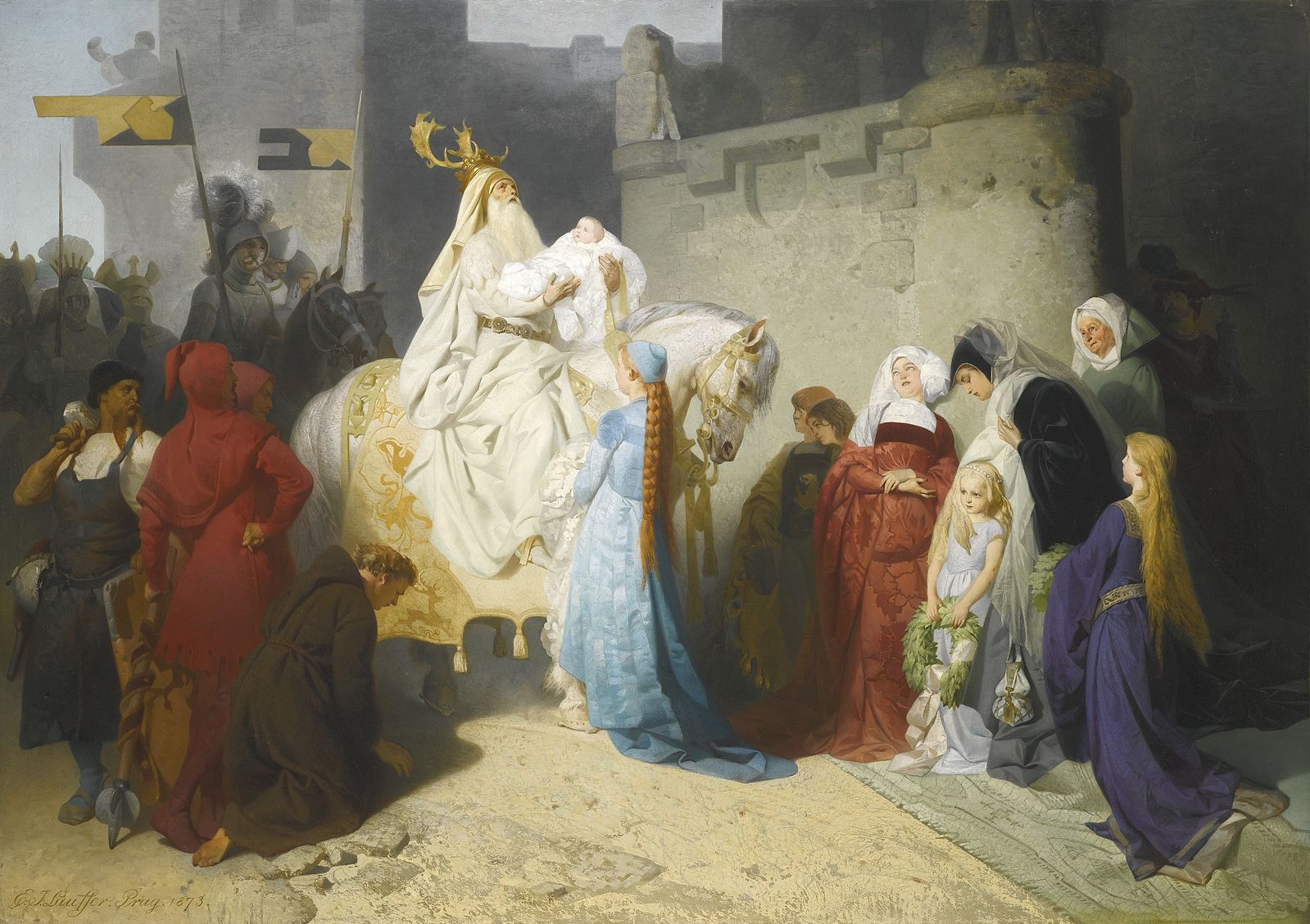 “Merlin Presenting the Future King Arthur,” before 1909, by Emil Johann Lauffer. (Public Domain)
In this poem, Merlin/The Poet feels a longing and pull to pursue a certain mysterious “Gleam” found in the world. In the poem’s second stanza, Tennyson reflects on his artistic past and the development of this longing after the Gleam:
Mighty the Wizard
Who found me at sunrise
Sleeping, and woke me
And learn’d me Magic!
Great the Master,
And sweet the Magic,
When over the valley,
In early summers,
Over the mountain,
On human faces,
And all around me,
Moving to melody,
Floated The Gleam.
The “Mighty Wizard” who taught the magic of poetry to Tennyson is quite likely God himself, based on a second reference to him later in the eighth stanza. God woke in the young poet’s heart an awareness of the otherworldly glimmer and gleam that sheds its light over all things: valleys, mountains, human faces, all of which become part of a cosmic music. That is the poet’s gift (and the burden): to see that light that others cannot see and to hear the music they cannot hear.
Tennyson embraced that calling fully, however painful it was. The result was a deposit of beautiful and powerful poems that show us, too, how to see “The Gleam.”
What arts and culture topics would you like us to cover? Please email ideas or feedback to features@epochtimes.nyc