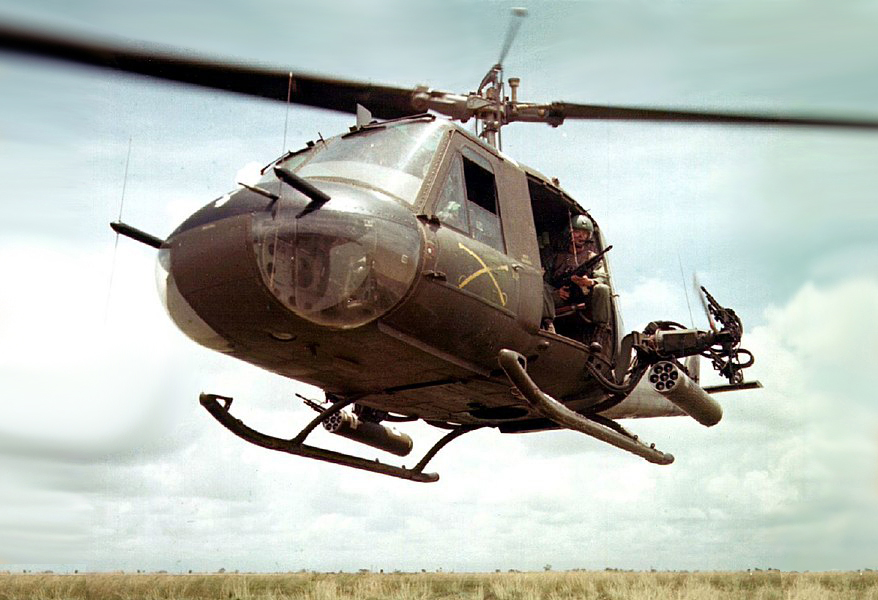
On May 2, 1968, the Special Forces camp in Loc Ninh, a small town in South Vietnam bordering Cambodia, received a frantic radio call for help from a 12-man reconnaissance team under heavy attack by North Vietnamese regulars. Hearing the radio exchange, Staff Sergeant Raul “Roy” Benavidez grabbed his medical kit, and, armed only with a knife, climbed aboard a helicopter and took off to assist his friends.
Forced by ground fire to land some 75 yards from the team, Benavidez dropped from the gunship and ran toward the beleaguered team. Though shot in the leg and wounded by shrapnel from a rocket-propelled grenade, he quickly organized the survivors into a rough perimeter and signaled the helicopters to begin the extraction of some of the men. During this part of the operation, as he helped the men aboard, he was shot again, this time in the stomach, while another exploding grenade flung shrapnel into his back.
As the helicopter lifted off with its cargo of wounded men, the pilot was killed by gunfire, and the aircraft plunged to the ground. From the crash, Benavidez rescued the battered men and organized them into defensive positions, all the while under heavy fire from an enemy that they later learned outnumbered them 100 to one.
As his Medal of Honor citation later stated: “Under increasing enemy automatic-weapons and grenade fire, he moved around the perimeter distributing water and ammunition to his weary men, reinstilling in them a will to live and fight.”
Hard Times and Army Life
The hammer blows that forged Roy Benavidez began in boyhood. Born in 1935 to a poor Texas sharecropper and his Yaqui Indian wife, by the age of 7 Benavidez had lost first his father and then his mother to tuberculosis. At his mother’s funeral, an uncle arrived and announced that he and his wife were adopting Benavidez and his younger brother.
The two boys joined their uncle, aunt, grandfather, and eight cousins. Though jammed into a small home, the family was poor but happy. Everyone worked. From that time on, Benavidez attended school, worked odd jobs, and pitched in on the sharecropping during the summers. He was a tough kid, known as a fighter at school, so much so that his uncle eventually got him into a gym and boxing for a time.
During this time, Benavidez became enamored with the Army, which he’d seen in the newsreels shown during the rare movies he could afford to see. Another Texas boy, Audie Murphy, who had battled the Germans and returned home as the most decorated American soldier of World War II, was a particular hero.
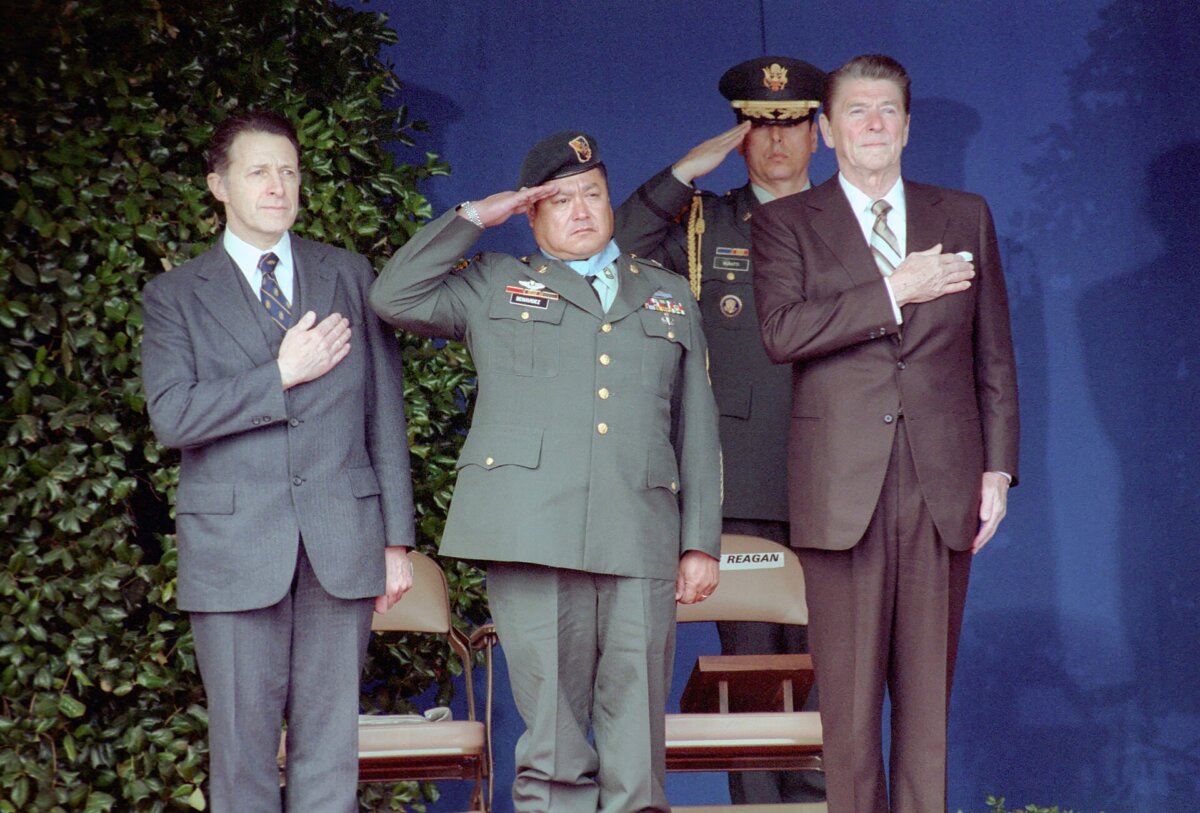
 On Feb. 24, 1981, President Ronald Reagan (R) presents the Medal of Honor to Sgt. Roy Benavidez at the Pentagon. (Public Domain)
After dropping out of school at 15, two years later Benavidez enlisted in the National Guard. In another two years, he entered the Army as an active-duty soldier. At Fort Bragg, he joined the 82nd Airborne and then became a Green Beret, trained in medicine, linguistics, and heavy weapons. He married and served in post-war Korea and in Europe. His story seemed to fit the classic tale of the poor kid who lifts himself out of poverty through military service.
Deployed to Vietnam as an adviser in 1965, Benavidez was on patrol when he stepped on a land mine. The next thing he remembered was awakening in the Clark Air Force Base hospital in the Philippines, paralyzed from the waist down. Shipped then to Fort Sam Houston in Texas, the doctors in that hospital informed him that he would likely never walk again and would be discharged from the Army following treatment.
Crawling to the Finish Line
In this hospital, Benavidez displayed the guts and grit that he would bring to that battlefield three years later.
After realizing the provided physical therapy regimen was aimed at helping him use a wheelchair, Benavidez invented his own form of PT. Night after night, when the ward of other wounded men, many of them amputees, was quiet, he would roll from his bed onto the floor, drag himself on his hands and elbows to a nearby nightstand or wall, and in exercises that he later said often left him in tears, went from wiggling his toes to pushing himself up the wall to strengthen his legs.
His discipline and training helped carry him through this ordeal. “In my Special Forces training … I remembered that my leader would tell me, ‘Faith, determination, and a positive attitude. A positive attitude will carry you further than ability. You can do it, Benavidez. You can do it.’”
Occasionally, the medical staff would catch him at these exercises, rebuke him, and return him to bed, but Benavidez refused to quit. Once the other patients understood his plan, they softly cheered him on while creating diversions so his exercises would go undetected. When after several months the doctor arrived with the discharge papers, Benavidez responded by pushing himself off the bed, standing up, taking a step toward the doctor, and begging to remain in the Army. The doctor said, “Benavidez, if you walk out of this room, I’ll tear these papers up.” Benavidez walked out of the room, and back into the Army.
While working a desk job, Benavidez continued exercising at home, increasing his capacity. Over time he went from walking daily to jogging short distances, then running up to 10 miles at a clip. On regaining his strength, he was slated to go to Central America but wanted more than anything to return to Vietnam. By pulling strings, he managed to wangle that assignment.
That was how Benavidez found himself in the battle for his life and the lives of others in what he later described as “six hours in hell.”
Above and Beyond
As we rejoin Sergeant Benavidez following the crash of the helicopter, let’s pick up the story with this passage from his Medal of Honor citation. These citations are typically worded in cool, unemotional military terms, but in Benavidez’s case, even that distancing fails to exclude the drama of his courage:
“Facing a buildup of enemy opposition with a beleaguered team, Sergeant Benavidez mustered his strength, began calling in tactical air strikes and directed the fire from supporting gunships to suppress the enemy’s fire and so permitted another extraction attempt. He was wounded again in his thigh by small-arms fire while administering first aid to a wounded team member just before another extraction helicopter was able to land. His indomitable spirit kept him going as he began to ferry his comrades to the craft. On his second trip with the wounded, he was clubbed from additional wounds to his head and arms before killing his adversary. He then continued under devastating fire to carry the wounded to the helicopter. Upon reaching the aircraft, he spotted and killed two enemy soldiers who were rushing the craft from an angle that prevented the aircraft door-gunner from firing upon them. With little strength remaining, he made one last trip to the perimeter to ensure that all classified material had been collected or destroyed and to bring in the remaining wounded. Only then, in extremely serious condition from numerous wounds and loss of blood, did he allow himself to be pulled into the extraction aircraft.”
The citation doesn’t mention that the man who clubbed Benavidez also bayoneted him in the arm, or that Benavidez killed his assailant with a knife, or that when he boarded the helicopter he was “holding [his] intestines with [his] hands.” Nor does it note that a doctor, convinced that Benavidez was dead from his 37 gunshot wounds, gashes, shrapnel punctures, and burns, bent over for one final check before having him put into a body bag when Benavidez, unable to speak, move, or open his blood-encrusted eyes, spat into the man’s face as a sign of life. That, he later declared, was the “luckiest shot I ever made in my life.”
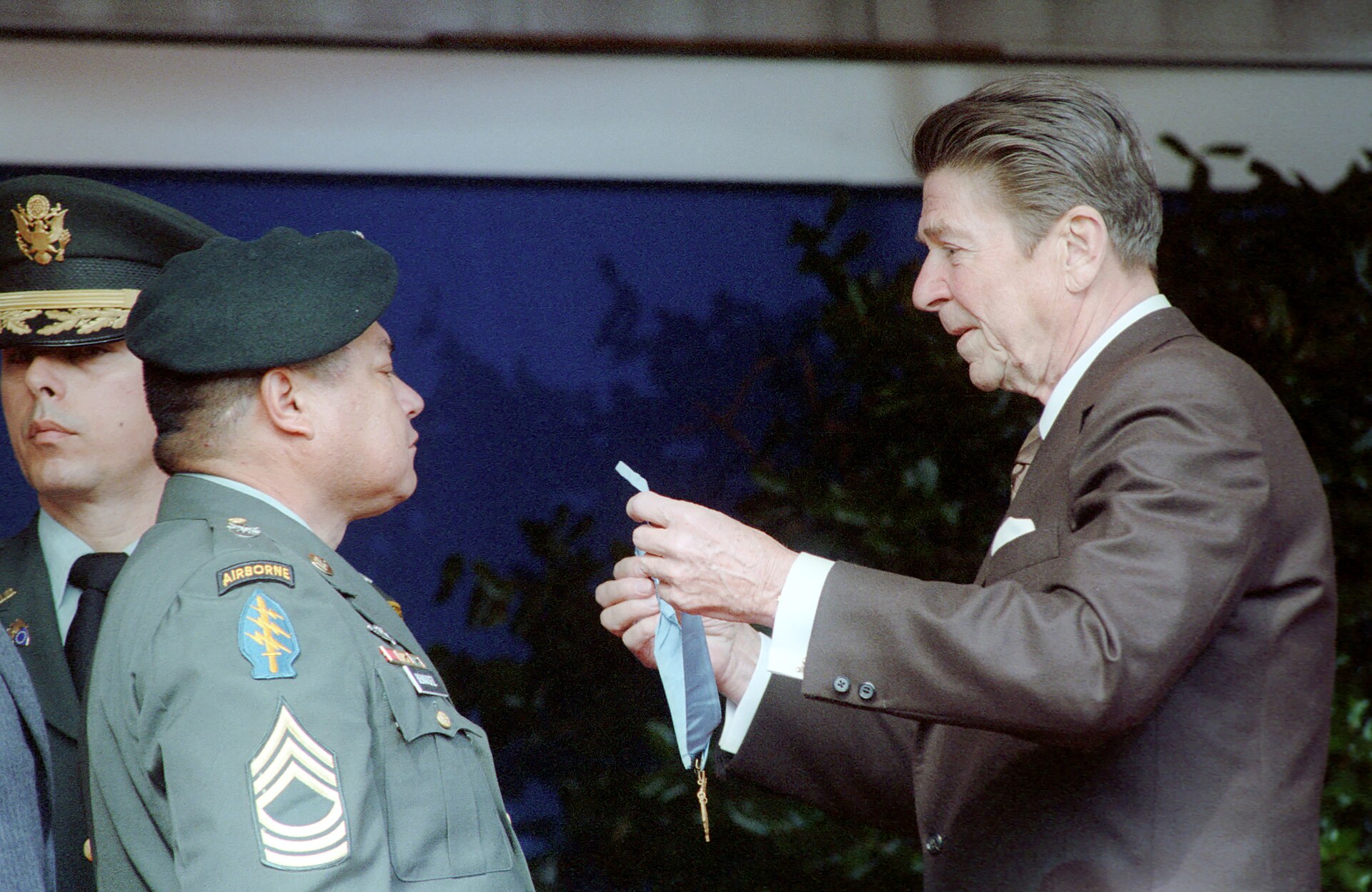
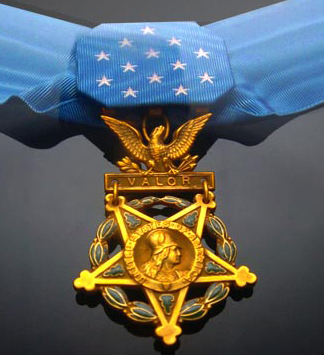 Staff Sgt. Benavidez was awarded the Medal of Honor by President Ronald Reagan. (Public Domain)
Aftermath
Benavidez spent the following year in several hospitals recovering from his wounds. He was awarded the Distinguished Service and the Medal of Honor, and retired from service in 1976. Afterward, he wrote several accounts of his life and of the battle that had nearly ended it, became a popular speaker, mentored young people, and was a fierce advocate for veterans’ health care. He died in 1998 and was buried in San Antonio’s Fort Sam Houston National Cemetery.
During the Medal of Honor ceremony, President Ronald Reagan summed up the life of Roy Benavidez: “If the story of his heroism were a movie script, you would not believe it.”
What arts and culture topics would you like us to cover? Please email ideas or feedback to features@epochtimes.nyc.