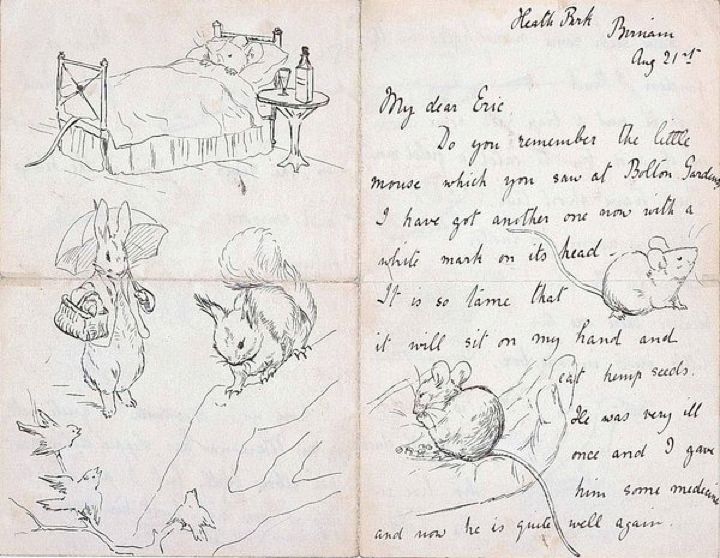
“Victorians were in love with natural history,” wrote Barbara T. Gates in the introduction to an issue of Victorian Literature and Culture. The Victorian age was a time of booming scientific exploration and experimentation, yet this scientific interest didn’t by any means wipe out a romantic and spiritual fascination with nature or its aesthetic appreciation.
These somewhat opposed tendencies—toward the systematic and rational on the one hand and the intuitive and aesthetic on the other—met and merged during the Victorian and Edwardian eras. As Gates put it, what the intellectual and artistic work of the day did “was to build and reinforce powerful bridges: between science and art … between romanticism, with its expansive verbal tribute to nature, and Victorianism, with its adoration of concrete, detailed description.”
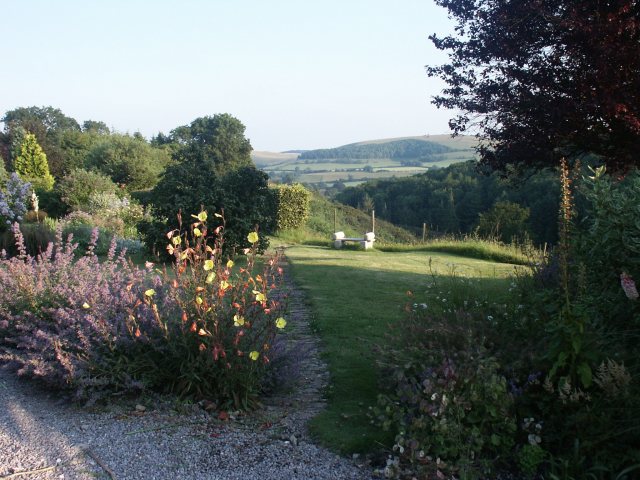 A country garden in Shaftesbury, England. The simple beauty of nature is inspiring in many ways. (Katy Walters/CC BY-SA 2.0)
The Victorian devotion to nature manifested in both writing and art. E.D.H. Johnson called the period from 1770 to 1880 the “golden age of natural history writing,” and this golden age continued to influence Western culture into the Edwardian period (1901–1910) and beyond. As Gates wrote:
“Victorian natural history describes an overwhelming drive to collect, witness, and catalog nature that occurred during the reign of Queen Victoria, although, again, I would prefer to expand its date to encompass what we now call the long nineteenth century.”
During this timeframe, the study and documentation of nature became a popular activity among people of all ages and classes, both men and women. Gates wrote:
“Natural history offered fields open to amateur and professional alike, and those fields were populated by both throughout their history. … It certainly had an aesthetic as well as a scientific component; it was concerned both with leafy facts and the beauty of leaves.”
Two Household Names
As is often the case with love affairs, Victorians’ infatuation with nature inspired a good deal of beautiful art. In varying styles and applications, artists working at this time exemplified the age’s devotion to classifying, studying, and portraying the bountiful marvels of the natural world.
As early as the beginning of the 19th century, the renowned artist and ornithologist John James Audubon (1785–1851) wandered the wilds in hope of identifying and depicting all the birds of North America. The scientific rigor of his work combined with high-caliber artwork foreshadowed the qualities of naturalism in the Victorian era.
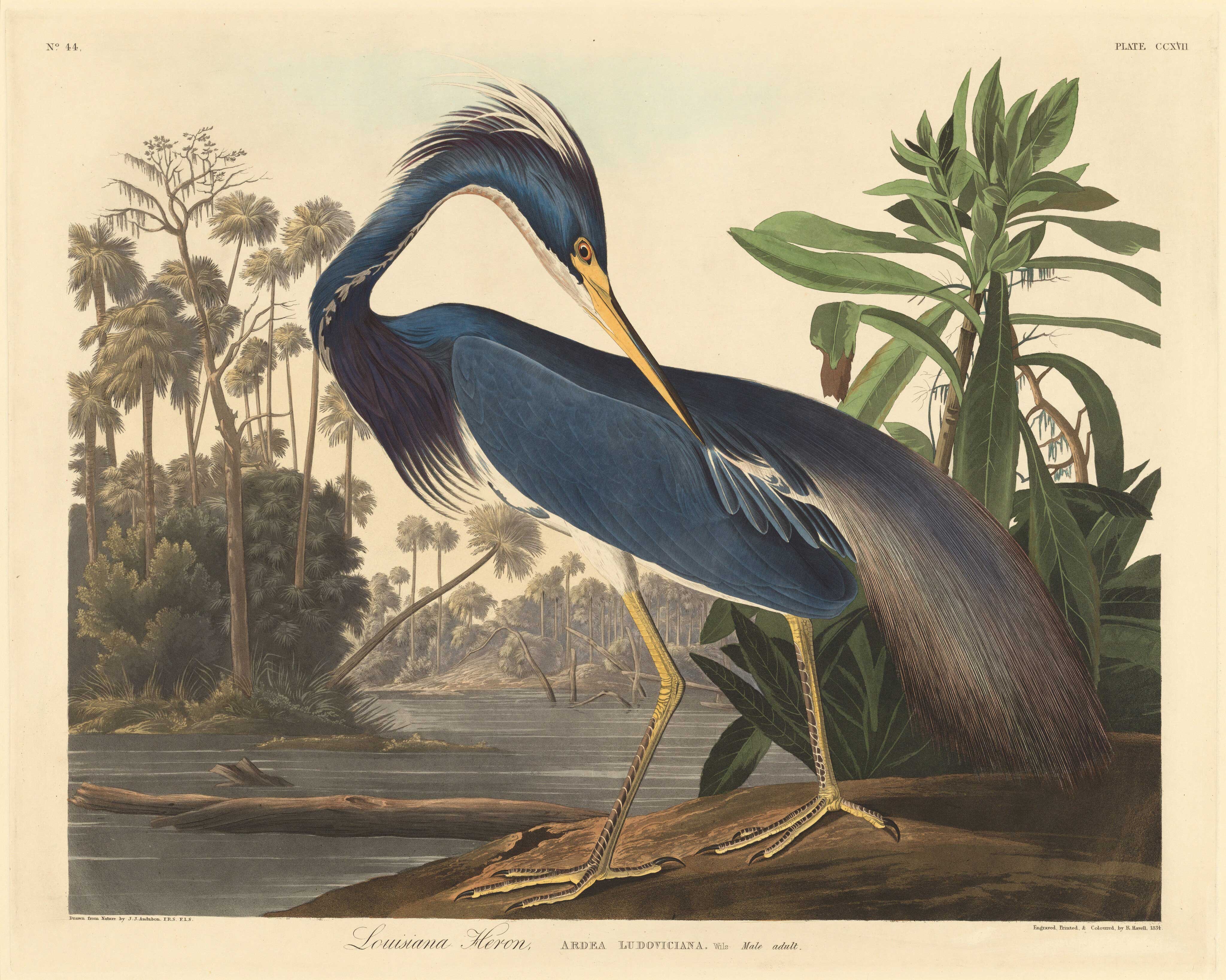 The great blue heron on Plate 211 of “Birds of America” by Audubon, 1827–1838. (Public Domain)
Audubon’s paintings of birds seem to gleam with an otherworldly sheen, a dreamlike quality, while retaining a scrupulous fidelity to detail and correctness of the subject matter as it exists in its everyday surroundings. They are both realistic and romantic. His magnum opus, “The Birds of America,” remains the standard against which bird artists are measured even today.
If Audubon kept his eye steadily on the sky and its inhabitants, another household name—Beatrix Potter (1866–1943)—kept hers trained on the ground and the plants and fungi that blanketed it. Though best known for her enchanting children’s books featuring anthropomorphized animals, she was also a talented botanist and mycologist. She created intricate, detailed illustrations of fungi, and she wrote a paper in 1897, “On the germination of the spores of Agaricineae.” As the Linnean Society of London wrote: “Potter’s strengths lay in her meticulous observation and artistic prowess … she was a consummate illustrator who closely observed and faithfully recorded what she saw.”
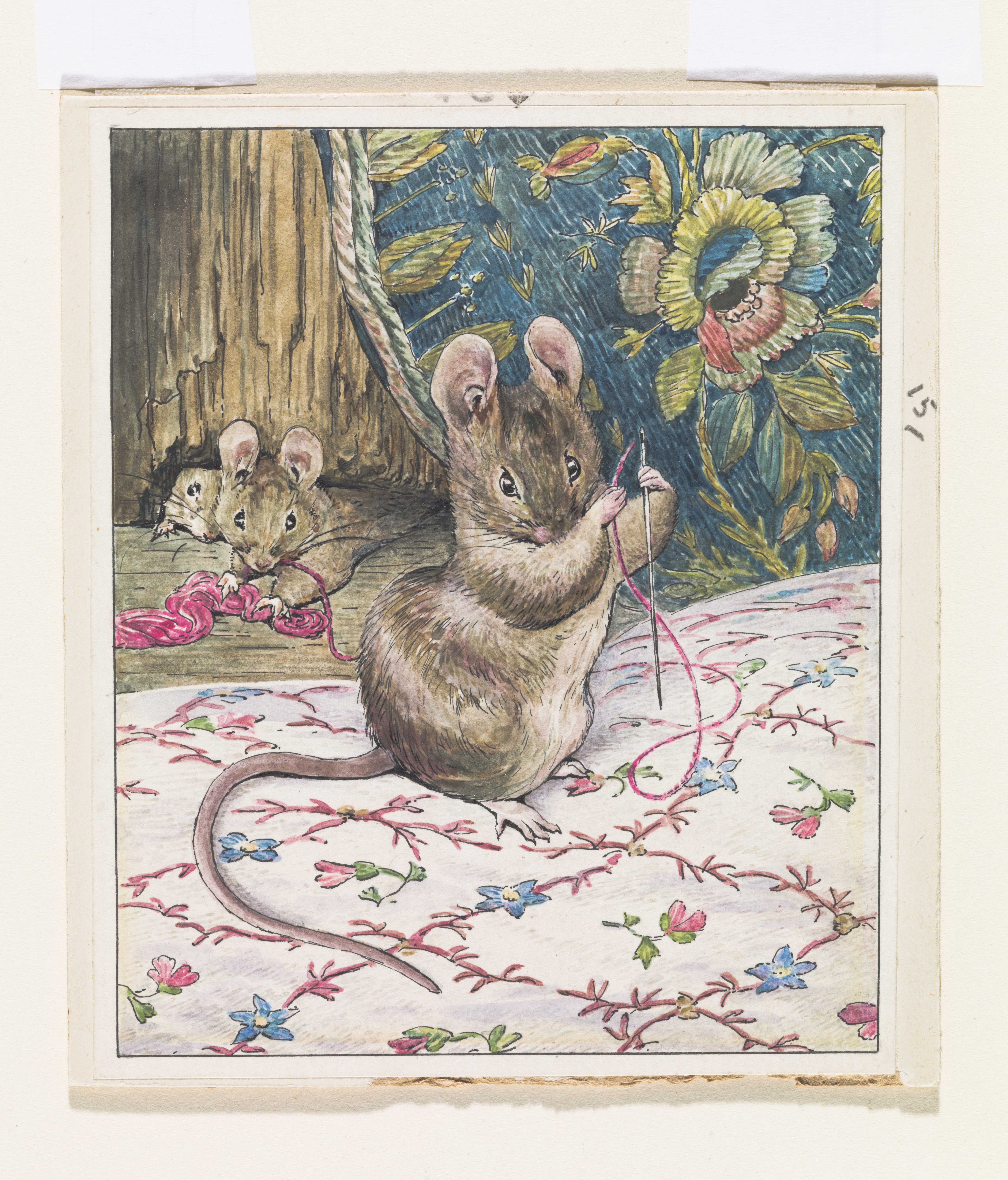 “The Mice at Work Threading the Needle,” 1902, by Beatrix Potter. Illustration for “The Tailor of Gloucester.” Watercolor, ink, and gouache on paper. (Tate)
The enormous success of her children’s books can be traced back, in part, to their grounding in her firsthand observations. From her childhood onward, Potter had firsthand experience of real plants and animals and a lot of practice in faithfully rendering them. This background meant that when she added a dash of fancy and fantasy to her children’s book illustrations, such as the clothing and little houses of her animal characters, it was counterbalanced by a weight of authenticity.
Potter’s careful observation of nature was echoed in the art of Edith Holden (1871–1920). Her whimsical, nature-inspired children’s literature found an heiress in Cicely Mary Barker (1895–1973).
Lesser-Known Contributors
Holden is best known for her posthumously published “Nature Notes for 1906,” published as “The Country Diary of an Edwardian Lady,” a beautifully written and illustrated journal recording Holden’s inspections of the natural world around her in the British countryside. It includes observational notes, snippets of poetry, calligraphy, and detailed, rich watercolor illustrations of specimens and landscapes, labeled with their common and scientific names.
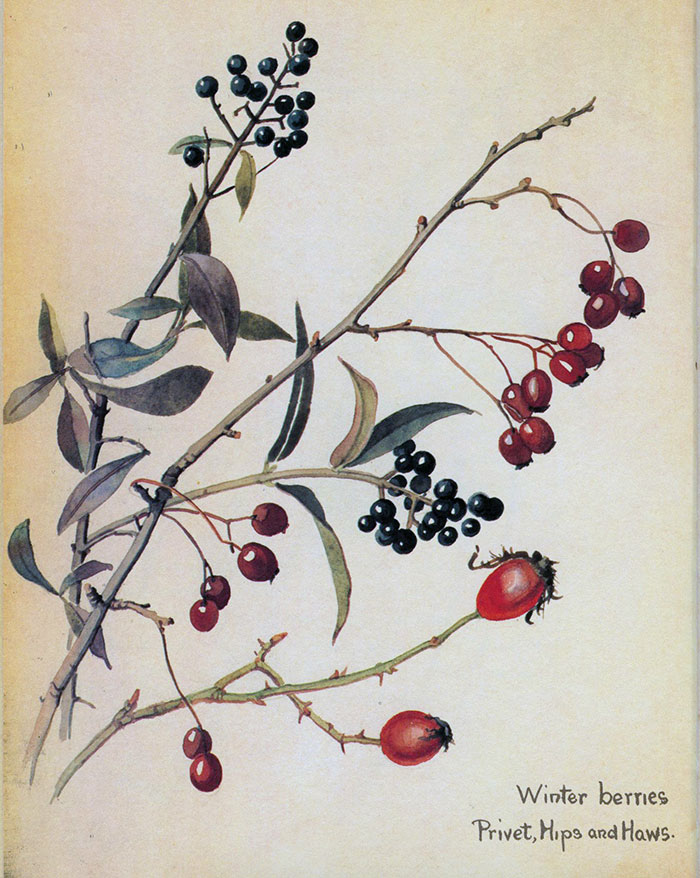 “Winter Berries: Privet, Hips, and Haws,” 1906, by Edith Holden. (Public Domain)
This picturesque work reveals a mind in sync with the natural world, the English literary tradition, the visual arts, and the interconnection of all three. It wasn’t uncommon for Victorian and Edwardian ladies to keep similar nature journals, although Holden’s professional training as an artist at the Birmingham School of Art and the Municipal School of Art made hers a remarkable example. Her journal sold well when it was first discovered and published in the 1970s.
Barker’s work is far less scientifically accurate, though it clearly draws inspiration from the naturalist-artists of the prior century. She became a life member of the Croydon Art Society when just 16 years old, and she soon devoted herself to a career as a painter, illustrating greeting cards, magazines, and books. In 1923, she sold a collection of fairy-focused images and verses to Blackie & Son, “Flower Fairies of the Spring,” which was followed by three more books that completed the four seasons. The delicate illustrations, featuring fanciful fairies that were often tied to real plants, are reminiscent of Potter and the broader naturalist-artist tradition. The books are faux nature journals or field guides.
Though she went in a fantastical direction with her fairy books, Barker drew inspiration from the Pre-Raphaelite painters, who held to the rule of “truth to nature” articulated by writer, lecturer, painter, and art critic John Ruskin.
True to Nature
Ruskin believed that a closer adherence to the forms found in nature would lead to higher truths in the moral, spiritual, and philosophical realms. The most prominent members of the Pre-Raphaelite movement included Dante Gabriel Rossetti, William Holman Hunt, and John Everett Millais.
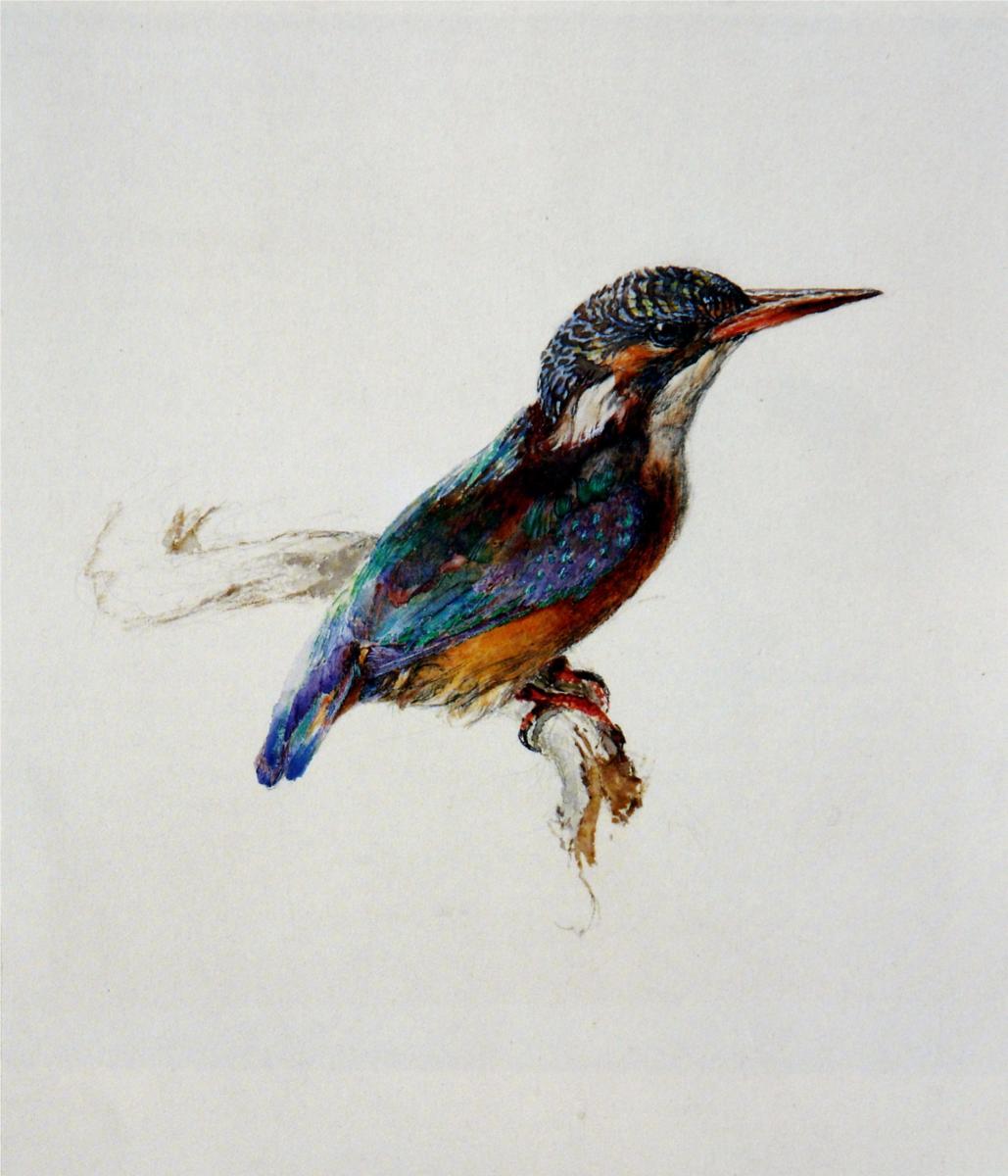 “Kingfisher,” 1871, by John Ruskin. Watercolor sketch. Ashmolean Museum, UK. (Public Domain)
This movement—particularly its landscape paintings—again emphasized the way that the natural world informed Victorian art. Because the Pre-Raphaelites were committed to painting precisely what was right in front of them in nature, they engaged in painting “en plein air.” As Dominic Witek wrote for Artsper Magazine:
“The Pre-Rapaelites, and Ruskin, disagreed with the idea that nature needed to be changed. To them, nature was a gift from God … Millais went to nature and tried to remain as true to what was in front of him, as he possibly could.”
Victorian nature-inspired work wasn’t limited to the canvas or the sketchpad. Martha Maxwell was a naturalist and taxidermist from the Victorian-era United States. Some of her taxidermy specimens were eventually installed in the Smithsonian. Indeed, the art of taxidermy originated during this period in the work of John Hancock. Hancock exhibited a display called “Struggle With the Quarry.” In it, a falcon attacked a heron, which was holding an eel. The lifelike display attracted the interest of exhibition visitors, scientists, and even Queen Victoria herself. Victorians started to bring taxidermied animals into their homes. It put the natural world within reach in an unprecedented way.
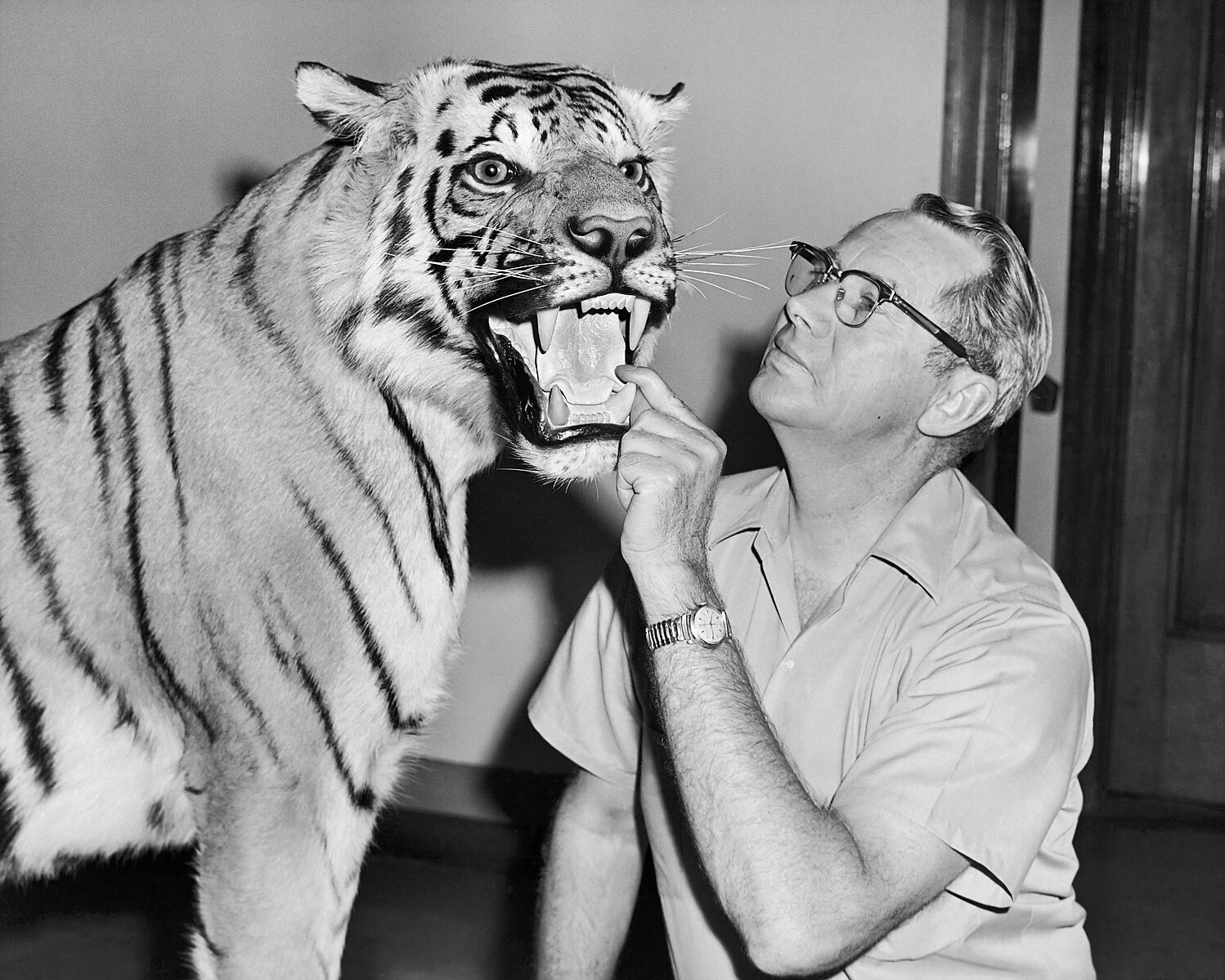 Dr. Wilmer W. Tanner, zoology professor, poses with a tiger trophy given to the BYU Life Sciences Museum in 1973. Gelatin silver, 7 1/2 inches by 9 2/5 inches. Provo, Utah. (Smalljim/CC BY-SA 3.0)
Each of these artists and their work display a lovely harmony between science and nature, reason and imagination, which seems to have characterized the Victorian mind. In true Aristotelian fashion, these Victorian artists began with their senses by carefully observing the world around them. In it, they found deep wells of meaning—both spiritual and scientific—which flowed out in exquisite works of art.
Moreover, the popularity of such nature study and depiction speaks to a culture that sought to live close to the natural world. The Victorians loved to drink from a pure elixir of nature that would stimulate both mind and emotions. The work of the Victorian naturalist-artists teaches us about a mindset that rests easily in the wonders of the everyday. It finds endless fascination and joy in a tiny seashell or mushroom and in a lofty mountain peak—something we might do well to recover in our era.
What arts and culture topics would you like us to cover? Please email ideas or feedback to features@epochtimes.nyc