Long before the first “selfie” ever appeared, there was self-portraiture. It reaches back centuries, shaped by the same impulse that drives today’s digital snapshots: to document presence, highlight their profession, and explore one’s place in the world.
That motivation has remained remarkably steady over time. From Renaissance workshops to baroque studios and beyond, artists have turned to their own likeness as both subject and study. Self-portraiture, in all its forms, remains a vital global practice of artistic self-exploration, revealing both the makers and the historical moment in which they lived.
Albrecht Dürer
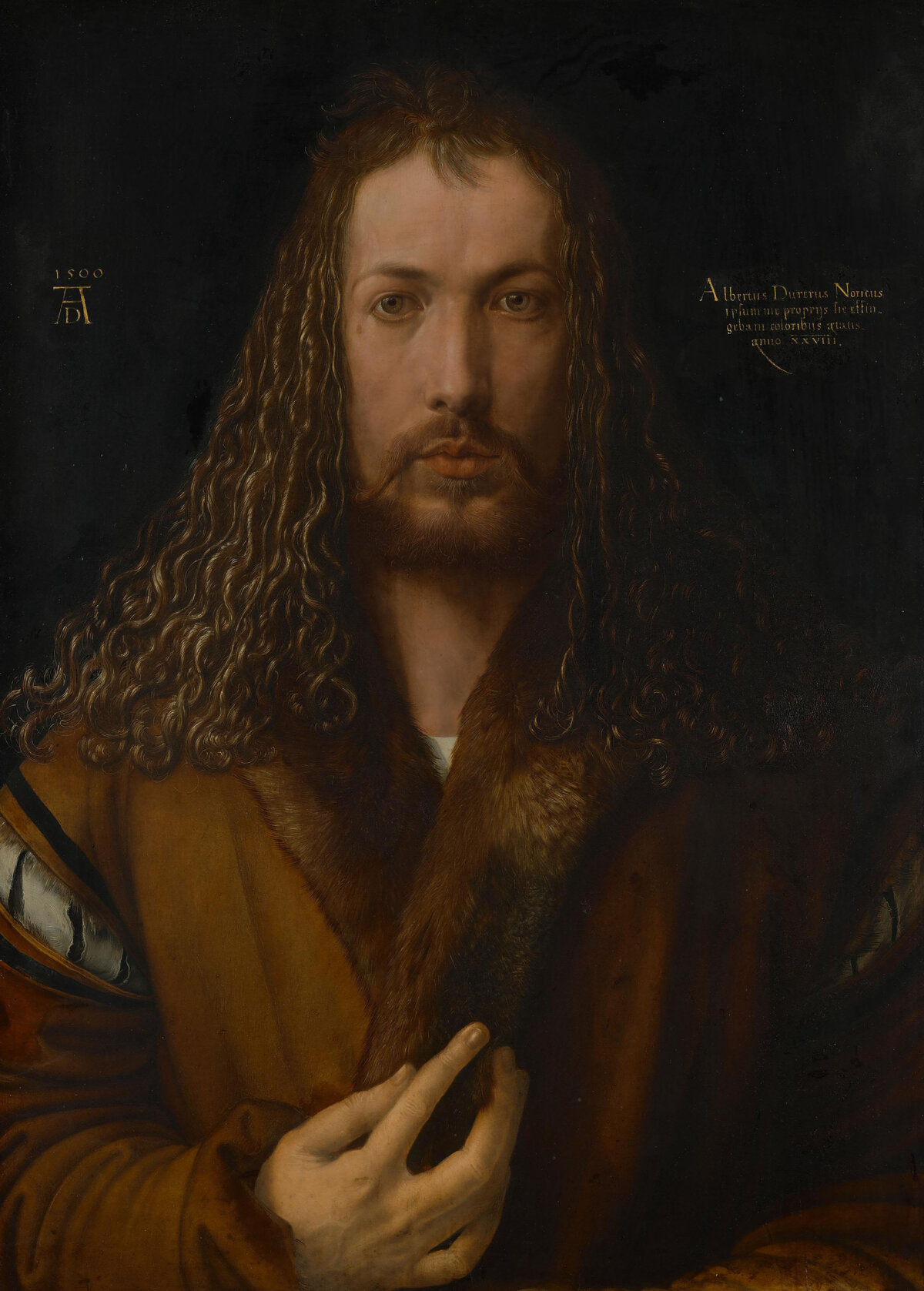
Initially trained as a goldsmith, Albrecht Dürer (1471–1528) emerged as a leading painter, printmaker, and theorist. His wide-ranging body of work includes engravings, altarpieces, portraits, watercolors, and books. Dürer cultivated connections with leading Italian artists of his time, including Raphael, Giovanni Bellini, and Leonardo da Vinci, reflecting his active engagement with key Renaissance ideas.
In this strikingly direct self-portrait (1500), he presents himself facing the viewer head-on, clad in a fur-lined coat, a composition that conveys both authority and self-possession. Through this image, Dürer asserts not only his artistic and intellectual identity but also his elevated social standing, securing his place as one of the most significant figures of the Northern Renaissance.
Leonardo da Vinci
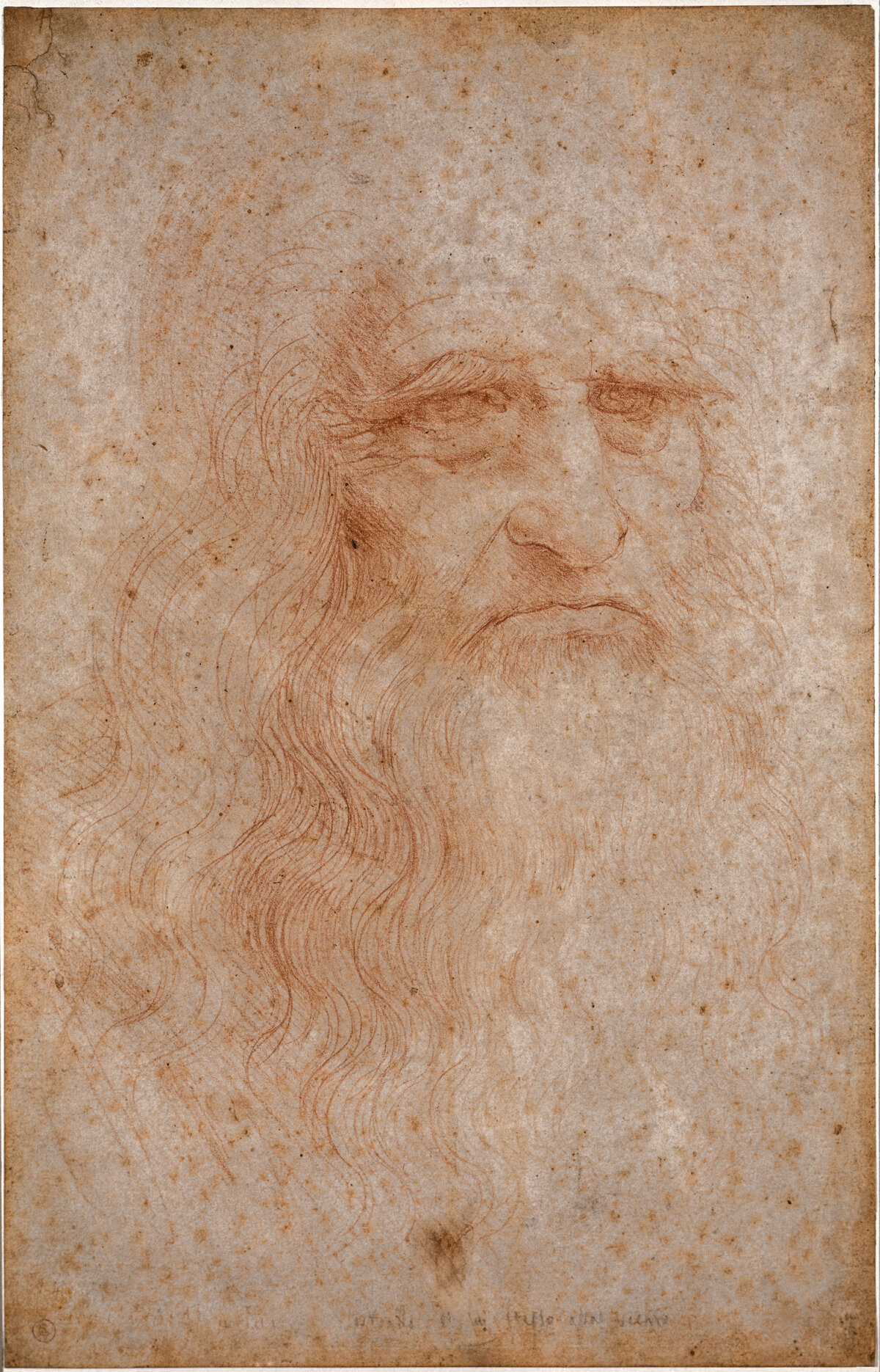
Leonardo da Vinci (1452–1519), often regarded as the Renaissance ideal of the “universal man,” left an extraordinary body of nearly 2,500 drawings spanning art, anatomy, and engineering. Among them, a red chalk drawing has been widely accepted as his self-portrait. “Portrait of a Man in Red Chalk” depicts da Vinci as an elderly man with a long beard and deeply lined features. While attribution of a younger self-sketch remains uncertain, this image became his most recognized likeness, reflecting his deep study of human anatomy and facial expression.
Catharina van Hemessen
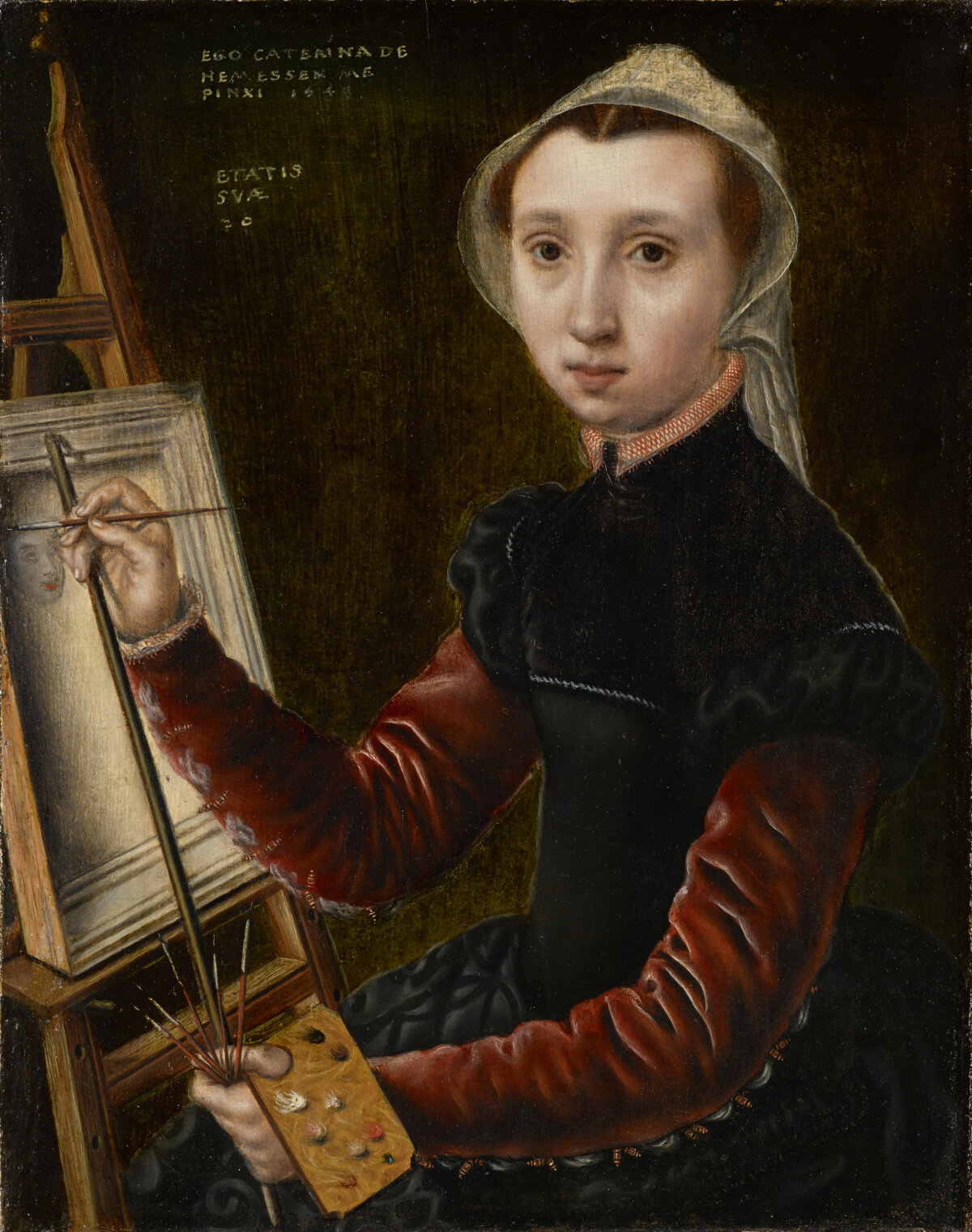
This small self-portrait shows the Flemish painter Catharina van Hemessen (1528–after 1567) holding a brush and palette while seated at her easel. Notably, her dark velvet dress would have been unsuitable for painting and was likely included to signal status. It was among the earliest paintings to depict an artist actively painting. Van Hemessen was recognized as a professional painter, often working for elite patrons in Northern Europe.
Sofonisba Anguissola
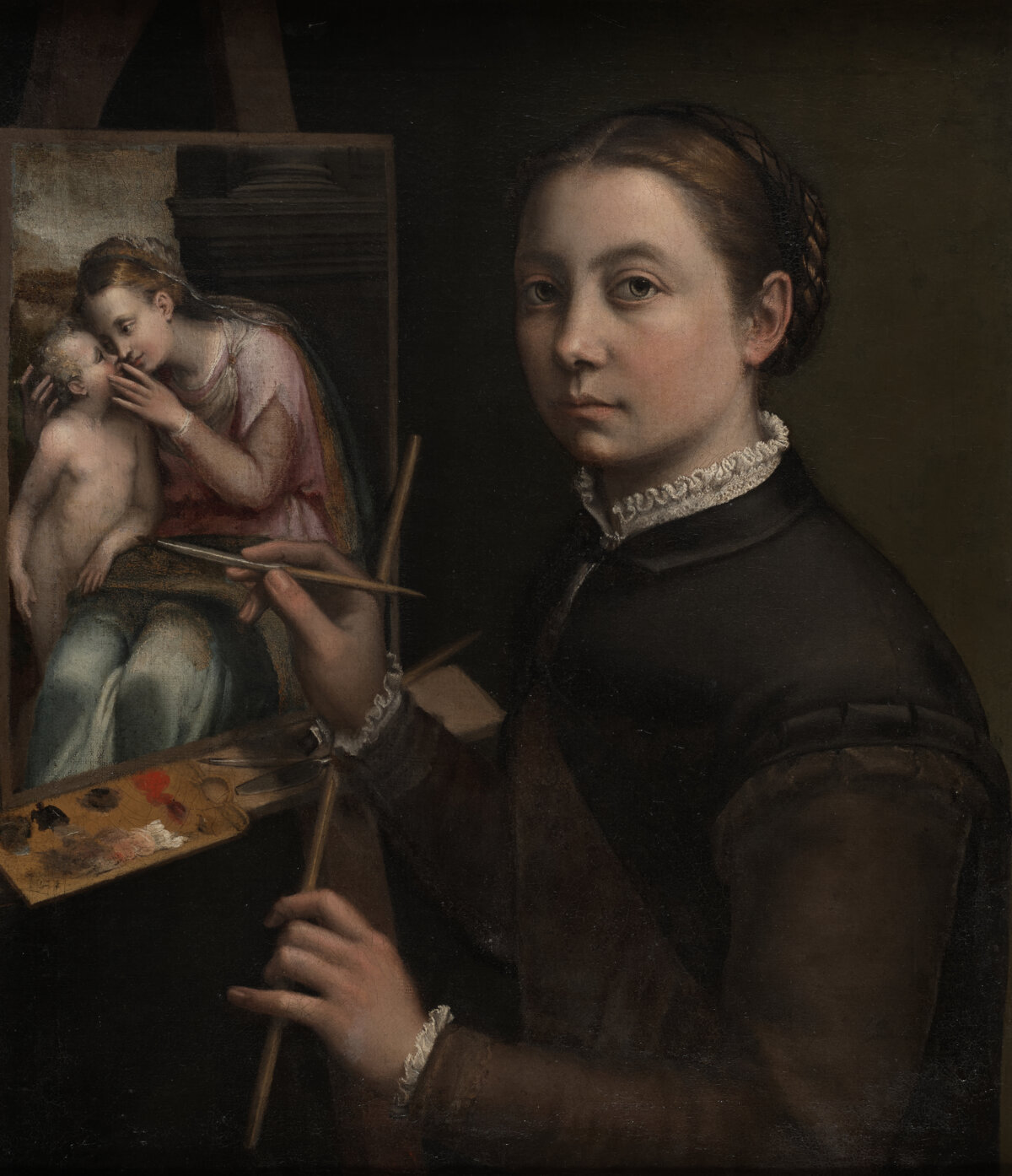
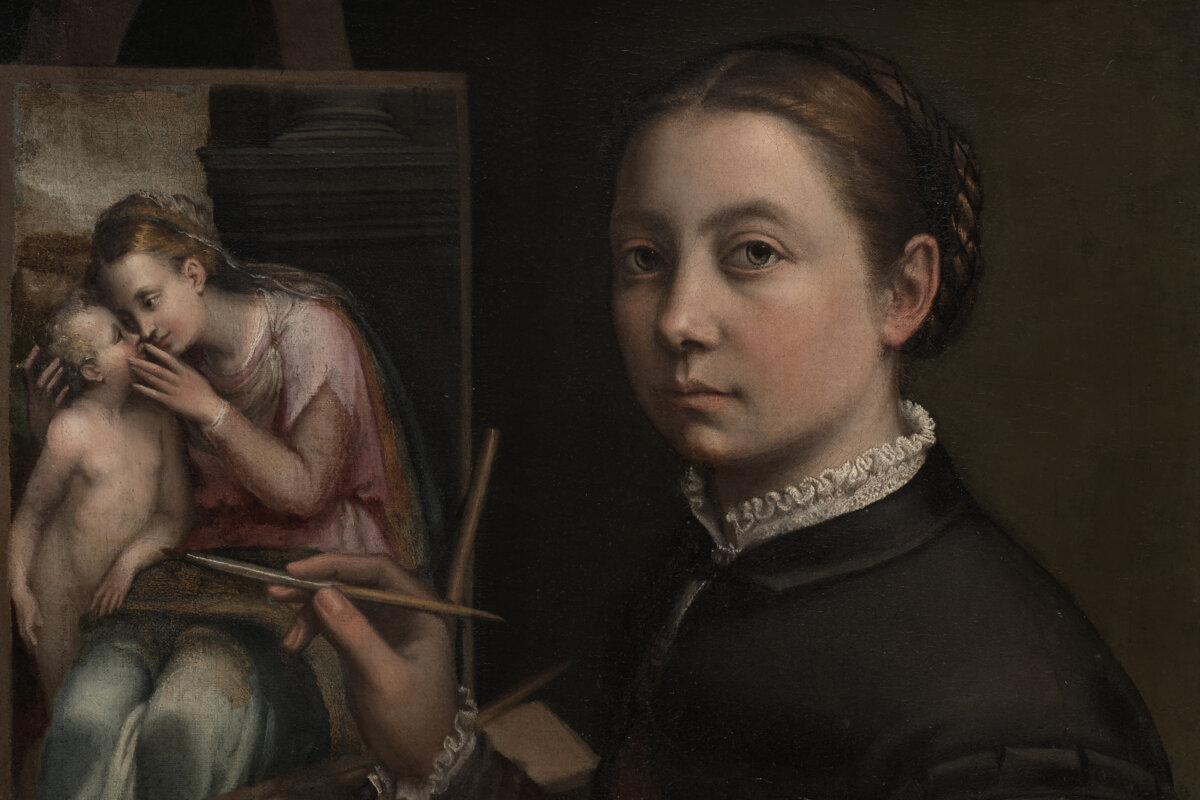
In 1554, at the age of 22, the Italian painter Sofonisba Anguissola was challenged by Michelangelo to create a work that could convincingly convey emotion. After demonstrating her skill, she entered into an informal period of mentorship with him that lasted about two years. Near the end of this time, she completed a self-portrait depicting herself at an easel (1556). Her carefully braided hair, refined attire, and steady gaze project both confidence and elegance, while the painting in progress affirms her identity and authority as an artist.
As her reputation grew, Anguissola was invited in 1559 to the court of Philip II of Spain in Madrid, where she painted portraits and served as an attendant to the infanta Isabella Clara Eugenia, as well as a lady-in-waiting to Elisabeth of Valois. She continued painting into old age and lived to the remarkable age of 93.
Rembrandt van Rijn

Rembrandt van Rijn (1606–1669) used self-portraiture as a visual record of his life, returning to his own image repeatedly over decades. His works traced a progression from confidence to introspection. In this example, his direct gaze and confident posture convey both presence and depth, creating a striking contrast with his plain workman’s attire. His mastery of chiaroscuro, often using a single, concentrated light source to model figures against deep shadow, gives his portraits a striking emotional intensity.
Sir Godfrey Kneller
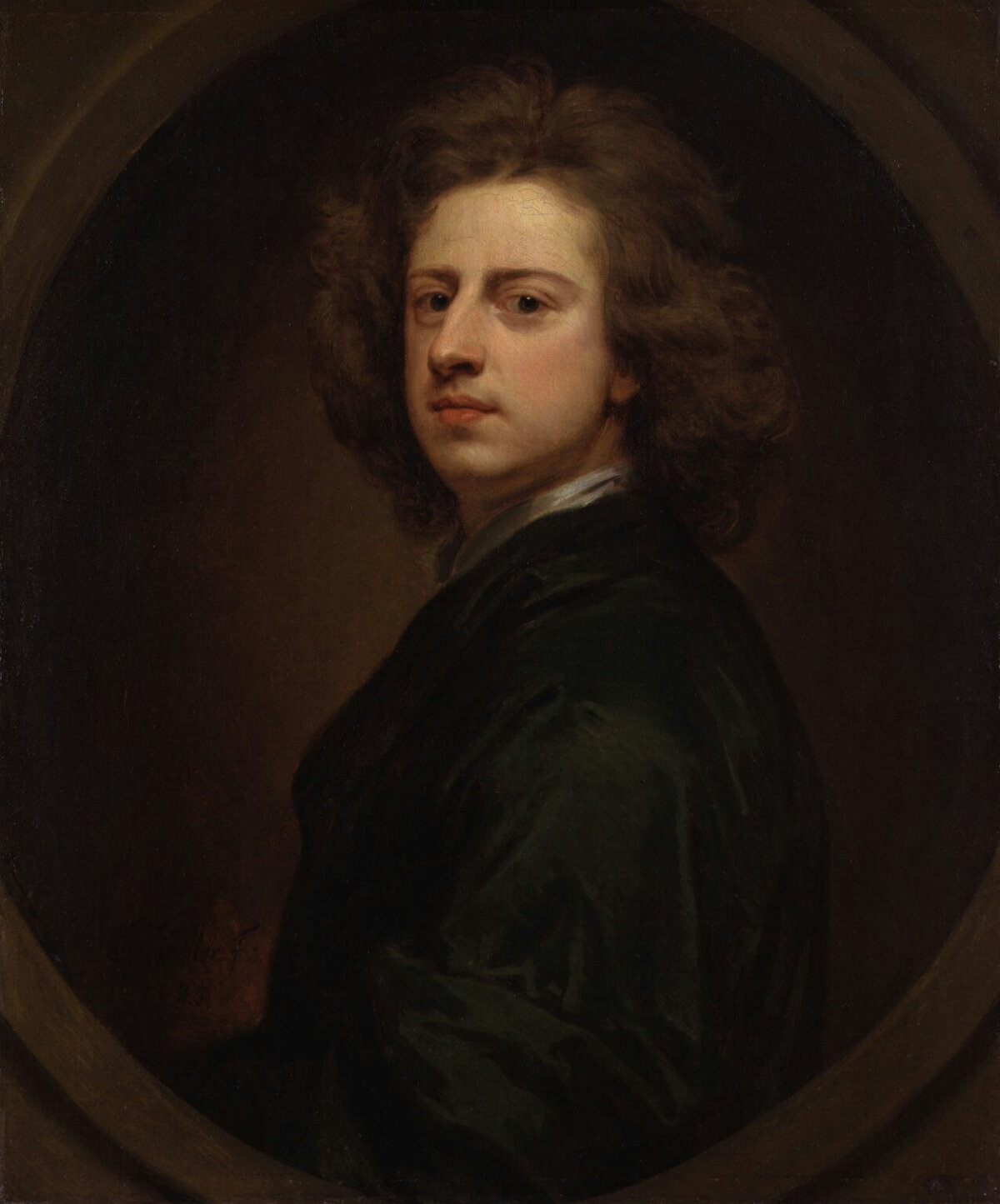
As a 17th-century court painter to English and British monarchs such as King Charles II and King George I, Sir Godfrey Kneller (1646–1723) played a central role in shaping aristocratic portraiture. In this self-portrait (1685), he presented himself with refinement and composure. Across several self-depictions produced over time, Kneller carefully cultivated his own likeness as a statement of status, portraying himself as he wished to be seen: a distinguished and accomplished artist.
Marie-Gabrielle Capet
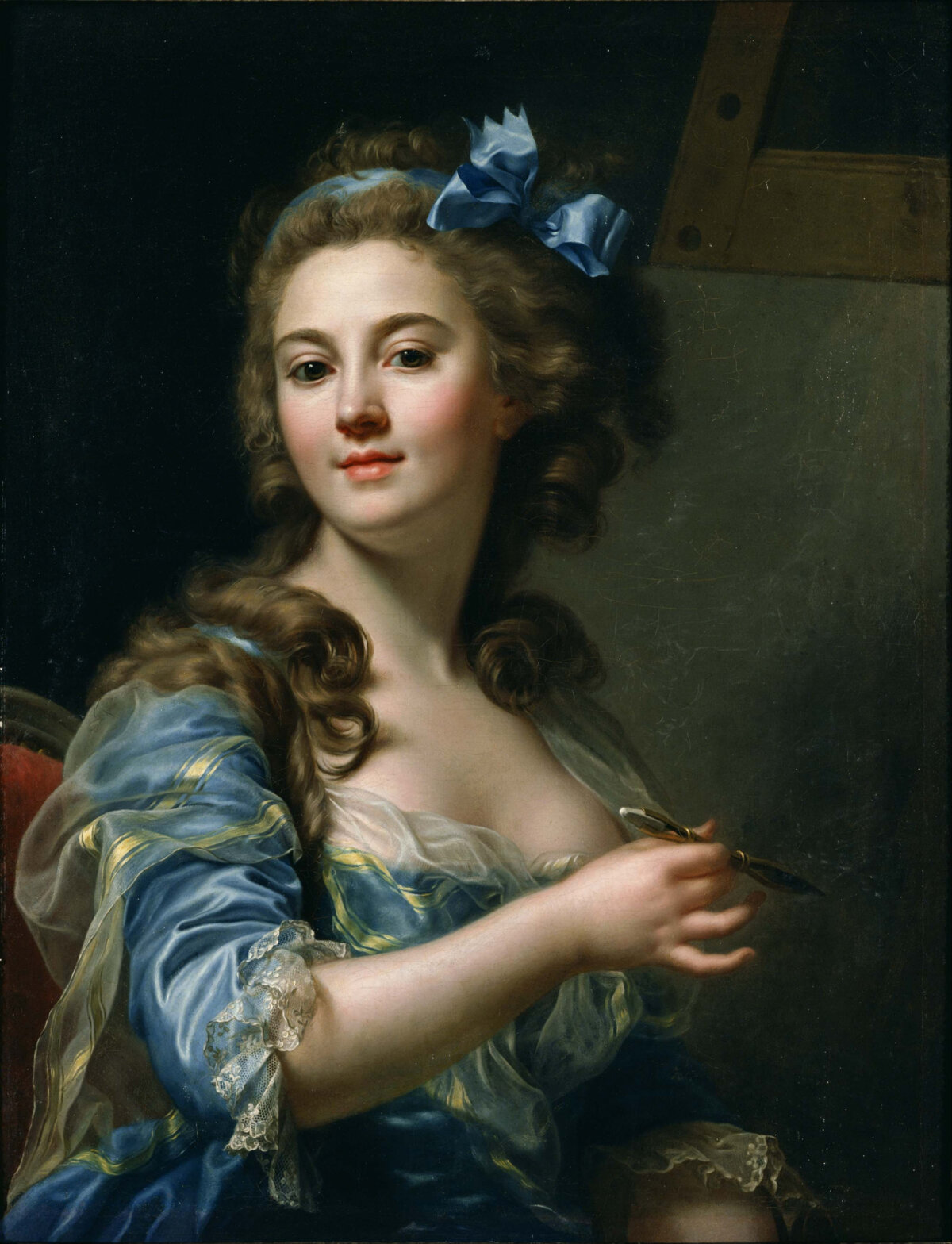
Marie-Gabrielle Capet (1761–1818) was a French painter from a modest background, with little documented information about her formal artistic training. Despite this, she developed a wide-ranging practice in the neoclassical style, working in pastel, watercolor, and oil paint. In her circa 1783 self-portrait, Capet presents herself according to the refined ideals of the period, with porcelain skin, softly flushed cheeks, and elegant dress. She holds a porte-crayon with understated confidence, offering the viewer a gentle, knowing smile.
Capet’s abilities secured her a strong reputation as both a portraitist and a history painter. Her body of work includes a substantial number of miniature portraits, many of which are now part of the collection at the Louvre.
Joseph Ducreux

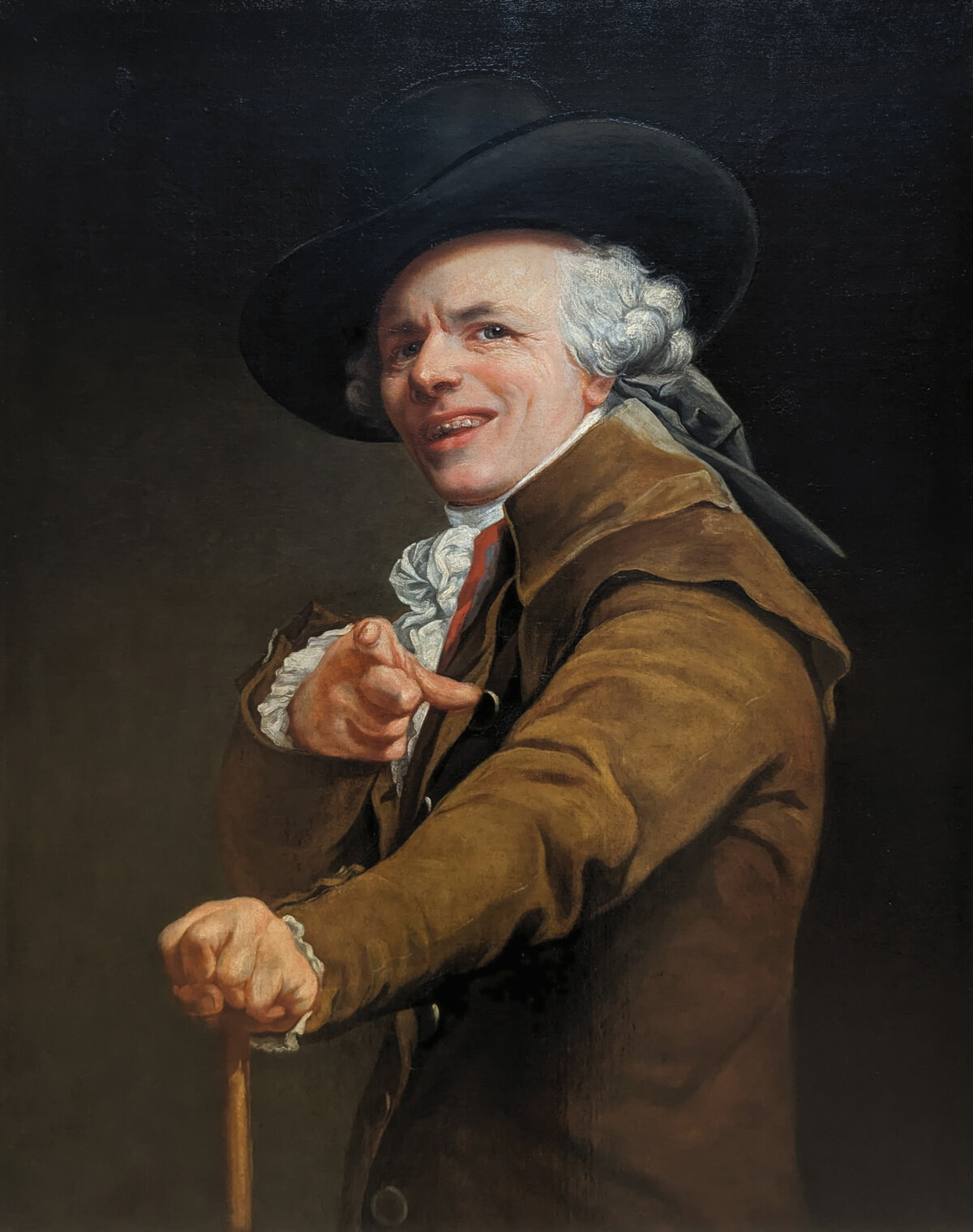
Known for portraits of aristocrats, including Marie Antoinette, Joseph Ducreux (1735–1802) often brought a strong sense of personality and humor to his work. He created a series of playful self-portraits that departed from the formal conventions of his time. His fascination with physiognomy played a significant role in shaping his art, sharpening his attention to detail and guiding him in creating portraits that are both perceptive and individualistic. This influence is especially evident in his self-portrait as a mocker, in which his exaggerated expression is heightened by an animated pose, with a finger pointing teasingly at the viewer. This humorous quality has helped it endure and even find new life as a widely circulated internet meme.
Charles Willson Peale
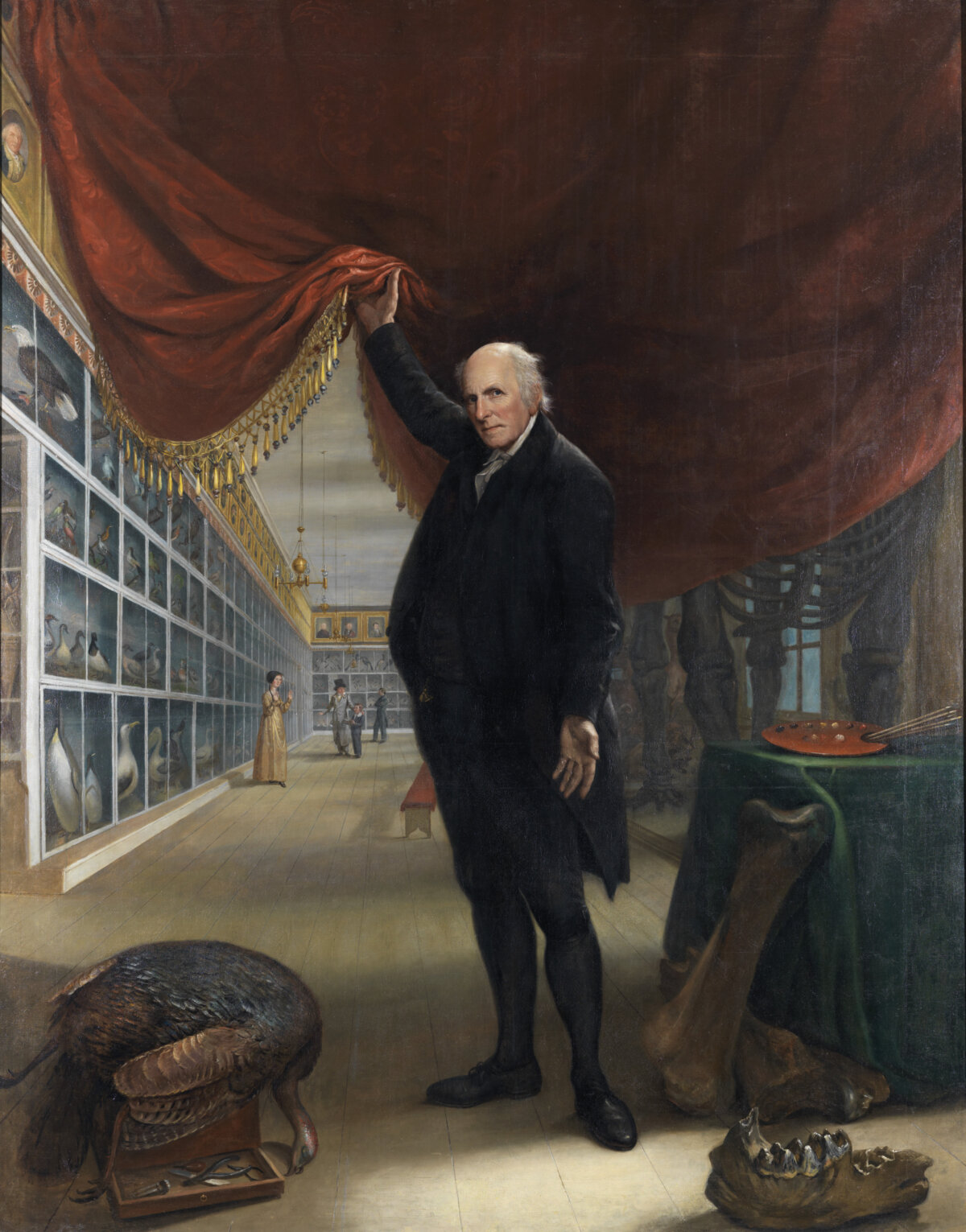
Charles Willson Peale (1741–1827) painted this self-portrait at the age of 81, presenting the legacy he wanted the world to remember: that of an American painter, scientist, and devoted family man. Over the course of his career, he created portraits of numerous influential figures, including Benjamin Franklin, John Hancock, Thomas Jefferson, Alexander Hamilton, and George Washington. He also founded two art academies, among them the Pennsylvania Academy of the Fine Arts, as well as the nation’s first museum.
In this self-portrait (1822), Peale draws back a dramatic red curtain to reveal his collections of art and natural history. The scene opens onto rows of preserved animals, the skeleton of the mastodon he helped excavate, and walls lined with portraits of prominent Americans.
Across centuries and cultures, self-portraiture has offered artists a way to express who they are at a particular time. Through choices such as clothing, composition, and lighting, self-portraits—like selfies—are carefully constructed to present a particular version of the self. So the next time you see someone taking a selfie, it is worth remembering that they are participating in a long-standing tradition of visual self-expression.
What arts and culture topics would you like us to cover? Please email ideas or feedback to features@epochtimes.nyc.