



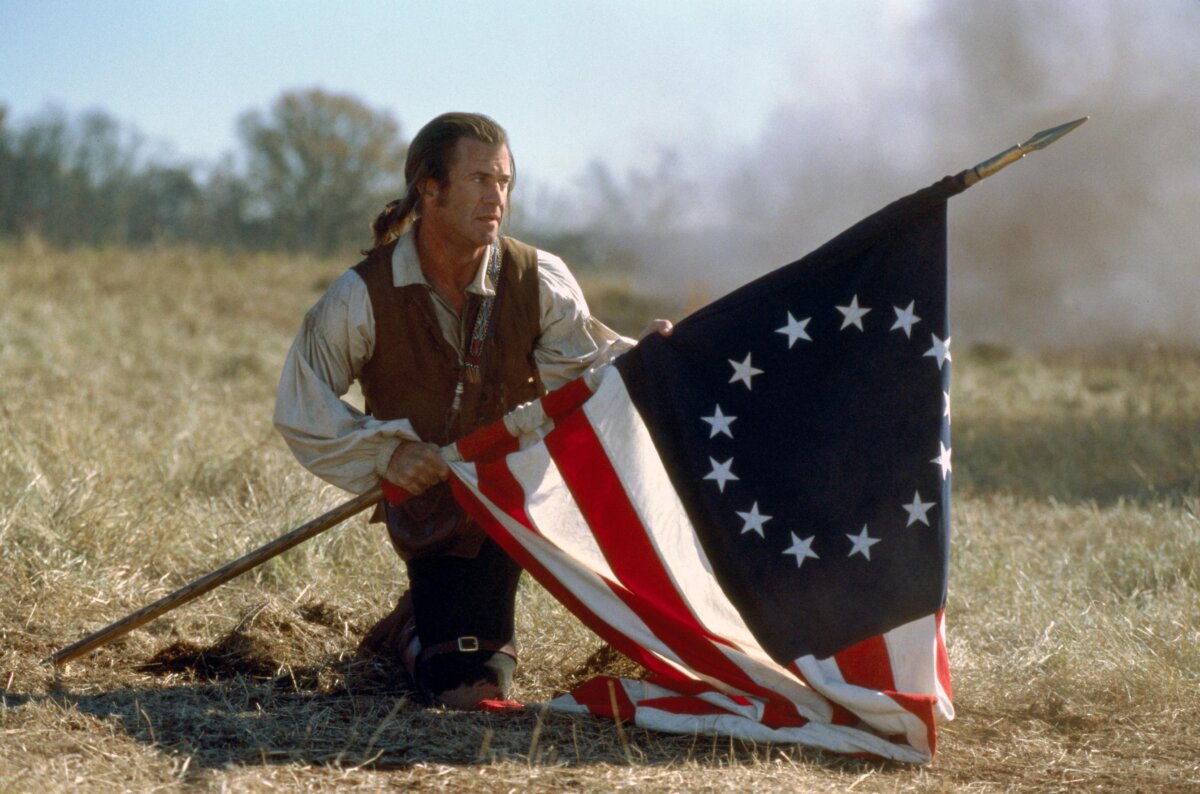
The 2000 film “The Patriot” tells the story of a reluctant soldier, compelled to join America’s war of independence.
Feared warrior Benjamin Martin (Mel Gibson), a South Carolina widower, would rather not fight the British colonial army. He’d rather care for his family of seven children and maintain his livelihood of farming.
When a cruel British officer (Jason Isaacs) claims the life of his second son, Thomas (Gregory Smith), a remorsefully resolute Benjamin leads a ragtag militia alongside his friend in America’s Continental Army, Col. Harry Burwell (Chris Cooper).
Benjamin’s oldest son, Gabriel (Heath Ledger), blames Benjamin’s former pacifism for Thomas’s death. His youngest daughter, Susan (Skye McCole Bartusiak), barely speaks to him; she resents his riding into battle. While his sister-in-law, Charlotte Selton (Joely Richardson), looks after the children, Benjamin rides with Gabriel against the British.
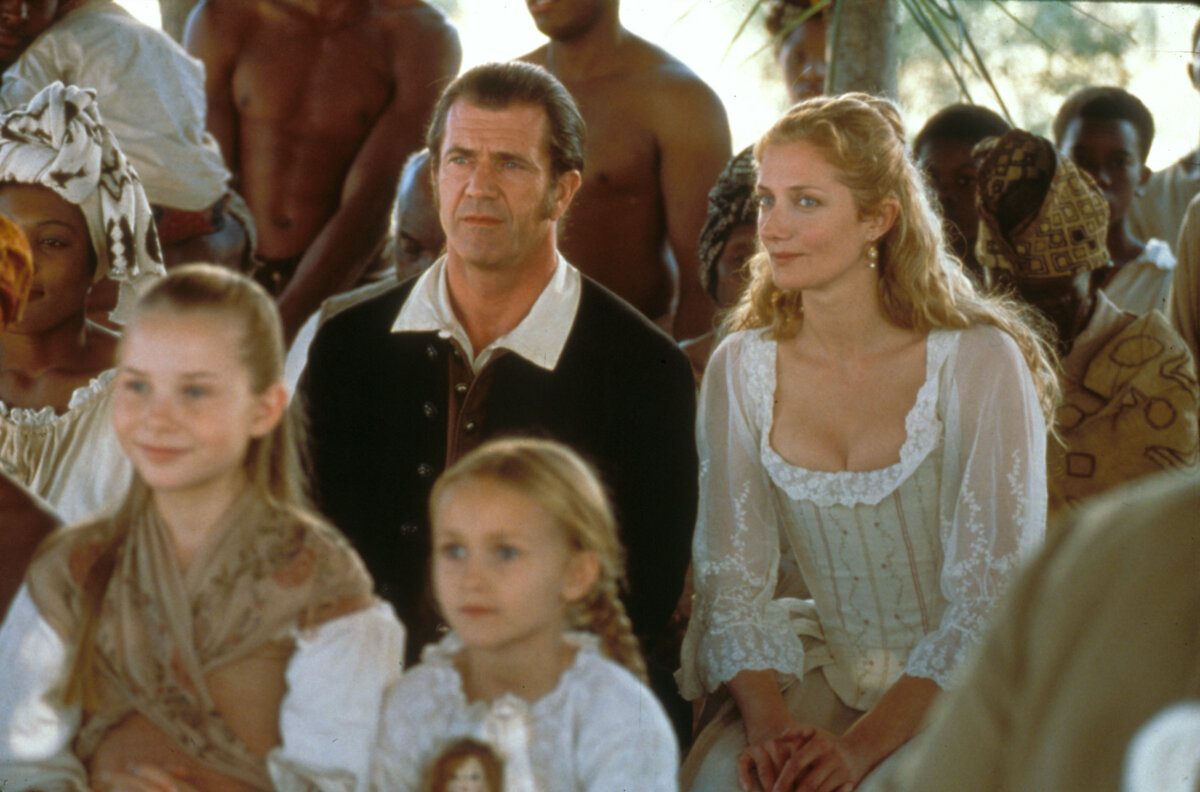
In drawing the ire of the enemy, are they endangering the family they swore to protect? After all, their supposedly dreaded militia aren’t soldiers; they’re no more than patriotic peasants.
Soldierly Sacrifice
Benjamin’s hobby, marshaling tin soldiers on a mock battlefield, finds resonance in real life. As he melts tin soldiers to make bullets, Benjamin portrays soldierly sacrifice. Soldiers surrender not merely their possessions to patriotism but their very selves. The individual vanishes, as if into a molten mass, becoming in brotherhood a deadlier defense against aggressors.
Reeling from familial loss, Benjamin tries to beg off from further fighting, telling Burwell he’s just a cog in the wheel. How can he, just one man, possibly influence the outcome of war?
Burwell says it isn’t about victory alone: “You’re wrong, Benjamin. You matter to your men and to others as well. Your victories and your losses are shared by more than you know.”
The soldierly “oo-aah” is ultimately a rallying cry that has nothing to do with victory or defeat and everything to do with finding a common cause in shared values.
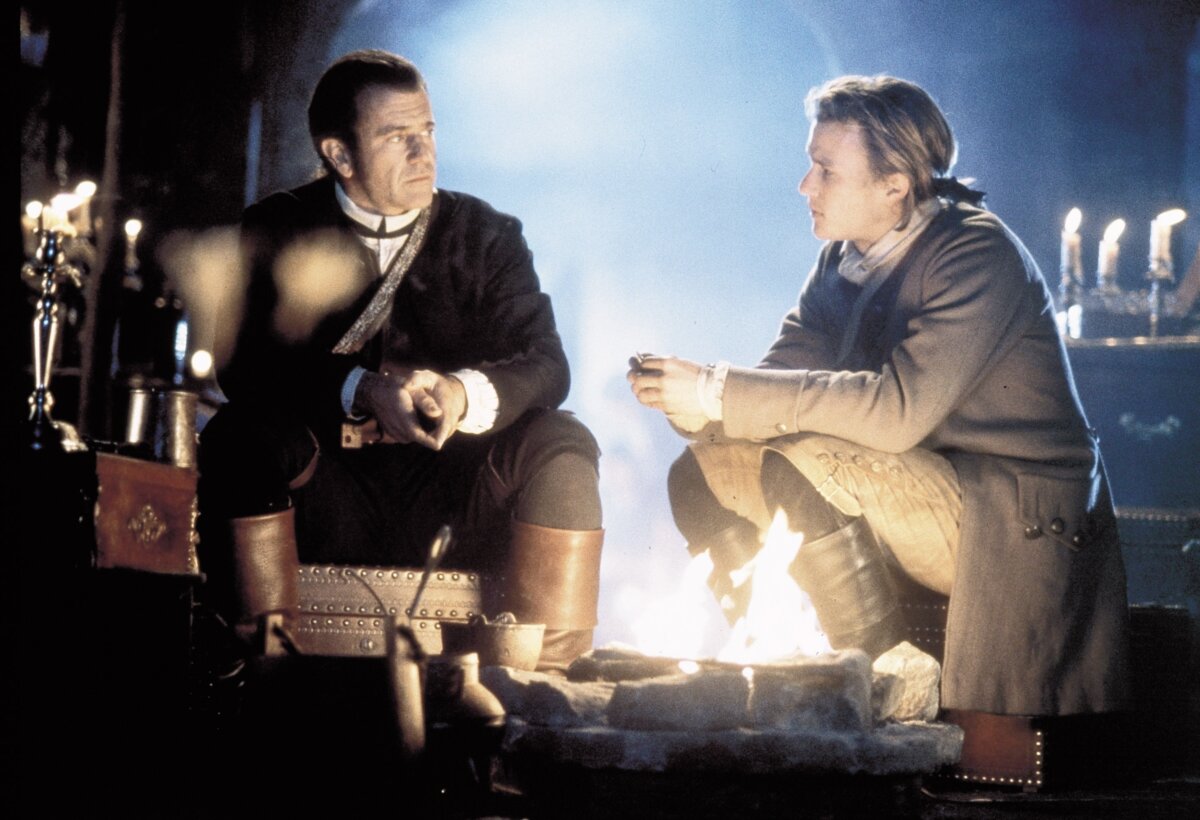
Benjamin’s militia may be peasants: Their aim might be off, their bayonets bent out of shape, their uniforms torn, and their flags ragged. Nevertheless, their voices are steady and their steps sure.
Charlotte comforts Benjamin, who’s wracked by the guilt of his one-time inertia, saying, “You’ve done nothing of which you should be ashamed.” Benjamin replies, “I’ve done nothing. And for that I am ashamed.”
It’s men who’re expected to be soldiers, but women matter in war, too. If anything, a woman here personifies the family and nation, cheering on the great men who rise to protect and preserve freedom. They also call on lesser men to rise alongside them.
Filmmakers don’t show Lady Liberty here; they don’t have to.
Righteous Love
Tenderly, Benjamin confides in Gabriel about just how much he loved his late wife. He implies that it’s righteous love that powers soldiers to do brave things as men, which they might have shied away from as mere boys.
Benjamin’s older daughter, Meg (Mika Boorem), puts little Susan to sleep by likening the North Star in the night sky to their late mother. She explains to her father, “It helps her know Mother’s there.”
When Anne Howard (Lisa Brenner) becomes Gabriel’s bride, Benjamin ties his late wife’s North Star amulet around her neck, reverentially telling her, “It’s the only star in the sky that never moves. It’s constant, unwavering, a guide.”
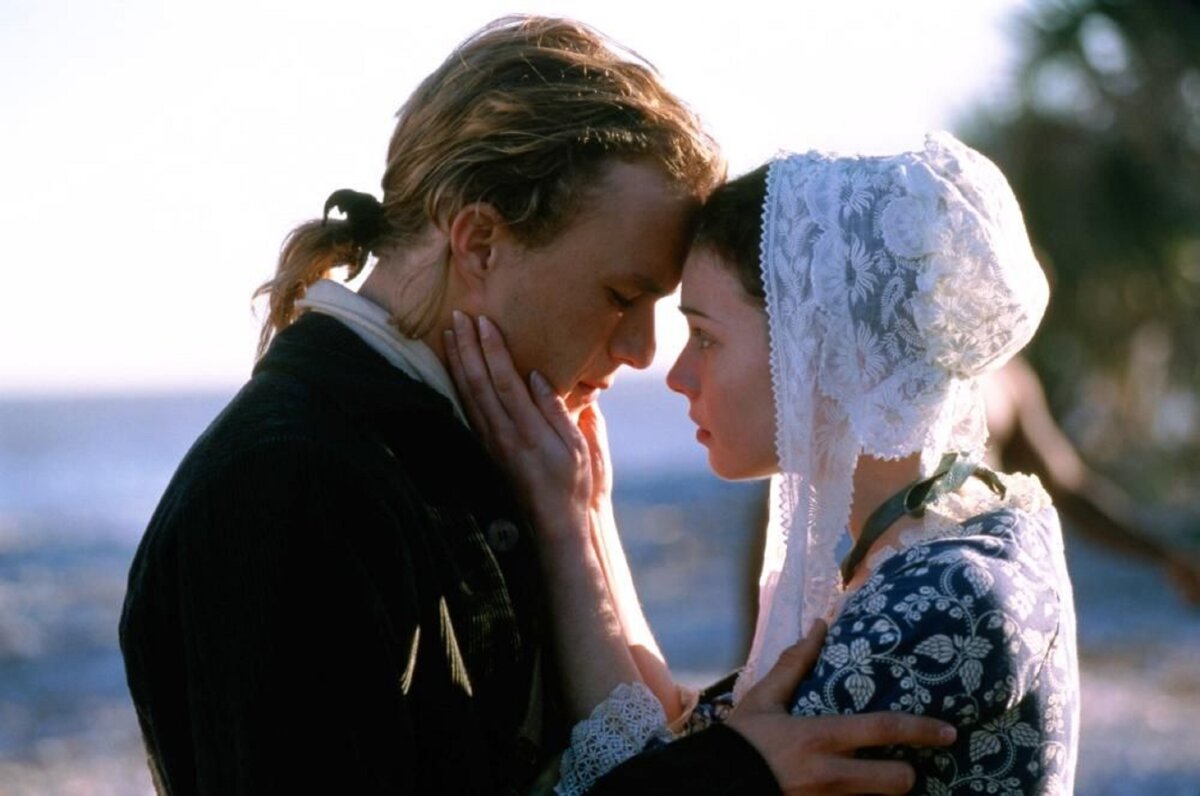
Notice how one sentence and one smile from the otherwise silent Susan is all it takes to energize the battle-worn Benjamin.
No, women aren’t inconsequential in war. They’re often one of the most profound reasons men go into battle in the first place; better men would rather die than return to homes robbed of the teasing giggles, laughing eyes, and quiet companionship of their women. Only lesser men abuse that sacred trust.
Afraid of losing his family, Benjamin first figures he can afford not to fight, only to discover that it’s because of his family that he can’t afford not to. His line, “I’m a parent; I haven’t got the luxury of principles,” takes on new meaning as the chill between him and Gabriel thaws.
Anne’s little speech in church stirs patriotism in peasants who don’t yet know they’re patriots. They eventually enlist, but one by one; the power of one man standing first and alone, helps others overcome their fear and instinct for self-preservation.
Men, too scared to protect a principle, are prepared to die to protect a person: a beloved mother, father, wife, daughter, or son. The opposite of fear isn’t courage; it’s love.
Check the Internet Movie Database website for plot summary, cast, reviews, and ratings. You can watch “The Patriot” on Tubi, Prime Video and Apple TV.
These reflective articles may interest parents, caretakers, or educators of young adults, seeking great movies to watch together or recommend. They’re about films that, when viewed thoughtfully, nudge young people to be better versions of themselves.
What arts and culture topics would you like us to cover? Please email ideas or feedback to features@epochtimes.nyc.
