



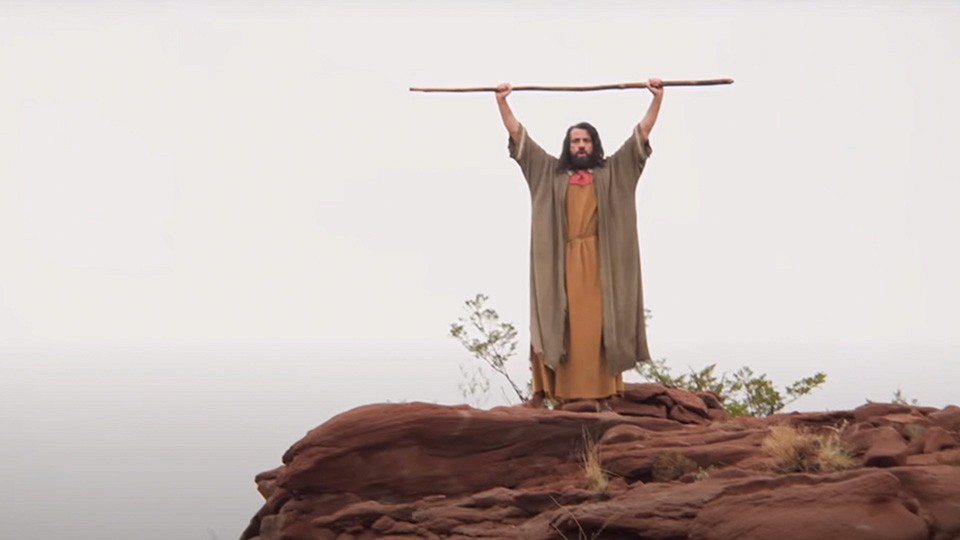
TV-PG | 6 episodes | Comedy | 2025
A new show cheekily adapts part of the biblical book of Exodus. God’s chosen people struggle to keep their faith—and a straight face—amid the laughable absurdities of life in the desert.
Having escaped death at the hands of Egypt’s pharaoh, Moses (Wasim No’Mani) and his fellow Hebrews set up camp in Refidim, east of the Red Sea. The Hebrews follow Moses, believing that he’d lead them to The Promised Land.
Now, they’re stuck with heat, hunger, thirst, sand, pestilence, and each other—and, it seems, with too many of Moses’s large family: his wife Zipporah (Tryphena Wade), sister Miriam (Shereen Khan), and brother Aaron (Majed Sayess). Moses’s many sons are, for convenience, referred to as “the boys.”
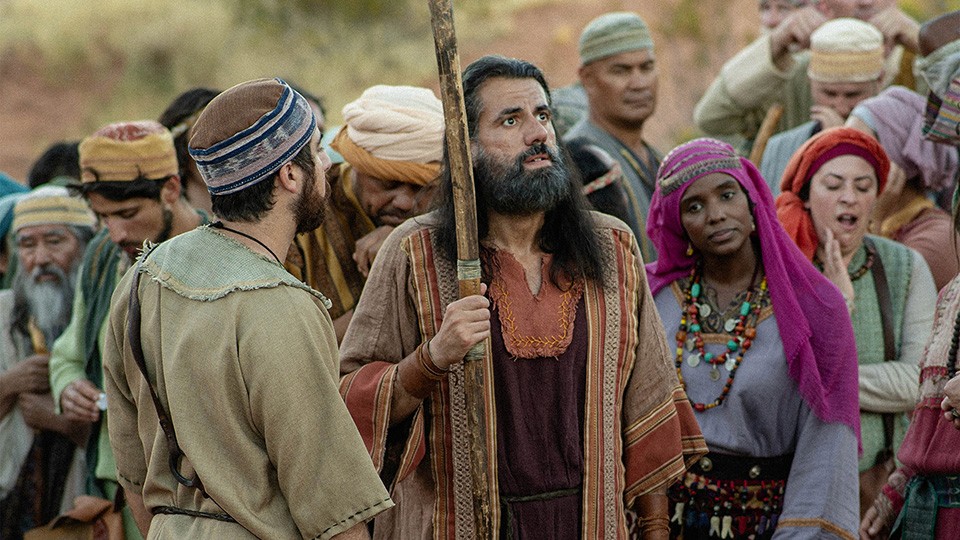
Overzealous Joshua (Artoun Nazareth) thinks the path to becoming a prophet-leader is to help others, even if compulsively. Runaway Egyptian Chisisi (Dav Coretti), now on the wrong side of the Red Sea, blends into the Hebrew crowd; helpfully, his name is the Egyptian word for “secret.” Go figure. Self-righteous Korah (Brad Culver) suspects that something’s off about Chisisi and, it appears, with everyone else.
Still, the Lord freed them from Egypt. What’s to complain about? Apparently, a lot. The same miracle-a-minute Lord has suddenly gone AWOL. So, when Moses, too, keeps disappearing up the mountain only to return as God’s glorified stenographer with a list of laws longer than the Nile, the tribes are fed up. They turn on each other. And to pagan gods. Now, even Moses’s most trusted followers wonder if it would’ve been better if they’d stayed in Egypt—some privately, others a little too publicly.
The series was conceived by associate producer Sydney Jarm. Writer-director Mitch Hudson says of the series: “We are not laughing at Scripture, we are laughing at the people who lived it, doubted it, and still tried to follow it.”
Hudson cut his directorial teeth as assistant director on “The Chosen” from 2019 to 2025. For “The Promised Land, he and producer Richie Johns marshal a cast of 30 actors, hundreds of extras, over two dozen animals, and a 100-strong crew, first on location in Carlsbad, New Mexico, and then in St. George, Utah.
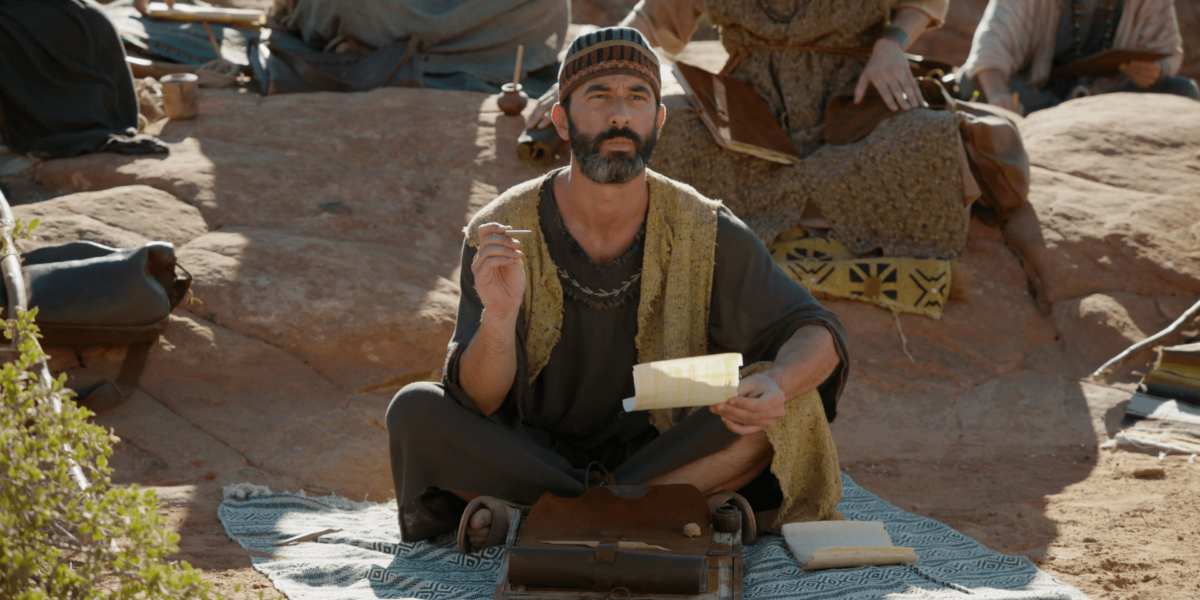
Even with all the horseplay on set, the actors manage to bring out the children in themselves at just the right time, every time. Cinematographers Ryan Little and Dan Parsons use their lens furtively, as if spying on the Hebrew campers, zooming in to emphasize an emotion or a character’s stunned or sly side-eye to the camera. Editor Brian Cates expertly conveys the comedy through his cuts.
The filmmakers intended the show for all ages but recommend parental viewing of all episodes first. The innuendo and double entendre appear more for late teens and young adults than children. Free of this, the show’s absolutely for all ages. As Season 1 needs no editing, here’s looking at you, Season 2.
Each episode features characters practicing their virtue and good-natured villainy on each other. Subplots bristle with poignant moments, pranks and, yes, some puns. As if to rub it in, a show about a land flowing with milk and honey is presented by, you guessed it, Milk & Honey Studios. Still, it’s no parody or spoof. It’s a reverential, if rib-tickling, nod to the fact that God’s grace flows through the unlikeliest of people.
Finding God in People
If you venerate the larger-than-life grandeur, sobriety, and eloquence of Cecil B. DeMille’s “The Ten Commandments” (1956), Hudson’s first episode may feel like an awkward start. It may feel too offbeat for comfort.
But stay the distance. The show settles into a confident, easy rhythm, balancing fun with memorable messages about life and living. Better still, these messages flow organically, never feeling like the tacky cut-and-paste of Scripture so typical of faith-based entertainment.
Honestly, isn’t it easy imagining Old Testament characters breaking the fourth wall? The prophets faced such preposterous demands from a thundering God, they could hardly be blamed for feeling like doomed characters in the final, despairing pane of a three-pane comic strip. Hudson demonstrates that with staggering understatement. Here, Moses mutters, “Ah, this is not how I thought this would go.”
But Hudson’s fourth wall isn’t a gimmick. It’s a storytelling device. His characters interrupt the narrative to get up close to the camera, sharing with the audience their pride, joy, sorrow, shame, envy, and fear.
The audience doubles as a priestly confessor, of sorts. It is privy to the characters’ intimate thoughts and feelings, understanding them as vulnerable people, not caricatures of perfect obedience. Viewers come away thinking not so much about Hebrew problems and preoccupations but their own. Those watching might acknowledge, perhaps sheepishly, how petty some of their own problems are.
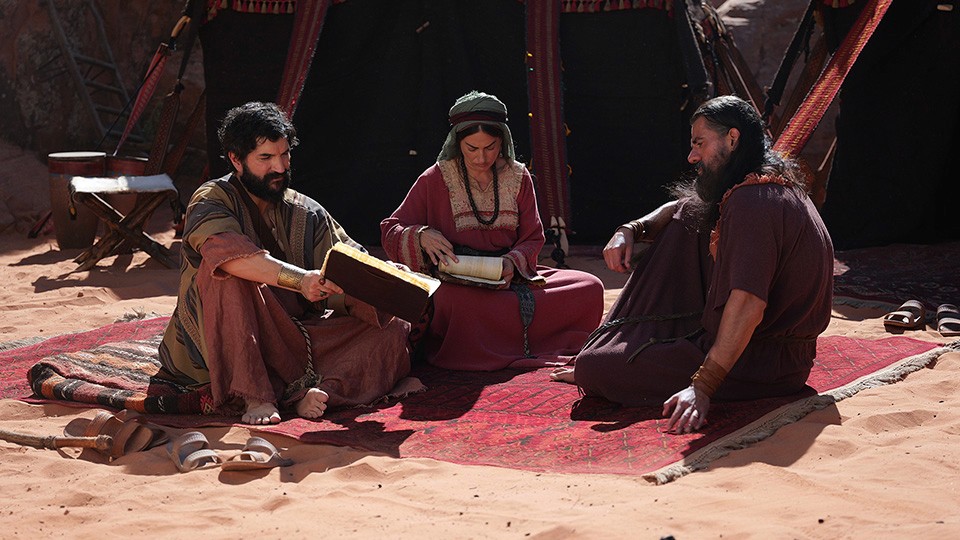
Episodes brim with wearily familiar biblical lessons but are delivered with a humane touch. Sin isn’t the end of a relationship with God; if there’s true repentance (not mere remorse), it can be a new beginning. Pride—nothing else—comes in the way of repentance or forgiving.
It’s easy to be popular; it’s harder to lead. Delegation doesn’t signify a leader’s weakness but his generosity and his trust, and that apparent weakness builds empathy. Being God’s people isn’t about being perfect or tablet-of-stone worthy, but about being faithful.
Fear not. The show’s messaging is unapologetically humorous, too. Who would’ve thought that Egyptian torture could involve ordering a Hebrew—who couldn’t sing to save his life—to keep singing.
Pompous Korah frets about 10 ragtag Hebrews he’s been asked to lead as he says, “Every great leader faces obstacles, I happen to have been given ten.” Never mind that his attempt to prove his faith in them falls, er, flat. There’s even a dig at pronoun posturing. Watch Miriam swing, conveniently, between certainty and confusion when Moses refers to “her.”
You can watch “The Promised Land” at The Promised Land Series.
‘The Promised Land’
Director: Mitch Hudson
Starring: Wasim No’Mani, Tryphena Wade, Shereen Khan, Majed Sayess
MPAA Rating: PG-13
Episodes: 6
Release Date: Oct. 1, 2025 (episode 2)
Rated: 4 stars out of 5
What arts and culture topics would you like us to cover? Please email ideas or feedback to features@epochtimes.nyc
