Everyone is aware that this coming Fourth of July marks the 250th anniversary of the Declaration of Independence. But how many people have actually read the celebrated document in its entirety? For that matter, how many people are aware of why certain phrasing was incorporated into its contents?
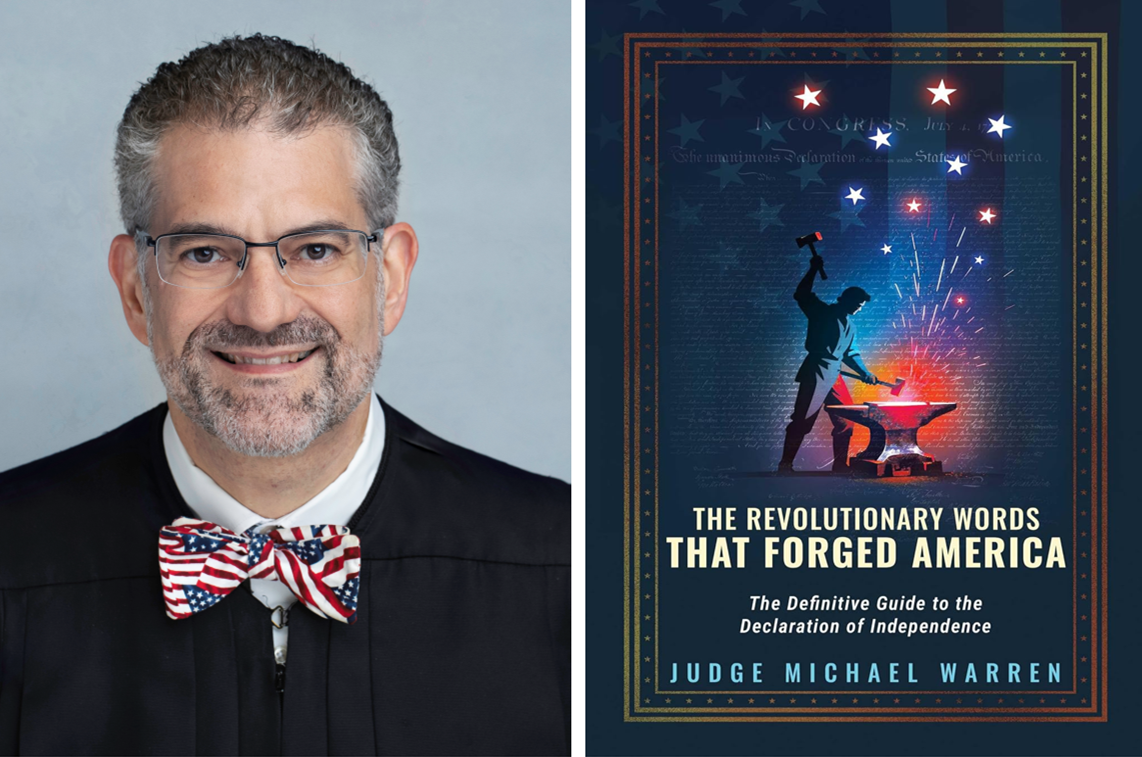
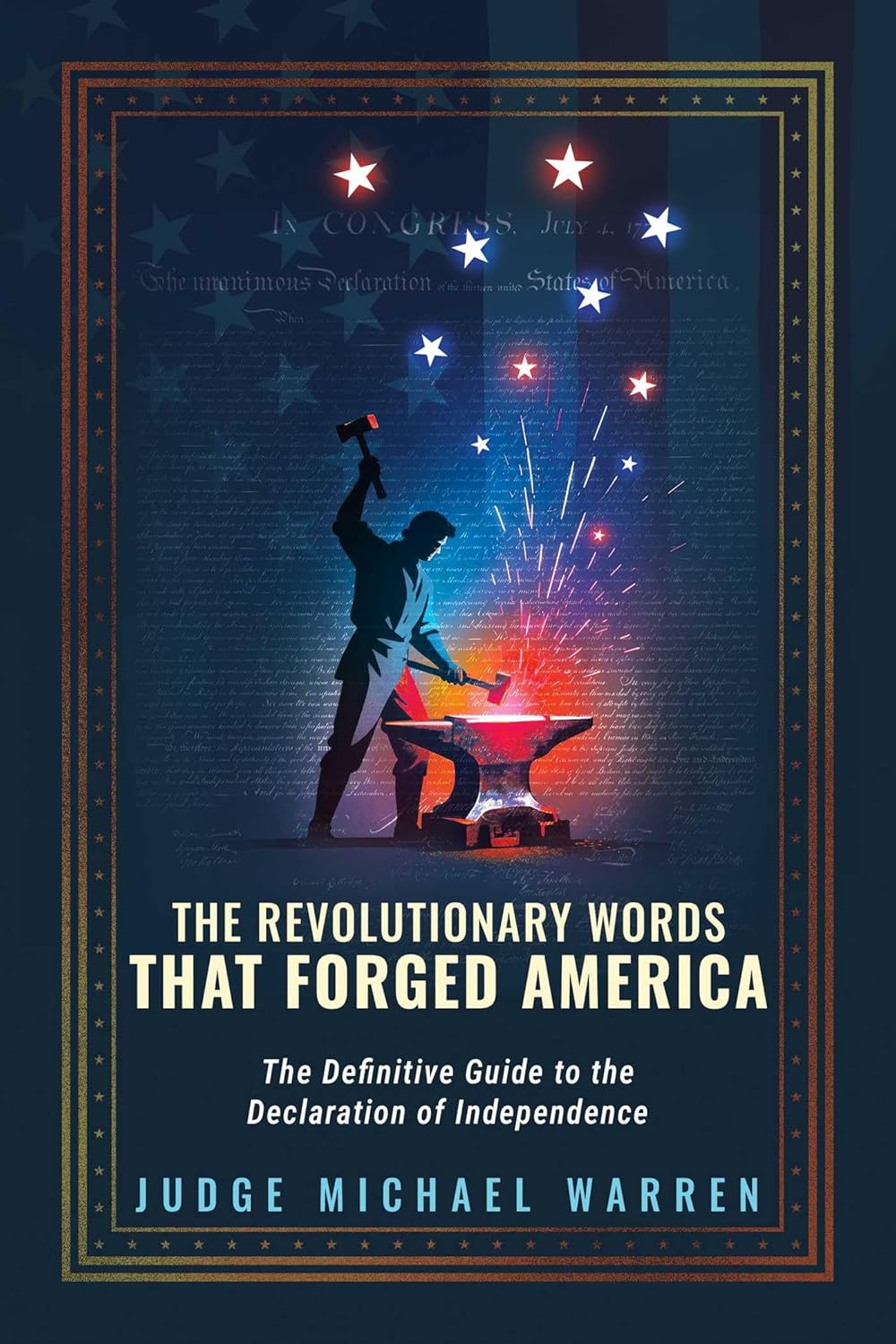
Judge Michael Warren dissects the Declaration of Independence in his new book, “The Revolutionary Words that Forged America: The Definitive Guide to the Declaration of Independence.” With some chapters, he examines portions of a sentence, while other times he plumbs entire paragraphs. The result is a fascinating mix of history and semantics.
In the Beginning
Warren launches his book by promising to let the Declaration of Independence speak for itself, with proper historical context framing its bold contents. He adds that he is not in the business of America-bashing revisionist history.
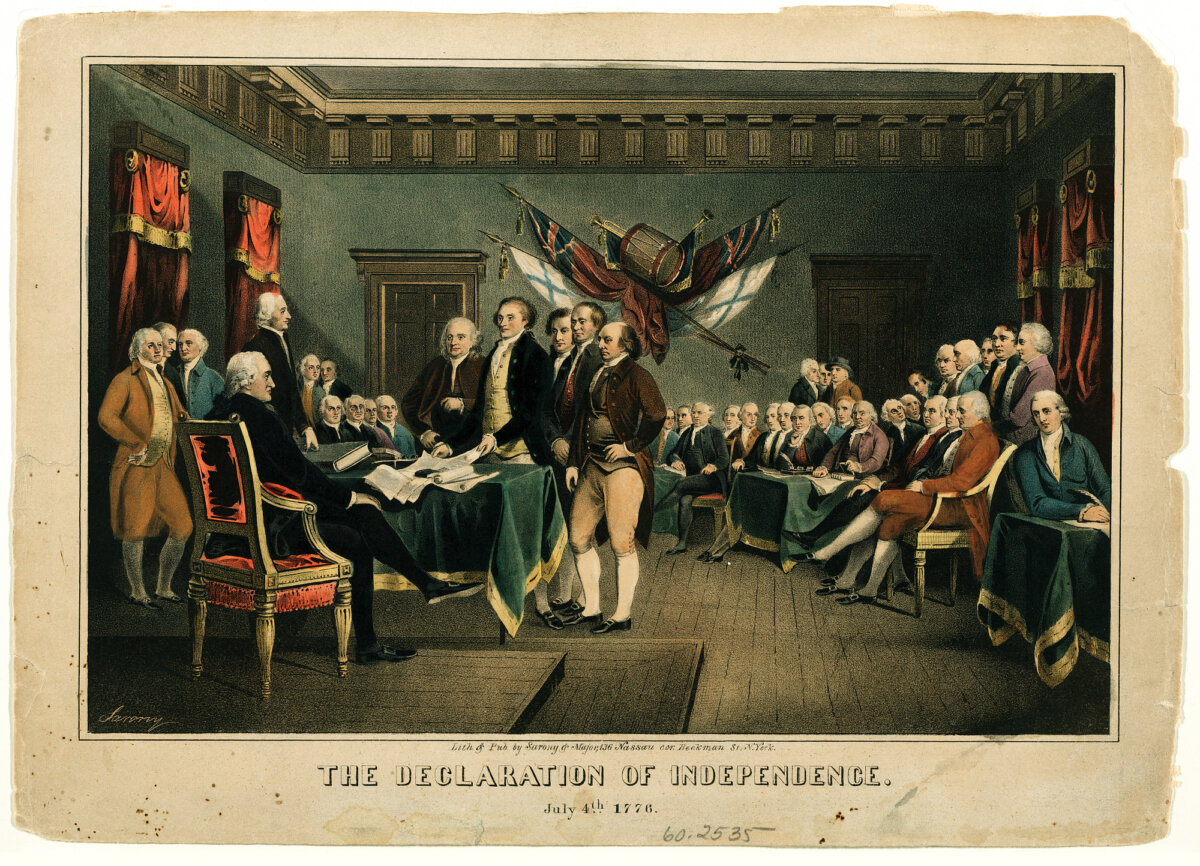
The study kicks off with the Declaration’s heading of “In Congress, July 4, 1776.” This enables the author to explain why the Continental Congress came about and how it functioned. Warren goes into depth on why the nation celebrates its Independence Day on July 4 (the day the Declaration was adopted by the Second Continental Congress) rather than July 2 (the day that Virginia delegate Richard Henry Lee’s resolution for independence was adopted).
Contrary to popular legend, the Declaration was not signed by all of the congressional delegates on July 4. Instead, 49 delegates signed a formally printed Declaration on Aug. 2, with seven others signing it over the following months.
A notable absentee from the signatories was New York’s Robert Livingston, who was part of the five-man committee assigned to draft the document. He was recalled by his state’s government before the signing ceremony.
What Was Created?
Warren then considers the document’s formal title, “The unanimous Declaration of the thirteen united States of America.” Again, popular legend clouds the facts. In this case, the author carefully shows that the Declaration clearly referred to “united States” rather than “United States,” which meant each state was a nation unto itself. The Declaration did not announce the birth of a brand-new country.
The author stresses that the Continental Congress was not a central government, but rather a political hub for this loose confederacy. As a result, the body was impotent to act unless all 13 states agreed to cooperate on a single course of action.
The Declaration’s eloquent opening seeks to define the document as the product of a specific time and place (“When in the course of human events …”). It also insists the colonists had the right to embrace “among the powers of the earth, the separate and equal station to which the Laws of Nature and of Nature’s God entitle them.”
This was not the first revolution against a governing authority, but it was the first that articulated in print that those in revolt possessed rights that a sovereign could not withhold. The author notes that despite their different views on faith, the delegates were “unified in their belief that there is a Supreme Judge of the world—a creator, Nature’s God, who intervenes in world affairs.”
Then, there is the passage on “Life, Liberty and the pursuit of Happiness.” Warren states that the 1776 version of “Happiness” is related to occupational and financial self-direction, rather than jollity or serenity. The author points out that Thomas Jefferson’s text rewrote the formulation presented by English philosopher John Locke which held mankind’s unalienable rights consisted of “life, liberty, and property.”
The influence of Locke and other brilliant thought leaders, notably the writers Thomas Hobbes and Thomas Paine, and the clergymen Daniel Shute and Gad Hitchcock, is cited throughout the book.
The Intended Ideas
Warren acknowledges that many contemporary scholars have problems with the Declaration’s insistence that “all men are created equal.” After all, some of the Founding Fathers owned black slaves. Also, the Declaration crudely refers to Native Americans as “savages” and never mentions women as having equal rights.
Instead, the author highlights that the reference goes back to Genesis 1:26–27, which asserts that God created all of mankind in His image. The author asserts this is a grand vision that rejects an ossified class system headed by a monarch and encourages meritocracy, which was radical for its time.
Of course, this doesn’t erase the vast inequalities of 1776. But the Founding Fathers realized their words were at odds with their deeds. Warren includes an omitted passage from the Declaration that berates King George III for encouraging a slavery-fueled economy. This was dropped under pressure from the Georgia and South Carolina delegations.
Nonetheless, the author quotes an 1855 essay by Frederick Douglass that looked back on this era. Douglas determined the Founding Fathers, while inconsistent in their actions, still “had the grace to confess the abhorrent character of slavery, and to hopefully predict its overthrow and complete extirpation.”
The remainder of the book provides depth and scope to the Declaration’s grievances against the king for perceived abuses of the legislative and judicial processes. Warren’s research skills are considerable, and his explanatory skills are wonderful.
Warren’s book ultimately presents the Founding Fathers as men of their times (not ours) who put forth an unprecedented concept of self-determination—and 250 years later, their words still resonate with audacious clarity.
‘The Revolutionary Words that Forged America: The Definitive Guide to the Declaration of Independence’
By Judge Michael Warren
Republic Book Publishers: April 14, 2026
Paperback, 496 pages
What arts and culture topics would you like us to cover? Please email ideas or feedback to features@epochtimes.nyc