With tickets in hand, a crowd of spectators stuffed themselves inside the B.F. Keith Theatre. The auditorium filled to capacity on this September Tuesday afternoon in 1911. A most unusual spectacle was to take place. The “sea monster,” which had recently washed ashore on the beach in Boston, was scheduled to take center stage.
As Bostonians gathered around, the smelly carcass of the 1,500-pound creature lay before them, fully wrapped in chains. The crowd stood in anticipation. Suddenly, the belly of the beast began to move and writhe. Similar to the tale of Jonah, the beast gave up the man.
Harry Houdini, the American magician, burst forth from the sewn body of the reportedly 500-year-old creature to a raucous applause. He had escaped death once again. At 15 minutes, it had taken the magician a much shorter time than the biblical figure’s three days. Nonetheless, the creature had been doused in arsenic for preservation, and, despite a small hole carved in the body for Houdini to breathe, there was still a chance of suffocation or death by breathing the poisonous fumes.
Knowing the dangers, he had signed a waiver, ensuring that none of the promoters nor anyone else would be held accountable in the event of his death. Houdini had become one of the country’s, indeed one of the world’s, most famous entertainers for his audacious stunts and for his equally audacious courage. Over the past two decades, the magician had risen from obscurity and poverty to fame and fortune, and he had done so by creating more and more elaborate and risky escapes.
“The easiest way to attract a crowd,” Houdini once said, “is to let it be known that at a given time and a given place someone is going to attempt something that in the event of failure will mean sudden death.”
Becoming Harry
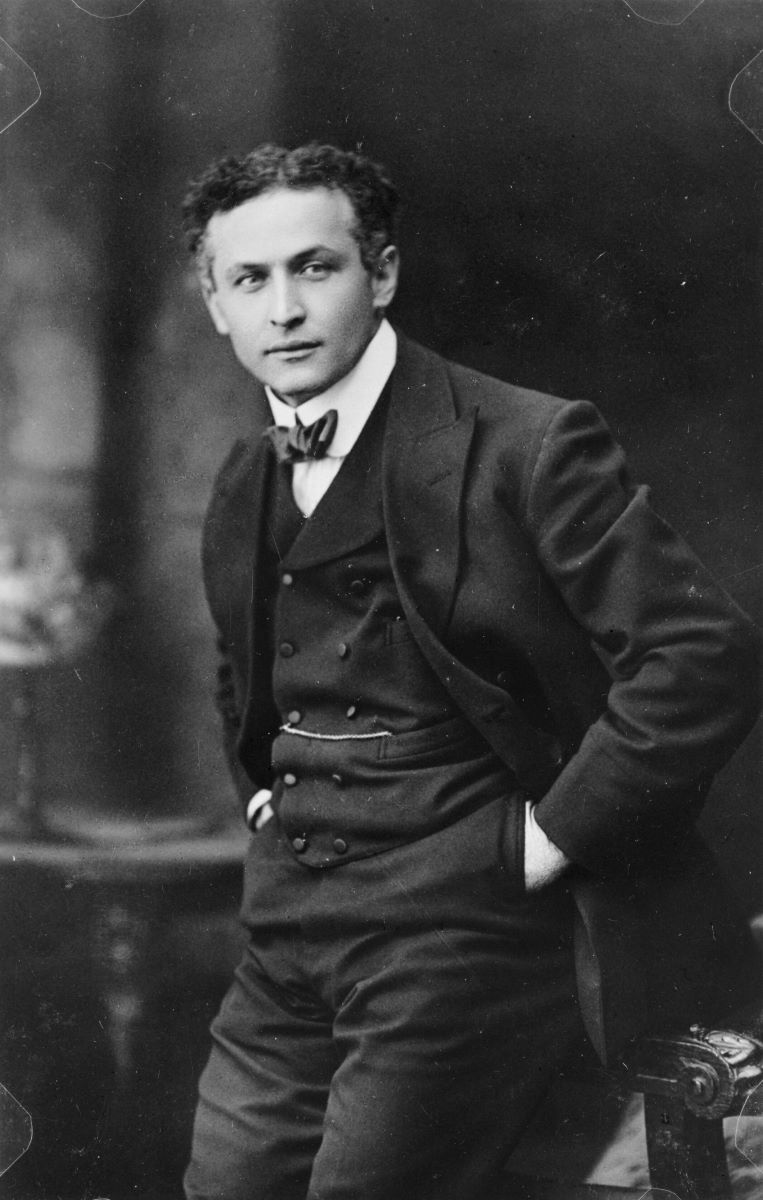
Harry Houdini had not always been Harry Houdini. He was born Ehrich Weisz in Budapest in 1874. Great escapes, however, seemed part of his genetics. His family escaped the rising antisemitism in Hungary only a decade after the state had granted equal rights to Jews.
The Weisz family (or Weiss, as the family name was altered by U.S. Immigration Services) settled in the town of Appleton, Wisconsin. Mayer Samuel Weisz, the patriarch, became a rabbi in the community, but this position soon dissolved, forcing him to seek work in other parts of the country, ultimately landing in New York City in 1887, with Ehrich. The family later moved to New York, but, in 1892, his weary father died.
The young and athletic Ehrich chose to try his hand as an entertainer. By 1898, he had toured countless cities, small towns, and little villages; had changed his name to Harry Houdini; had been married for four years; and seemed no closer to financial security than when he had begun.
Whitney’s Venues
In 1875, C.J. Whitney, a Detroit businessman, celebrated the opening of “the most elaborately equipped playhouse in the city.” The Whitney Grand Opera House had cost Whitney $135,000 to build (more than $4 million today). For more than a decade, the building hosted Detroit’s finest entertainers and entertainments. When the federal government expressed their desire to build a federal building on the very location of the opera house, Whitney chose to sell the building to the government and construct another venue.
On Oct. 31, 1887, the same year Houdini arrived in New York with his father, Whitney’s 1,409-seat multitiered New Grand Opera House with its Gothic interior design opened to the public. The opera house (renamed the Garrick Theatre in 1909) slowly developed as a venue of serious entertainment, having first begun with comedies and melodramas, but eventually to host more serious theatrical performances and more popular entertainers.
Becoming Houdini
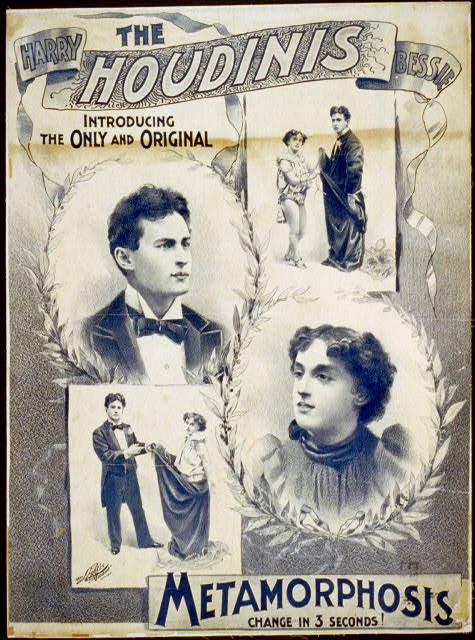
In 1898, Houdini and his wife, Bess, took an extended break from performing. They returned to New York City to live with his mother and contemplate whether the career path of a magician and escape artist was worth pursuing. The following year, the two decided to return to the grind with their Metamorphosis magical trunk illusion trick and Houdini’s handcuff escapes. Their future as entertainers, however, looked bleak.
While performing in St. Paul, Minnesota, in early spring, Martin Beck, a vaudeville manager, took notice of Houdini’s handcuff trick. Intrigued, he brought his own handcuffs to the magician and challenged him to escape them. Houdini quickly did.
On March 14, a telegram from Chicago reached Houdini. It was from Beck. The vaudevillian offered him a spot at his Omaha show with the possibility of joining for the full season. “This wire changed my whole Life’s journey,” the magician recalled.
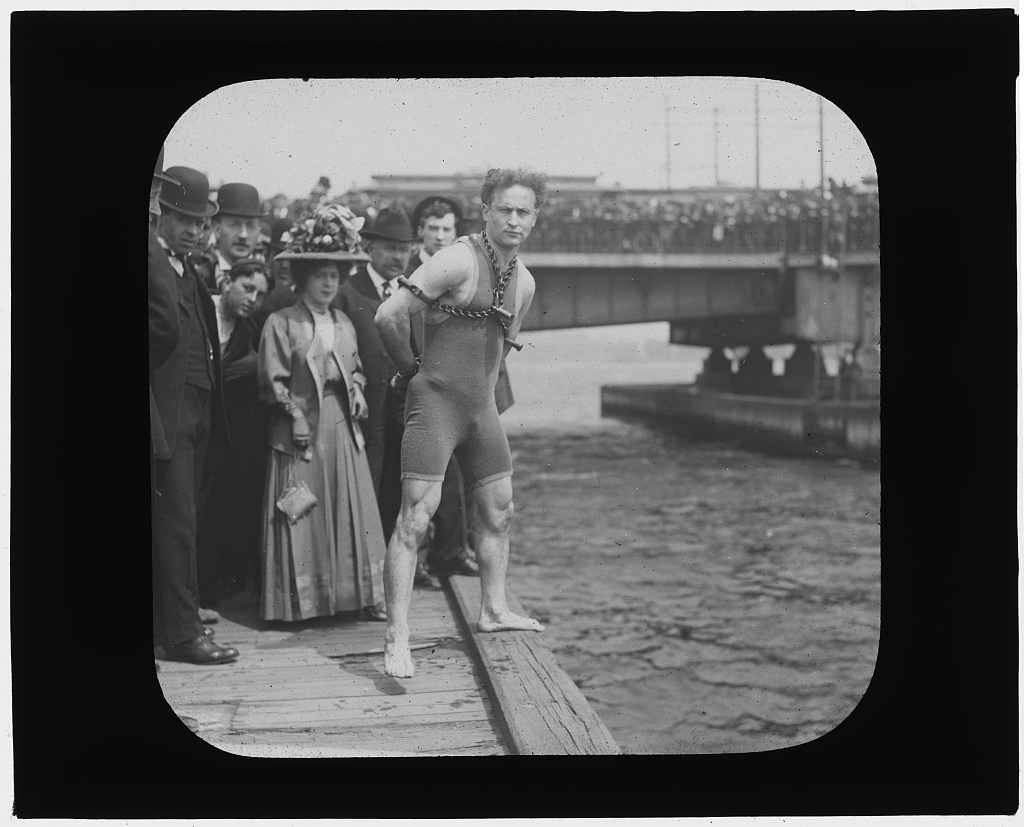
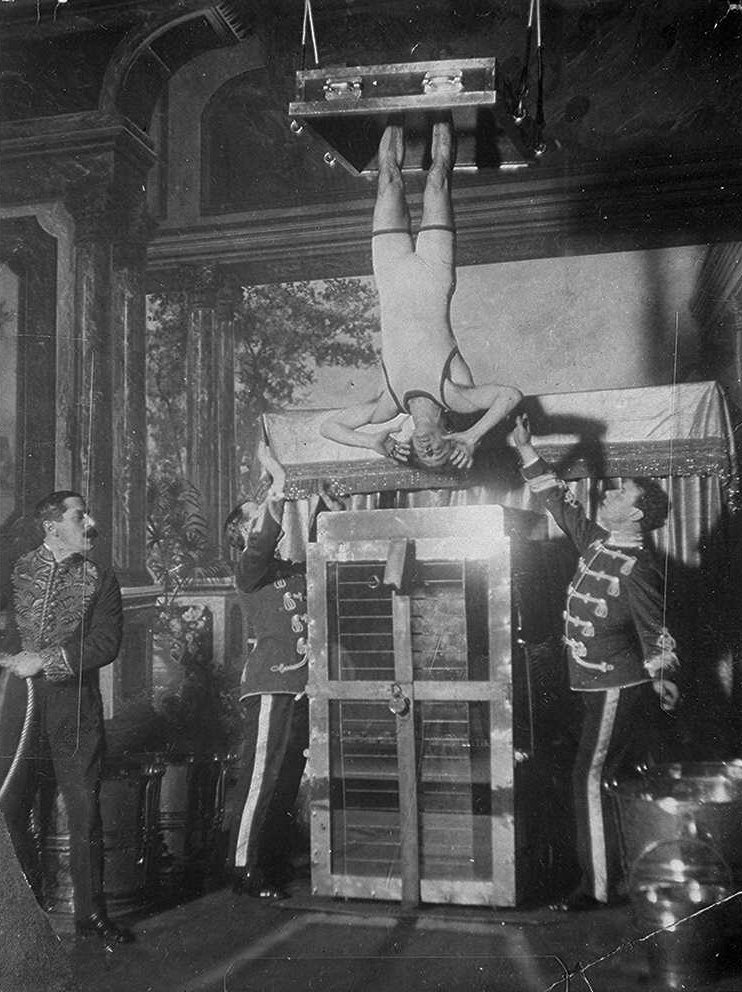
Houdini soon became known as The Handcuff King. Handcuffs expanded to leg restraints, straitjackets, and chains. His name became synonymous with the impossible. He continued to up the ante on his escapes by putting himself in a nailed-down crate tossed in a river; being lifted upside down, high into the air, by a crane; being buried six-feet underground; being placed upside down inside a water-filled glass box; and even being trapped inside the carcass of a “sea monster.” Those who disbelieved the stories were proven wrong by their own eyes, including the German imperial police when one of its officers called him a fraud.
Sniffing Out Frauds
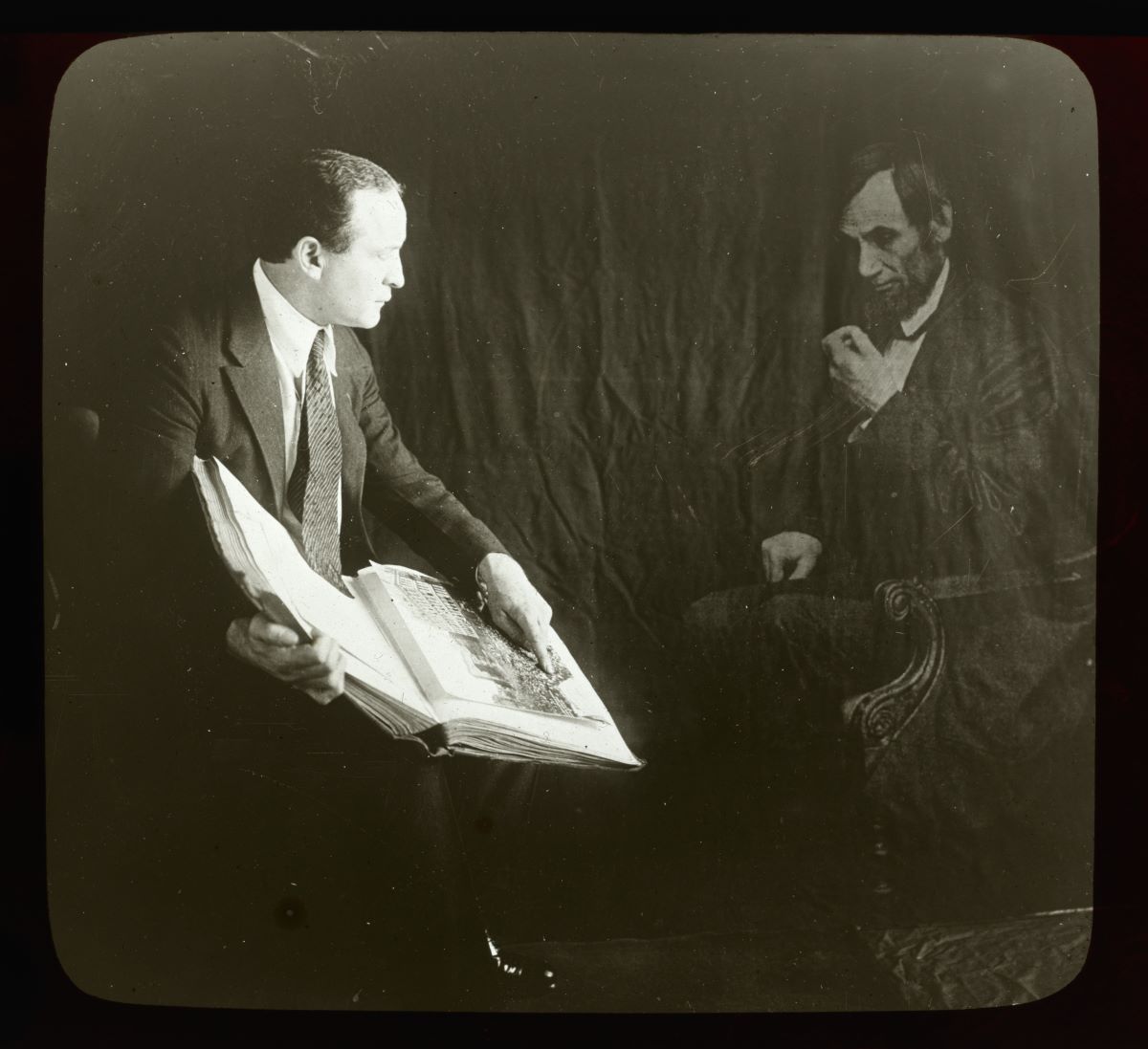
Houdini took great pride in his work. It was not simply about entertainment but authenticity. Such pride led him to mount a campaign against psychics and spiritualists who claimed to contact the dead. He had initially been curious about the psychic claims, sitting with scores of mediums during séances, and befriending devout believers, including Sir Arthur Conan Doyle, the creator of Sherlock Holmes. But he was convinced it was all fraudulent. Of the many he outed as frauds, none were more famous than Boston’s Mina Crandon, known publicly as “Margery.”
In 1924, Scientific American offered a $2,500 grand prize to any medium who could substantiate their claims. Margery believed she could. Houdini joined the magazine’s investigative committee. Before the year was up, he was convinced Margery, too, was a fraud and even published a pamphlet explaining why. His campaign against the Boston medium continued into 1925 by conducting an exposé at Boston Symphony Hall. Scientific American did not award “Margery” the prize. Additionally, Doyle, who maintained his belief, severed his friendship with Houdini.
A Deadly October
Houdini continued to perform his mesmerizing stunts before audiences and continued his campaign against the Spiritualist movement. When he began his 150-minute one-man Broadway show called “Houdini” on Dec. 14, 1925, which continued until Jan. 17, 1926, he focused on magic tricks, escapes, and exposing Spiritualism. Making Broadway exemplified that Houdini was at the height of his popularity.
The show was such a success that he took it on the road. Houdini performed his two-and-a-half-hour show before packed audiences. On Oct. 11, he performed in Albany at the Capitol Theater. While preparing for his famous Chinese Water Torture Cell act, in which he had to escape his restraints while holding his breath under water for about three minutes, he fractured his ankle. Advised to take a few days to nurse the ankle, he nonetheless continued the entire performance. In fact, he continued his scheduled performances.
Eight days later, Houdini gave a lecture at McGill University’s McGill Union in Montreal. It was part of a multi-day performance. During his stay in Montreal, he was visited by three McGill students. The third, J. Gordon Whitehead, arrived last to interview the magician.
There are conflicting narratives that have arisen over the past 100 years over precisely what took place, but according to the affidavit given by Whitehead, he and Houdini discussed how to remain physically fit. During the conversation, Houdini allegedly invited Whitehead to punch his stomach. It is reported that due to his foot injury Houdini was lying down. Whitehead stated he barely punched him the first time. Urged to hit harder, he hit him again. Houdini was unfazed and urged him again, and Whitehead obliged even harder.
Other reports suggest that Whitehead sucker-punched Houdini, some adding that it was done with malicious intent. Additionally, the invited punches or the malicious attack was done either on Oct. 20, 21, or 22—sources conflict. There is no conflict, however, as to what happened next.
Houdini completed his time in Montreal and boarded the overnight train to Detroit on Oct. 23. During the train ride it became evident that the magician was in a bad state. He was running a high fever and suffering from abdominal pain. He told his wife what had happened in the McGill dressing room. During a stop, a wire was sent requesting a doctor meet Houdini at the Detroit hotel. The train, however, arrived late. The doctor would have to meet him at the theater.
The Final Act
The Garrick Theatre was full of anxious and excited fans of Houdini. It was to be the first night of two weeks’ worth of performances, but, for Houdini, it would just be the one night.
With a fractured ankle, searing pain in his abdomen, and a 104-degree fever, America’s greatest magician and escape artist told the doctor in the dressing room, “I’ll do this show if it’s my last.” It was 100 years ago during this week in history, on Oct. 24, 1926, that Harry Houdini indeed conducted his last performance. Unbeknown to him, poison was spreading throughout his bloodstream. His appendix had ruptured.
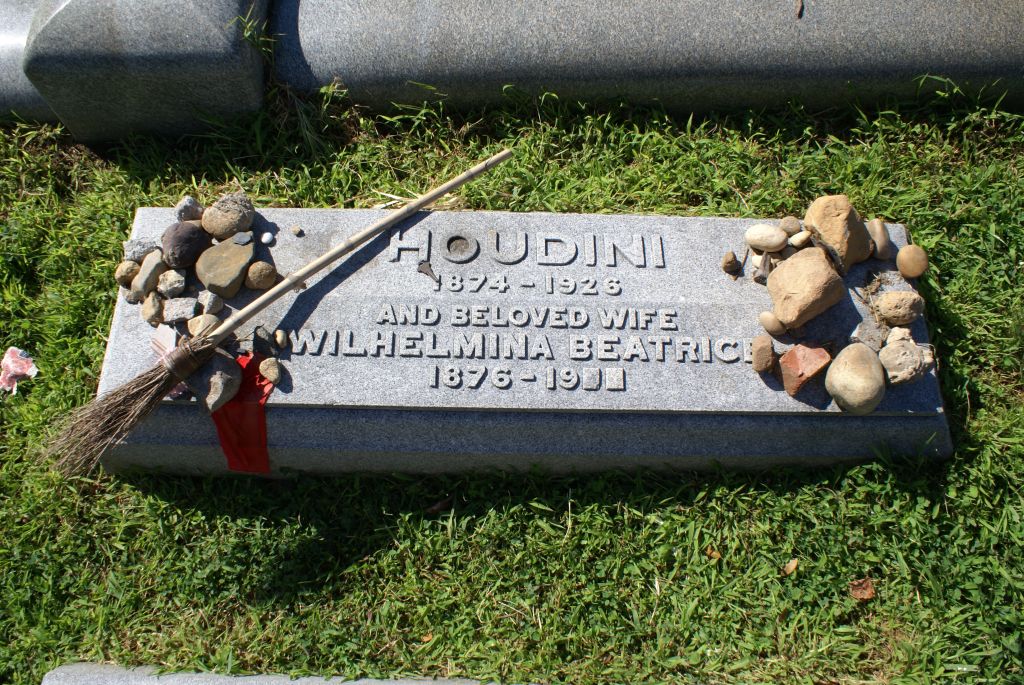
After his performance, he collapsed. He was taken to his hotel and then to Grace Hospital where he underwent two operations—one for appendicitis and the second for peritonitis. In a small twist of irony, Houdini died on Oct. 31—the 39th anniversary of the opening of the Garrick Theatre, the site of his final performance.
Although Houdini did not believe in the claims made by Spiritualists, he promised that if he died first, he would try to contact Bess. She attempted to contact him for 10 years, conducting an annual ritual atop the roof of a Hollywood hotel. The ritual included an electric lightbulb that remained on. After her final attempt, she solemnly stated, “He has not come. I turn out the light.”
Never miss a This Week in History story! Sign up for the American History newsletter here.
What arts and culture topics would you like us to cover? Please email ideas or feedback to features@epochtimes.nyc.