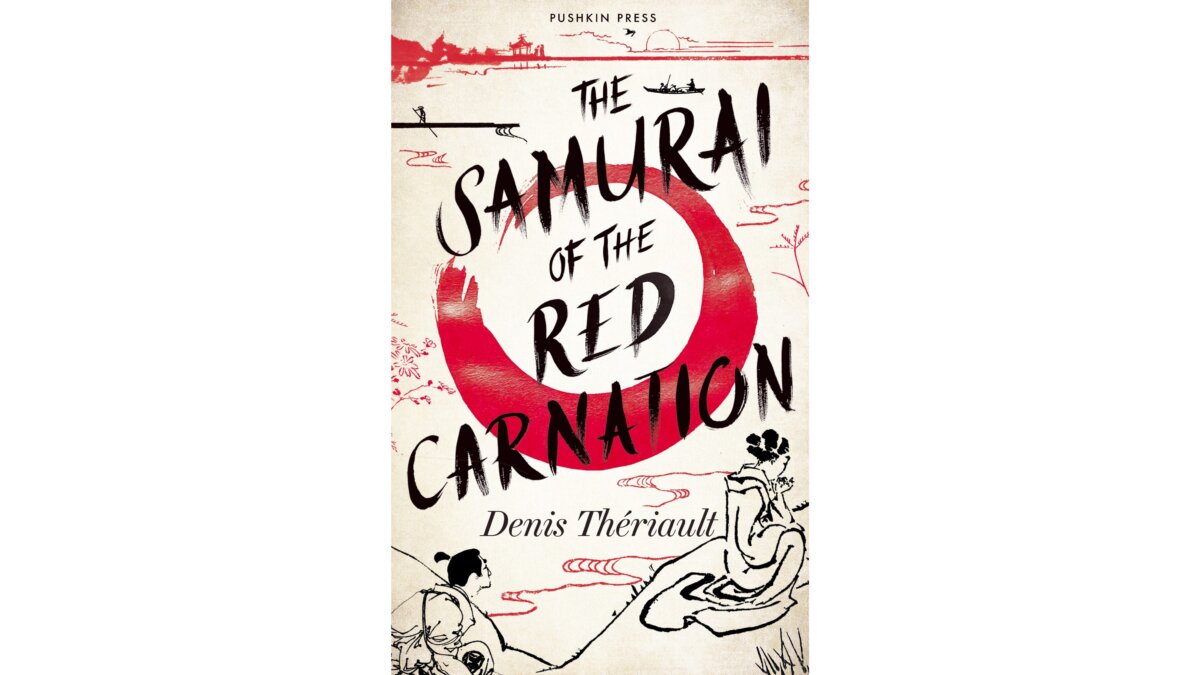
“The Samurai of the Red Carnation” transports us back to A.D. 1177, the final year of the Heian period in Japan. It’s “a time of unprecedented cultural refinement and sophistication,” where poetry is considered the noblest of the arts.
Matsuo is the only son of Yoshitsuna no Morito, the regional commander, who never tires of reminding Matsuo that he comes from a long line of bushi (“warriors” in Japanese). Matsuo’s gentle and sweet mother encourages Matsuo’s great interest in poetry, particularly in tankas. Tankas (“short songs”) are short, unrhymed Japanese poems composed of 31 syllables. They were used as a means of communication between members of the Japanese court, often between lovers.
When he turns 12, Matsuo is sent to an academy in Okayama for the next five years to receive comprehensive military training. Matsuo shows little aptitude at first, and his incompetence becomes a worry to himself and his father. Things take a turn when the head of the academy takes an interest in the struggling boy.
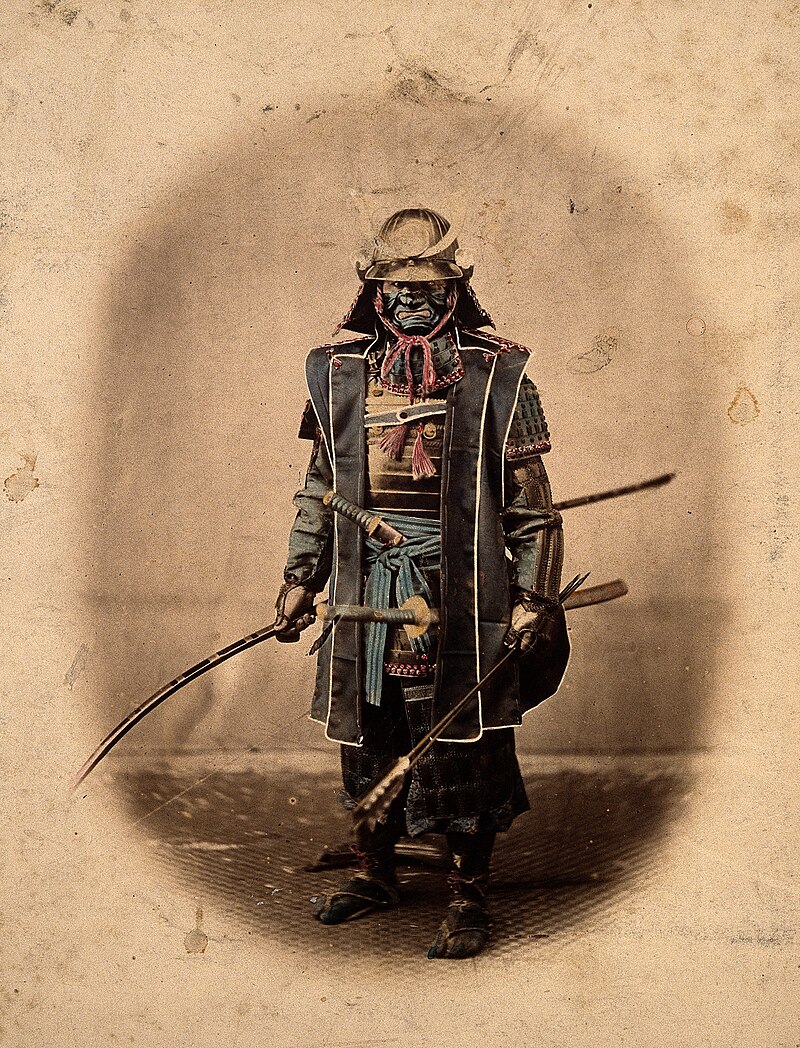
“What do you most want to do?” Lord Masayori asks. “Write poetry,” Matsuo admits. “Poetry? Well, what are you waiting for?” The lord then presents him with a collection of Chinese tankas titled “Blades,” each one centering on themes of warfare and fighting instead of love.
The Versatility of Tankas
The poems are a revelation to Matsuo, motivating him to become a true bushi. Matsuo develops “a style of swordplay all his own, based on the tanka form,” and he begins to gain the admiration of his fellow students. His poetry improves in tandem with his warrior skills.
When his third year begins, Matsuo meets a new arrival, Kuroda no Itachi. Itachi is even more awkward and uncoordinated than Matsuo was when he first arrived. The two connect over their shared admiration of poetry and become close. But that tenuous friendship becomes strained over time as Itachi grows sullen, arrogant, and entitled.
The friendship is pushed to the limit when a vulgar tanka is scrawled on the academy walls. Everyone suspects that Itachi is to blame, and it’s very likely true, but Matsuo takes the fall instead. Rather than supporting his only friend in the academy, Itachi abandons Matsuo.
Matsuo is saved from expulsion, but soon after, his family suffers a tragedy. Forced to return home, he is plagued by terrible dreams and begins to think a demon might have possessed him. Trusted members of his household urge him to visit a local witch woman right away.
During the visit, he has a vision that tells him to “follow the red carnation.” Though his natural path would be to become head of his prestigious household, the vision inspires him to become a true poet instead. Much like the legendary Shakyamuni, who eventually would become the Buddha, Matsuo also forsakes his riches to travel as a pauper and be a poet.
A Return to Romanticism
“The Samurai of the Red Carnation” is a throwback to the romanticism of the 18th century. Back then, “Romance” referred to tales of heroic adventure rather than love stories. Set in far-off or exotic settings, the stories featured noble characters on epic quests, mysterious strangers, and sensational plot twists.
For example, Matsuo encounters a strange monk named Yosai, who tells him they were destined to meet. Matsuo is enamored with the teachings of Zen and agrees to be Yosai’s pupil. However, the monk turns out to be less noble than he appears. He betrays Matsuo, but not before telling him about the uta-awase contests in Kyoto. Uta-awase were competitive poetry contests (similar to modern poetry slams) and perhaps a great opportunity for Matsuo.
Of course, no novel in the classic style of romanticism would be complete without a romantic interest. During an amateur theater performance in Kyoto, a mysterious poetess with a red carnation embroidered on her kimono enthralls Matsuo. “That woman has put a spell on you,” a friend warns him. Considering the carnation, there might be some truth to the warning.
Matsuo discovers her noble identity, but this also means that she is far beyond his reach. Nevertheless, he pursues her. It’s a choice that leads him down a dark path that nearly destroys him. At the lowest point of his life, he must find a way to redeem his honor and defeat those who have betrayed him.
This novel will likely be one of my top picks of the year; I highly recommend it. Denis Thériault’s style is formal, as if reading a historical essay rather than a piece of fiction. But it works to the book’s advantage. Most readers won’t be very familiar with the history or culture of 12th-century Japan, and Thériault’s directness eases us into this world at a steady pace.
“The Samurai of the Red Carnation” is a luxurious and riveting adventure about life, war, love, the supernatural, and the beauty of poetry.
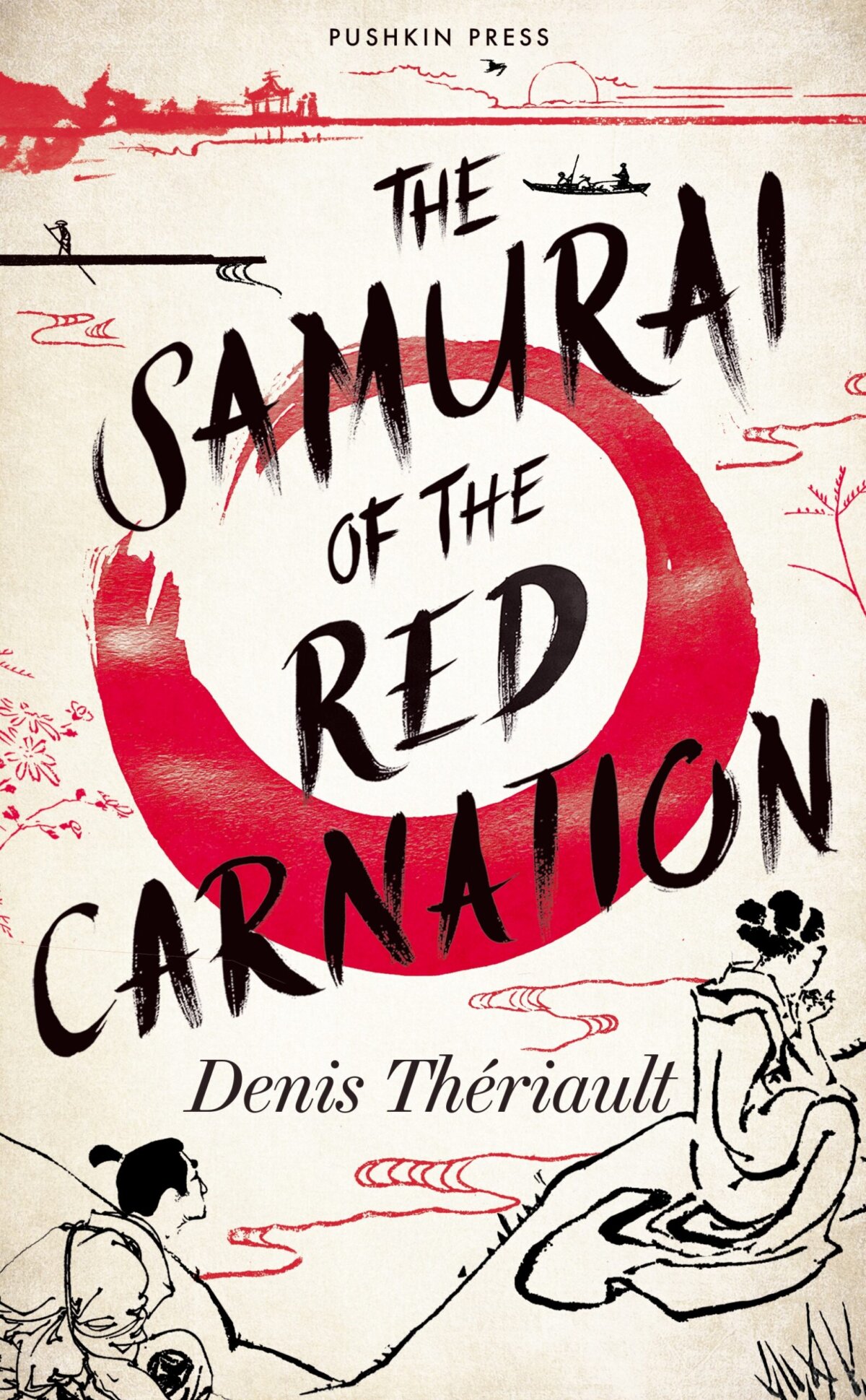
‘The Samurai of the Red Carnation’
By Denis Thériault
Pushkin Press, July 4, 2024
Hardcover: 288 pages
What arts and culture topics would you like us to cover? Please email ideas or feedback to features@epochtimes.nyc