A priest and two companions walked uneasily through the stately streets of Rome. The National Fascist Party of Mussolini had been overthrown, only to be replaced with the iron rule of the Nazis, and the city groaned under the yoke of hostile occupation.
Suddenly, the trio saw an imposing pair of German SS officers striding toward them. Would they be found out? Was this the end?
In hushed tones, the priest told his companions–two disguised British prisoners of war making an attempt at escape–to remain silent as the Germans approached. The priest did his best to appear innocent and relaxed. His wide, bespectacled face and gentle features looked almost childlike.
A conversation something like this followed: “Can I be of assistance?” he asked. The German SS men, quite close now, halted. “We’re looking for directions to the Colosseum,” one of them said. A wave of relief coursed through the priest, but he took care not to show it. “Certainly.” He gave them the directions. Just like that, the moment of terror had passed.
But such moments were common in the life of Msgr. Hugh O’Flaherty in those days. Darting in and out of the relative safety of Vatican halls and colonnades, O’Flaherty stalked the shadowy streets of Rome, often at night, often in disguise, always living on the knife’s edge, never certain that he wouldn’t find a pistol against his chest when he rounded the next corner. But he was committed to saving the lives of as many prisoners and fugitives as he could, come what may.
His efforts earned him the nickname, “The Scarlet Pimpernel of the Vatican,” and like the fictitious British Lord of the Baroness Orczy’s novel, he ran an extensive and intricate underground network of safe houses and safe passages to bring thousands of hunted people to safety. His work resulted in the rescuing of 6,500 Jews and Allied soldiers.
War had haunted O’Flaherty’s steps since his young days: The future priest grew up in Killarney, Ireland during “the Troubles,” violent conflicts between Irish Catholics and Protestants. Four of O’Flaherty’s friends were killed by the Black and Tans, a motley collection of thugs and ex-soldiers who worked to enforce British rule over the country by terrorizing the locals. Needless to say, O’Flaherty had little love for the British at that time of his life–yet he would go on to save thousands of them during World War II.
When O’Flaherty was growing up, his father was steward of a golf club, and O’Flaherty himself became a skilled golfer. But instead of pursuing golf, O’Flaherty decided to become a Jesuit priest, and he enrolled in seminary in 1918.
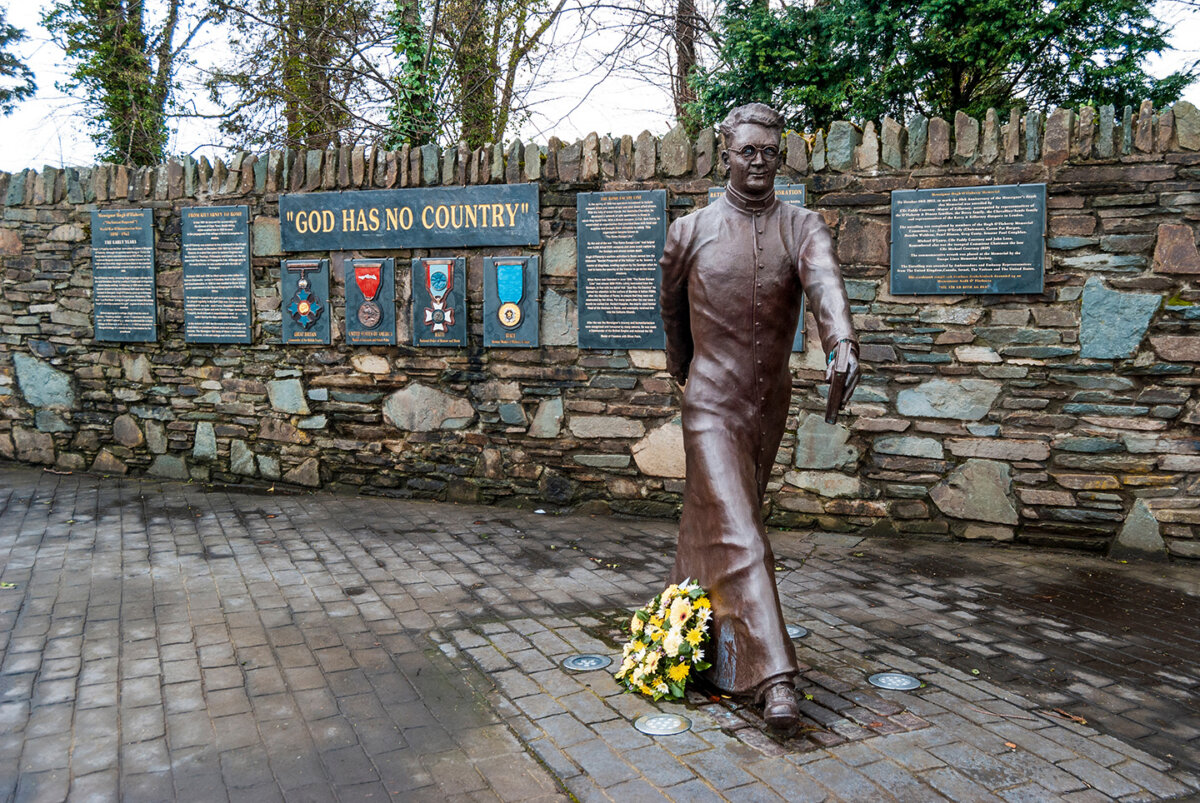
In 1922, he was sent to Rome to conclude his studies, and ordination to the priesthood followed in 1925. Academically gifted, O’Flaherty earned multiple doctorates and learned multiple languages. His skills fitted him well for work in foreign relations, and The Holy See assigned him to diplomatic work in Haiti, Santo Domingo, Egypt, and Czechoslovakia. Just before the kindling of WWII, O’Flaherty was recalled to Rome and appointed to the Holy Office.
In 1939, Italy, which was Germany’s ally, set up prisoner of war camps for captured British and French troops. Msgr. O’Flaherty was part of a Vatican delegation sent to visit these prisoners. O’Flaherty was moved to pity at the sight of the forlorn prisoners, and his animosity towards the British faded. He recognized their humanity and their need for assistance, regardless of what they may have done to his own country in the past. He provided the prisoners with blankets, clothing, and medical supplies. He also began reassuring their families through broadcasts on the Vatican radio station.
When Mussolini’s government fell, many of the French and British prisoners escaped but remained in danger of recapture, torture, and death when the Germans swept in and occupied Rome and the surrounding area in 1943. At the same time, the persecution of Jews intensified–and so did O’Flaherty’s efforts to help those in need. O’Flaherty created an organization to supply fugitives with food, shelter, concealment, documentation and, ultimately, a path to freedom. He and his associates established hundreds of safe houses throughout Rome, risking imprisonment or death in their efforts to keep others safe. His tactics included disguising refugees as priests and nuns to avoid notice.
While the Vatican was technically neutral in the war–and therefore a safe place for O’Flaherty to run operations from–his clandestine activity didn’t exactly qualify as “neutral.” Yet Pope Pius XII permitted O’Flaherty to continue the work of his life-saving organization.
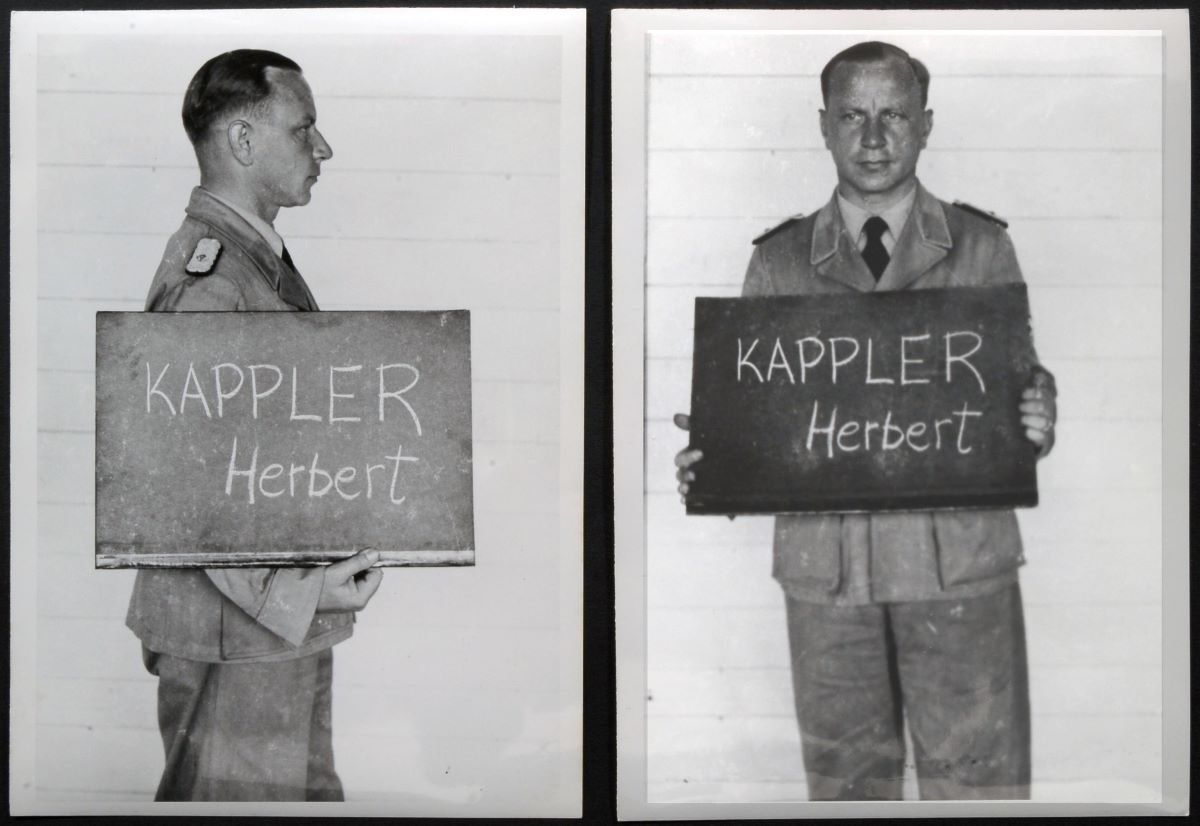
Unsurprisingly, all this brought the ire of the Germans and Italians down on O’Flaherty’s head, and his safety terminated at the border between Rome and Vatican City. Both Col. Herbert Kappler, head of the Gestapo in Rome, and Pietro Koch, the head of the Italian police, vowed to kill the priest if he ever left the neutral territory of the Vatican.
In fact, Kappler even plotted to kidnap O’Flaherty on Vatican soil and then have him shot. Despite this assassination plot and the fact that O’Flaherty often did leave the safety of the Vatican, neither the Germans nor the Italians were ever able to capture the elusive Monsignor.
Through disguise, subterfuge, and a dash of boldness, O’Flaherty avoided detection. His daring extended even to establishing a safehouse directly across from the Gestapo headquarters, reasoning that the German officers wouldn’t think to “look under their noses.”
After the War
Infuriatingly for his pursuers, O’Flaherty never slipped up, and eventually the conclusion of the war brought peace and safety to all. After the war, O’Flaherty’s charity did not diminish: He helped POWs get home and families reunite. And his heart carried a concern for all, including his former enemies. As one of his biographers, Fiorella De Maria wrote,
“True to his belief that God has no country, Hugh started his war work defending British prisoners who were being mistreated by their German and Italian captors and he was ending the war arguing passionately with Americans with their treatment of German prisoners. They were all human beings with a right to life, a right to respect and a right to return to their homes and families.”
Among those whom O’Flaherty was concerned for after the war was his old enemy, Col. Kappler. At the conclusion of the war, Kappler was convicted of war crimes and imprisoned. One of his few visitors was the Irish priest he’d sought so long to capture, torture, and kill. O’Flaherty had one more rescue mission to perform: this time, the rescuing of someone’s soul. Incredibly, through his patient efforts, O’Flaherty succeeded in changing Kappler’s heart and baptizing him into the Catholic faith before his death.
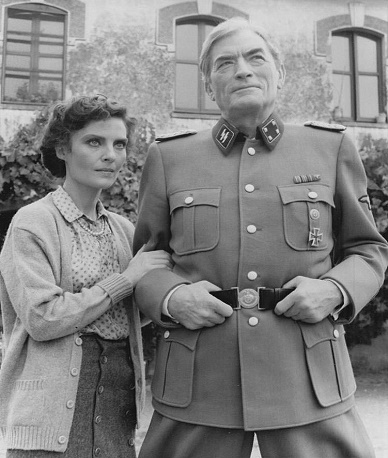
O’Flaherty’s work during the war won him international acclaim. The United States gave him the Medal of Freedom, the Italians offered him a lifetime pension, and the British named him commander of the Order of the British Empire. His story was dramatized in the classic film “The Scarlet and the Black,” featuring Gregory Peck in the lead role.
O’Flaherty was one of the few individuals who maintained sanity in a time of insanity, heart in a time of heartlessness. He saw beyond the fog of war to realize that every human life has value, and that hatred is never the path to a better world. Moreover, he knew that spiritual redemption is possible even for the greatest of sinners—the Col. Kapplers among us.
What arts and culture topics would you like us to cover? Please email ideas or feedback to features@epochtimes.nyc