During World War II, Sweden successfully stayed neutral, avoiding direct conflict with Nazi Germany and the Soviet Union. After that war ended, it had a nightmare neighbor in the communist Soviet Union.
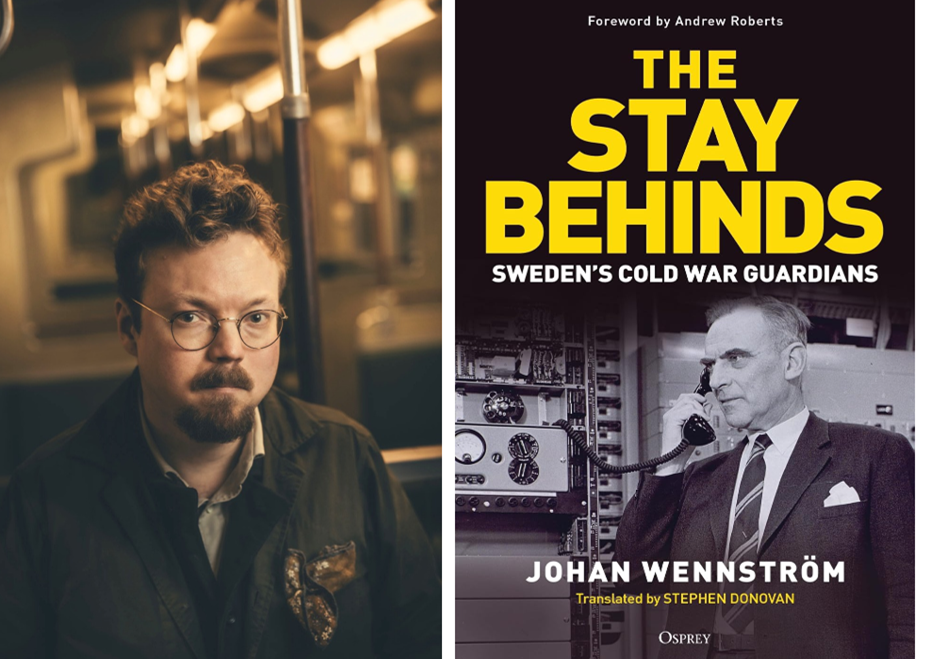
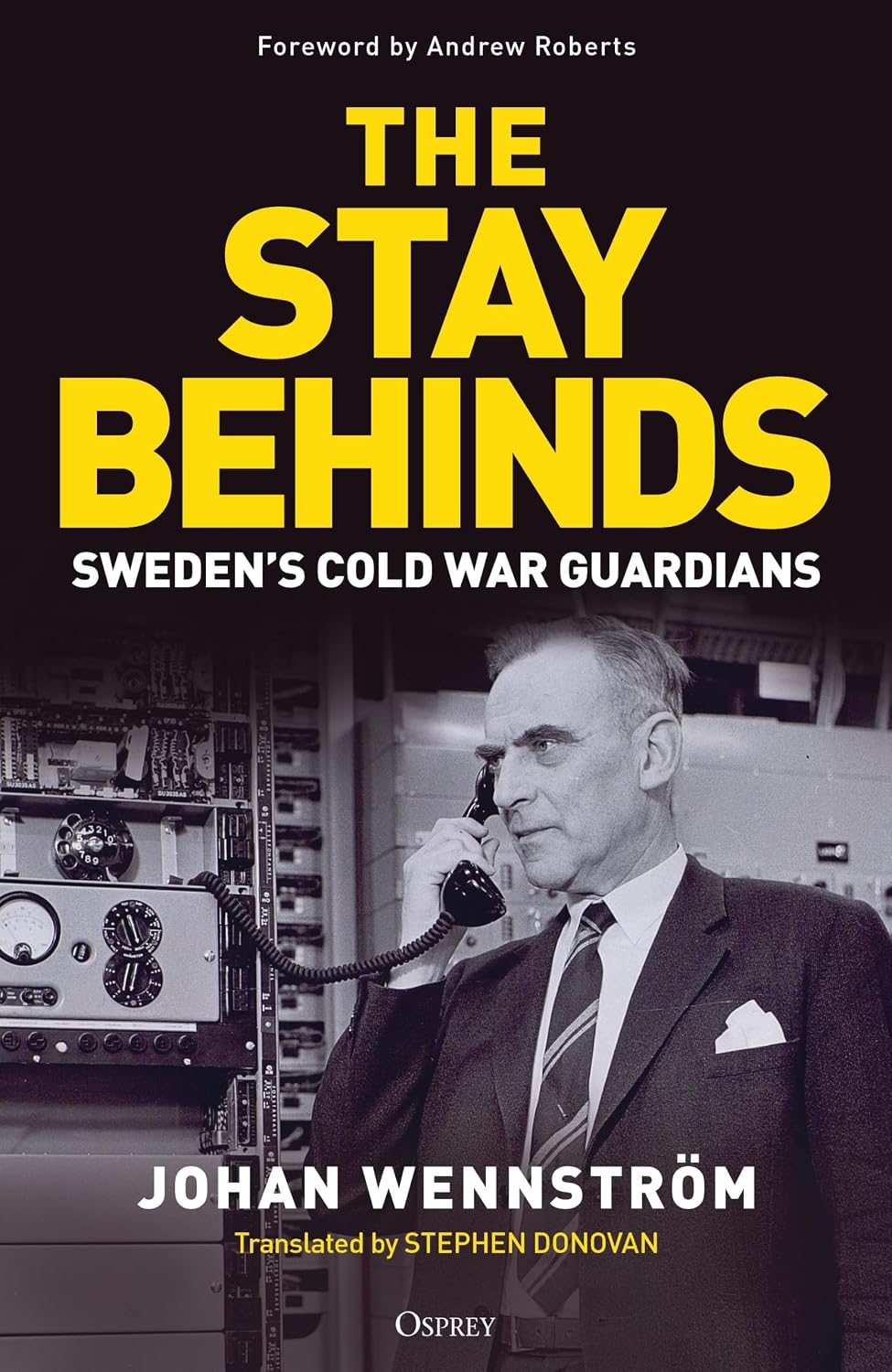
One secret Swedish organization did more than worry. It prepared. Author Johan Wennstrom tells how Sweden faced this problem in “The Stay Behinds: Sweden’s Cold War Guardians.”
When the Swedish press learned about this underground group in the 1990s, they dubbed it the “Stay Behinds,” using an English term to imply that it had been run for and by the United States and the United Kingdom. The Swedish government called it “Homeland Stewardship.”
Communist Threat
Until the Soviet Union collapsed in 1991, Sweden expected any large-scale war in Europe to open with a Soviet invasion of Sweden. In 1988, a Swedish author used a 1992 invasion by the Soviets as a plot for his novel. It was a bestseller in Sweden.
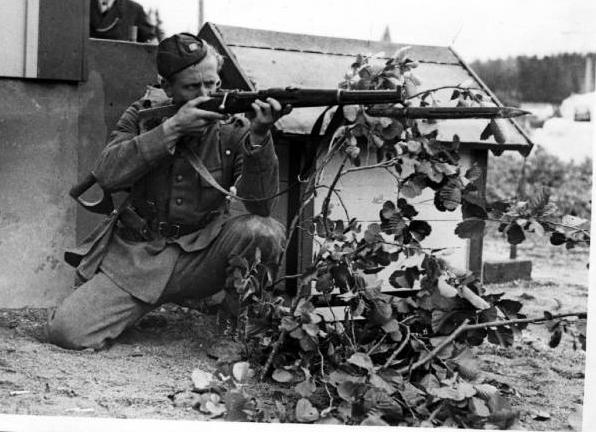
Believing that NATO would remain too focused on the European mainland to provide much direct support for the Scandinavian Peninsula, Sweden built a formidable military. This included a navy which could defend its coast, an air force which could operate high-performance jets off its highways, and a decentralized army which could quickly materialize if war came.
Even with this build–up, Homeland Stewardship prepared for defeat. In 1948, they secretly organized a potential resistance movement. Its mission was threefold. The plan was to spirit the Swedish government out of Sweden, where it would establish a government-in-exile. Partisan resistance would be coordinated against the occupying Soviets. The Stay Behinds would gather intelligence and report their findings to the forces fighting the Soviets.
Neither Sweden’s monarchy nor its Parliament was informed, and Homeland Stewardship wasn’t fully legalized until 1955. Secrecy was viewed as critical.
The Iron Curtain
Wennstrom shows how the organization was created in the late 1940s, a period when the Iron Curtain was falling across Europe. Sweden watched as the Soviets strong-armed Poland and Czechoslovakia into their orbit and forced Finland into a Soviet-favoring neutrality.
Homeland Stewardship was autonomously Swedish, under the control of no other nation or international organization. It coordinated with Britain’s Secret Intelligence Service (MI6) and the U.S. Central Intelligence Agency (CIA) and accepted assistance in the form of training and radio equipment.
Assuming that any invasion would be a precursor to a general European war, the organization had plans to cooperate with the CIA and MI6 if Sweden was attacked. Nevertheless, Homeland Stewardship maintained its independence throughout the Cold War.
As Sweden entered the 1980s, the fear of a Soviet invasion was greater than during earlier decades. The country feared Soviet desperation as the Soviet state unraveled.
Operating in Plain Sight
The book details how Homeland Stewardship operated throughout its 40-plus-year history. It shows how members were selected and trained and how they would operate if they were called into action. It describes their various missions and explains how they operated in plain sight in peacetime Sweden without being noticed by politicians or the press.
One surprise was its leaders. They were largely civilian, although most had previously had military training and service. They were drawn from Swedish labor leaders, farmers’ cooperative leaders, and corporate executives. These were men who might oppose each other during labor negotiations, yet they were working together to protect Sweden from invasion.
The author shows how the organization evolved over its lifetime. Homeland Stewardship adapted to shifts in the Cold War. The leadership passed from the original men running it to a new generation as its 1940s leaders aged-out in the 1960s.
Equally surprising is the support which Homeland Stewardship received from Sweden’s political left. Even the country’s socialists were patriotic Swedes. Their most prominent leaders acknowledged that if the communists took over Sweden, the leadership of the Swedish left would be among the first the Soviets imprisoned.
Wennstrom drew on recently opened archival material for this book. He also conducted extensive interviews with surviving members of Homeland Stewardship. These were often the organization’s leadership.
When the leaders were unavailable to him, usually because old age had claimed them, Wennstrom interviewed their children. The result is a remarkably rich treatment of a shadowy organization which deliberately kept few records. Homeland Stewardship was maintained in secrecy until the Soviet Union collapsed in 1991. Only then was it dissolved.
Wennstrom began writing this book in the wake of the Russian invasion of Ukraine in 2022. He feels that Stay Behind organizations have a renewed relevance for nations bordering Putin’s Russia. While Sweden abandoned neutrality by joining NATO in 2024, Wennstrom contends that nations need to maintain autonomy over their own defense.
“The Stay Behinds” is fascinating book. Wennstrom does an excellent job of drawing together a diverse set of sources to provide a coherent picture of a deliberately obscure organization. The book offers insight into an often-neglected aspect of politics and warfare.
‘The Stay Behinds: Sweden’s Cold War Guardians’
By Johan Wennstrom, Translated by Stephen Donovan
Osprey Publishing: Sept. 8, 2026
Hardcover, 240 pages
What arts and culture topics would you like us to cover? Please email ideas or feedback to features@epochtimes.nyc