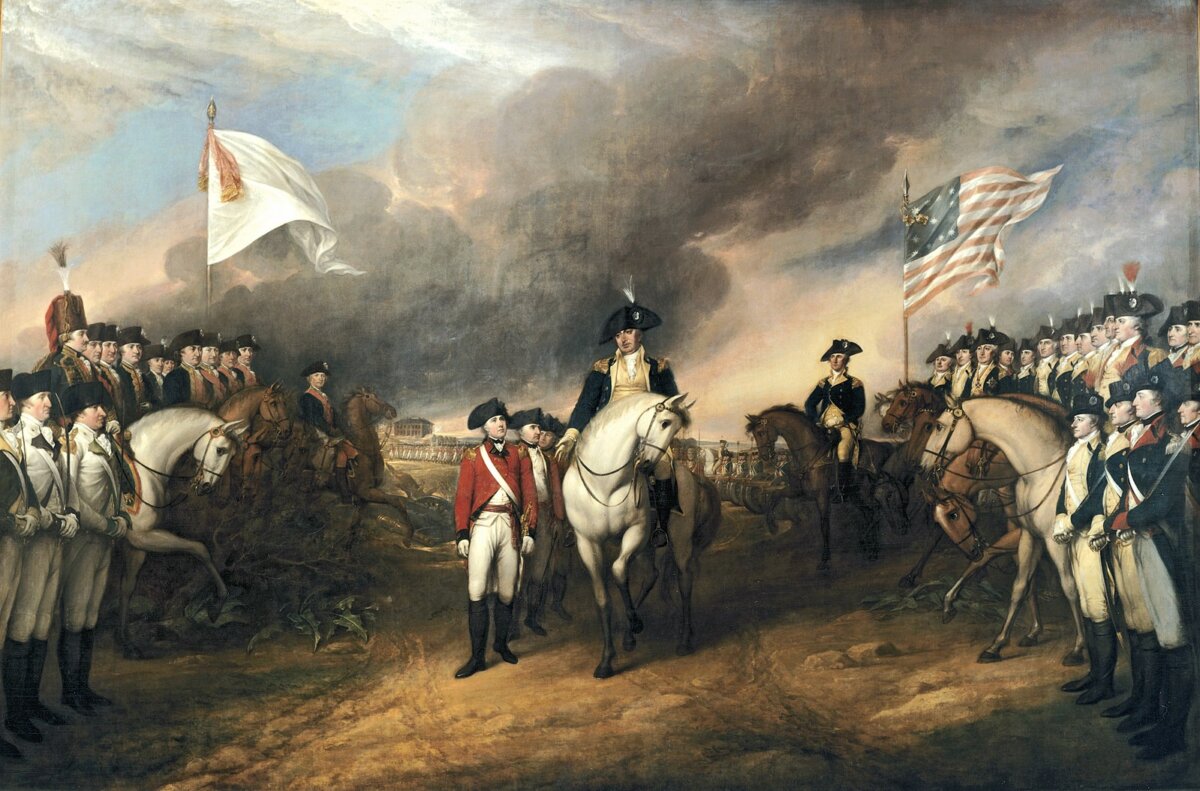
After being surrounded and sensing defeat was near, British Gen. Charles Cornwallis tried to flee during the final stages of the Revolutionary War. A storm arrived at just the right moment to spoil the escape. Cornwallis and his men were forced to surrender in the last major battle of the American Revolution.
French Alliance Turns the Tide
While it’s unclear who fired the first shots of the Revolutionary War in April 1775, the Colonists reported first that they had. France backed the Americans from the start, sending supplies to help them fight the British. In 1778, France and Britain declared war on each other.
With Britain now a common enemy, the French began sending troops and naval ships to aid the American cause. American forces received much-needed support when French Royal Army officer Comte de Rochambeau arrived in Rhode Island with 5,500 troops.
Cornwallis, on the other hand, was one of the most successful British commanders of the war. By 1780, he had shifted his focus to the southern colonies, capturing Savannah, Georgia, as well as Charleston and Camden, South Carolina.
But as he moved north, his campaigns faltered. After a brutal clash with American troops under Maj. Gen. Nathanael Greene in North Carolina, Cornwallis’s forces were battered. He retreated to the Virginia coast in April 1781 to replenish supplies.
The Siege of Yorktown
Cornwallis and his 9,000-man army then occupied Yorktown, Virginia. From there, they could send messages to the Royal Navy by sea. Their plan was to fortify the town until reinforcements and supplies arrived.
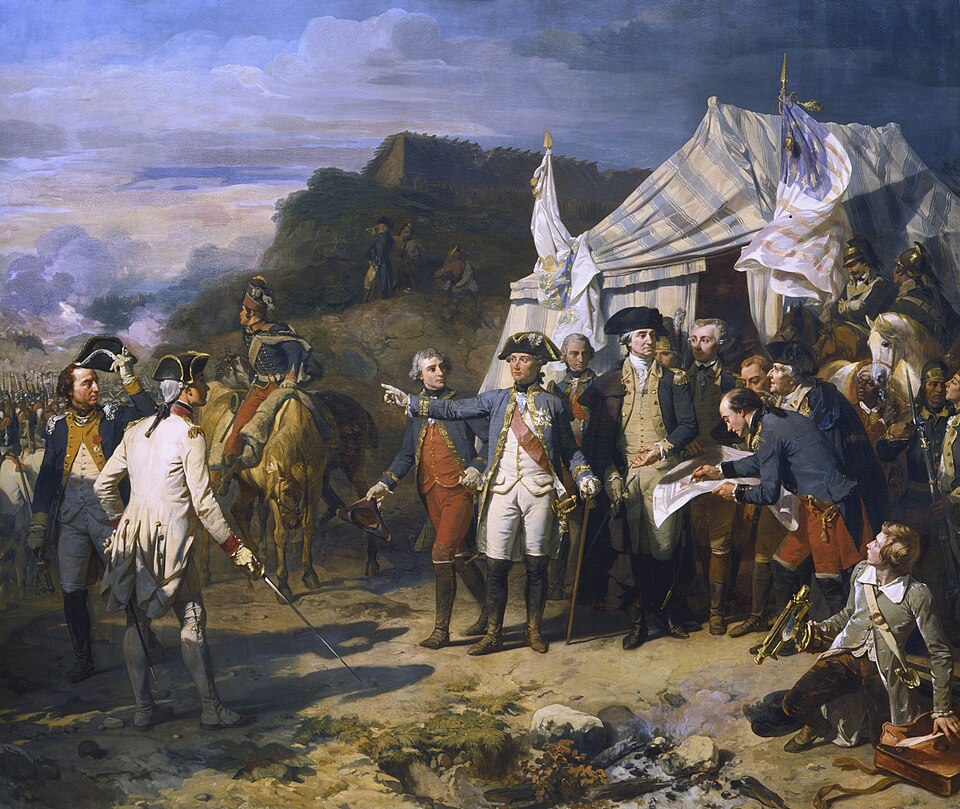
Meanwhile, American Gen. George Washington headed from New York to Rhode Island to meet up with Rochambeau. They initially planned to attack the main British force under Gen. Harry Clinton in New York. Washington changed course after learning that another French fleet was sailing for the Chesapeake Bay.
He pivoted south toward Yorktown. To deceive Clinton, Washington ordered troops to construct large camps featuring giant brick bread ovens, making it appear the Americans planned to stay. He left a handful of troops near New York to trick Clinton while the main American and French armies headed south.
By Sept. 5, 1781, a French fleet had arrived to blockade the entrance to the Chesapeake Bay as the allied armies marched south. The British Royal Navy tried to break through to reach Cornwallis but was intercepted by the French.. The two fleets clashed in the Battle of the Capes. The Royal Navy was soundly defeated, leaving Cornwallis on his own.
The French and American troops reached Yorktown on Sept. 28. The British were now completely surrounded, blocked by land by Washington and Rochambeau’s troops and cut off from the sea by the French navy.
The Storm That Sealed Cornwallis’s Fate
Allied forces dug trenches ever closer to Cornwallis’s troops. On Oct. 9, the barrage of cannonballs began and pounded the British position for several days.
Cornwallis had been promised reinforcements from Clinton in New York, but the ships left too late. His last hope was to cross the York River to Gloucester Point, where British Lt. Col. Banastre Tarleton held a small perimeter.
On the night of Oct. 16, Cornwallis ordered a desperate evacuation using 16 flatboats to ferry more than 8,000 troops in three round trips. The first trip succeeded around 11:00 p.m. Then the weather changed.
“But at this critical moment, the weather from being moderate and calm, changed to a most violent storm of wind and rain and drove all the boats, some of which had troops aboard, down the river,” Cornwallis wrote in his campaign report, according to the book “The Weather Factor” By David M. Ludlum published in 1984.
The flat boats making the second crossing were blown southeast down the York River. Some landed on shore about a mile from Yorktown. Two were carried five miles and captured by the French at the river’s mouth.
Knowing he was defeated, Cornwallis recalled his men from Gloucester Point. The next day, around mid-morning, he sent out a drummer boy followed by an officer waving a white flag. They negotiated a ceasefire and the terms of surrender.
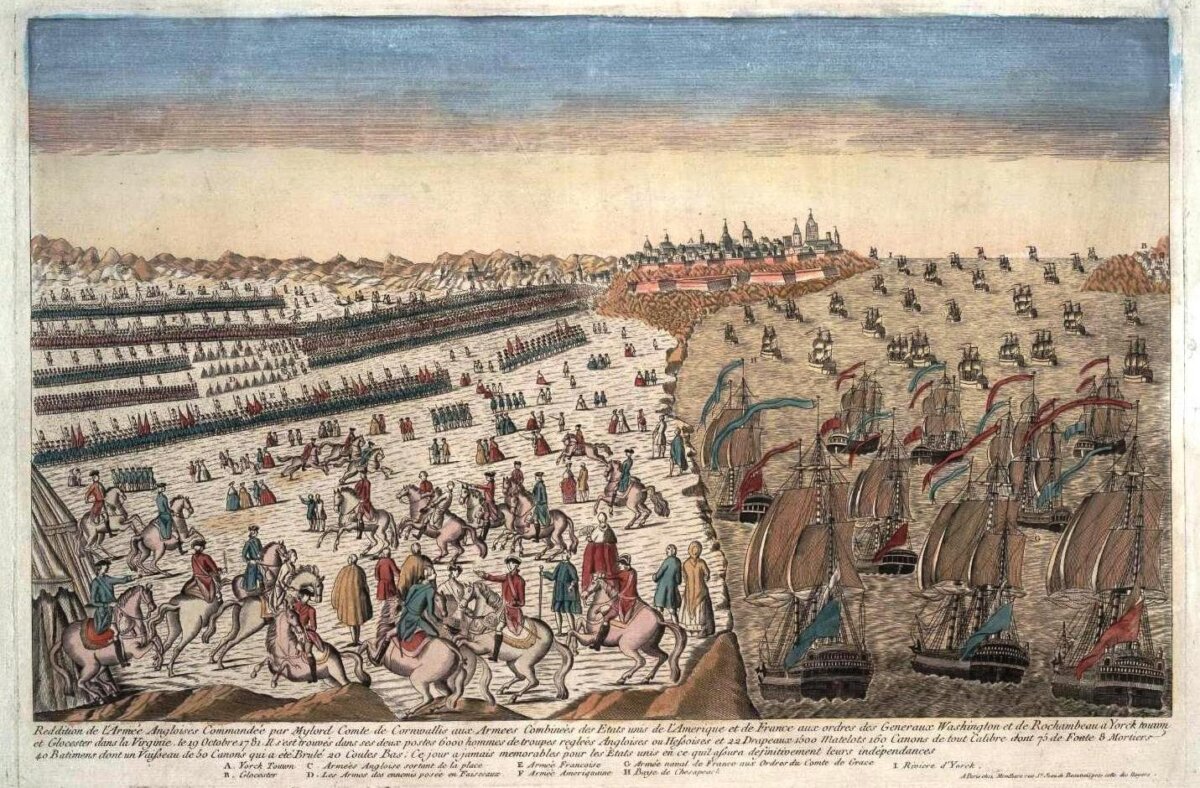
The British formally surrendered on Oct. 19, 1781. Claiming he was ill, Cornwallis did not attend and sent Gen. Charles O’Hara in his place. As the troops marched out, O’Hara symbolically offered his sword to Rochambeau, who refused it. Washington also refused, noting it didn’t come from Cornwallis himself.
The war did not end immediately. The British still had around 26,000 troops in North America. Skirmishes continued on land and at sea until the British Parliament on March 5, 1782, authorized peace negotiations. The Treaty of Paris, signed on Sept. 3, 1783, formally ended the war and recognized American independence.
What arts and culture topics would you like us to cover? Please email ideas or feedback to features@epochtimes.nyc