



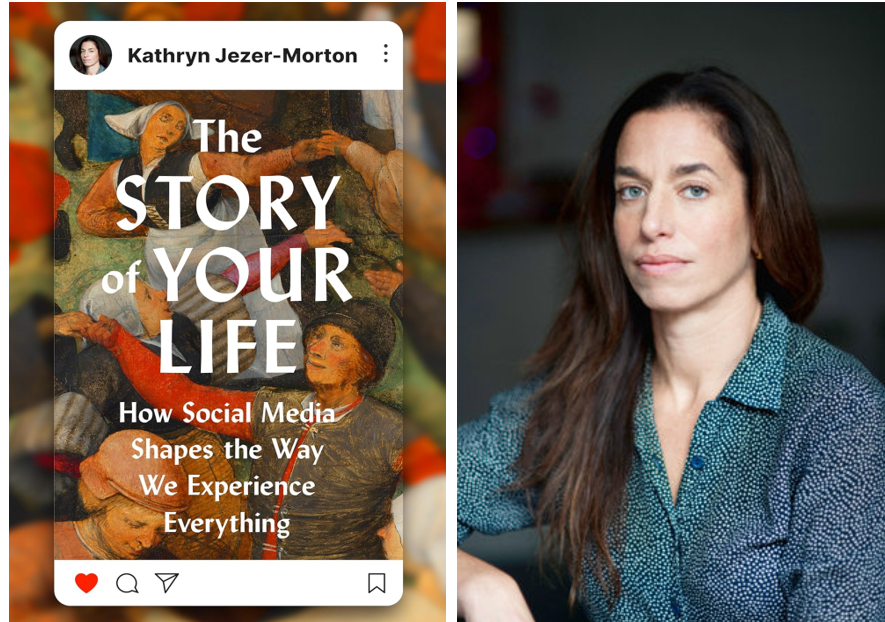
According to “The Story of Your Life: How Social Media Shapes the Way We Experience Everything” by sociologist Kathryn Jeter-Morton, social media has changed the way we live.
While that’s not a revelation by any means, she qualifies it with a more pointed claim— “Social media is where our history lives now.” This book is not meant to knock our social media posting habits; it’s meant to shed light on how they’re changing the way we vacation, get married, face struggles, and on and on.
There are more categories, for sure, and the more popular ones are chapter headings in this deeply researched book, with plenty of real-world conversations about the irresistible lure of sharing our lives online.
The book’s idea came to the author in 2022 while working on a doctoral project on mommy-influencers. Her project centered on women who regularly shared their everyday home experiences with an ever-increasing audience. As their fans and viewers increased, so did their potential to become paid spokespeople for corporate brands.

Mommy Content Creator
Readers learn, for example, about one of these moms who started a blog with a friend. Each shared their take on typical home topics, such as wellness and beauty.
However, when one of the moms began sharing more intimate family stories, that part of their content received the most attention, growing a highly engaged audience. Now a popular solo act, the mommy influencer is considered a “content creator” and continues to share the ups and downs of family life.
Jezer-Morton does not get into the technology or specific online platforms, per se, but on the stories that grab our attention. She tells how audiences receive them. Maybe the most pressing is how persuasive social media has become to influence the stories we feel worthy of posting.
With anecdotes from friends, family, colleagues, and those she meets on her travels across the country, the author formulates her theories on whether social media is “shaping our evolving identities.”
‘Likes’ or ‘Hearts’
What better subject to start with than “Vacations.” It’s amusing to read the author’s description of how people view vacation photos. They question things like “Is everyone there? Is everyone having fun?” as if it were a list of boxes to check.
Once the influencer gathers the answers, the site shows the level of approval with a “like or heart.” More attention is paid to posting curated content than to whether a good time was had by all.
As for choosing which photos to upload, there’s a tendency to place more importance on documenting happy traveling moments than on living them.
Readers may ask: Is there more attention into setting up the perfect photo than being present at the very site vacationers traveled miles to enjoy? Is the photo of the pasta plate the server delivers good enough for Instagram?
We read about “mad crowds” trying to outpace themselves to get to iconic scenic spots or historical markers; this is sometimes done at the risk of irreparable damage to fragile areas.
In some cases, local officials have gone so far as to restrict or limit access to some ancient sites. There is now an unexpected and harmful by-product of the pursuit of showing friends and family the places the vacationer has been to and the fun they’ve had along the way.
Super Status Weddings
The next topic, “Celebrations,” covers special occasions in our lives with a spotlight on weddings. Social media has blown up the wedding industry.
Formerly “relatively modest affairs,” weddings grew grander in the 1980s after the “televised fairy-tale” wedding of Diana Spencer and Prince Charles. What was an occasion to bond two families together now “functions as advertising for the couple’s affect and taste.”
Beyond the wedding ceremony itself, new social media traditions coined by the author as “shareable prenuptial content” have become the norm—notably the proposal, engagement photo shoots, and the pre-wedding parties and rehearsals.
Another amusing touch is the author’s description of her own wedding photos, taken before smartphones and which now make her feel as if she’d “gotten married in the previous century.”
In “Struggle,” we read about a woman who stresses over letting her online friends know about her divorce and new dating life. There is the new mother, one who used to post about her fun and adventurous life and who is now facing the challenges of parenting and marital strife. How does she present herself now?
Speaking to a regular online “poster” who isn’t concerned about appearing vulnerable, the author asks if there’s anything she couldn’t be honest about. Without a beat, the response was, “You can’t be broke.” There’s a motto content creators aim to follow. It’s this: “The brand must remain strong.”
Then and Now
Each chapter includes historical context in the form of a “that was then, this is now” comparison: a review of how these subjects were handled pre-social media versus today.
With plenty of real-life examples, the book becomes a convincing sociological study that, for better or for worse, reveals our ideals for what makes a life well-lived.
In the last chapter, “Obsolete Tools,” the author does not advocate discontinuing posting or tossing away our phones. Her call to action is for readers to become more conscious about their own posting habits. She foresees the number of people posting online will decrease over time, but not the human need for storytelling and connection.
She concludes with a story about one of her most cherished family traditions, a winter solstice gathering in the woods. It’s nighttime; there’s never been an opportunity to take pictures. However, she writes about the festivities, the singing, the eating, as if it’s happening before her very eyes.
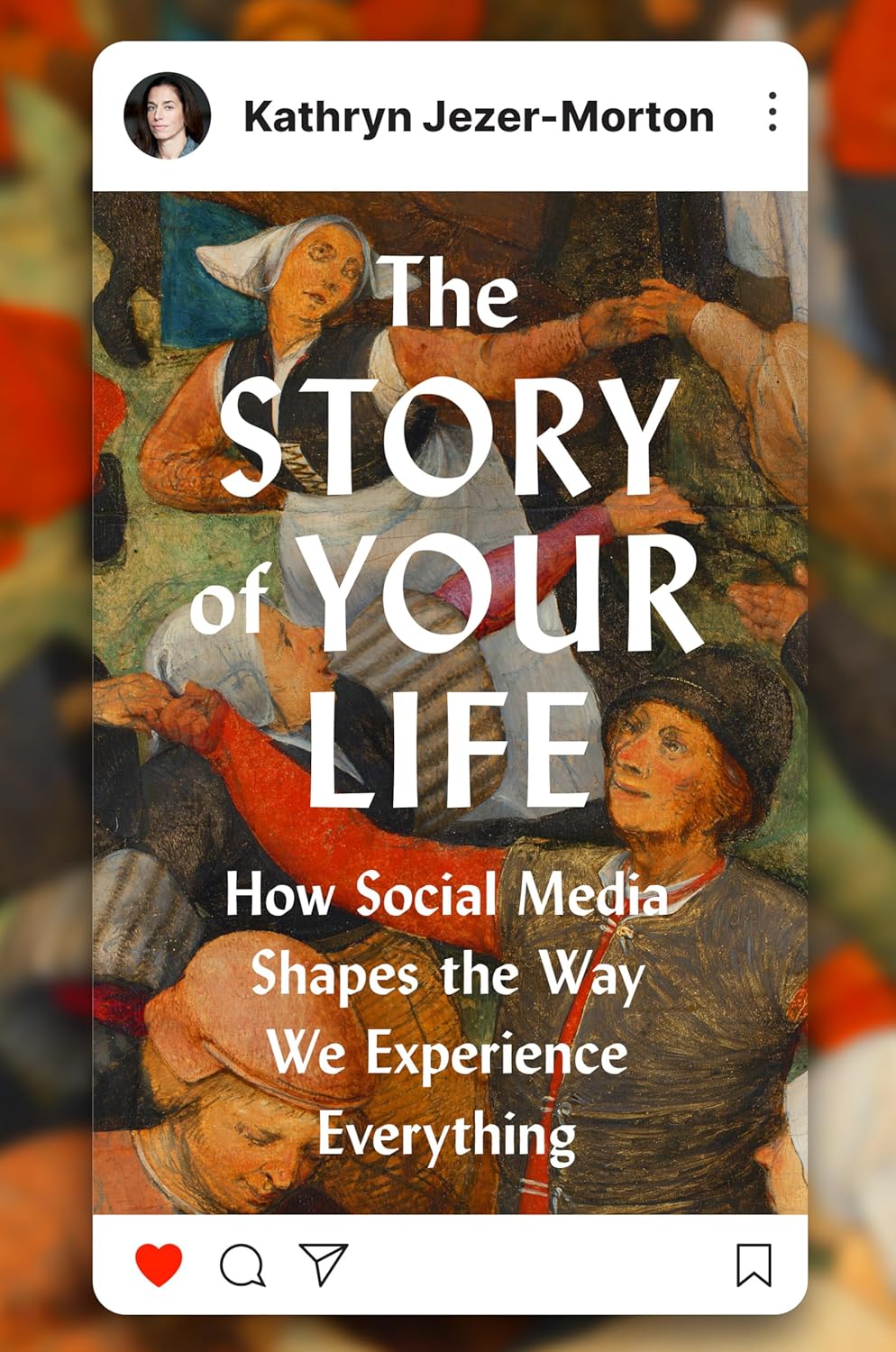
‘The Story of Your Life: How Social Media Shapes the Way We Experience Everything’
By Kathryn Jezer-Morton
Viking: Aug. 4, 2026
Hardcover, 272 pages
What arts and culture topics would you like us to cover? Please email ideas or feedback to features@epochtimes.nyc.
