



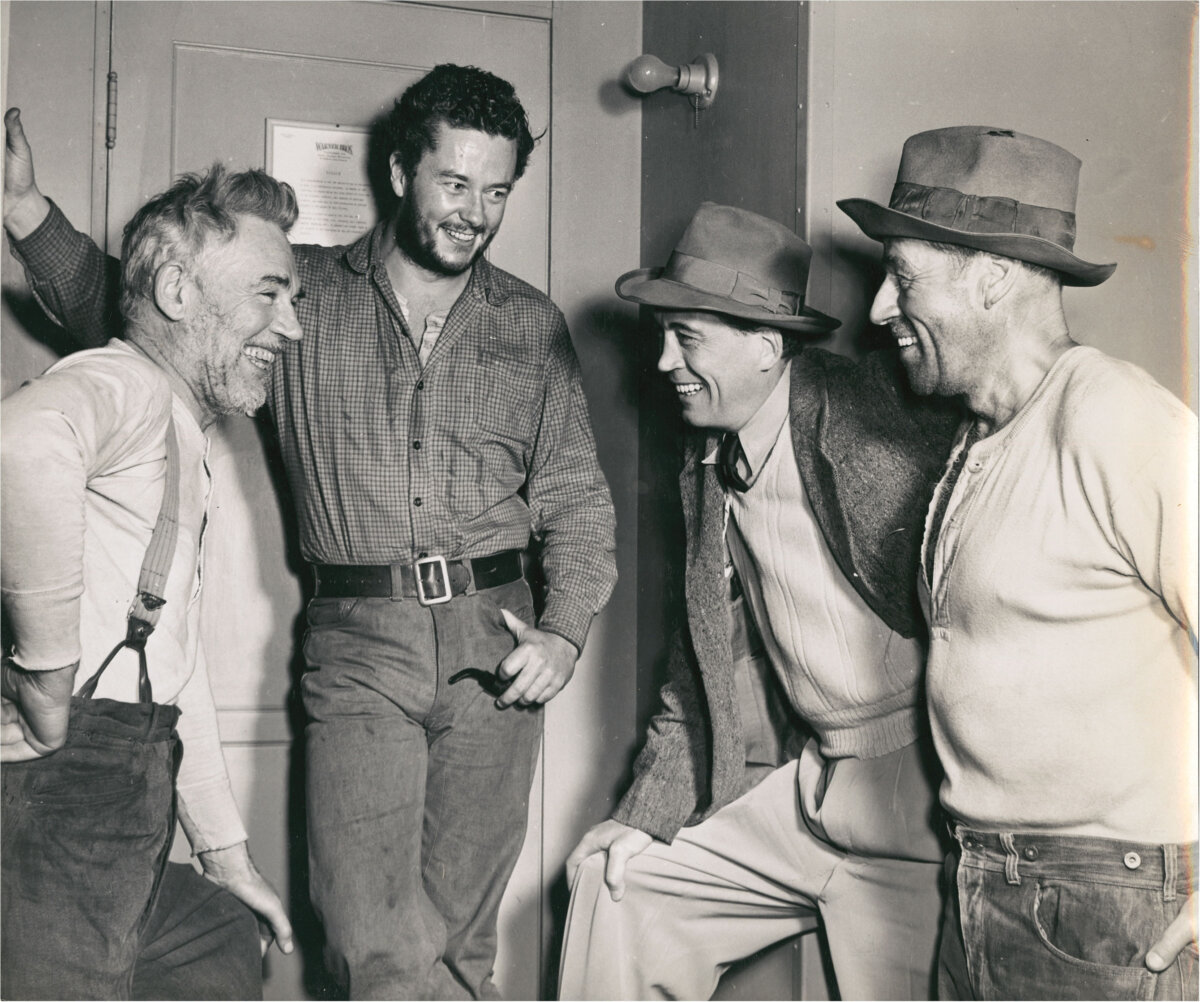
Based on B. Traven’s novel of the same name, “The Treasure of the Sierra Madre” won John Huston a Best Director Oscar and Walter Huston a Best Supporting Actor Oscar, the first time a father and son duo won for the same film. The story is about seeking meaningful, not mock, treasure.
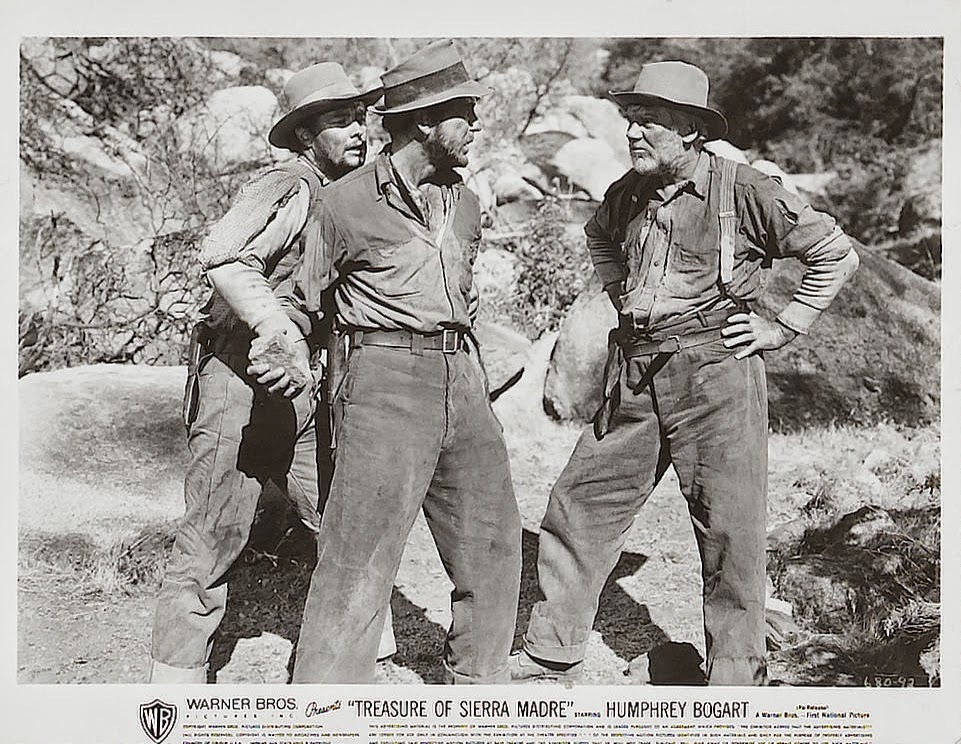
Two drifters, Fred Dobbs (Humphrey Bogart) and Bob Curtin (Tim Holt), seek a fortune in Mexico working on an oil derrick. When contractor Pat McCormick (Barton MacLane) cheats them of their rightful earnings, they secure their wages only after a scuffle.
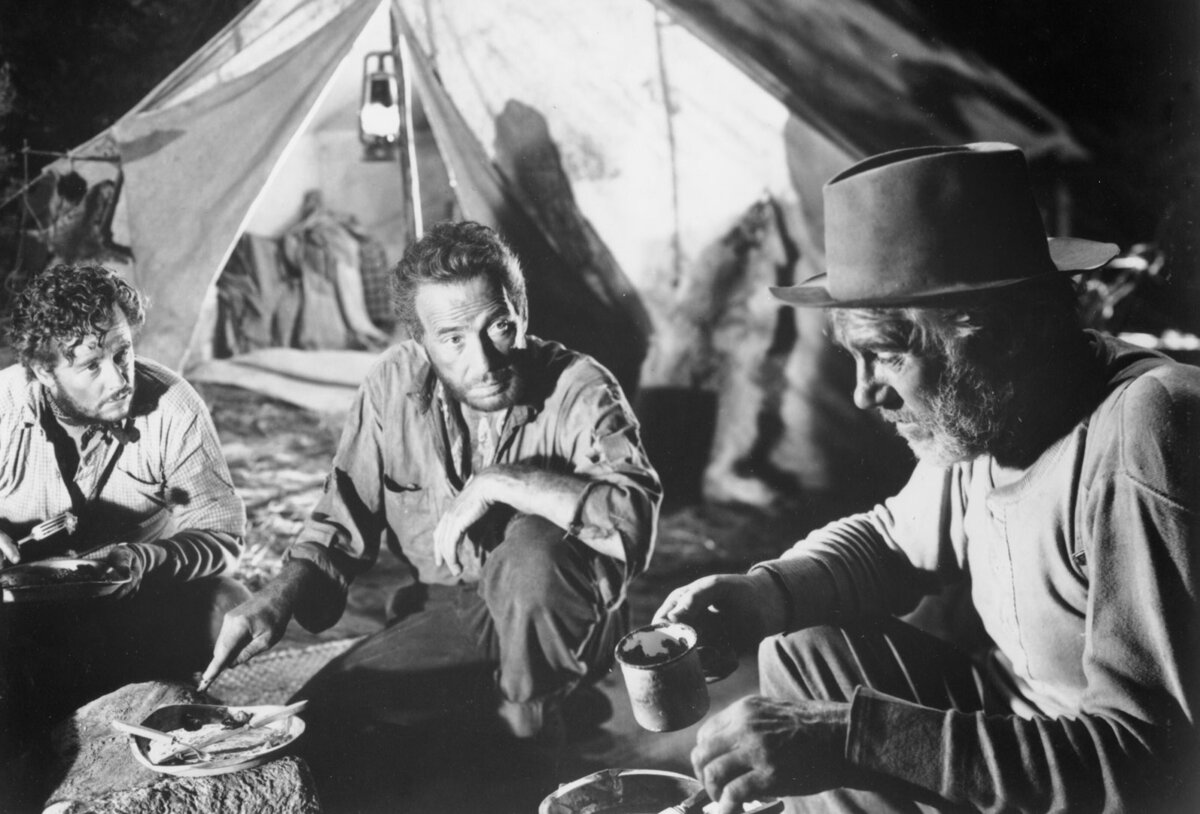
They befriend veteran prospector Howard (Walter Huston). As a trio, they aim higher, mining for gold up in the Sierra Madre mountains. In treacherous terrain, they must contend with Mexican bandits, harmless but curious villagers, and another prospector, James Cody (Bruce Bennett).
As the mined gold piles up, though, the biggest threat they face is Dobbs’s growing greed.
Greedy Nature
Screenwriter and director Huston suggests that greed isn’t unique or rare. If anything, it’s rather commonplace.
Here, many characters are greedy to some degree. Dobbs, who’s had a rough, impoverished life, dreams that gold will buy him not just ease but luxury. He’s after not just power but control.
Not everyone’s as greedy, however. Curtin and Howard prioritize a sense of home, hearth, and happiness above their appetite for gold.
Howard warns that gold can corrupt a man’s soul. However, as the film demonstrates, gold isn’t the problem; an insatiable ego is.
Howard figures that Dobbs, for all his conniving, is as honest as the next man, “or almost.” That qualifier is vital. It separates those who don’t allow selfishness to overwhelm them from those who do. Howard recalls how he’d once acquired “almost enough” gold to cure him of the “fever” he’d caught. He knows too well the ideas even supposedly decent people get when gold is at stake.
Before they begin prospecting, Dobbs brags that finding gold won’t make him greedier. In response, Howard implies that, while it’s tempting to see only others as susceptible to greed, even the best of men can be vulnerable if they forget what matters in life.
Watch Howard dismiss Curtin’s and Dobbs’s claims to have struck gold early on in their journey. What they’ve found, he clarifies, is pyrite, “fool’s gold,” not to be mistaken for “the real stuff.”
Greed Turns Crazy
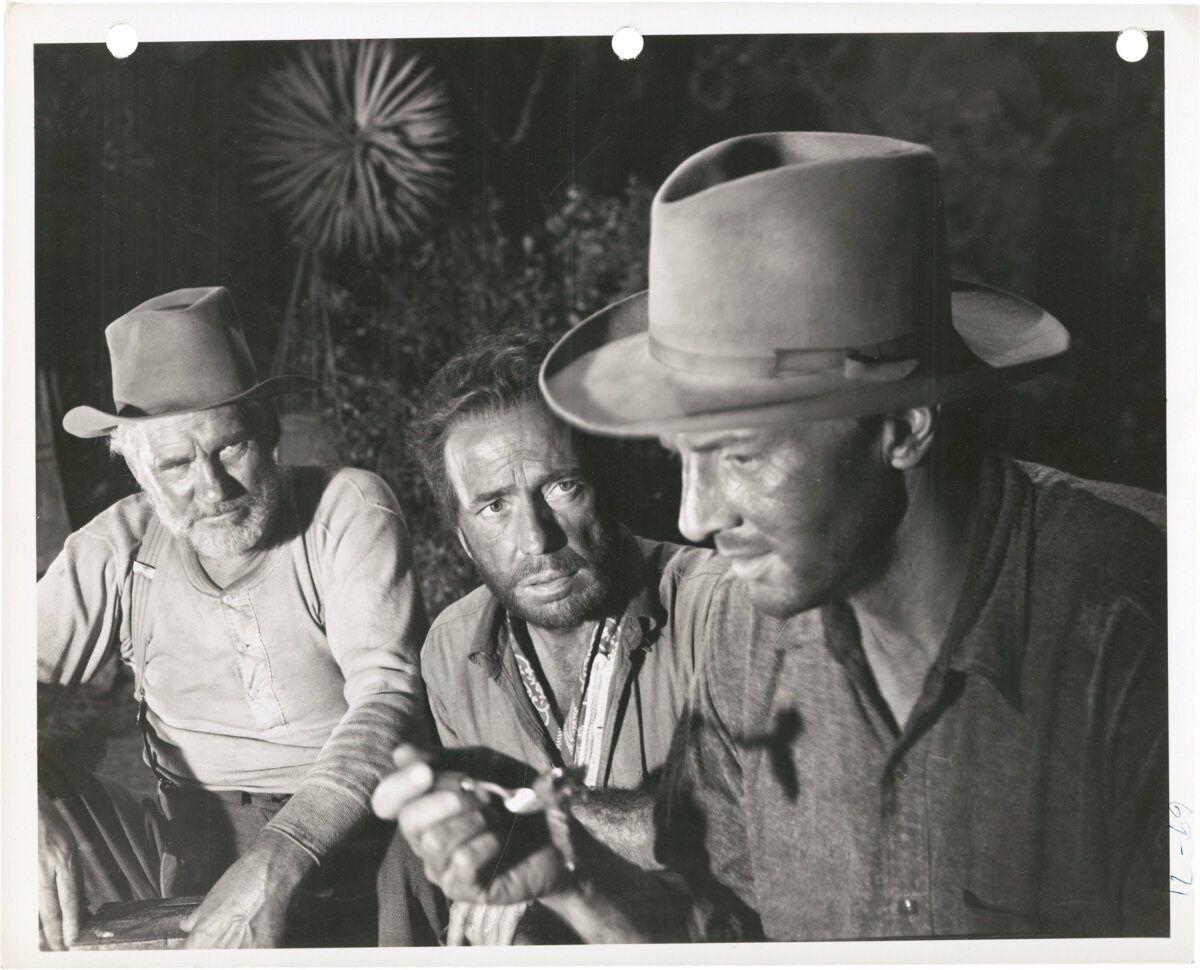
When an increasingly deranged Dobbs starts talking to himself, he becomes a caricature, a perversion of a morally ordered conscience. The soul should direct the mind, body, and heart toward goodness, beauty, and truth. John Huston shows that your conscience helps you stay true to who you are. Dull it, and you become who you aren’t.
One scene captures this profoundly. As Dobbs turns diabolical, he feels chilled, although there’s a nice little fire going at the camp. Those flames give a lot of light but too little heat. Likewise, it’s not that his conscience doesn’t exist; it’s just that he’s dulled it to a point where it can’t reach him. As a result, he keeps second-guessing himself, unsure if he’s right, or right enough.
When Curtin and Dobbs beat the lying McCormick in a fight, they take only the money due to them. However, as the prospecting journey wears on, Dobbs reaches even for what isn’t his. Because he lacks a sense of himself, he projects his mistrustful, bad faith thinking onto Curtin and Howard, imagining they’re as scheming as he is.
True character, like gold, always shines. It never loses its luster and stays undimmed even under stress.
The film is shorn of prominent female characters, but its best lines belong to a woman who remains offscreen: Cody’s wife, Helen. The prospecting trio stumble upon her letter to Cody and read it, stunned; every line of hers glows like a nugget of gold. Helen writes that she’s thrilled that Cody, who keeps going on prospecting trips, has promised he won’t go again if he doesn’t strike gold this time. She writes, “I’ve never thought any material treasure, no matter how great, is worth the pain of these long separations.” She reassures him that their little son is fine. She describes the beauty of the countryside, spring, warm rains, trees in bloom, and orchards aflame with flowers.
Hinting at everything good waiting for him back home, she says she won’t mind if he’s lucky with gold this time. Even if not, she adds, “Remember, we’ve already found life’s real treasure.”
Check the Internet Movie Database website for plot summary, cast, reviews, and ratings. You can watch “Treasure of Sierra Madre” on Kanopy, MGM+, and YouTube.
These reflective articles may interest parents, caretakers, or educators of young adults, seeking great movies to watch together or recommend. They’re about films that, when viewed thoughtfully, nudge young people to be better versions of themselves.
What arts and culture topics would you like us to cover? Please email ideas or feedback to features@epochtimes.nyc
