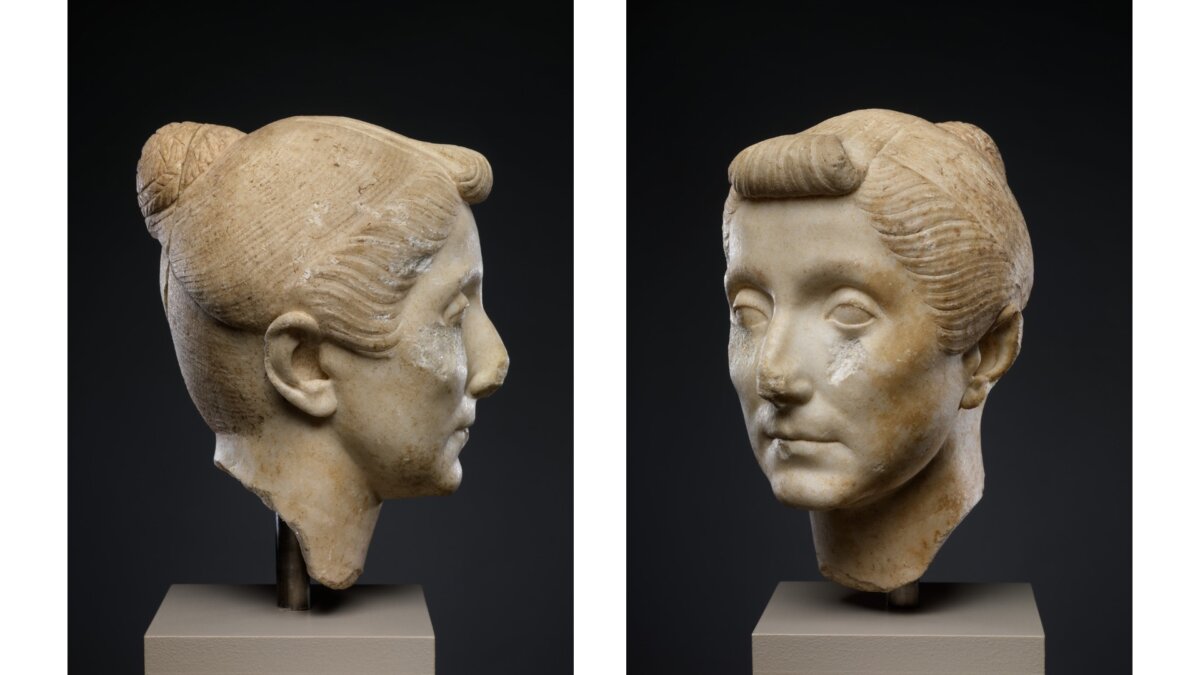
For centuries, the quintessential image of ancient Greek and Roman sculpture has been the pure white marble statue. But these ancient works of gods, goddesses, important personalities, and mythological creatures were once painted in lively colors with flesh-toned paint, colorful clothes (often in striking patterns), and sometimes with touches of gold or metal or stone inlays.
According to New York’s Metropolitan Museum of Art, “Marble and wood sculptures were brightly painted, and bronze statues were originally a pale flesh-like brown.”
The idea of uncolored ancient sculpture began in the Italian Renaissance in the 16th century, when sculptures fit the ideal art artists were looking for, Vinzenz Brinkmann explained in a video.
Brinkmann heads the department of antiquity at the Liebieghaus Sculpture Collection in Frankfurt am Main, Germany, where his team spent over 40 years researching ancient artists’ use of color.
He explains that, in the 18th century, when archaeologists began excavating ancient sites in Rome and then in Greece, they unearthed artifacts with traces of paint. But the myth of uncolored ancient art continued. Even in the 20th century, when researchers used science to confirm that color was used on ancient statues, the idea of colorless ancient sculpture still reigned.
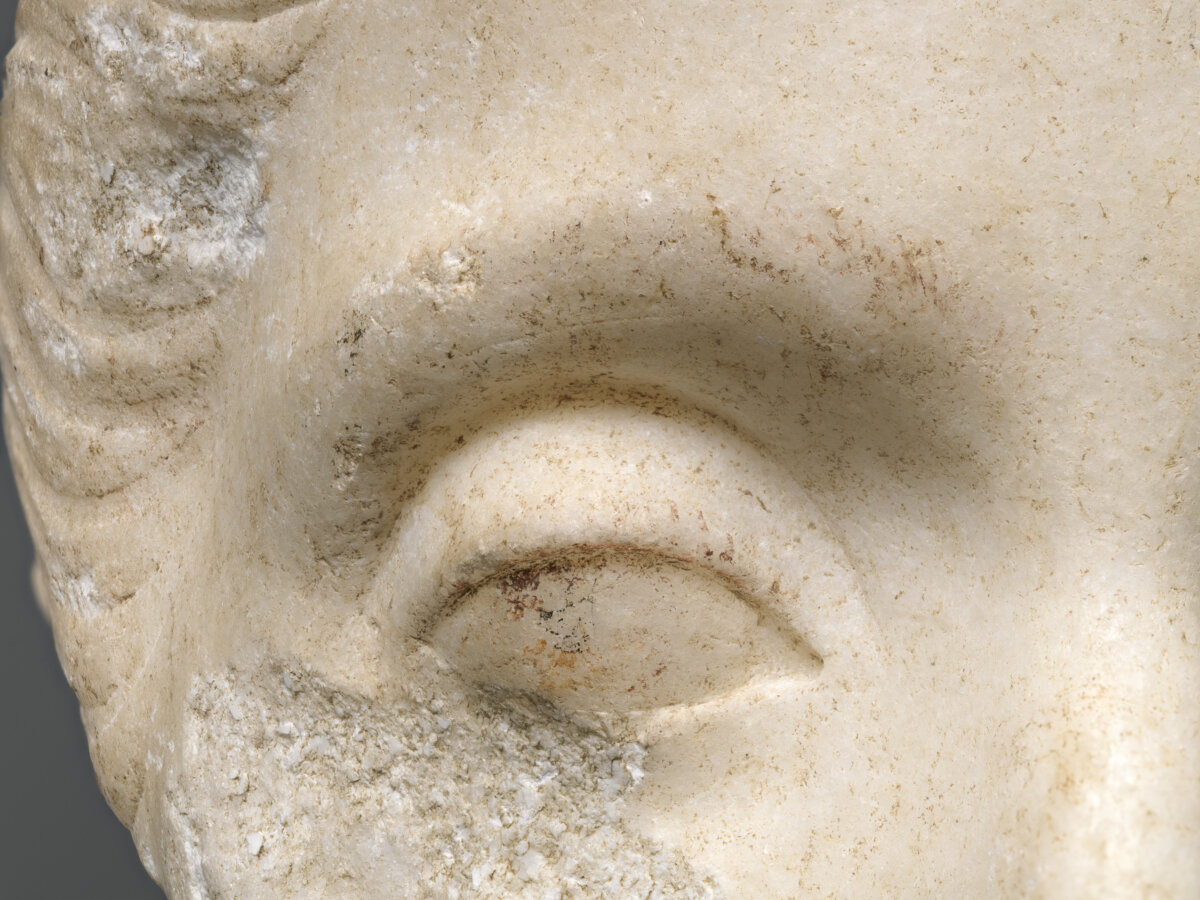
White marble dominates most world-class collections of ancient sculpture, such as The Met’s collection of over 30,000 works of Greek and Roman art. They found traces of colored pigment on the hair and eyes of a head of an elderly Roman matron in its collection. A small pigmented area on one eyelid indicated that the marble bust, from around 40 B.C. to 20 B.C., once had eyelashes.
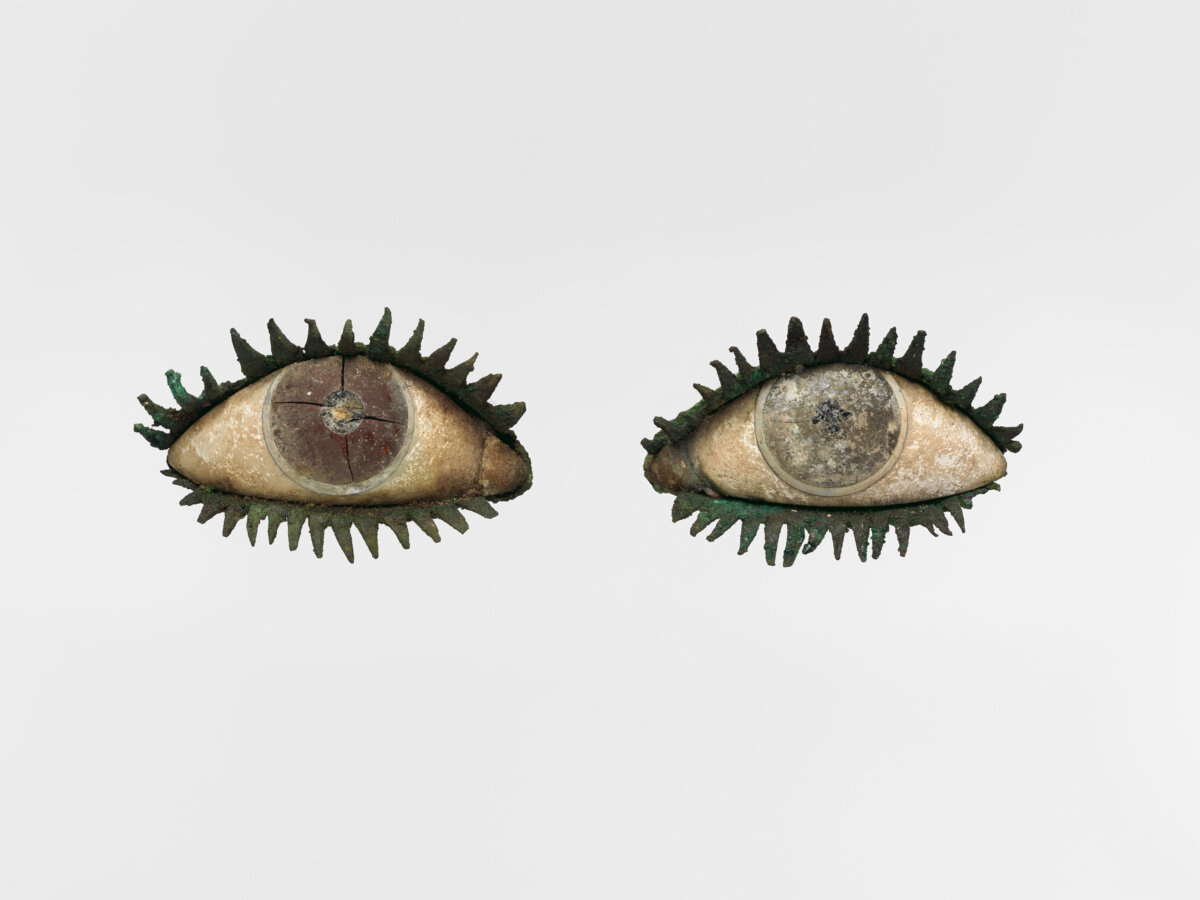
Besides coloring sculptures with pigments, the ancients also inlaid some body parts with stone or metal, such as silver for teeth and copper for lips and nipples. A pair of 5th-century Greek eyes in The Met’s collection demonstrates how sculptors inlaid marble, frit, quartz, and obsidian for a striking effect.
Experts like Brinkmann continue to reveal the vibrancy of ancient art that is no longer visible to the naked eye.
What arts and culture topics would you like us to cover? Please email ideas or feedback to features@epochtimes.nyc.