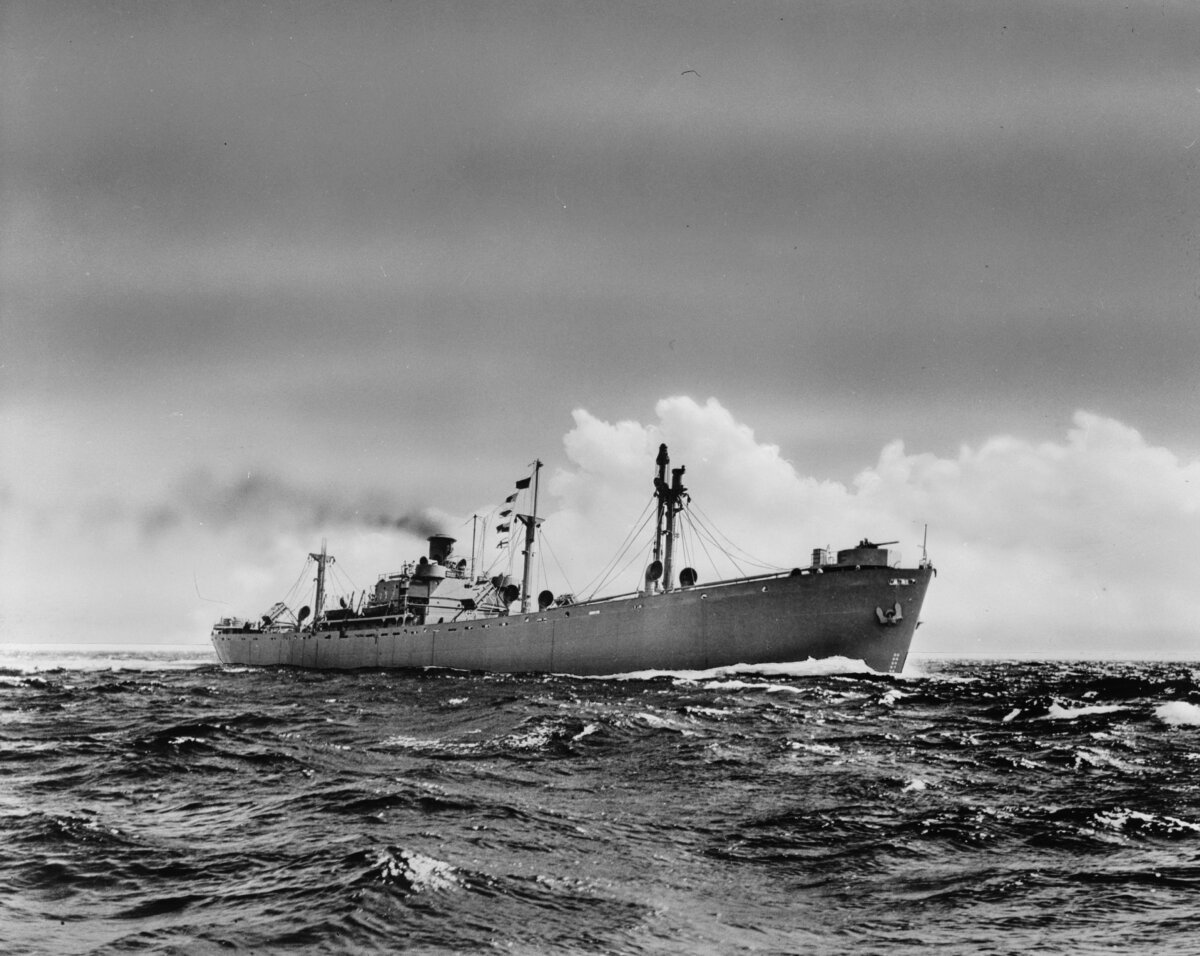
The necessity of commerce and national defense became high priorities in the mid-1930s. America’s naval vessels and tonnage capacity were behind Great Britain, Japan, and Germany, in that order, with the British far exceeding other nations’ merchant fleets. As a former assistant secretary of the Navy, President Franklin Delano Roosevelt pushed for a better Navy and for a much improved domestic maritime industry.
Congress passed the Merchant Marine Act of 1936, which replaced the Shipping Board with the U.S. Maritime Commission. The Commission oversaw the planned construction of 500 vessels over the course of 10 years.
The Act categorized the ships into seven types of cargo ships, a tanker, and a cruise liner. The lone constructed cruise liner had a displacement of 35,400 tons, which was twice the size of the largest of the seven cargo ships and more than 12,000 tons larger than the tanker.
The ocean liner was named the SS America and was sponsored by First Lady Eleanor Roosevelt. It was laid down in August 1938 and was constructed in Newport News, Virginia by the Newport News Shipbuilding and Drydock Company. It took a year to construct the 723-foot ship, which included its luxurious interior designed by the New York firm Smyth, Urquhart & Marckwald. With a capacity to transport more than 1,200 passengers, the country’s largest luxury liner launched on Aug. 31, 1939. Its time as a leisure ship, however, was short-lived; the day after its launch, Germany invaded Poland, forcing Great Britain to declare war on the Germans and thus officially beginning World War II.
The British Delegation
The SS America began its maiden voyage on Aug. 10, 1940. Built for America-to-Europe excursions, it had to alter its North Atlantic route due to the threat of German U-boats. Despite the country’s neutrality during the early years of the war, the U.S. government wasn’t taking any chances. “America” was painted in large letters on the hull. Two large American flags were constantly visible. And at night, the ship was always fully illuminated.
During the 1930s, Congress had passed several Neutrality Acts in an effort to remain out of any potential conflict. The acts made it illegal for Americans to sell war materiel to any belligerent nation. As Germany, Japan, and Italy expanded their territories by force, America attempted to withdraw itself from the fray. Before Germany’s invasion of Poland, Roosevelt had requested that Congress alter its neutral position and allow America to sell munitions to countries for cash, as long as those munitions were carried on non-U.S. ships. Congress refused. After the invasion, however, Congress agreed with Roosevelt’s policy of “cash-and-carry.”
On June 25, 1940, France fell to Germany, leaving only Britain to fend off the Nazi threat. The following month, the Battle of Britain began. The battle was primarily fought in the air—the German Luftwaffe against Britain’s Royal Air Force (RAF). By herculean effort, the RAF successfully defended the British Isles. The battle lasted until the end of October.
In October, a British delegation ventured through the U-boat-infested waters of the Atlantic to reach America in hopes of finding a shipyard capable of building 60 merchant vessels. When they arrived, they found all of America’s main shipyards at full capacity building the U.S. Maritime Commission’s vessels. The Commission gave the British delegation its blessing to find a private shipyard to build its ships.
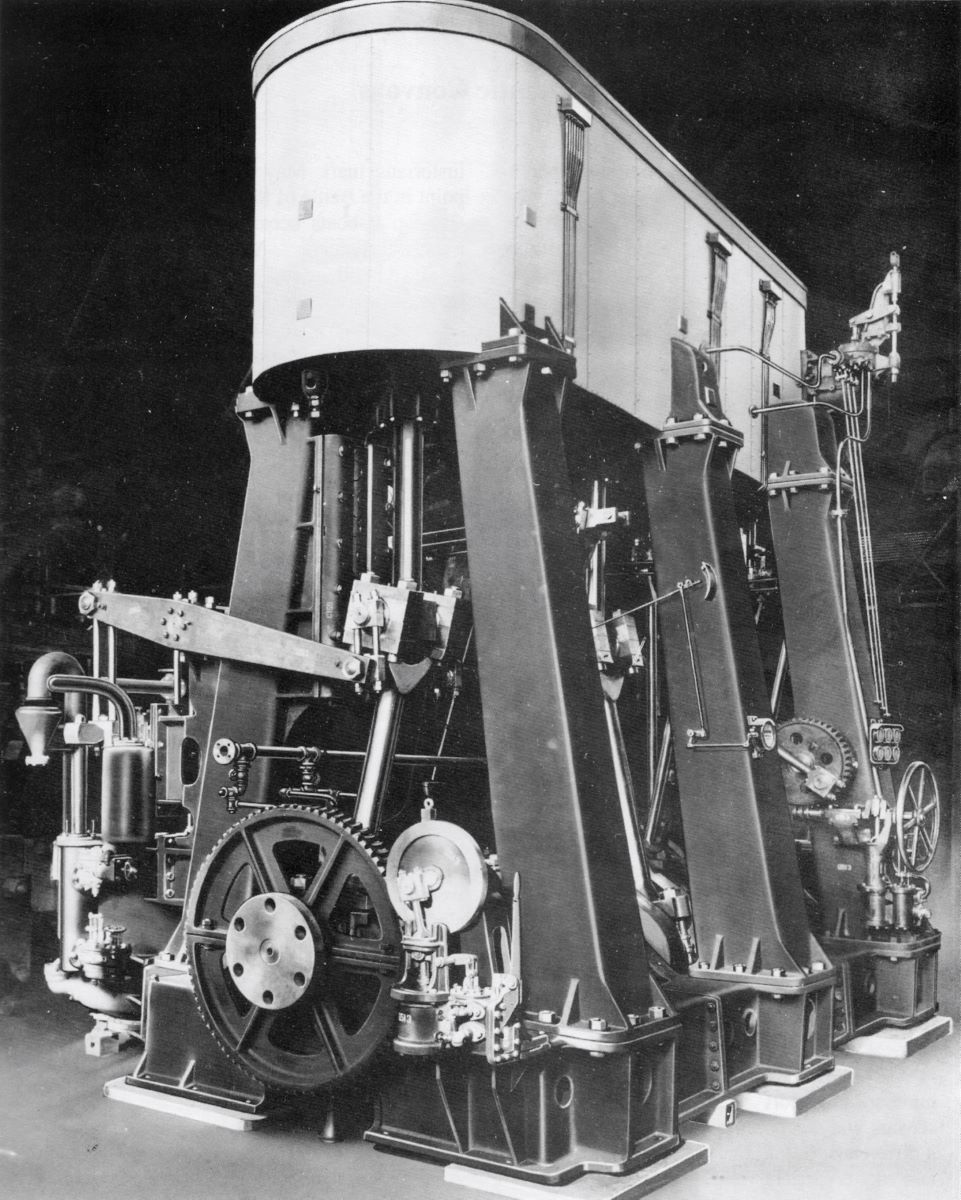
As the winter of 1940 descended, Britain’s merchant vessel problems worsened. The Germans were sinking them faster than they could rebuild them. The British found two shipyards—one in California and one in Maine. In order to speed the process, the British decided to base the design of the ship on an already existing coal-fired triple-expansion steam engine vessel.
‘Arsenal of Democracy’
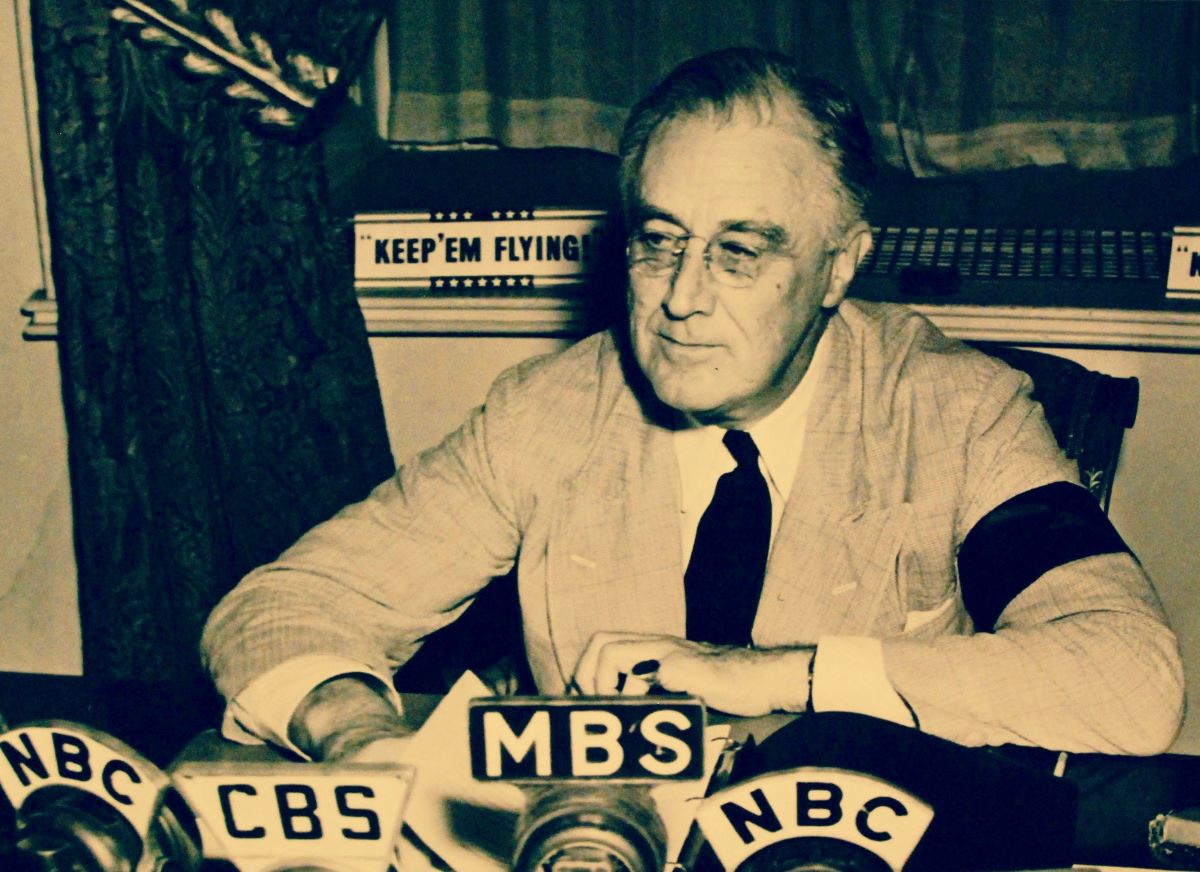
On Dec. 29, 1940, during a Fireside Chat, Roosevelt rang the warning bell of the surging threat from not just Germany, but from Japan and Italy. He reminded Americans that those three nations had recently signed the Tripartite Pact promising that if America interfered with its “program aimed at world control,” those three nations would attack the United States. To stave off the danger from what were now called the Axis Powers, Roosevelt urged increased munitions production at home and abroad.
“We must be the great arsenal of democracy,” he famously added.
Allowing Britain to have 60 vessels built in the States contributed to that arsenal. Just five days after his Fireside Chat and before construction could begin on what were called Ocean-class ships, Roosevelt announced on Jan. 3, 1941 that the Maritime Commission would add 200 vessels to the 500 they had been working toward since the passage of the Merchant Marine Act of 1936.
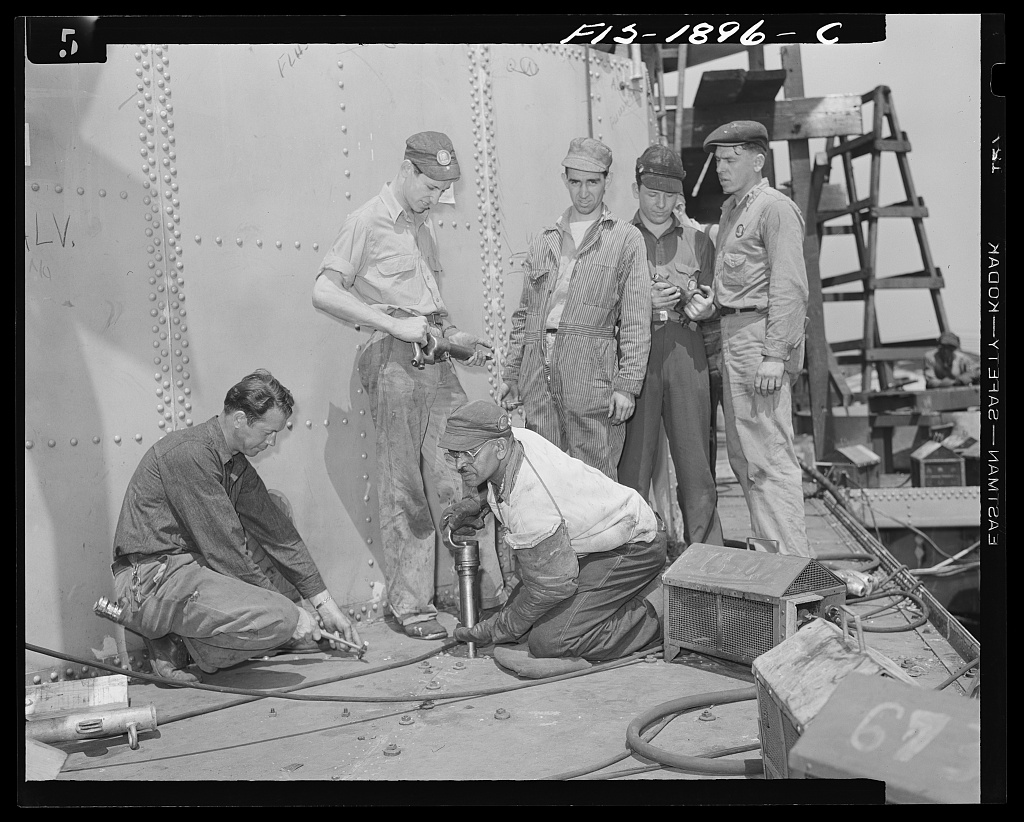
These American versions of the Ocean-class vessels were mass produced, replacing riveting with welding, which dramatically lowered the cost of construction. These ships were called EC2 (the “E” stood for “Emergency”). With a 2,500-horsepower steam engine, they had the capacity to transport 7,800 tons of supplies. Quickly constructed, they were commonly called the “ugly ducklings.”
The Purpose and Pledge
A few days after his 200-ship announcement, Roosevelt stood before Congress for the State of the Union speech. It became known as the “Four Freedoms Speech,” in which he cited the dangers the country faced despite not officially being at war. Although “armament production” had begun the year before, Roosevelt recommended the “actions and [U.S.] policy should be devoted primarily—almost exclusively—to meeting this foreign peril. For all [the country’s] domestic problems are now a part of the great emergency.”
He noted that America was behind in aircraft development but ahead of schedule with its warships, though he strongly advocated a speedier building process. He touted the recent shipbuilding efforts for the British, but believed more needed to be done.
“Let us say to the democracies: ‘We Americans are vitally concerned in your defense of freedom. We are putting forth our energies, our resources and our organizing powers to give you the strength to regain and maintain a free world. We shall send you, in ever-increasing numbers, ships, planes, tanks, guns. This is our purpose and our pledge.’”
Shipping ‘Liberty’
The statement to Congress was a reiteration of his desire to provide military equipment even when nations couldn’t pay at the time. On Jan. 10, Roosevelt formally introduced the idea to Congress in a bill called H.R. 1776 in hopes that the legislative body would allow the president to lend, lease, or sell military equipment to the Allies (Roosevelt had already sidestepped Congress in early September via executive action when he traded 50 destroyers for 99-year leases on British bases). Congress debated Roosevelt’s request for two months before passing what became known as the Lend-Lease Act. It was signed by Roosevelt on March 11, 1941.
In May, the SS America was brought back to Newport News to be refitted as a troop ship. It was renamed USS West Point and increased its capacity from just over 1,200 to more than 8,000.
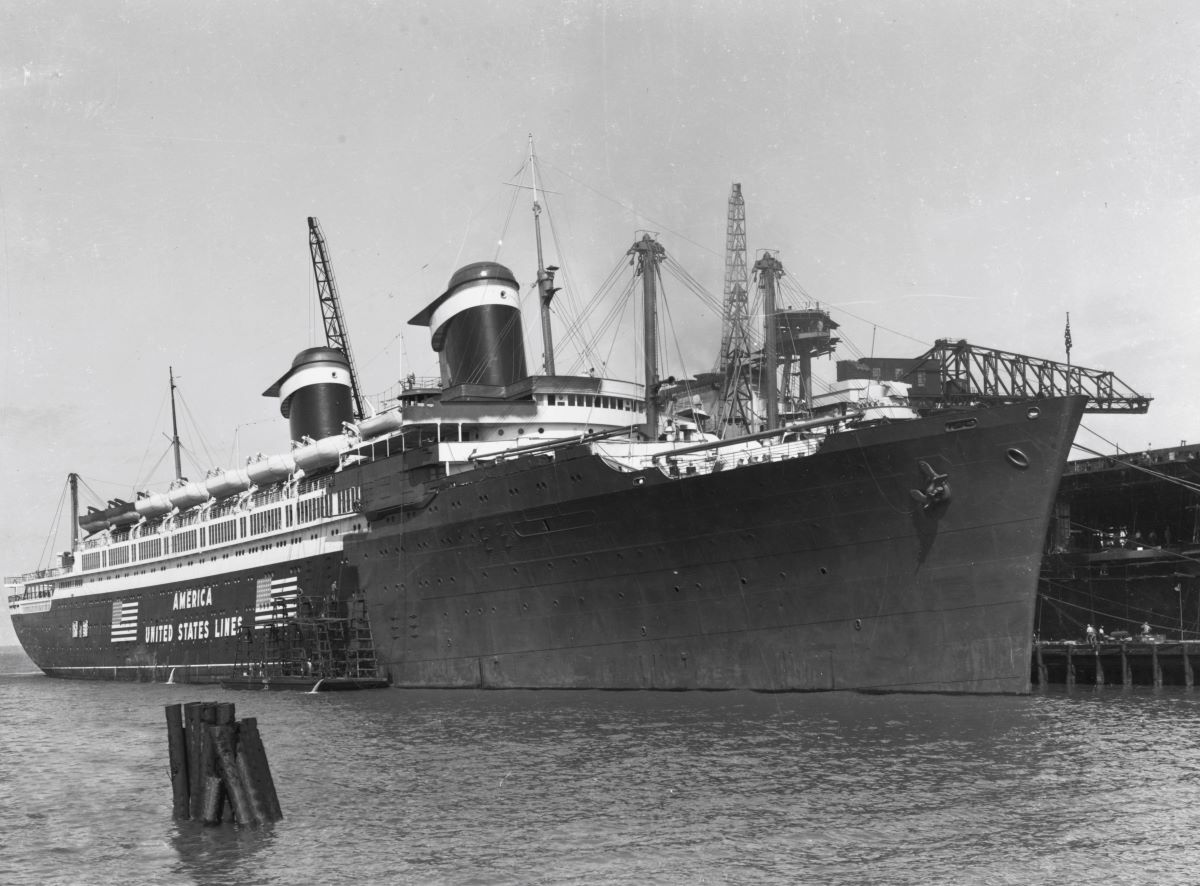
Newport News and other shipyards were working ever more efficiently on shipbuilding. The first of the U.S. Maritime Commission’s 200 ships destined to join Great Britain were nearing completion.
It was during this week in history, on Sept. 27, 1941, that the SS Patrick Henry—the first of Roosevelt’s “ugly ducklings”—was prepared to be launched. Considering its task, Roosevelt called it something different and more fitting.
“The Patrick Henry, as one of the Liberty ships launched today, renews that great patriot’s stirring demand: ‘Give me liberty or give me death,’” Roosevelt stated the day before the launch. “There shall be no death for America, for democracy, for freedom! There must be liberty, world-wide and eternal. That is our prayer—our pledge to all mankind.”
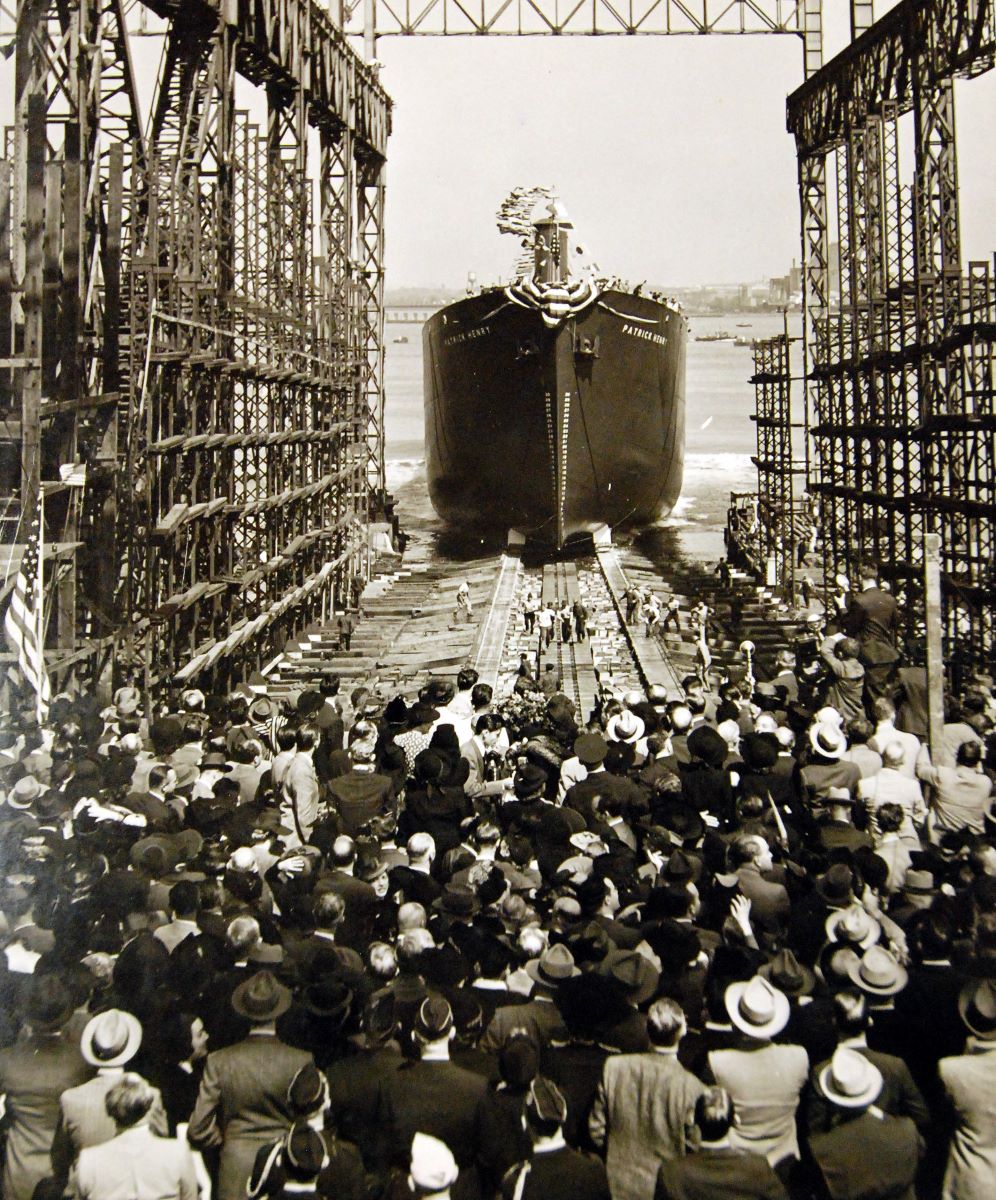
By the end of the war, the U.S. Maritime Commission oversaw the construction of more than 6,000 vessels, including more than 2,600 Liberty ships. Interestingly, the launch of the first Liberty ship—ships that were instrumental in turning the tide of the war and defeating the Axis Powers—took place on the one-year anniversary of the signing of the Tripartite Pact.
Never miss a This Week in History story! Sign up for the American History newsletter here.
What arts and culture topics would you like us to cover? Please email ideas or feedback to features@epochtimes.nyc.