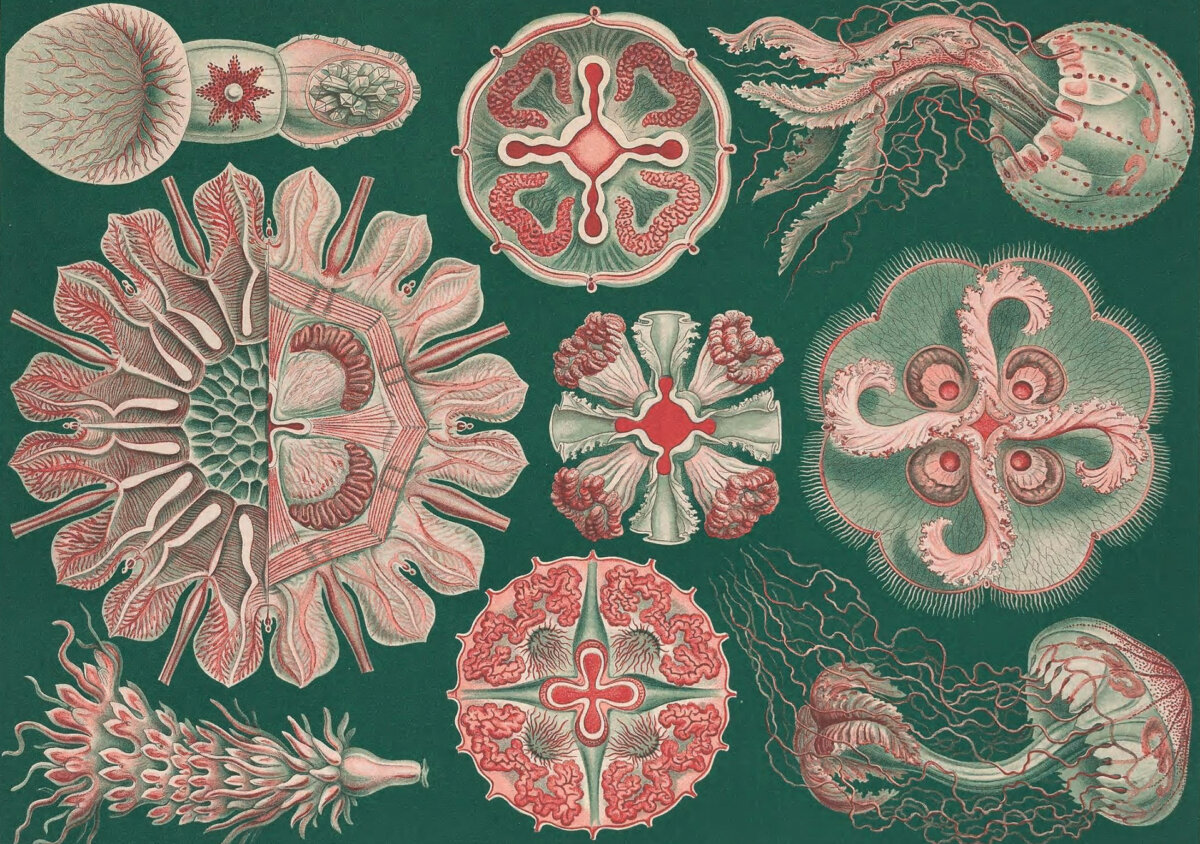
For those drawn to the artistry of the natural world, Ernst Haeckel’s work is particularly compelling. His artworks reveal a natural world of symmetry and strangeness, where each organism is rendered with detail and compositional grace matched by few scientific illustrators. Yet for all his devotion to ordering and naming the natural world, his illustrations are so vivid and so stylized that the organisms themselves seem to slip free of any category that might contain them.
Working from direct observation, often aided by the microscope, he produced nearly 1,000 scientific illustrations over his lifetime, many depicting species he first identified himself. A German scientist and illustrator, he devoted his career to capturing the diversity and structure of life with unusual intensity and precision. His drawings and paintings of organic forms are especially distinctive for their heightened symmetry, intricate detail, and careful arrangement, often revealing patterns that feel both scientific and deliberately composed.
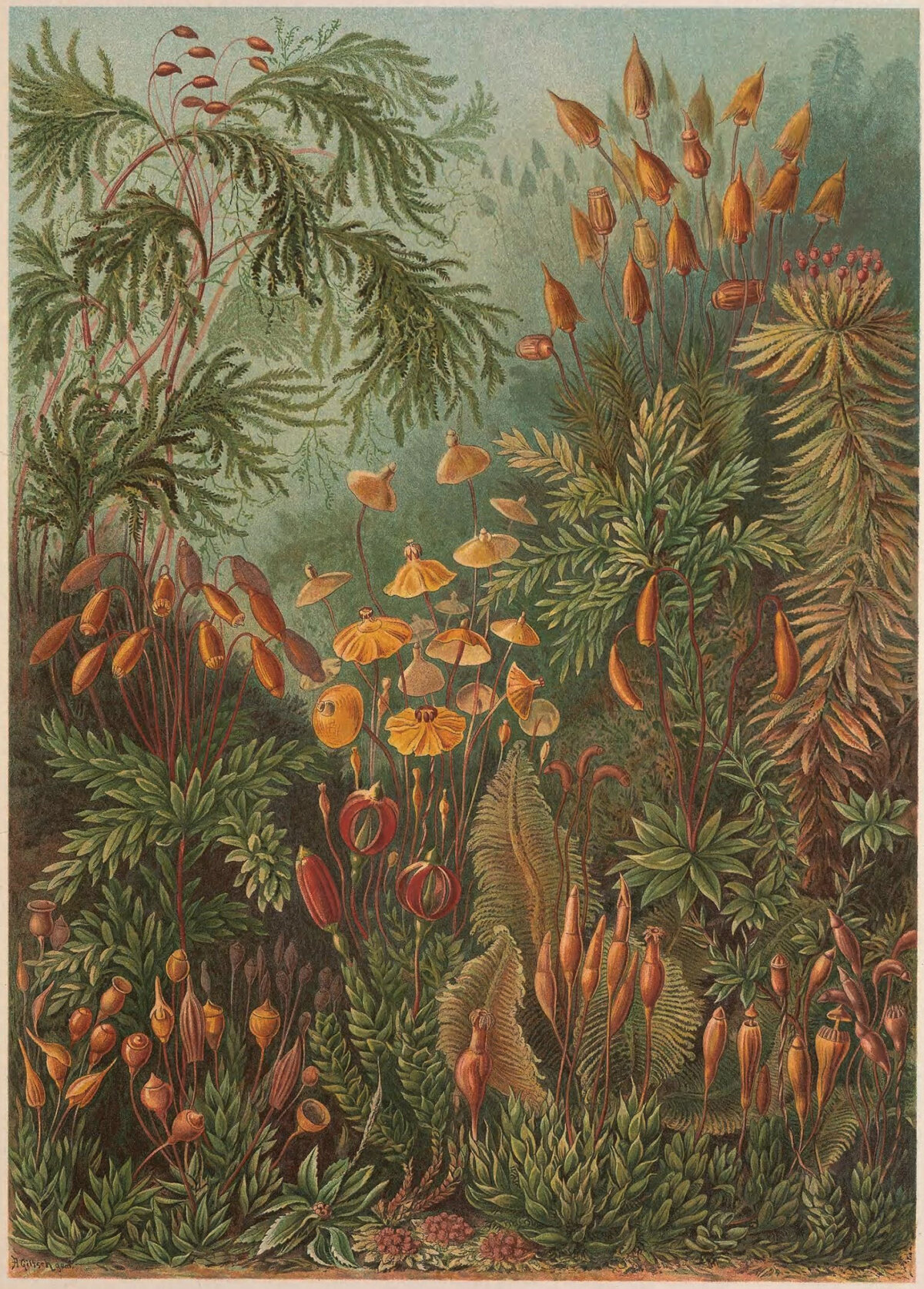
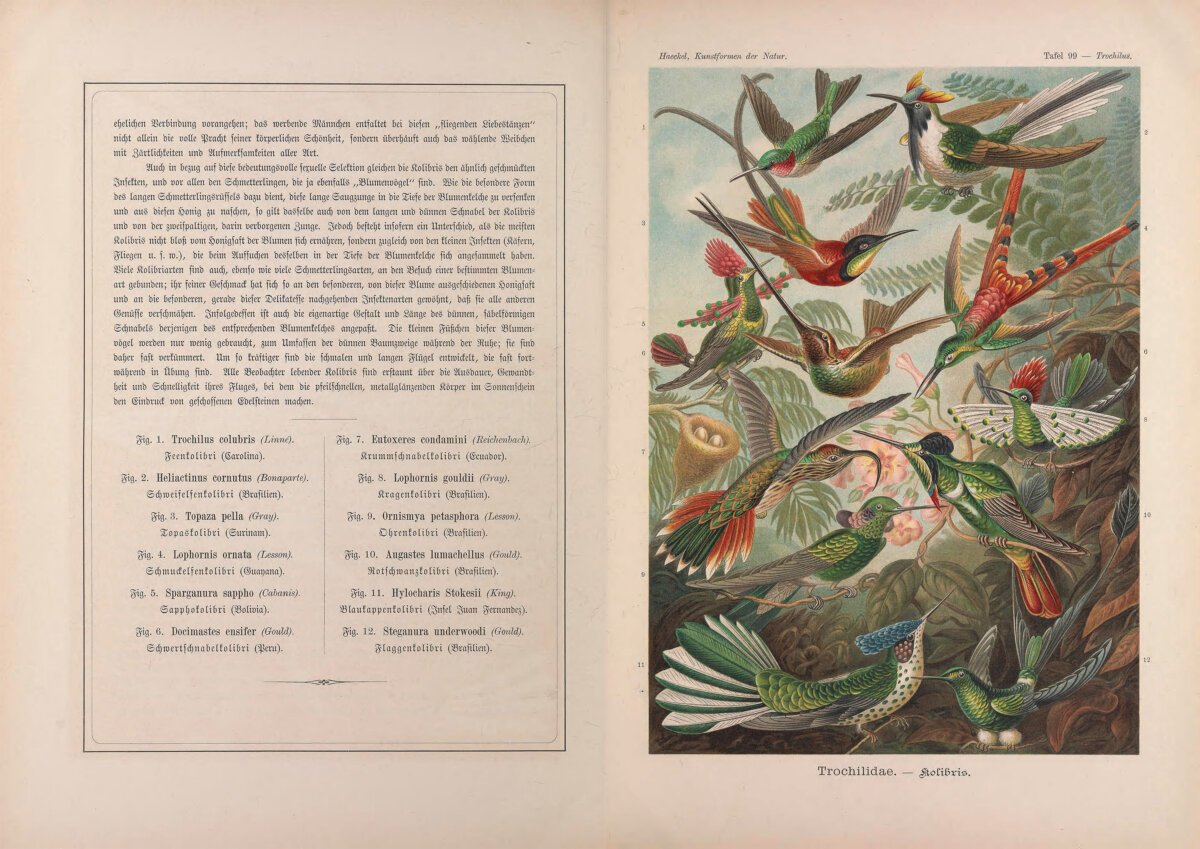
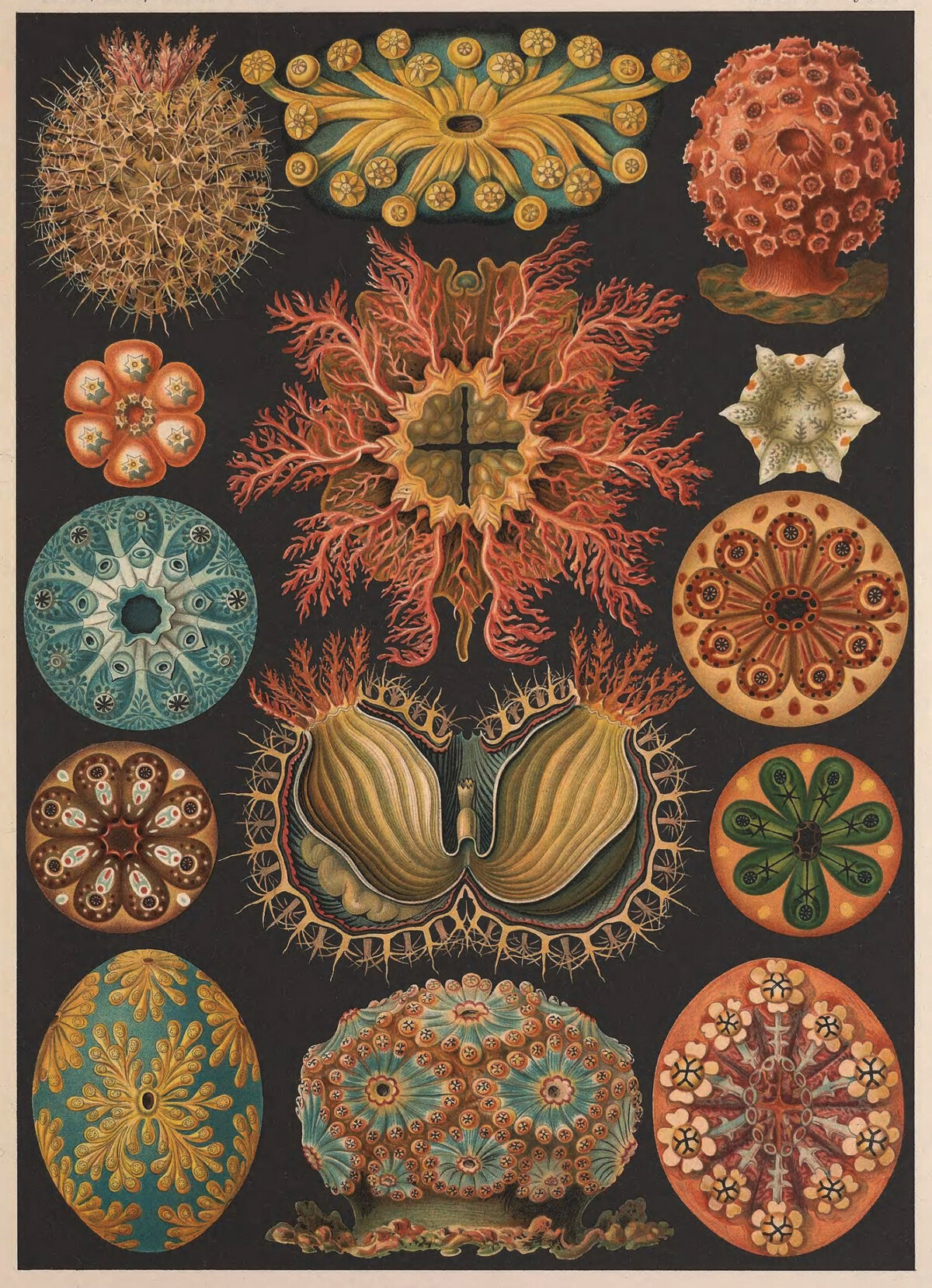
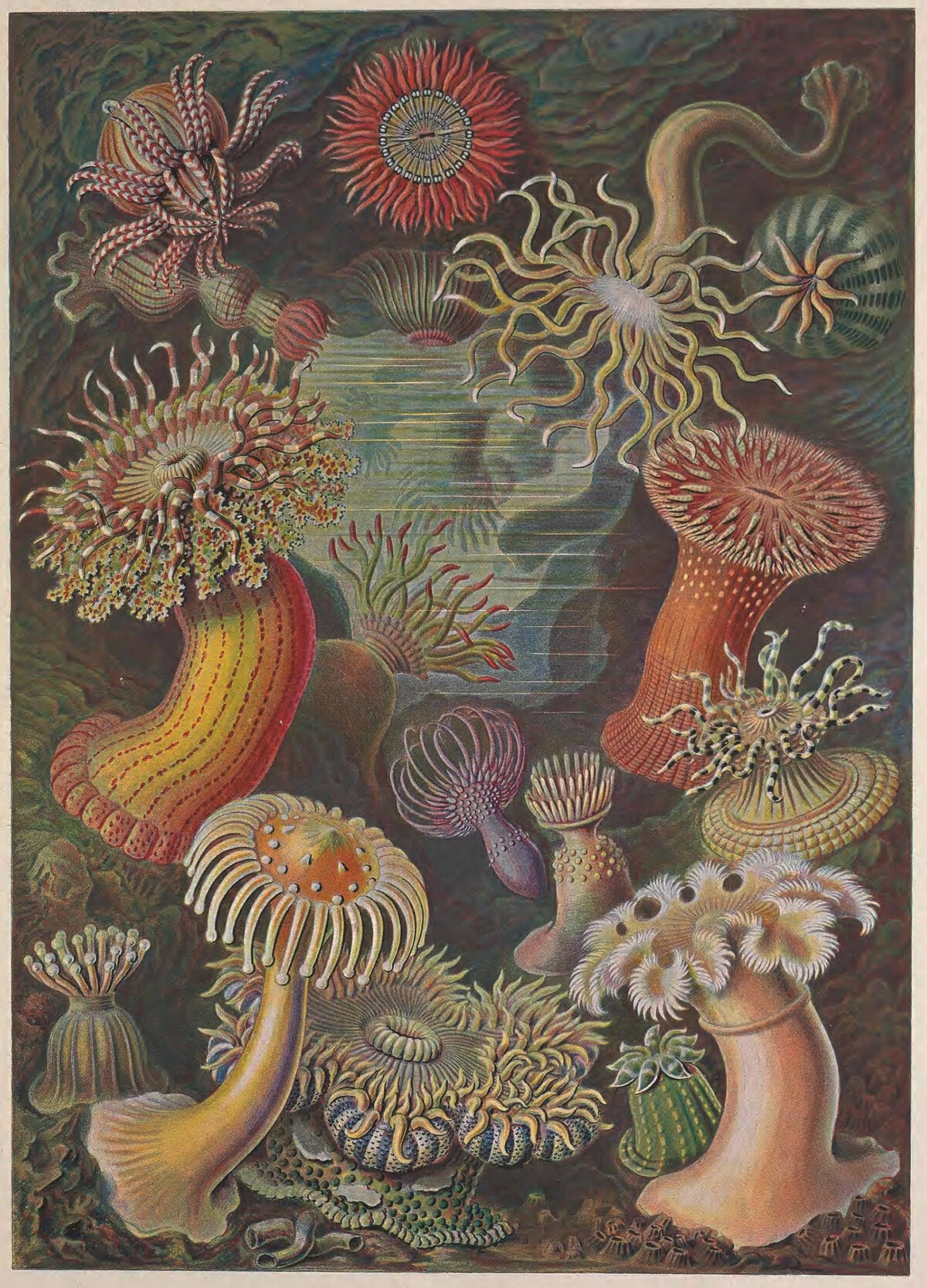
His most celebrated achievement is “Kunstformen der Natur,” a collection of illustrations originally published in 1904. Also known as “Art Forms in Nature,” it features a wide range of organisms in lithographic and halftone prints. Unlike most art collections, these works were not created as stand-alone pieces. They were intended to be reproduced and widely shared for educational purposes. Even so, there’s a clear artistic intent throughout. From delicate flowers to feathery mosses, the subjects are carefully arranged to highlight both their visual beauty and biological harmony.
From Biography to Biology
Haeckel was highly educated and strongly drawn to the natural sciences, particularly marine biology, a passion sparked by early experiences observing life in the North Sea. Born in 1834 in Potsdam, Germany (then Prussia), he studied at the University of Berlin, earning a doctorate in medicine at the age of 23. Finding clinical practice unfulfilling, he returned to his original interest in the natural world. He later completed his zoology dissertation in 1861, marking a decisive shift toward a lifelong scientific career focused on biology and marine life.
In 1862, Ernst Haeckel married Anna Sethe—a joyful beginning, arriving just as his scientific career was finding its footing. By all accounts, theirs was a marriage of genuine happiness. But just 18 months later, that life was gone without warning. In 1864, Anna died at the age of 29, on Haeckel’s 30th birthday. Her death devastated him. He withdrew almost entirely, at one point bedridden for days in a state of delirium.
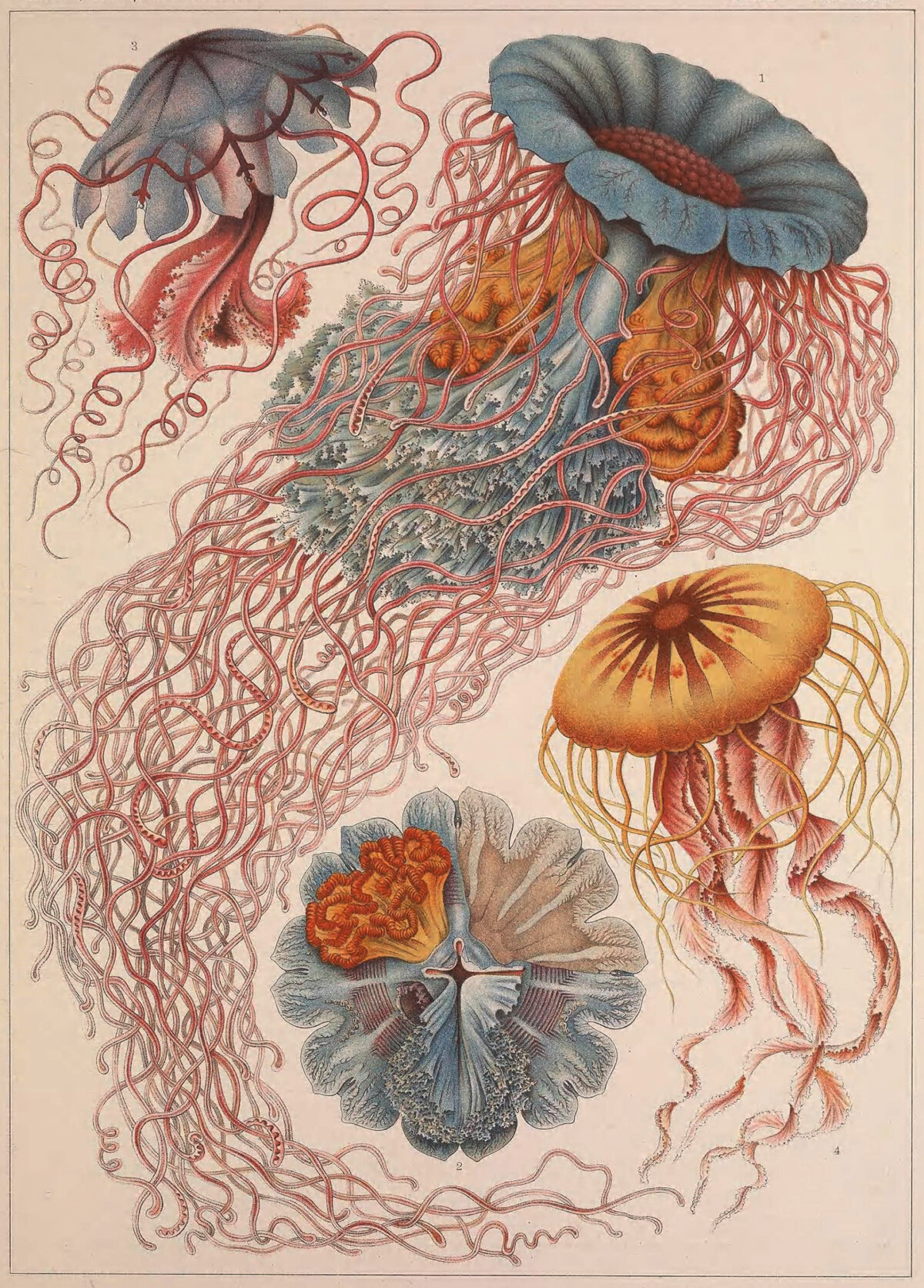
Haeckel channeled his grief into his work. During a visit to Nice, he found a brief moment of relief while watching a jellyfish in a tide pool, captivated by the movement of its tentacles, which “hung like blonde hair ornaments of a princess.” After carefully sketching it, he named the species Mitrocoma annae, or “Anna’s headband” in his wife’s memory. This blending of personal loss and scientific study became a defining thread in his work, and he developed a lasting fixation on jellyfish.
Haeckel’s work continued to blur the line between scientific observation and artistic expression. After completing a major two-volume study of jellyfish medusae, he built a home in Jena called Villa Medusa, decorating it with imagery inspired by the same forms he studied. His grief also showed up in the way he named species. When he encountered another striking jellyfish species with intricate tentacles trailing dramatically behind its bell, he named it Desmonema annasethe in Anna’s memory. This jellyfish, later known as Cyanea annasethe, became one of the most recognizable images in “Kunstformen der Natur,” its flowing, hair-like tentacles giving a deeply personal dimension to one of the most celebrated works of scientific illustration.
Bridging Art and Science
His legacy, much like his imagery, defies easy categorization. As a zoologist, marine biologist, and scientific illustrator, he produced work that bridged art and science in ways few of his contemporaries could match. “Kunstformen der Natur” has been reissued numerous times over the years, with recent editions pairing curated images with downloadable files intended for use in contemporary design. Its reach has expanded well beyond print, appearing across commercial products from posters to textiles. This wide circulation has often stripped the images of their original scientific and historical context, recasting them as purely decorative motifs.
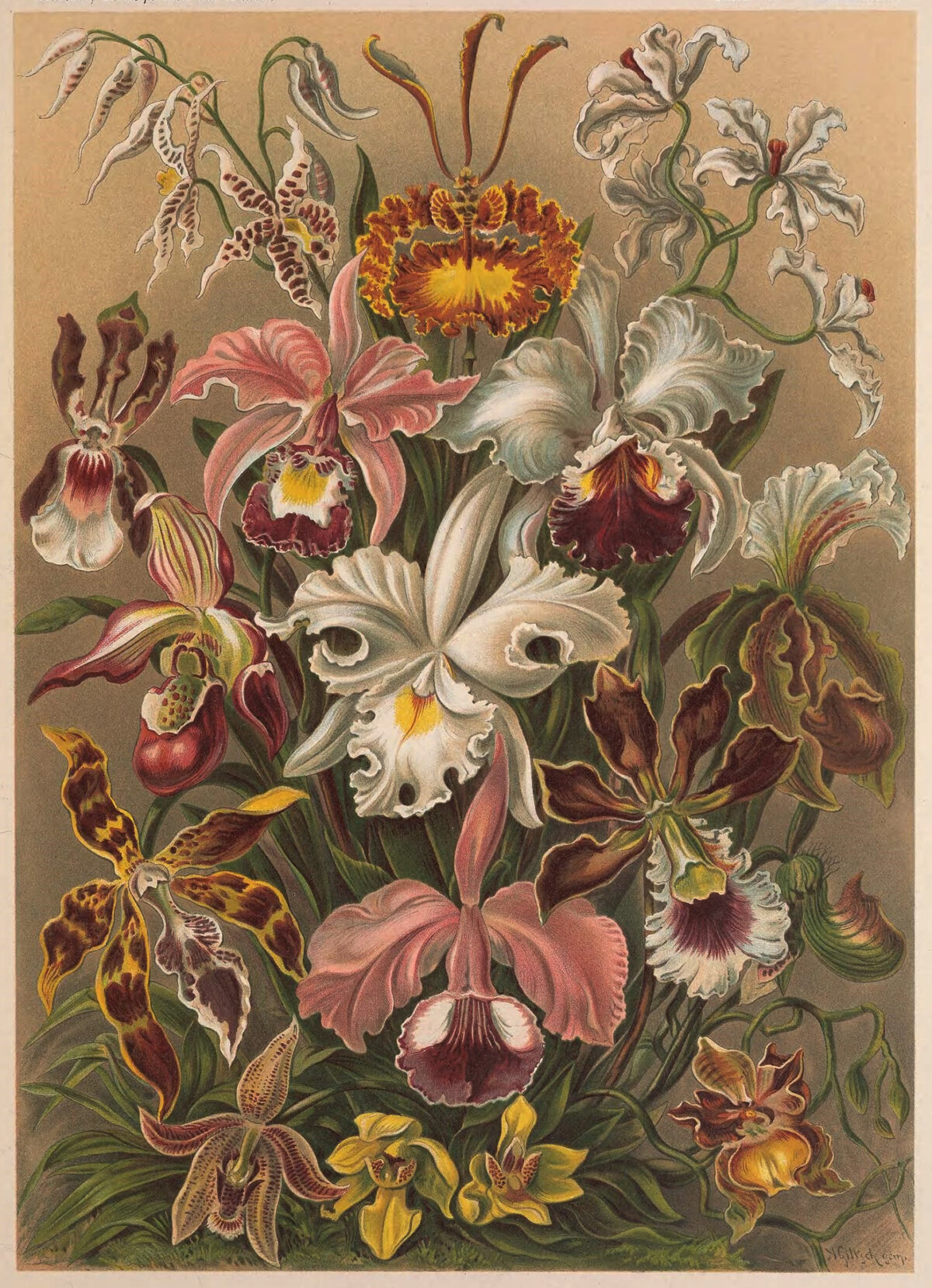
Yet the book’s influence was never limited to science. In the early 20th century, its marriage of careful observation and visual beauty left a clear mark on art, architecture, and design. That influence has proven remarkably durable, and it remains strongest in the visual arts, where Haeckel’s way of seeing the natural world continues to shape how organic forms are rendered and understood.
What arts and culture topics would you like us to cover? Please email ideas or feedback to features@epochtimes.nyc.