



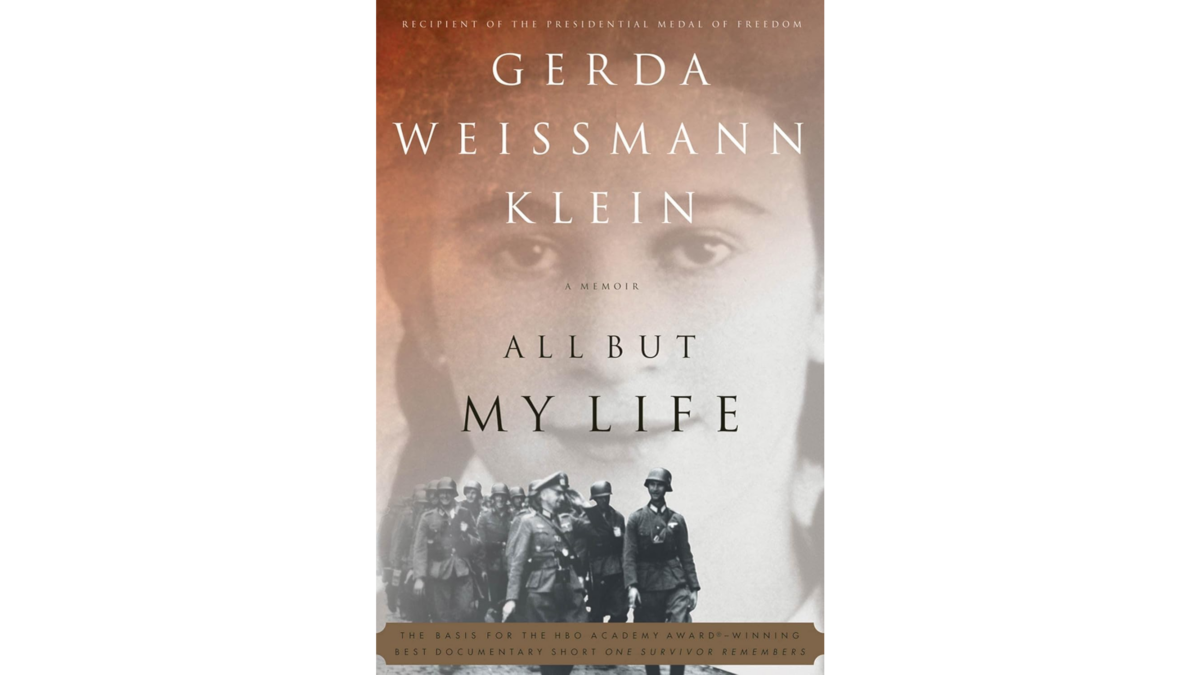
Scads of Holocaust novels and historical accounts leave readers feeling understandably despondent and angry. Not so, upon finishing “All But My Life,” Gerda Weissmann Klein’s memoir. While the book does not diminish the terrors and abuses Jews and political prisoners experienced at the hands of the Nazis before and during World War II, it maintains a glass-half-full outlook throughout.
A Glass-Half-Full Narrative Amidst Despair
Klein was a teenager in 1939 in Bielitz, Poland, which she describes in Chapter 1 as a “charming” place called “Little Vienna”, when the Nazis invaded. Before the onslaught, she wrote that nothing had ever disturbed its tranquility. She lived a peaceful life with her close-knit family, her mother, father, and older brother, as well as with extended family and community friends.
She recalled idyllic days in their garden, evenings spent reading and sewing, and much laughter. These reflections are interspersed throughout a chronological account of the systematic fragmentation of their lives.
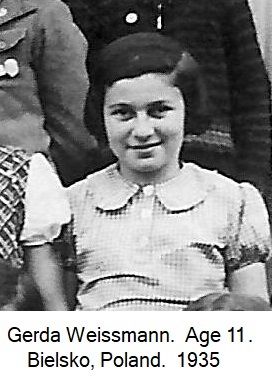
Regardless of what she and her family witnessed and experienced—including her brother having to “register” and leave them, letters from Polish family and friends describing mass killings, and banishment to a damp basement without electricity—Klein remained reticent. She observed her parents’ love and fortitude: “Papa touched Mama’s arm softly for a moment after Arthur [brother] was out of sight.” When forced to leave their home and move into cramped ghetto quarters, she noted that “Papa took Mama’s hand.”
In the ghetto, her parents celebrated her 18th birthday with an orange that her mother had traded a valuable ring to obtain. Shortly afterward, the family learned it would be split up and sent to camps. Instead of anguishing, Klein spent her last evening with her parents listening to them talk of their lives and future hopes.
“And so, they talked on through the night, animated and happy. They faced what the morning would bring with the only weapon they had—their love for each other. Love is great, love is the foundation of nobility.”
Later, when Klein was separated from her parents and working in one textile factory after another as a slave laborer—while surviving unthinkable cold and hunger—she drew strength from her pre-Nazi life and her parents’ love. She passed that optimism on to countless girls confined with her and even acted out skits in the evenings to distract them from their circumstances.
About those performances, she wrote in Chapter 5: “I loved those upturned faces between the bunks, the smiles and sudden laughter, the knowledge that it was in my power to bring them an hour of fun, to help them forget. … I thank God that I was able to make them forget. … I know that that was the greatest thing I had done in my life.”
Throughout “All but My Life,” Klein reminds readers to survive the most difficult situations, never take mundane aspects of life for granted and to focus on God’s beauty. She noticed roses growing outside the ghetto, appreciated winter ski boots her father told her to put on when they left the ghetto in summer because they later protected her feet from frostbite, and, remained thankful for the opportunity to work rather than be imprisoned.
In the book’s preface, readers get a sense that the writing process was cathartic.
“As I finish the last chapter of my book, I feel at peace, at last. I have discharged a burden, and paid a debt to many nameless heroes, resting in their unmarked graves. … Happy in my new life, I have penned the last sentence of the past.”
To an American Dream
Remarkably, despite spending her teenage and early adult years malnourished, dehydrated, and fatigued, Klein lived to be 97 and died in 2022. Although her book was first published in 1957, it was republished in 1995 with an epilogue that pays tribute to America, the U.S. military, and her children and grandchildren. Photos of her children were added to the book as well.
In the epilogue, she reflected on how her husband, the first American she met on Liberation Day, told her, “You have come home,” when he brought her to the United States in the fall of 1946.
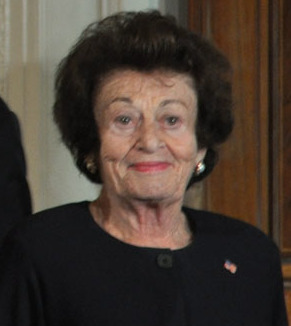
“It has been home,” she wrote, “better than I ever dreamed it would be. … I fell in love with this country from the moment I first stepped upon its soil. It felt so right, so expansive, so free, so hospitable, and I desperately wanted to become part of the American mainstream.”
She wraps up the epilogue with the same sanguine attitude that sustained her through darker days, expressing that “Those moments of pain are richly compensated for by others of immense joy.”
“All but My Life” unexpectedly inspires. In fact, Klein’s memoir became the basis for an Academy Award-winning short documentary, “One Survivor Remembers.” Released in 1995, it is worth watching after completing the book to grasp a visual understanding of what she endured and the marriage and family blessings she experienced post-Holocaust as an American citizen.
‘All but My Life: A Memoir’
By Gerda Weissmann Klein
Hill and Wang: March 31, 1995
Paperback, 272 pages
What arts and culture topics would you like us to cover? Please email ideas or feedback to features@epochtimes.nyc


.jpg)