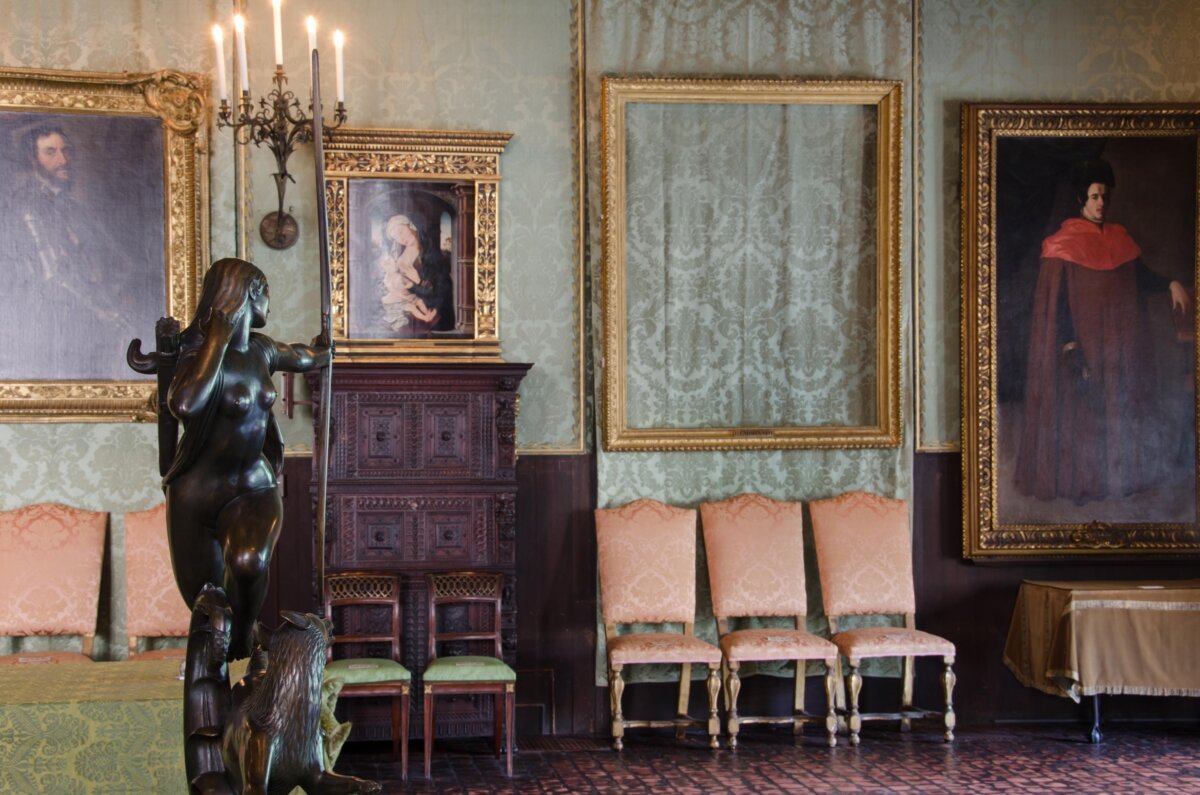
In the early morning hours of March 18, 1990, Boston’s Isabella Stewart Gardner Museum experienced the greatest art theft in American history. Thirteen works were removed by a pair of thieves in an 81-minute operation, resulting in a loss now valued at a combined worth of over $1 billion.
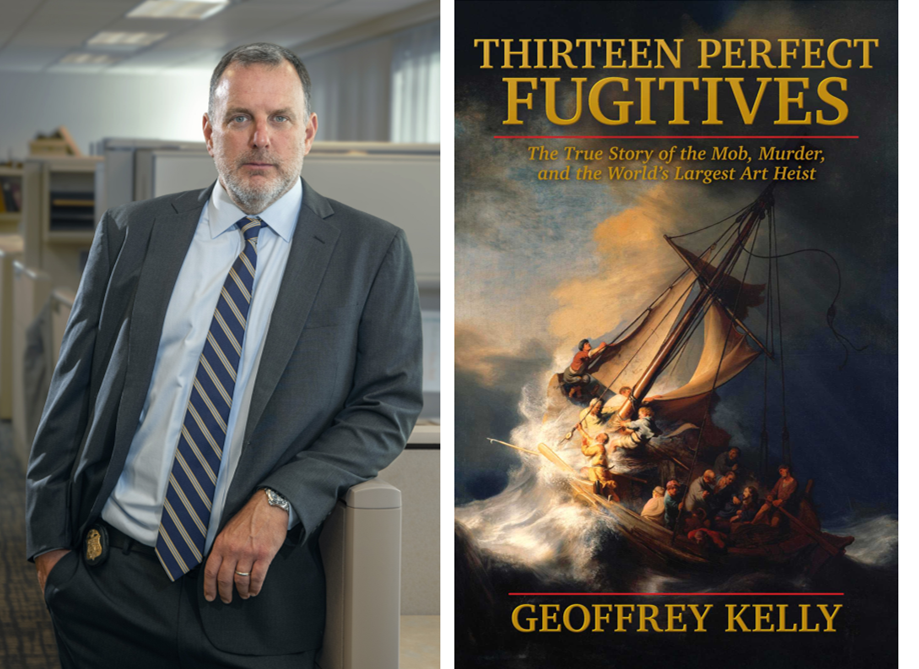
The theft has been the subject of multiple books, articles, documentaries, and podcast episodes. Now, Geoffrey Kelly has written “Thirteen Perfect Fugitives: The True Story of the Mob, Murder, and the World’s Largest Art Heist,” a compelling but uneven new book on the subject. A former FBI special agent, Kelly led the Gardner investigation for 22 years.
An Erratic Haul
The thieves were first spotted at 12:30 a.m. by teenage revelers leaving a late-night St. Patrick’s Day celebration. The men were dressed like cops and sitting in a 1985 Dodge Daytona adjacent to the museum’s rear courtyard gate.
The thieves buzzed the museum’s service door at 1:24 a.m., claiming they were police officers responding to a disturbance call. One security guard, 23-year-old Rick Abath, enabled the men to enter. The men subdued and handcuffed Abath and a second guard, 25-year-old Randy Hestand, then they wrapped their heads with duct tape and imprisoned them in the museum’s basement.
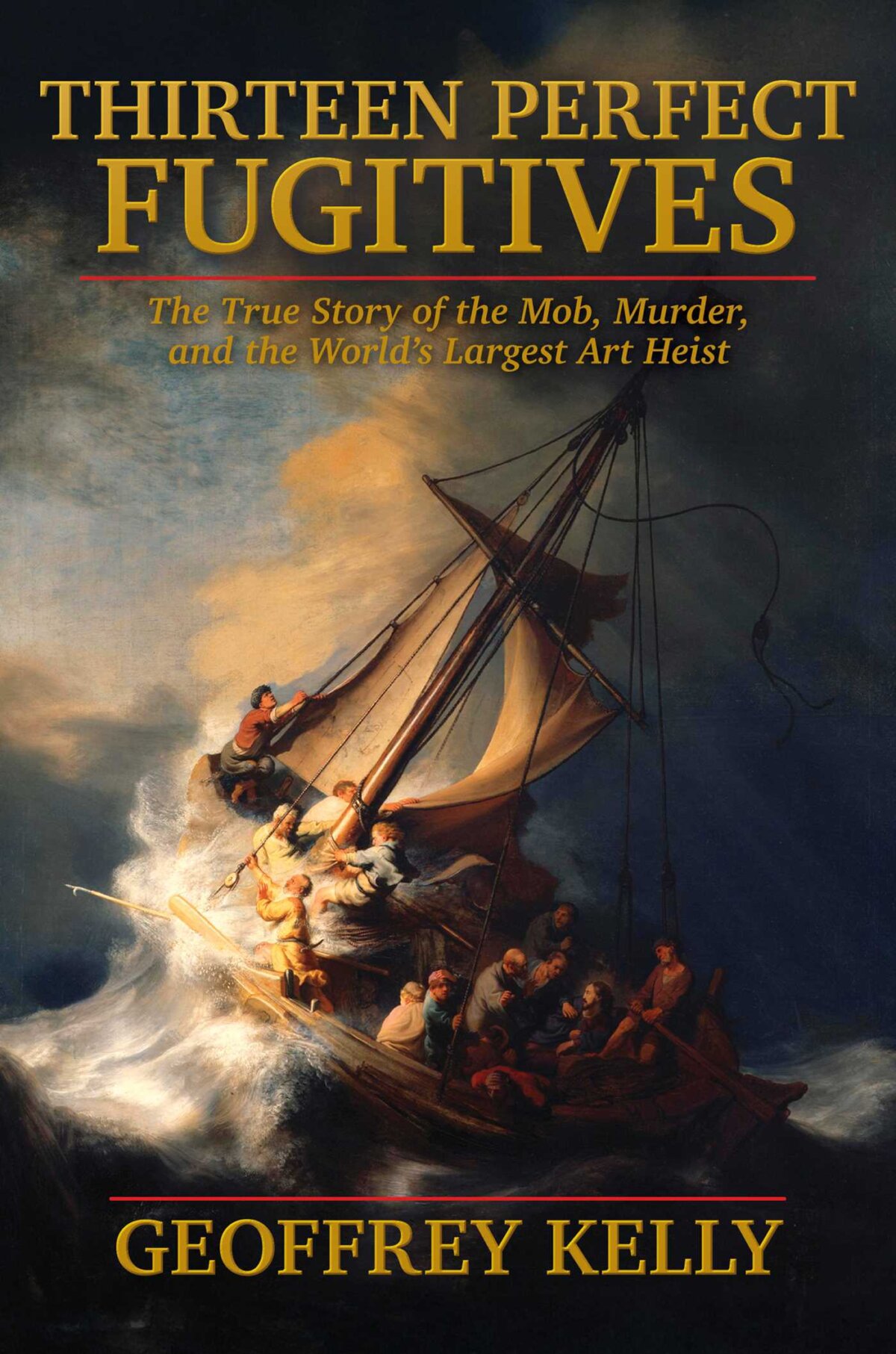
Kelly points out the curious nature of the pilfering. Priceless works such as Rembrandt’s “A Lady and Gentleman in Black” and “Christ in the Storm on the Sea of Galilee” and Vermeer’s “The Concert” were taken. However, less valuable works, including five sketches by Edgar Degas and a 10-inch-tall eagle-shaped finial from atop a flag of Napoleon’s First Regiment, also disappeared, while more valuable masterworks were untouched.
Twelve works came from the museum’s second floor. Édouard Manet’s “Chez Tortoni” was swiped from a first-floor gallery, but the museum’s sensors never detected the thieves in that space. Kelly notes that Abath was the last person recorded in the Manet room earlier that night, and he accuses him of being complicit in the theft.
Abath always expressed regret for allowing the thieves inside and repeatedly cooperated with Kelly and investigators over the years. He passed away in 2024.
Art-Loving Mobsters
Kelly recalls that the FBI held a press conference in March 2013, announcing that they knew who’d robbed the museum. The agency said its evidence pointed to organized crime figures operating in New England and Philadelphia.
As Kelly details, some potential suspects died under violent or mysterious circumstances shortly after the theft. Others were arrested and imprisoned on unrelated charges, always denying connection to the museum theft. A few people close to these figures insisted they saw the stolen works.
Boston Herald reporter Tom Mashberg said a shadowy antiques dealer named William P. Youngworth showed him “Christ in the Storm on the Sea of Galilee” in a warehouse outside of Boston, but Kelly is highly skeptical of that tale. Youngworth later produced paint chips that could’ve come from the stolen Vermeer, but he refused to cooperate with authorities when he wasn’t granted immunity from prosecution.
Christinia Conlon, a niece of gangster Robert Guarente, claimed the painting Mashberg allegedly viewed was on display in her uncle’s home. Guarente’s widow, Elene, would recall seeing “The Concert.” Guarente died from cancer in 2004 without the paintings in his possession.
Richard Reissfelder, brother of mobster George Reissfelder, said he and his wife, Donna, helped hang “Chez Tortoni” in his sibling’s apartment. Donna said her brother-in-law had a car similar to the one seen outside of the museum on the night of the heist.
Randy Hestand, one of the guards on duty during the robbery, later said one of the thieves resembled George Reissfelder, who died of a drug overdose one year after the crime, minus any purloined paintings in his residence.
Paul Calantropo, a Boston jeweler, said mobster Bobby Donati tried to sell him the purloined Napoleonic finial. Calantropo refused to buy it, and Donati was later kidnapped and brutally executed.
Some Misplaced Mirth
It’s a compelling story, but “Thirteen Perfect Fugitives” has a wobbly presentation. Kelly unleashes a blizzard of names tied to the case, but few are presented with in-depth personality descriptions; it’s easy to forget who’s who.
Also, the book’s effectiveness is diluted by Kelly’s insistence on injecting wisecracks into the text. This might be the only true–crime book that risks sounding like a Bob Hope monologue. Kelly was previously an associate producer at Comedy Central, which may explain the comedic residue.
Furthermore, Kelly was clearly padding the book’s length. Otherwise, why would he have needed to devote two chapters to his life story, a third recalling the museum’s namesake, and a fourth recounting other notable Massachusetts art thefts?
Near the story’s end, Kelly takes a sour tone over criticism of his lack of crime-busting success, writing:
“I was perpetually amused and equally bemused by armchair detectives who conducted their own investigations, searching for the missing artwork while simultaneously castigating and excoriating the FBI—and me personally—for not making a recovery.” He added a puerile, expletive-laced challenge to critics to find the art themselves. While his frustration is understandable, it’s nonetheless a childish and unworthy coda.
‘Thirteen Perfect Fugitives: The True Story of the Mob, Murder, and the World’s Largest Art Heist’
By Geoffrey Kelly
Post Hill Press: March 10, 2026
Hardcover, 376 pages
What arts and culture topics would you like us to cover? Please email ideas or feedback to features@epochtimes.nyc