NR | 2h 18m | Drama, History, War | 1944
There’s a particular kind of fear in World War II aviation movies that has little to do with the usual aerial dogfights. Major factors can affect bombers, such as fuel shortages, bad weather, dreaded mechanical failures, and, of course, enemy aircraft.
I’ve touched on different pieces of this worrisome set of equations in previous reviews, such as “Twelve O’Clock High” (1949), “Above and Beyond” (1952), and, more recently, “High Barbaree” (1947).
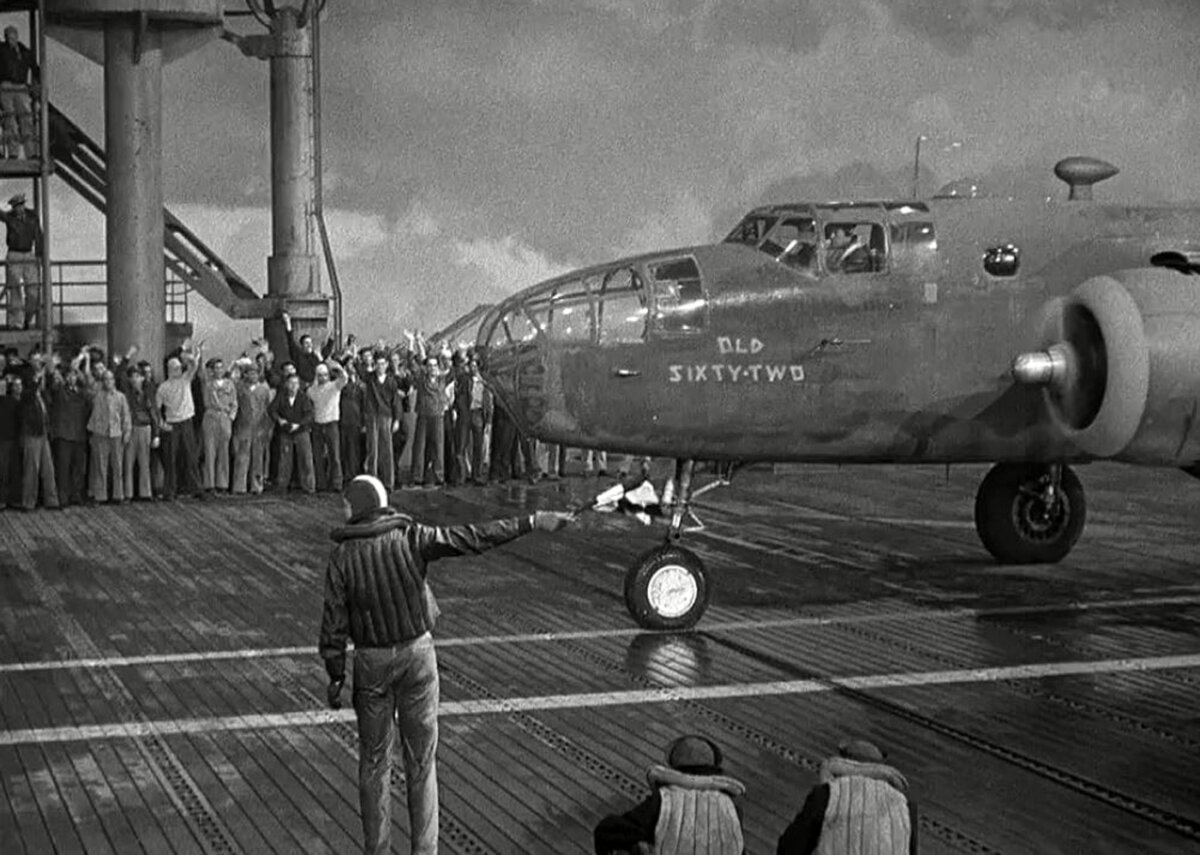
“Thirty Seconds Over Tokyo” takes us back to one of the most audacious American air operations of World War II, the Doolittle Raid. In April of 1942, only months after the Japanese attack on Pearl Harbor, 16 U.S. Army Air Force B-25 Mitchell bombers left the deck of the aircraft carrier USS Hornet and headed for targets in Japan.
Mervyn LeRoy’s 1944 film was made while World War II was still being fought. Capt. Ted W. Lawson, one of the men who actually flew the mission, had already put his experiences into the 1943 book of the same name, which became the basis for Dalton Trumbo’s screenplay. Van Johnson played Lawson, and the great Spencer Tracy appeared as Jimmy Doolittle.
MGM received considerable help from the War Department, which supplied the production with planes and pilots, while LeRoy filmed at locations connected to the raiders’ actual training. An aircraft carrier couldn’t be spared, so MGM’s effects department built a small-scale model of the USS Hornet.
Fortunately, all of that hard work paid off. “Thirty Seconds Over Tokyo” won the Academy Award for Special Effects and received another nomination for Robert Surtees and Harold Rosson’s black-and-white cinematography. More than 80 years later, the aircraft, photography, and effects still fascinate movie watchers.
Secret Mission
Ted Lawson is a young Army Air Force pilot enjoying newlywed life with his wife, Ellen (Phyllis Thaxter), when Lt. Col. James Doolittle recruits him for a top-secret and highly dangerous assignment.
He’s sent to Eglin Field in Florida. Lawson and other pilots, including Bob Gray (Robert Mitchum), train to launch B-25 Mitchell bombers from absurdly short runways; their families remain largely in the dark about what’s coming.
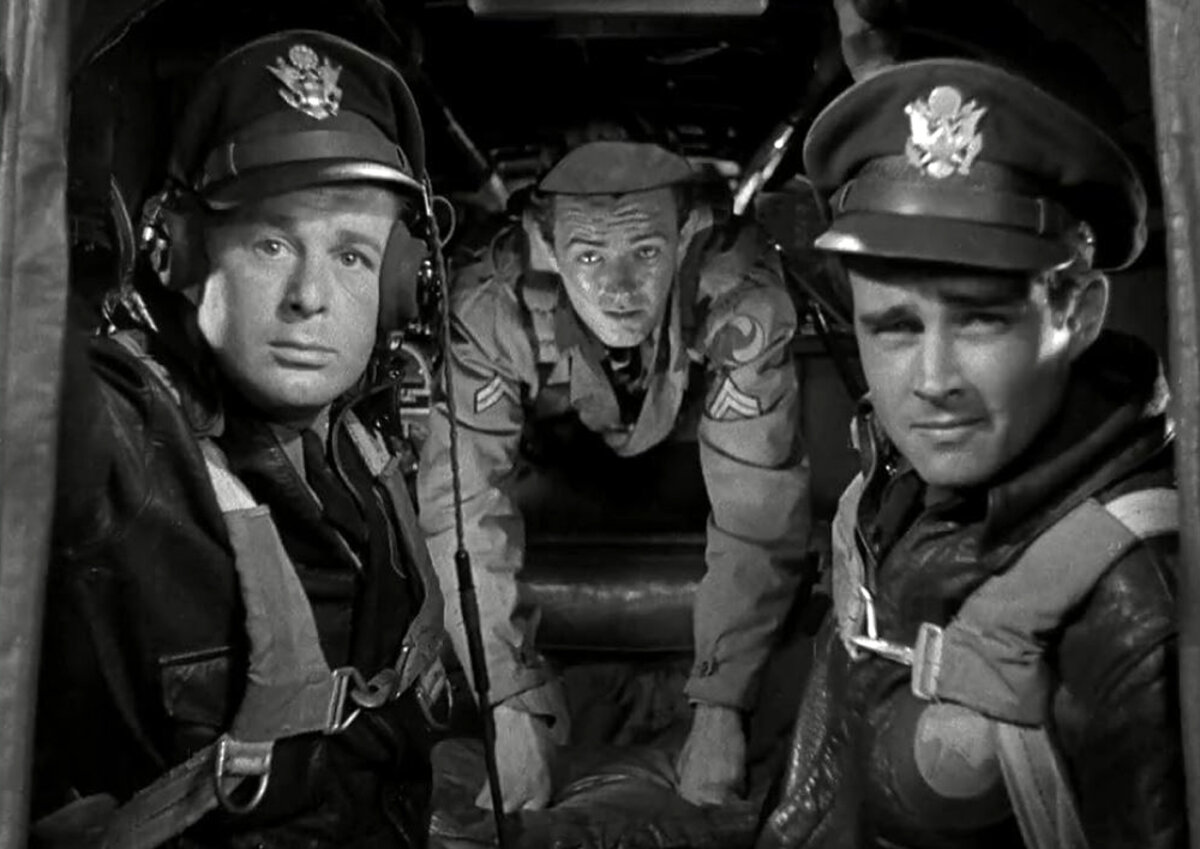
Lawson begins piloting a B-25 Mitchell bomber nicknamed the Ruptured Duck. Lt. Charles McClure (Don DeFore), Lt. Dean Davenport (Tim Murdock), Lt. Bob Clever (Herbert Gunn), and Cpl. David Thatcher (Robert Walker) make up the rest of his crew.
Their destination is finally revealed aboard the USS Hornet—Japan. On April 18, 1942, those 16 bombers launch earlier than planned after enemy patrol vessels spot the task force—but this complication is just beginning.
The Raid Comes Alive
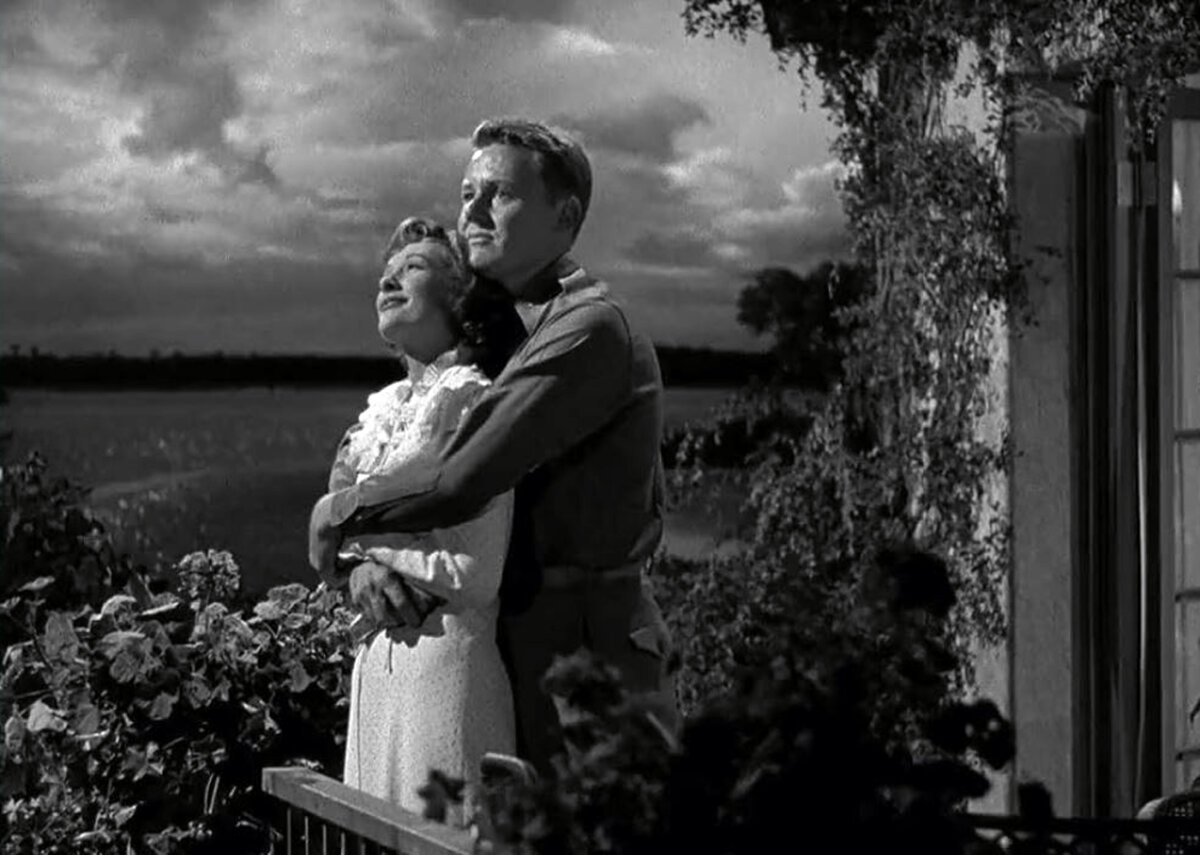
This classic wartime flick takes its time getting those big ol’ bombers off the deck. Since the movie is longer than average at 138 minutes, director Mervyn LeRoy spends the opening stretch on training, military routines, and Ted Lawson’s home life with Ellen.
The romantic passages are occasionally saccharine, although Johnson and Thaxter are easy to watch. Since the story came directly from Lawson’s wartime account, those scenes also show what awaited after the mission.
Tracy is underutilized here and appears only briefly as Lt. Col. Doolittle. Johnson has the bulk of the work and handles Lawson’s humor, devotion to his crew, and later ordeals very well.
Robert Walker makes the David Thatcher character memorable with comparatively little screen time, and Robert Mitchum’s Bob Gray has the sort of face that seems born for black-and-white photography. Even this early in their careers, the camera clearly liked these guys.
The raid itself has some superb low-altitude photography, and the cockpit views put us right beside the crews as rooftops, countryside, and stretches of sea rush beneath them. The film’s Special Effects Oscar was well deserved.
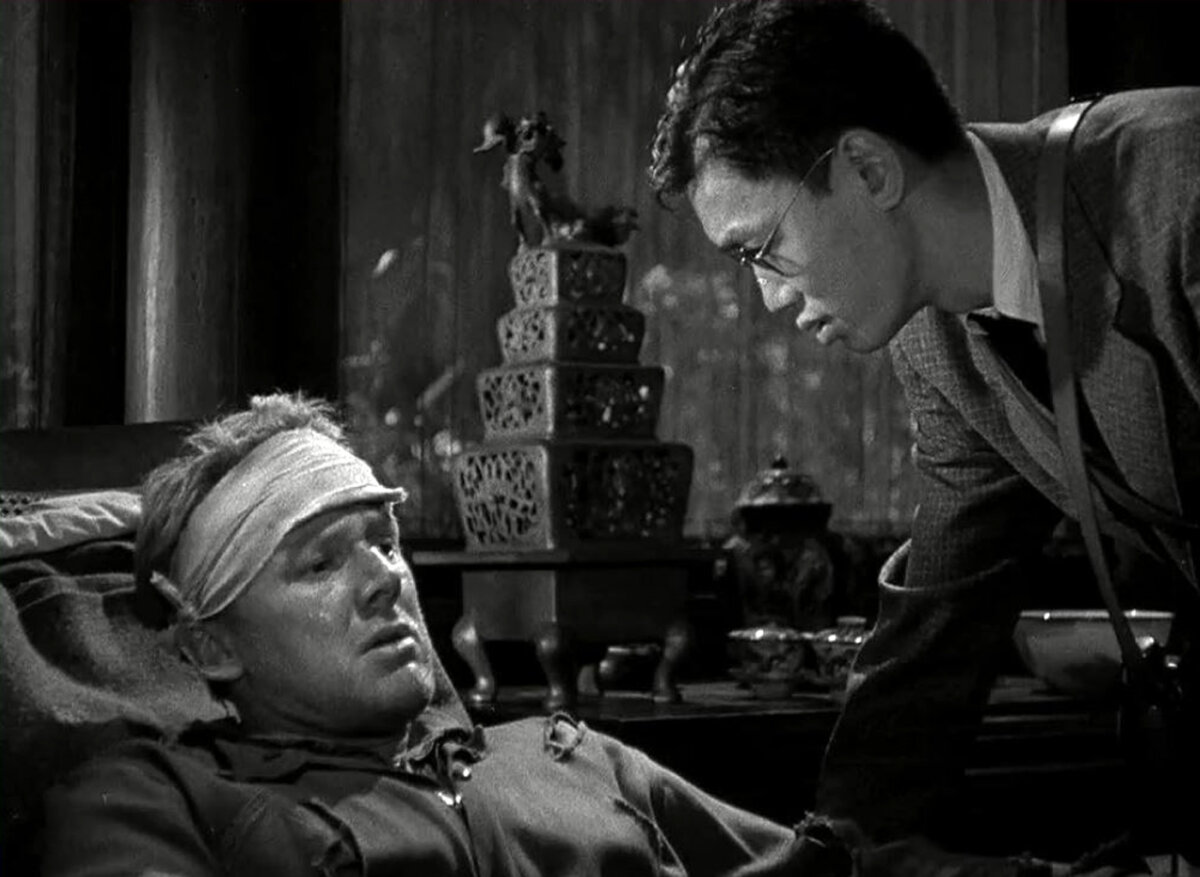
I also appreciated how much time the movie gives the Chinese civilians who help the Americans after the raid. We see them shelter injured men, find medical help, and expose themselves to danger in doing so.
Ultimately, the pilots’ determination and the patriotic camaraderie among the crew are a big part of what makes “Thirty Seconds Over Tokyo” so appealing.
There’s also something refreshing about a wartime film that emphasizes courage, sacrifice, friendship, and people helping each other when things go wrong.
“Thirty Seconds Over Tokyo” is available on Amazon, YouTube, and Apple TV.
‘Thirty Seconds Over Tokyo’
Director: Mervyn LeRoy
Starring: Spencer Tracy, Van Johnson, Robert Walker
Not Rated
Running time: 2 hours, 18 minutes
Release Date: Nov. 15, 1944
Rated: 4 stars out of 5
What arts and culture topics would you like us to cover? Please email ideas or feedback to features@epochtimes.nyc