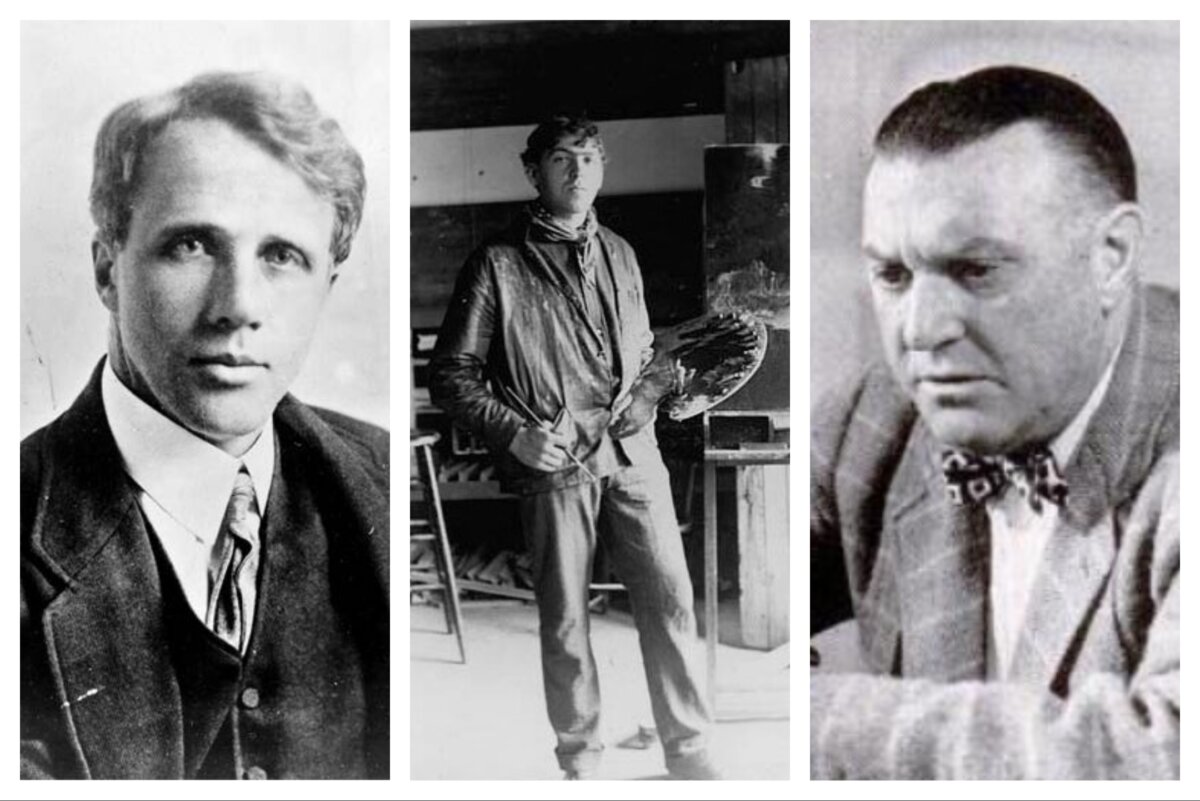
Read-a-dub-dub
Three men in this club
And who do you think they be?
A poet, a painter, a narrative maker
Who touched their country’s history.
Goofy, yes, that play on a nursery rhyme, but if my doggerel verse has snagged your attention, then its purpose is served. Let’s look at three American artists, all of the same generation—poet Robert Frost (1874–1963), painter and illustrator N.C. Wyeth (1882–1945), and novelist Kenneth Roberts (1885–1957)—and see how the time in which they reached middle age and the books they read contributed to their craft, which, in turn, helped shape our vision of America.
The Old Days
To wax nostalgic about the past without reservation makes fool’s gold of history. The age in which our three subjects were born and spent their youth, that period of American pride and general optimism screeched to a halt with World War I. It shook Western civilization to its foundations and featured plenty of negatives. Jim Crow laws in the South and racial bigotry throughout the nation were rampant. Antibiotics had yet to be widely adopted; an infected cut could poison the blood and bring death. The number of mothers who died giving birth and children who died before the age of 5 were staggering compared to today. Simple daily tasks like doing the laundry or preparing a supper were far more labor-intensive. A failed bank could ruin a family overnight.
On the other hand, that 40-year period before the “war to end all wars” does offer reasons for wistful nostalgia while also helping us understand our three artists. Life then was conducted on a different scale.
Just under 40 percent of Americans lived on farms. Elementary and secondary schools were much smaller than today, with about 10 percent of students ages 15 to 17 enrolled in high school. Families were larger, and neighbors knew each other. Porches were made for sitting and visiting, not for decoration.
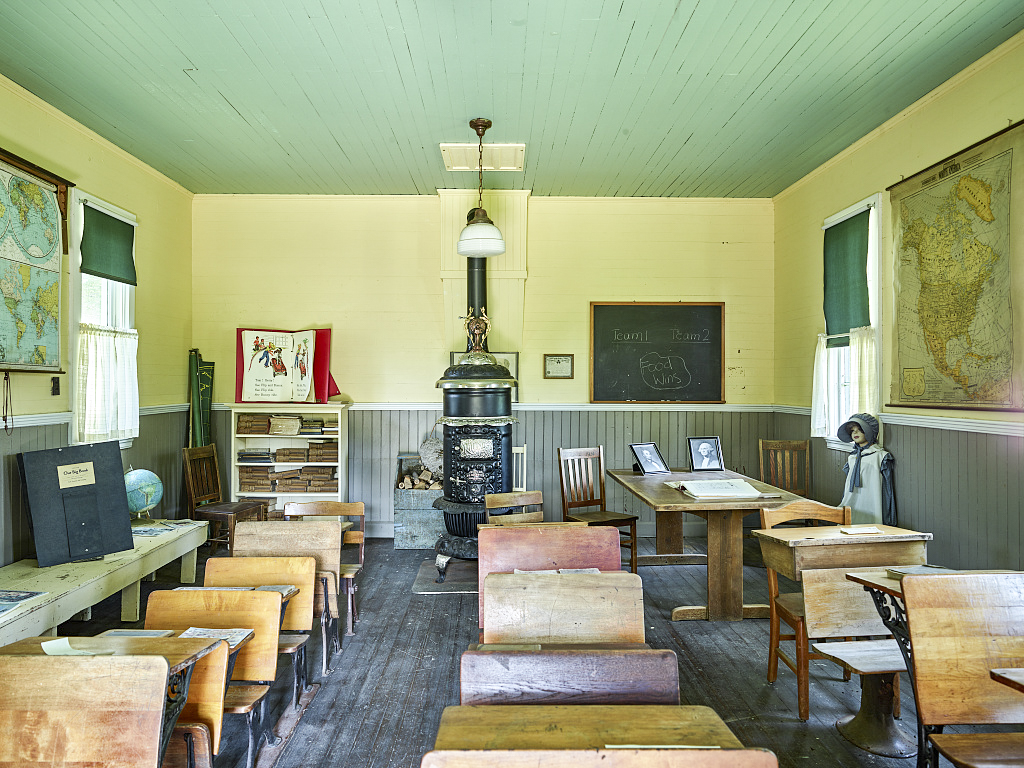
One clear contrast between then and now is entertainment. Today, the vast majority of Americans derive the great bulk of their entertainment from screens. In 1900, with the exception of shows and plays, entertainment was homemade. If you wanted music or storytelling or games indoors or out, you either made your own or you turned to family and friends.
Books and reading were diversions but also shapers of culture. Today, cultural observers note the dramatic shift from books to screens, from print-and-paper influences to phones, computers, and images. But 125 years ago, books were the chief architects of culture, building and shaping those who read them.
Included in this formation were our three artists. Let’s look at what they were reading.
The Poet
In 1934, the Massachusetts Library Association asked Robert Frost to list his favorite books. His choices marked him as an eclectic and thoughtful reader. First on his list was “The Odyssey,” which he called “the first in time and rank of all romances.” His remarks on his second-place selection, “Robinson Crusoe,” contained this insightful comment, “I never tire of being shown how the limited can become snug in the limitless.”
Other treasured works of fiction included the stories of Edgar Allen Poe, James Fenimore Cooper’s “The Last of the Mohicans,” Anthony Hope’s “The Prisoner of Zenda,” and Rudyard Kipling’s “The Jungle Book,” of which Frost noted, “I shall read it again as often as I can find a new child to listen to me.”
Two New England writers also made his list: Ralph Waldo Emerson’s “Essays and Poems” and Henry David Thoreau’s “Walden.” Of that classic American work, Frost wrote, “Crusoe was cast away; Thoreau was self-cast away. Both found themselves sufficient. No prose writer has ever been more fortunate in subject than these two.”
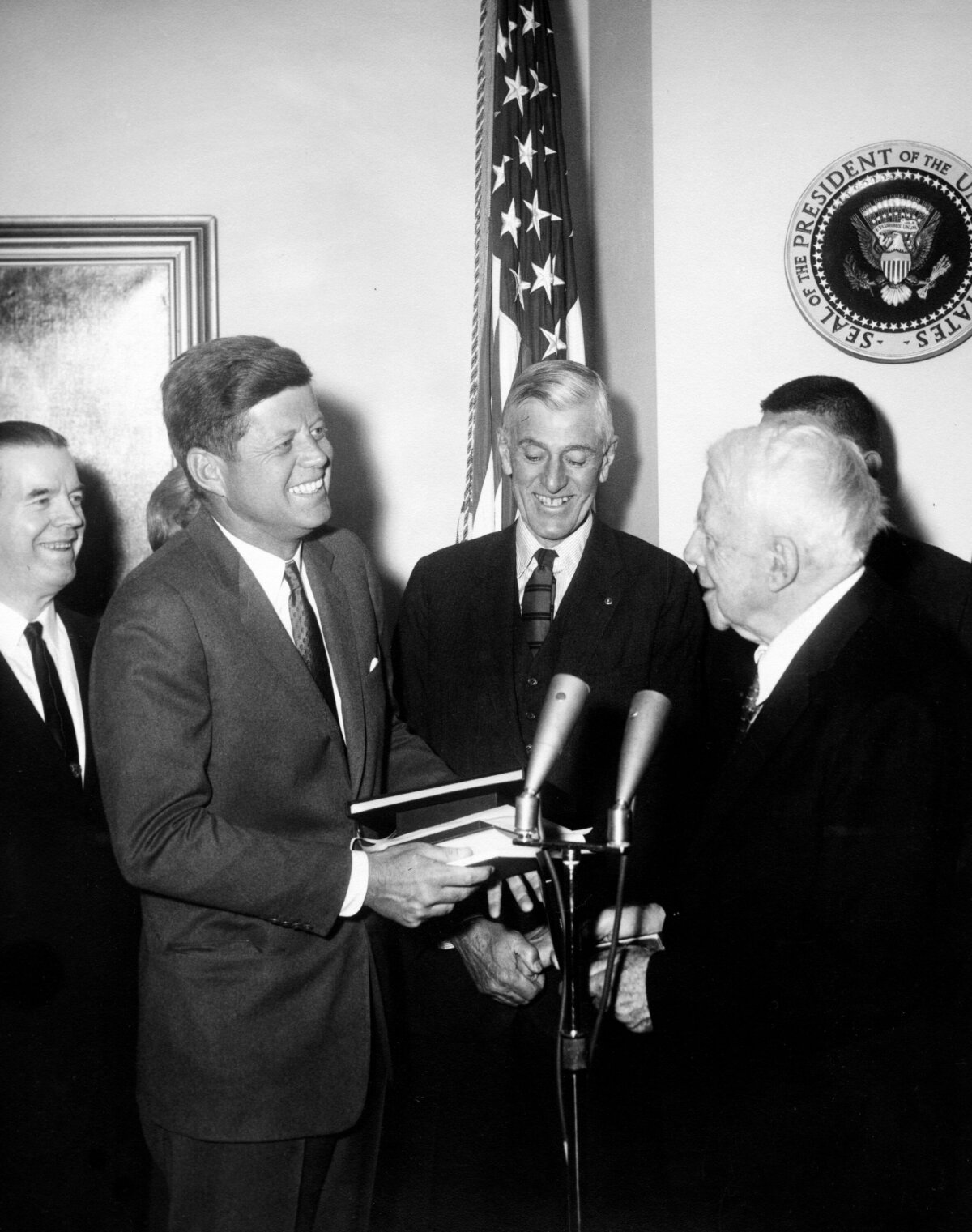
In 1960, the U.S. House of Representatives unanimously voted to award a Congressional Gold Medal to Robert Frost for his poetry, “which has enriched the culture of the United States and the philosophy of the world.” Nearly 30 years earlier, poet and critic William Rose Benét wrote of Frost’s collection, “A Further Range,” saying, “[I]f anybody should ask me why I still believe in my land, I have only to put this book in his hand and answer, ‘Well—here is a man of my country.’”
The Painter
Newell Convers Wyeth, famed illustrator of books and creator of more than 3,000 paintings, found constant inspiration in his reading.
In his fine homage, “My Father,” artist Andrew Wyeth writes of “Pa” as a reluctant early reader.
“From being hardly a reader at all in his youth, he had become a constant reader. He had a remarkable talent for writing. My mother’s mother got him reading Thoreau. He also read [Leo] Tolstoy. And he loved Robert Frost. He thought [John] Keats was terrific. He loved Emily Dickinson.”
Wyeth also kept on hand a stock of history books, particularly the ones important for his painting, like those on medieval armor.
As Wyeth’s son Andrew relates, his father’s book commissions further transformed him into an avid and attentive reader.
“He began each book project in the same way—he read the story. Pa’s first and foremost interest was: Is it a well-written story? Is it a vital story? What he wanted to do was to bring air into those books that had been sitting in libraries for decades. People often refer to the books Pa illustrated as ‘children’s classics,’ but I don’t think you can call ‘The Last of the Mohicans’ a child’s book. And certainly ‘The Mysterious Stranger’ by Mark Twain is not a child’s book.”
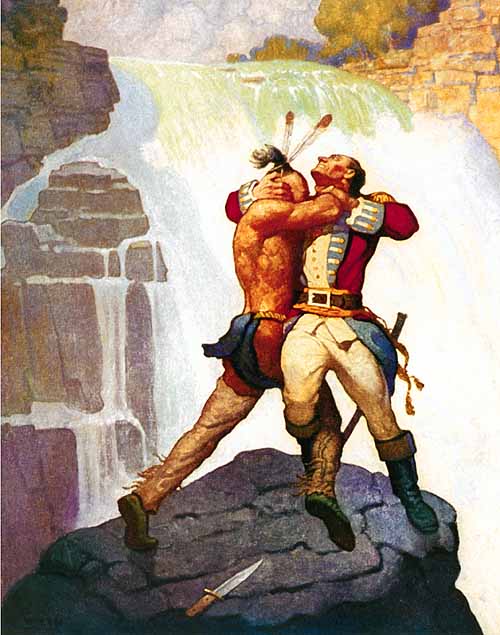
Wyeth had a lifelong fascination with history, sparked in part by his deep New England roots; Wyeths had lived in Massachusetts since the mid-17th century. In 1908, the artist and his wife Carolyn moved to Chadds Ford, Pennsylvania, where he had earlier lived while studying with artist Howard Pyle, and, in 1911, they purchased land there near a Revolutionary War battlefield.
The Brandywine Conservatory and Museum of Art reports that this “proximity appealed to the artist’s abiding love of history.” From then on, he frequently painted scenes from the American past, such as two Civil War murals for the Missouri State Capitol and another about Pilgrim life for an insurance company, incomplete at his death but finished by his son, Andrew, and John McCoy, his son-in-law.
To get just a taste of Wyeth’s art and his clear love of American history, we have only to turn to editor Brander Matthews’s 1922 “Poems of American Patriotism,” illustrated by Wyeth and available for examination online. Here is the drama, detail, and beauty of this master at work.
The Novelist
Of this trio, Kenneth Roberts is least known today, though in the mid-20th century, his historical novels, set mostly in colonial and revolutionary America, were bestsellers, and some remain in print today.
Cantankerous and eccentric, Roberts was a meticulous researcher who believed in meticulous investigation and a warts-and-all approach to his subjects. His excellent novel “Oliver Wiswell,” which featured an American Tory as its hero, raised eyebrows when it was first published. Two of his novels, “Arundel” and “Rabble in Arms,” feature Benedict Arnold when he was still a hero before becoming a byword for traitor.
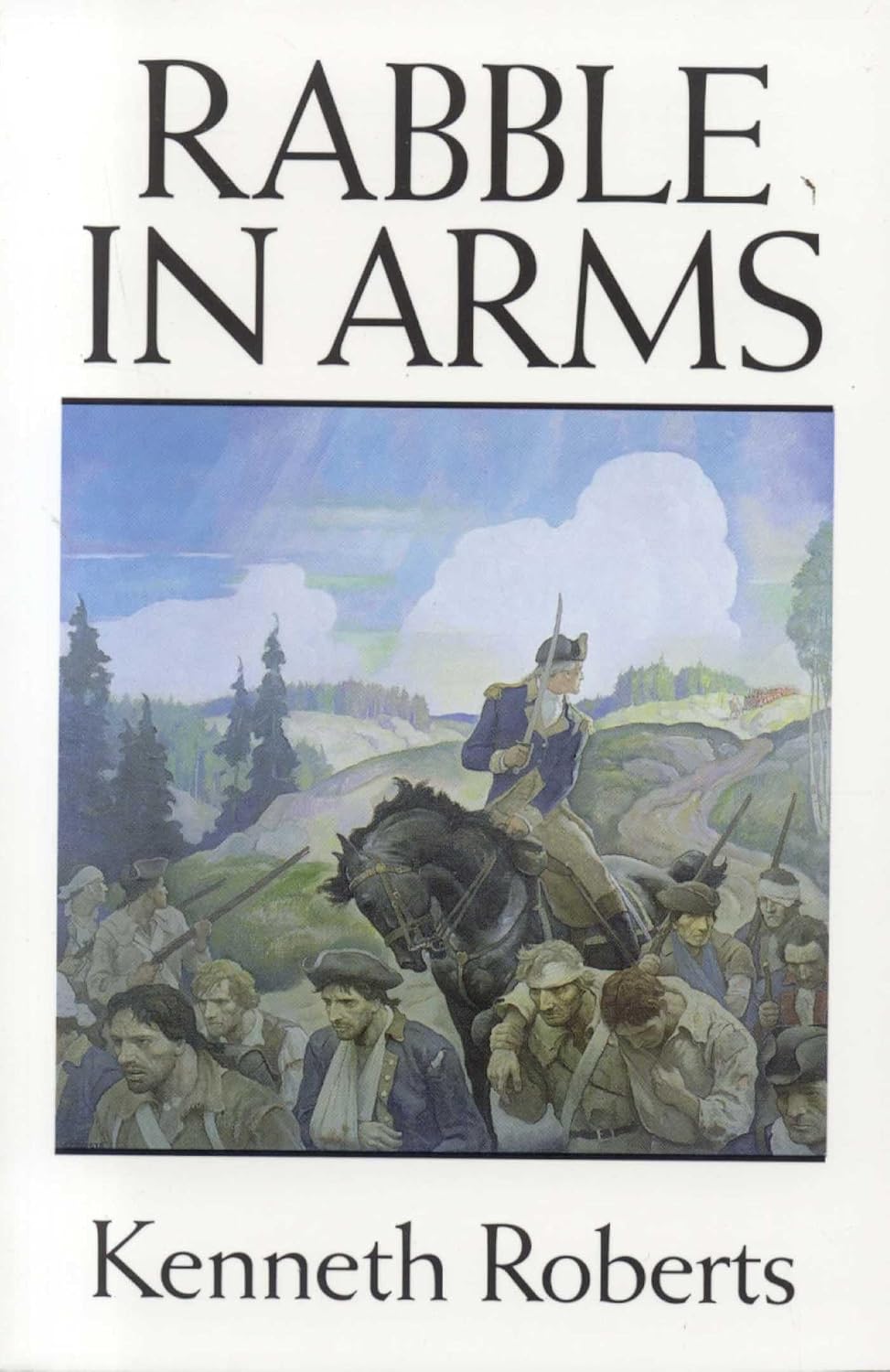
A partial list of books read by Roberts reveals his interest in both the novel in general and historical fiction. Here we find a hodgepodge of titles, from Zane Grey’s Western “Fighting Caravans” to historical novels like Margaret Mitchell’s “Gone With the Wind” and Henryk Sienkiewicz’s “By Fire and Sword.” Like both Frost and Wyeth, Roberts also listed Thoreau as among his favorites.
In 1957, the Pulitzer Prize judges awarded Roberts a special citation: “For his historical novels which have long contributed to the creation of greater interest in our early American history.” In “Oliver Wiswell,” Roberts wrote, “Great men tell the truth and are never believed. Lesser men are always believed, but seldom have the brains or the courage to tell the truth.”
Roberts aimed to tell the truth in his stories of the past.
We’ve looked briefly at the books that influenced Frost, Wyeth, and Roberts. Now it’s our turn. We can revisit the words of Frost and Roberts and the art of Wyeth, and so take from their art the hope, drama, and beauty in our country’s history which they took from others.
What arts and culture topics would you like us to cover? Please email ideas or feedback to features@epochtimes.nyc.