Active during the end of the Middle Ages, the prolific German artist Tilman Riemenschneider (circa 1460–1531) created some of the era’s most beautiful and technically virtuosic sculptures. His artworks featured primarily religious subjects, and represent the zenith of the late Gothic style’s realism, expressiveness, and elegance. In addition, his work heralded the coming Northern Renaissance’s appreciation of humanism.
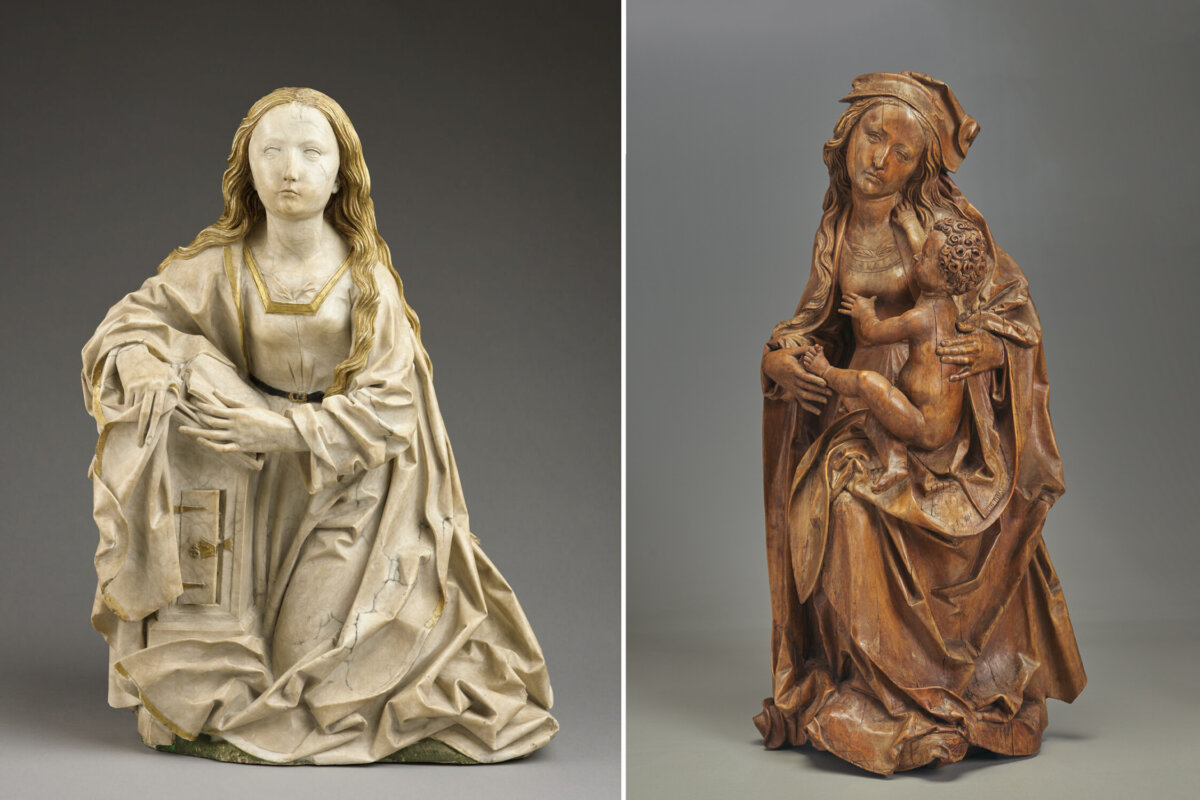
Among the most important artists of his time, Riemenschneider’s oeuvre is not well known in the United States, as most of his works are in European museum collections or remain preserved in their original religious settings. Analysis of two Riemenschneider depictions of the Virgin Mary, made in different media and housed on different continents, showcases his keen attention to detail and ability to convey a subject’s introspection.
A Master of Limewood and Stone
Personal details about Riemenschneider are sketchy. Scholars know he was born between 1459 and 1462 in the town of Heiligenstadt in the German state of Thuringia. He may have studied sculpting in central and southwestern German provinces. By the time Riemenschneider moved to the Franconian episcopal city of Würzburg (in present-day Bavaria), where he settled permanently, he was a fully trained artist. In 1485, two years after arriving, Riemenschneider opened his own workshop.
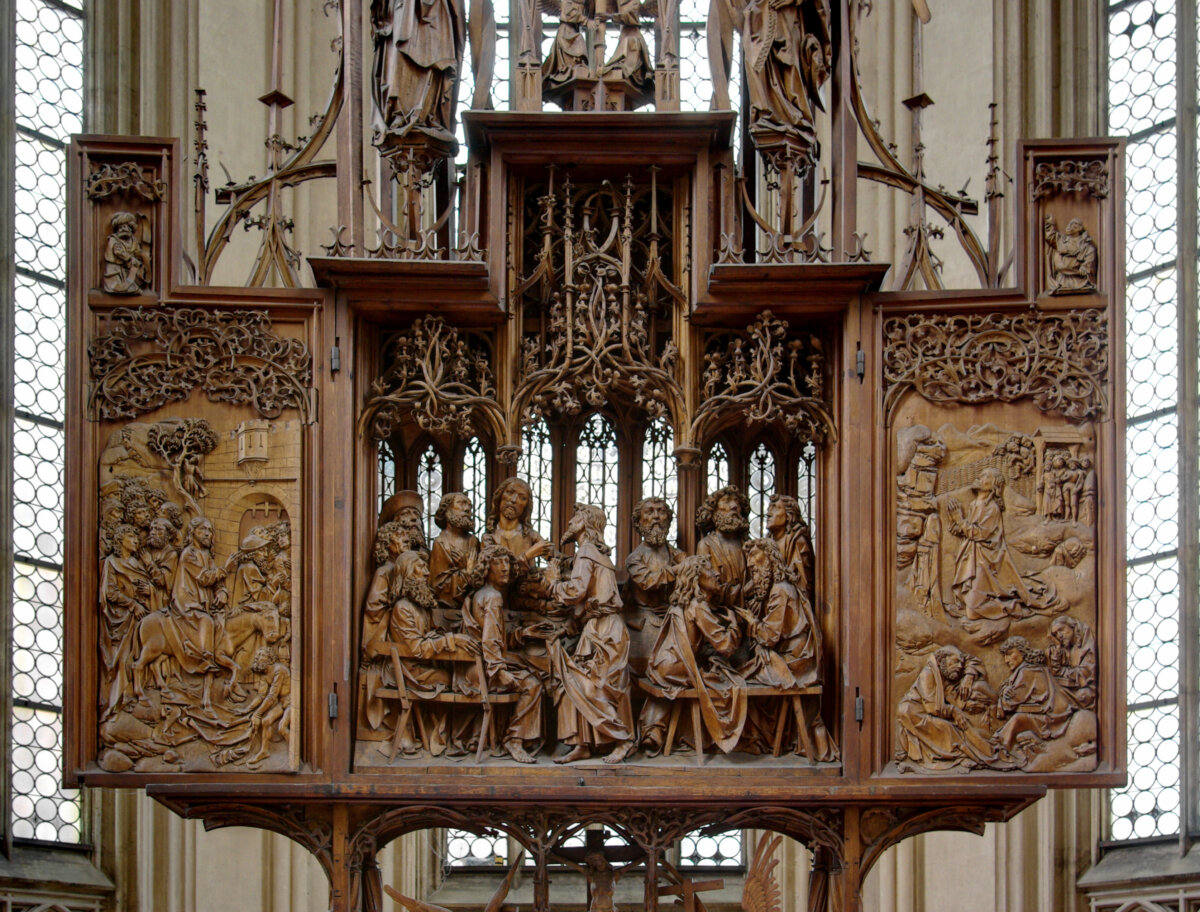
His career was illustrious, with extensive commissions from throughout Franconia over four decades and a workshop that employed as many as 40 apprentices. By around 1500, he was one of Würzburg’s wealthiest citizens. Along with being a flourishing artist, Riemenschneider was recognized as a member of the municipal council; he was elected mayor for a year in 1520.
Riemenschneider is best known for his limewood sculptures. At the time, wooden sculptures where usually polychromed, meaning painted and gilded. While many Riemenschneider artworks were finished in this manner, he was one of the first artists to also make sculptures that were kept in their natural color, leaving the wood and carefully carved details visible. Riemenschneider was also a master carver of other materials: sandstone and alabaster. His output in alabaster was very small, but the results are exquisite.
Alabaster Madonna
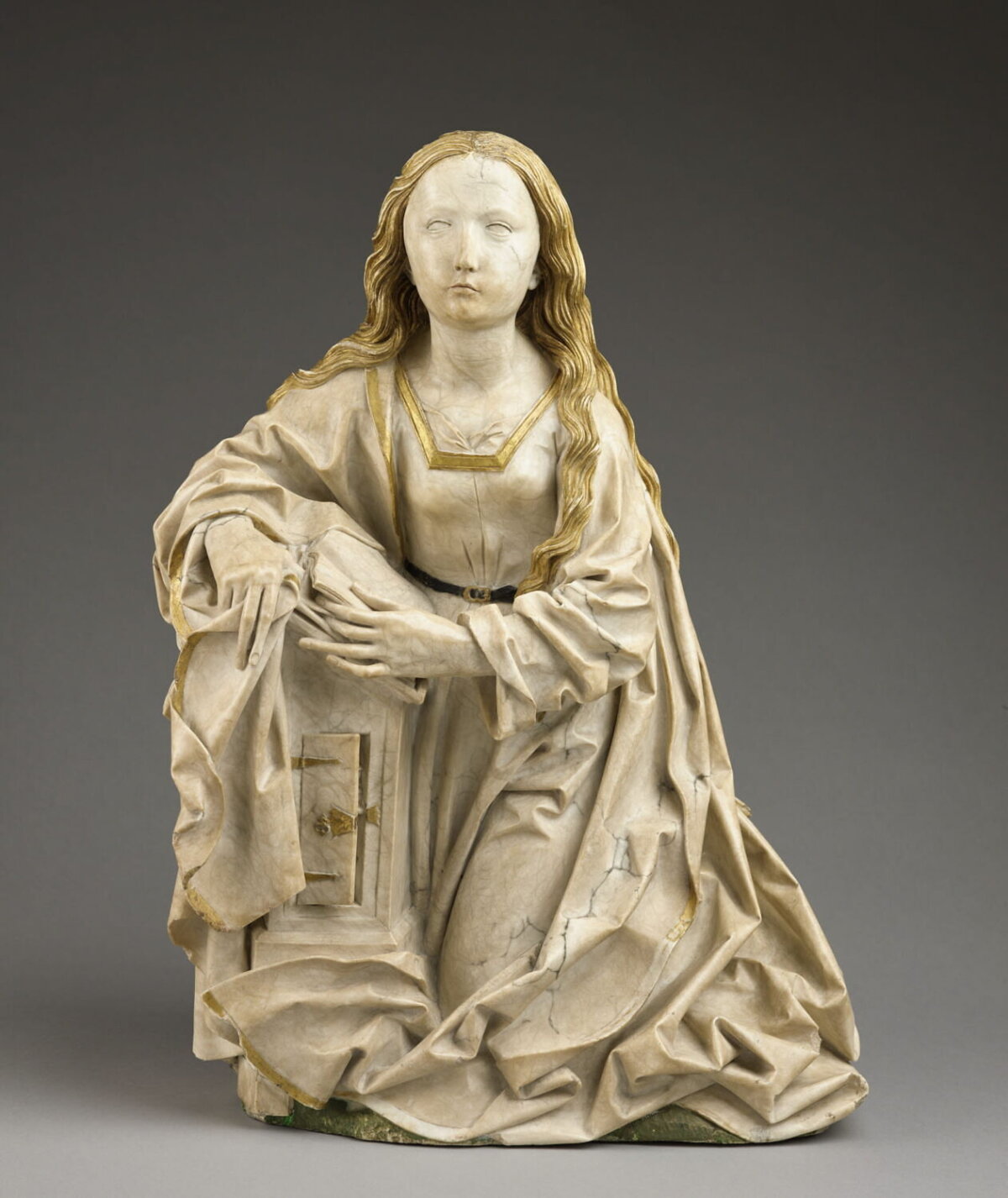
Alabaster, a type of gypsum, was used for small sculpted pieces in the medieval era . It was popular from the 14th to the 16th century in several European countries, including Germany. Around 1495, Riemenschneider received a commission from the Benedictine monastery of Saint Peter in Erfurt. He made at least two alabaster statuettes. The total number he completed is unknown; only two have survived.
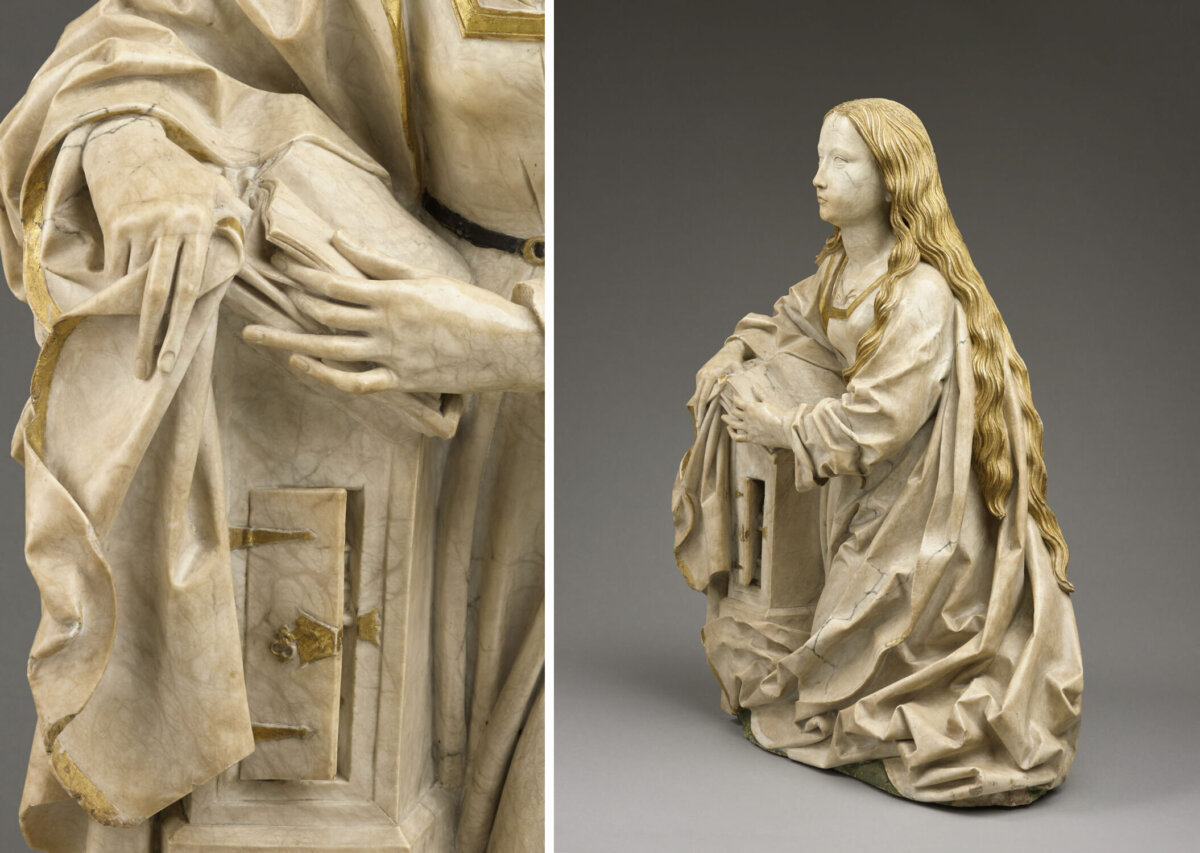
One is “The Virgin of the Annunciation,” now at the Louvre in Paris. It reflects still traces of polychromy. The exceptional work’s refinement is a testament to the medium’s ability to be carved with great detail due to its softness as well as Riemenschneider’s advanced skills at conveying delicate subtleties. Riemenschneider’s Mary has long, wavy hair and kneels before a lectern on which a book rests. She stares straight ahead and wears a cloak, dress, and another garment visible around the angular neckline of her dress. The gilded elements add to the sacredness of her person. No detail is overlooked: the lectern’s plinth has an opened door featuring a lock, pull ring, and hinges.
Seebenstein Madonna
Another illustrious work of Mary by Riemenschneider in limewood with traces of polychromy is the circa 1500–1505 “Virgin and Child Enthroned.” Also known as the “Seebenstein Madonna,” this 3-foot-tall sculpture was purchased by New Haven, Connecticut’s Yale University Art Gallery in 2025 from a private Austrian collection. At the time, it was one of only five autographed works by Riemenschneider still in private hands and the only seated limewood depiction of the Madonna and Child to survive at all.
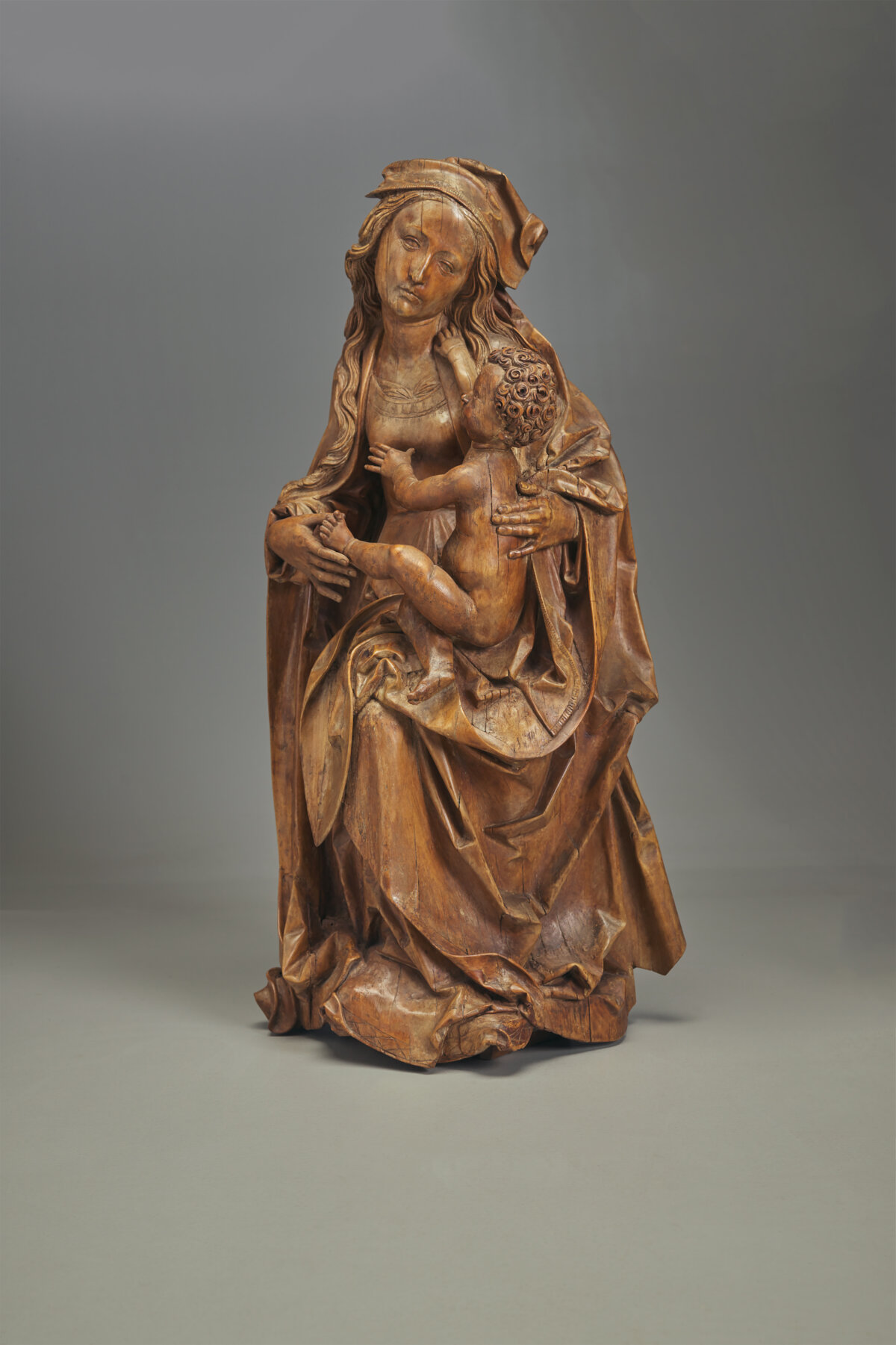
As in the alabaster “The Virgin of the Annunciation,” Riemenschneider’s brilliance at depicting flowing drapery is on display. “Seebenstein Madonna” is an emotive work. Seated on a throne, the Virgin gazes tenderly at the dynamic Christ Child seated in her lap. She supports his back delicately as he reaches up to her.
Riemenschneider was an inventive sculptor with a uniquely creative artistic vision. His work reveals a versatile range and an unparalleled technique. He knew how to mold a medium to the material’s best advantage, from carving to polishing and painting, as well as leaving it unadorned. For example, the back of the “Seebenstein Madonna” is hollowed out in order to prevent the wood from splitting.
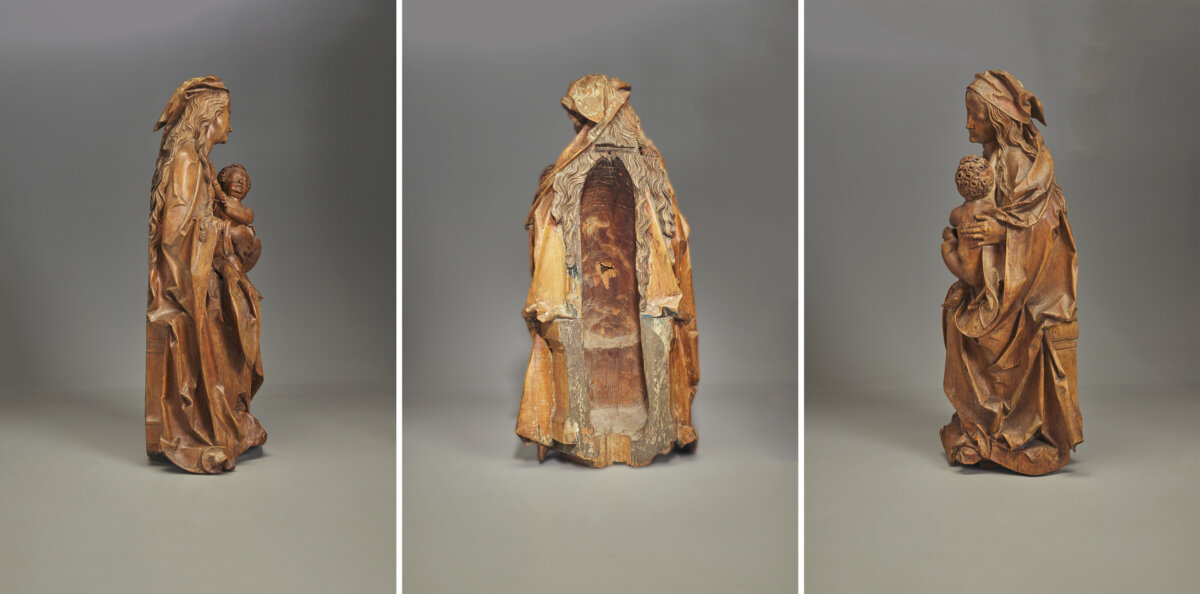
When comparing “The Virgin of the Annunciation” and “Seebenstein Madonna” there are clear differences in medium and scale, but Riemenschneider’s ability to capture detailed emotion shines through any format.
What arts and culture topics would you like us to cover? Please email ideas or feedback to features@epochtimes.nyc