



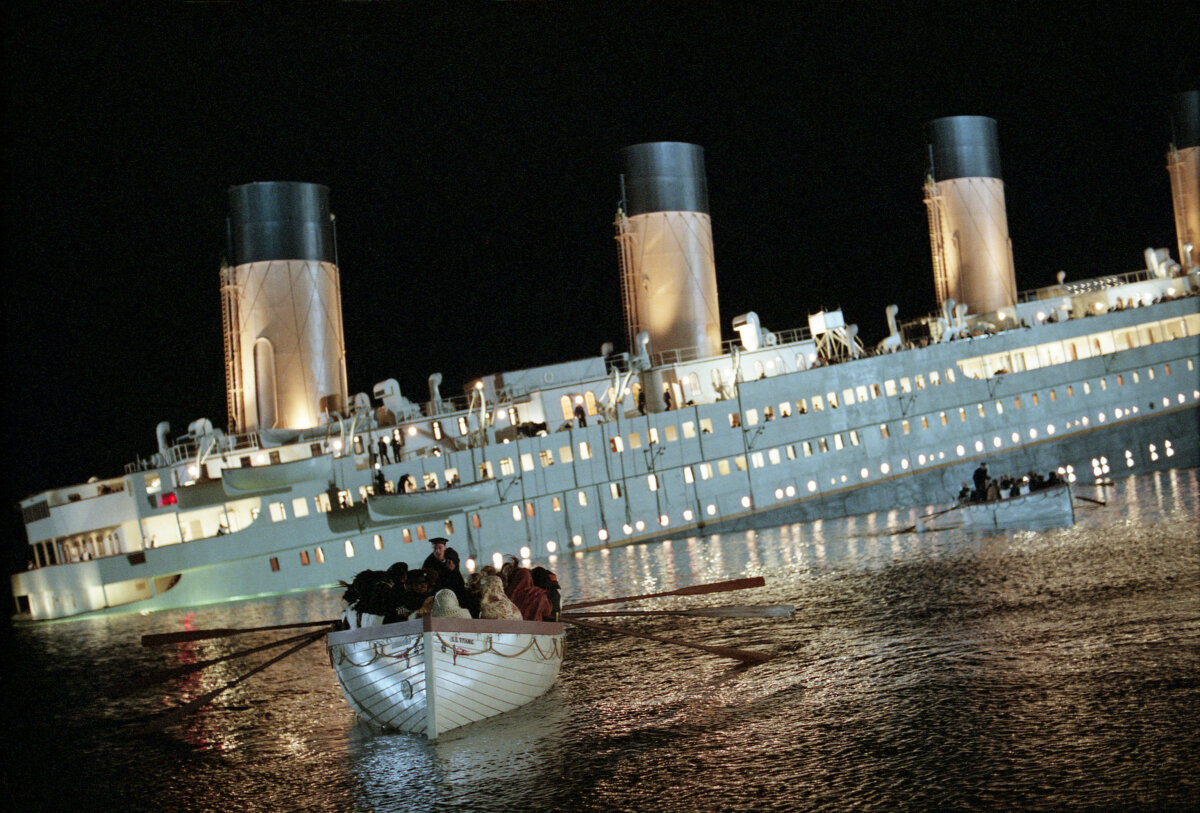
The 1912 Titanic disaster ought to have had near-zero survival rates, given the Atlantic Ocean’s sub-zero temperatures.
The nearly 900-foot-long ship had too few lifeboats. When it struck an iceberg at 11:40 p.m. on April 14, many of its more than 2,200 travelers were asleep. It wasn’t until 12:05 a.m. on April 15 that the captain ordered boarding lifeboats, leaving just over two hours before the Titanic plunged to its watery grave 12,500 feet below.
Of 531 women aboard, as many as 374 survived; a stunning survival rate of 74 percent.
Of 1,692 men aboard only 332 survived; a less stunning rate of 20 percent.
Maritime Tradition
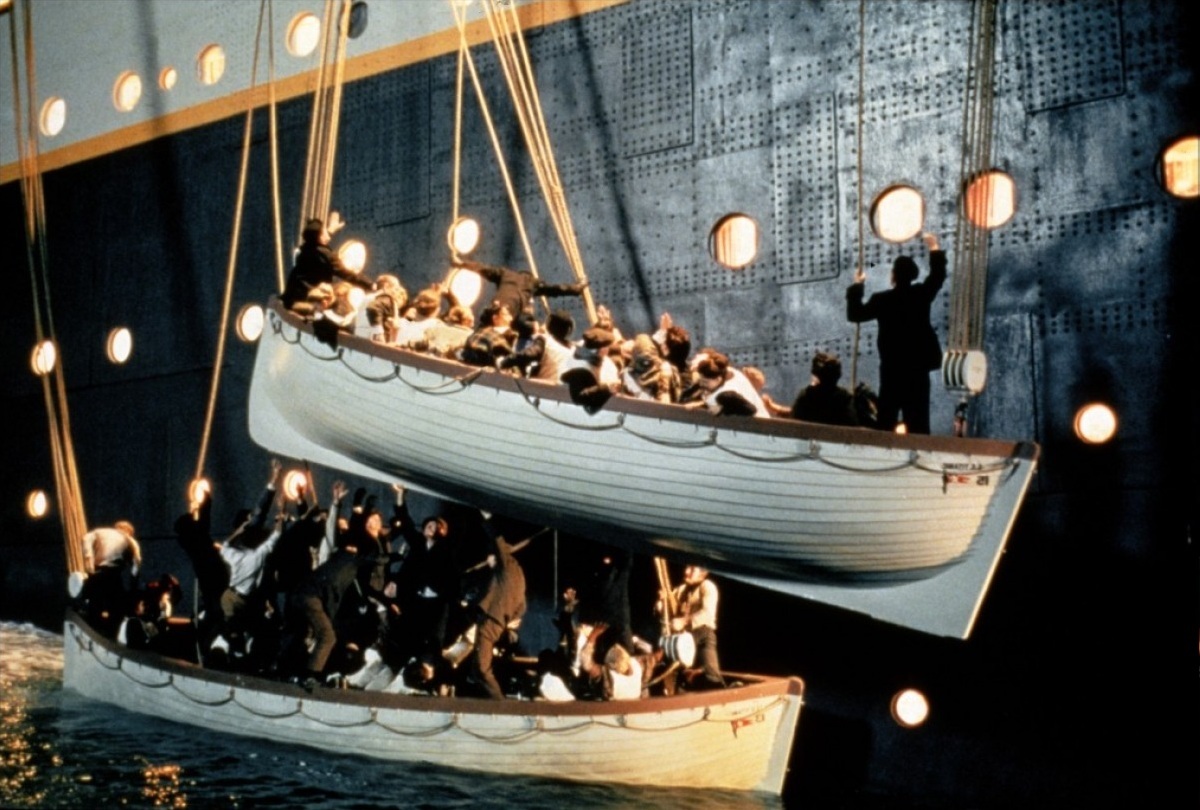
The captain’s instruction that night, “Women and children first,” a uniquely maritime, masculine tradition, didn’t aid all women and children equally. Not all men complied. Many women and children were trapped in hard-to-reach lower decks; others, too slow or weak, died of hypothermia, not drowning.
That the biggest, strongest, quickest, most agile travelers, men, died in the largest numbers, says something. Many were herding women and children onto lifeboats before flailing to death in icy water.
Brock Lovett’s (Bill Paxton) late 20th-century ocean-salvage corps, exploring the Titanic’s wreck, can’t find the diamond necklace they’re after, only the sketch of a woman sporting it. That woman, centenarian Rose Dawson (Gloria Stuart), gets in touch, then narrates her story.
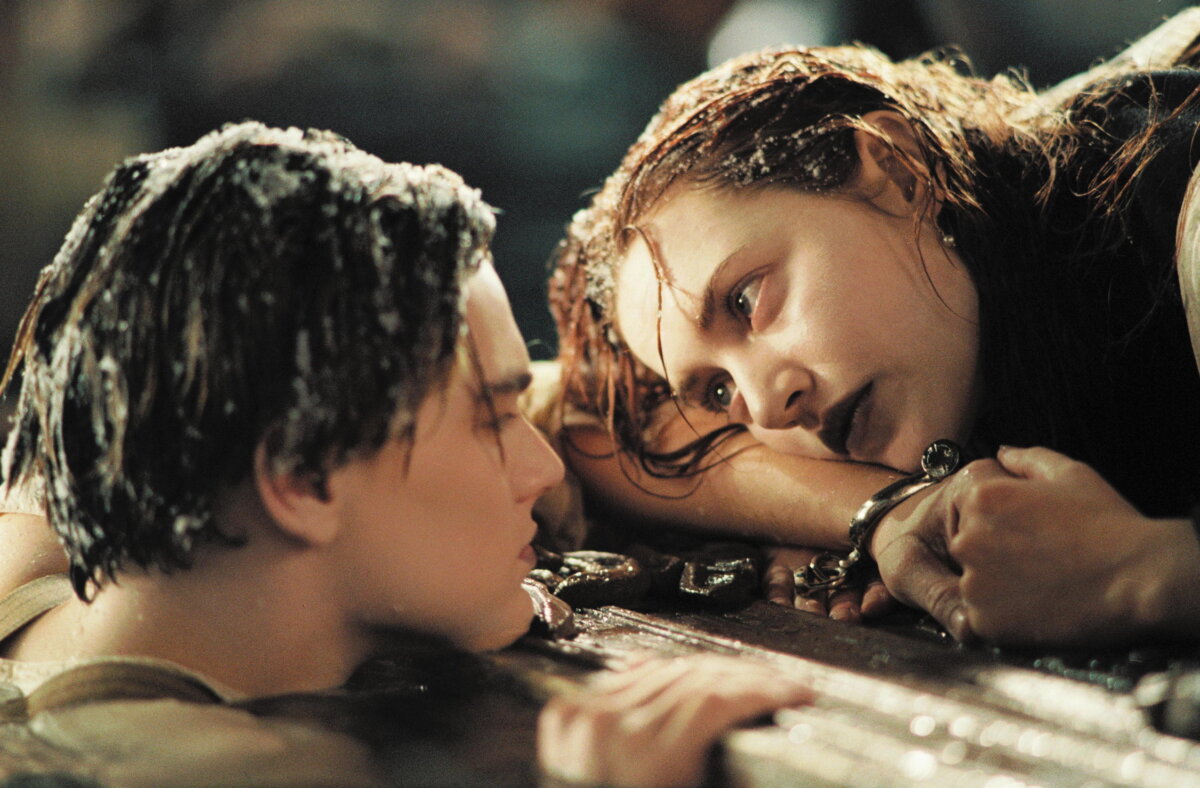
In 1912, young Rose (Kate Winslet) boards the supposedly “unsinkable” ship on its maiden voyage from England to America. Defying her controlling mother and conceited fiancé, Cal Hockley (Billy Zane), Rose falls for young, free-spirited sketch artist Jack Dawson (Leonardo DiCaprio). But her hope of a future with Jack floats too briefly, sinking with the fated ship. Jack believes that Rose needn’t sink, too.
Critiques of the contemporary self-obsessiveness of some men are well-meant and should be well taken. Some men here, albeit from a century ago, bear that swagger. Cal and his brutish sidekick, Lovejoy, exemplify it. Bruce Ismay (Jonathan Hyde), owner of the shipping line that manage the Titanic, Thomas Andrews (Victor Garber), Titanic’s designer, and Captain Edward Smith (Bernard Hill), figure that their mastery makes them and their machines invincible. They’re proven wrong.
The ship isn’t unsinkable. The bare minimum of lifeboats doesn’t suffice. Crow’s nest lookouts do need binoculars, but aren’t given them. With ample iceberg warnings, the ship should’ve slowed in ocean territory notorious for icebergs; it isn’t made to. Bulkheads should’ve been capped to preempt serial compartmental flooding; they aren’t.
Good Men
Thankfully, screenwriter-producer-director James Cameron offers a contrasting portrait of masculinity as well.
Jack and buddies from the lower decks use their manly strength to rip a bench off its moorings and wield it as a battering ram to force women and children up and away from rising water.
Torn from her father’s arms and laid in her mother’s, one girl cries. With his parting words, the father coaxes her to stay in the lifeboat. Knowing there aren’t any boats left, he says, “There’ll be another boat for the daddies.”
Jack’s friend, Fabrizio (Danny Nucci), armed with a lifejacket and ready to make a swim for it, returns to save others. Leaping clear of the water, he grips, then cuts giant ropes holding back boats filled with survivors.
Amid disasters (fire, flood, explosion, earthquake), few wannabe survivors talk of “equality.” They’re looking for those willing and able to save many; it’s up to men to do the right thing and do it gracefully.
Which group accounts for the highest proportion of the diseased, disabled, dead, or dying among 9/11 Ground Zero first responders? Men. Men are over-represented among bomb-disposal squads, commandos, police officers, ironworkers, utility crews, firefighters, ambulance drivers, and search-and-rescue corps. They’re usually able to hold onto someone longer or heave someone farther to safety.

Sure, mental, emotional strength matters, as Rose demonstrates. But it’s the indisputably physical, risk-taking instincts of men like Jack here, who get women to a place where their feminine strengths can count.
It’s a good two hours and 40 minutes into the film that Titanic’s power and lights fade; mere minutes before sinking. Survival rates would’ve been abysmal if the crew hadn’t kept on working until then: electricians, boilermakers, trimmers, greasers. All men.
It’s unclear who ordered the eight-person band to play soothing music during those final hours. It’s said to have helped ensure a calmer evacuation than may have been possible in stony silence. Two things are clear, though. All eight died. All men.
Check the Internet Movie Database website for plot summary, cast, reviews, and ratings. You can watch “Titanic” on Kanopy, Hoopla, and Prime Video.
These reflective articles may interest parents, caretakers, or educators of young adults, seeking great movies to watch together or recommend. They’re about films that, when viewed thoughtfully, nudge young people to be better versions of themselves.
What arts and culture topics would you like us to cover? Please email ideas or feedback to features@epochtimes.nyc.
