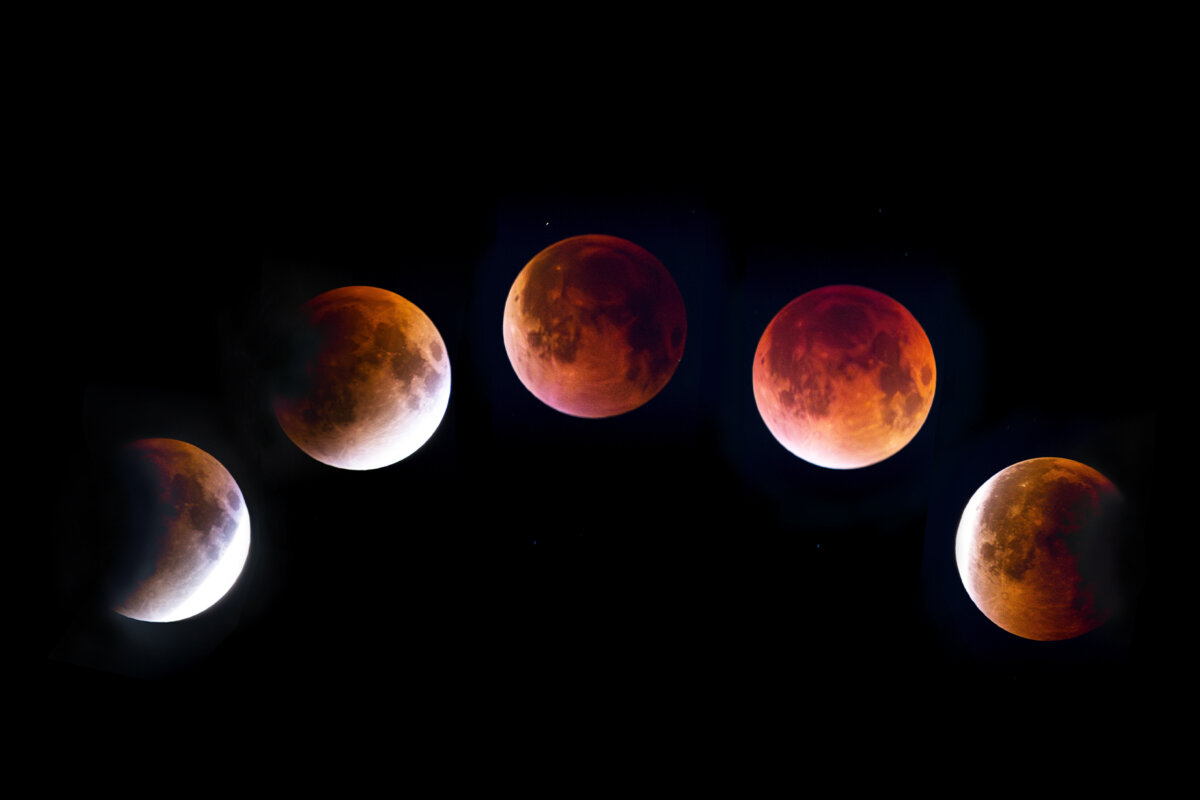
Astronomers say that early next month, something like 3.3 billion people might stroll outside after dark to see the full moon fade to black before turning an eerie rust red. The entire Western Hemisphere will be treated to a total lunar eclipse—also called a “blood moon”—although the spectacle will definitely favor the Pacific crowd.
Overnight on March 2 to March 3, viewers west of the Pacific Ocean as far as Kazakhstan and eastward to Florida will be privy to at least some of this lunar eclipse. It will be a partial eclipse for some observers. Others will catch the blood moon just as it’s rising or just setting, but a vast area of North America, Oceania, and Asia will see all phases from start to finish.
Unlike solar eclipses—including the one occurring this month, which will only be observable in Antarctica—lunar eclipses are visible from wherever you can see the moon. Instead of having to watch within a very narrow band of select locations, people will see the moon going dark wherever it’s nighttime. Weather permitting, it will be unmissable.
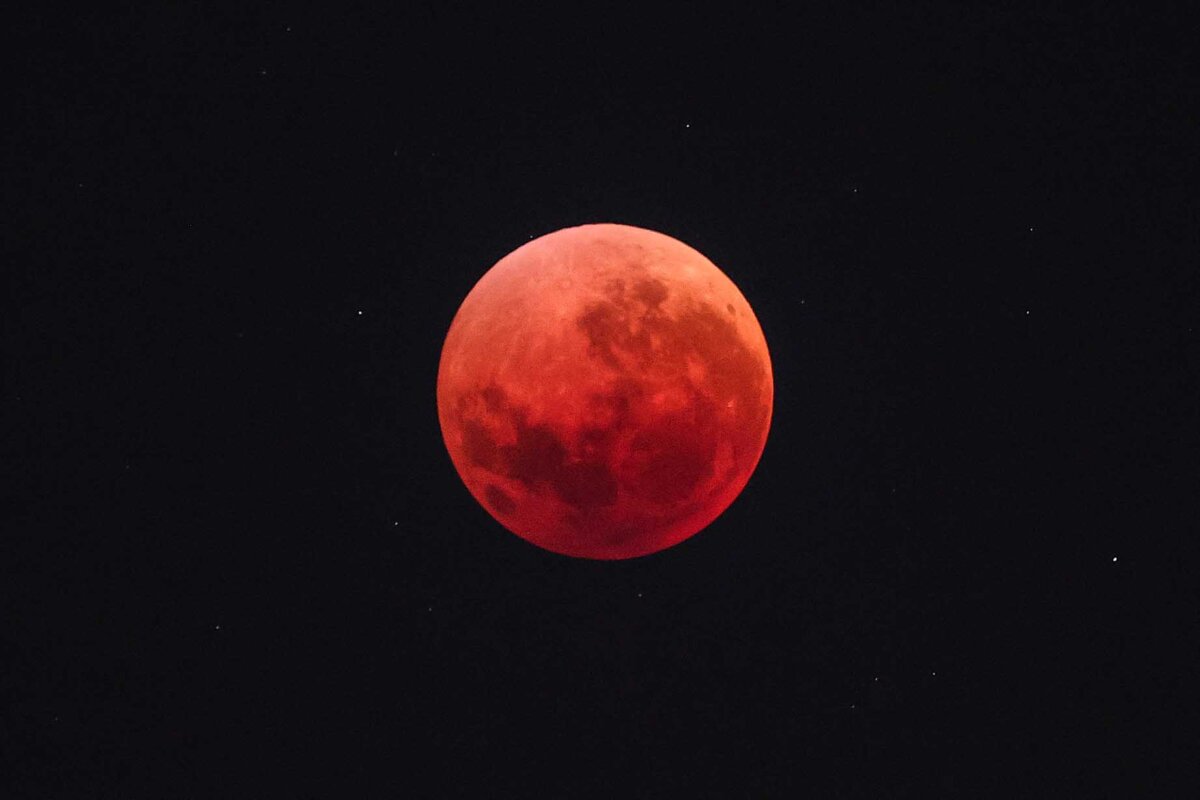
No eye protection is needed at all for total lunar eclipses, although it is absolutely essential for solar eclipses.
For this lunar eclipse, the moon will spend 65 minutes fully engulfed in the darkest part of Earth’s shadow, the umbra, where no sunlight reaches. It will start to glow an uncanny red, caused by sunlight filtering through Earth’s atmosphere and refracting around its horizons. It will literally be all the sunrises and sunsets on Earth shining upon the moon’s surface at once, tinting it crimson.
This is a blood moon, which only appears in the totality phase (when the moon is fully in shadow) of a total lunar eclipse, never in partial ones.
For those in North America wanting to watch the blood moon, the moon will fully slip behind the umbral shadow at 6:03 a.m. ET on March 3, marking the start of totality. The moment of maximum eclipse—when the center of the moon is closest to the axis of Earth’s shadow—will be at 6:33 a.m. Totality ends at 7:02 a.m.
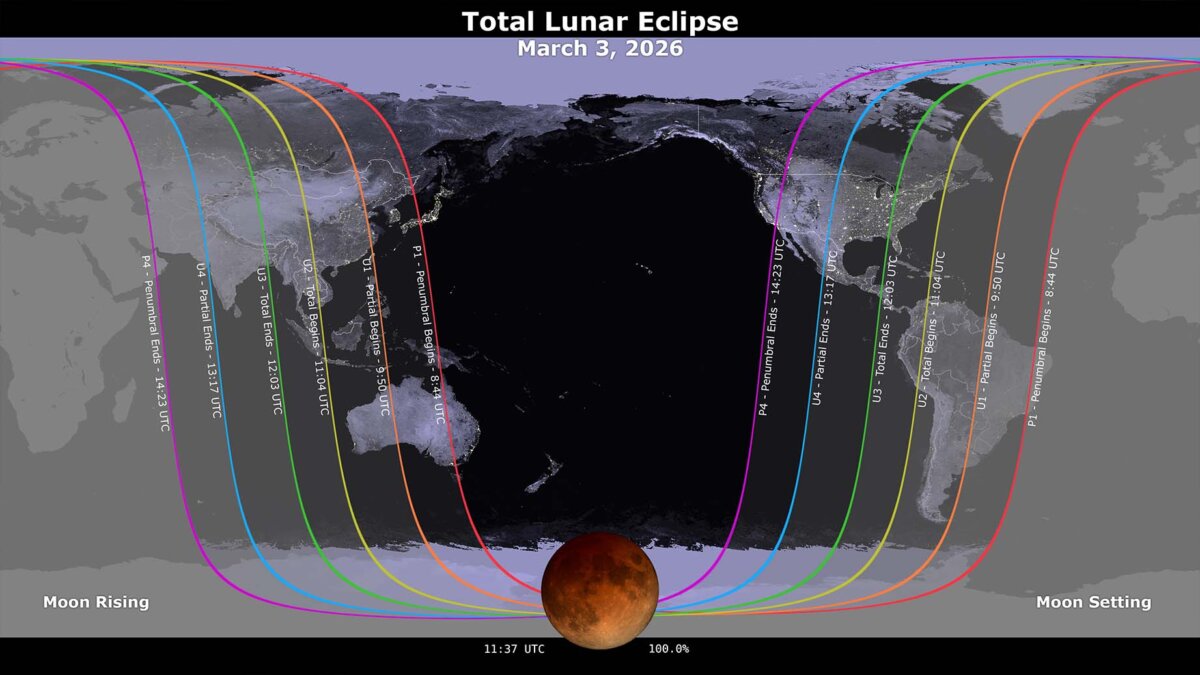
All this will unfold everywhere at once, although the time of day will depend on what time zone you’re in. If you’re in Los Angeles, totality will span from 3:03 a.m. till 4:02 a.m. The times for totality in Tokyo will be from 8:04 p.m. till 9:02 p.m.
At the western limits for viewing, Bangladesh, China, and central Russia will see the blood moon. Oceania and Australia will also have front-row seats for totality, as will a giant swath of the Americas, although Canada’s Newfoundland and Labrador and most of South America will miss out.
The reddish moon will be just setting when it appears in places such as Maine, Panama, and Ecuador. Observers might see just some of it before it dips below the horizon.
However, an even wider audience will see a partial lunar eclipse. The Earth’s umbral shadow will half-cover the moon, making it look like a giant moon cookie with a bite mark in it. This will begin at 4:49 a.m. and end at 8:17 a.m., after totality. A far wider geographic area will be privy to this event—as far west as India and eastward to Guyana.
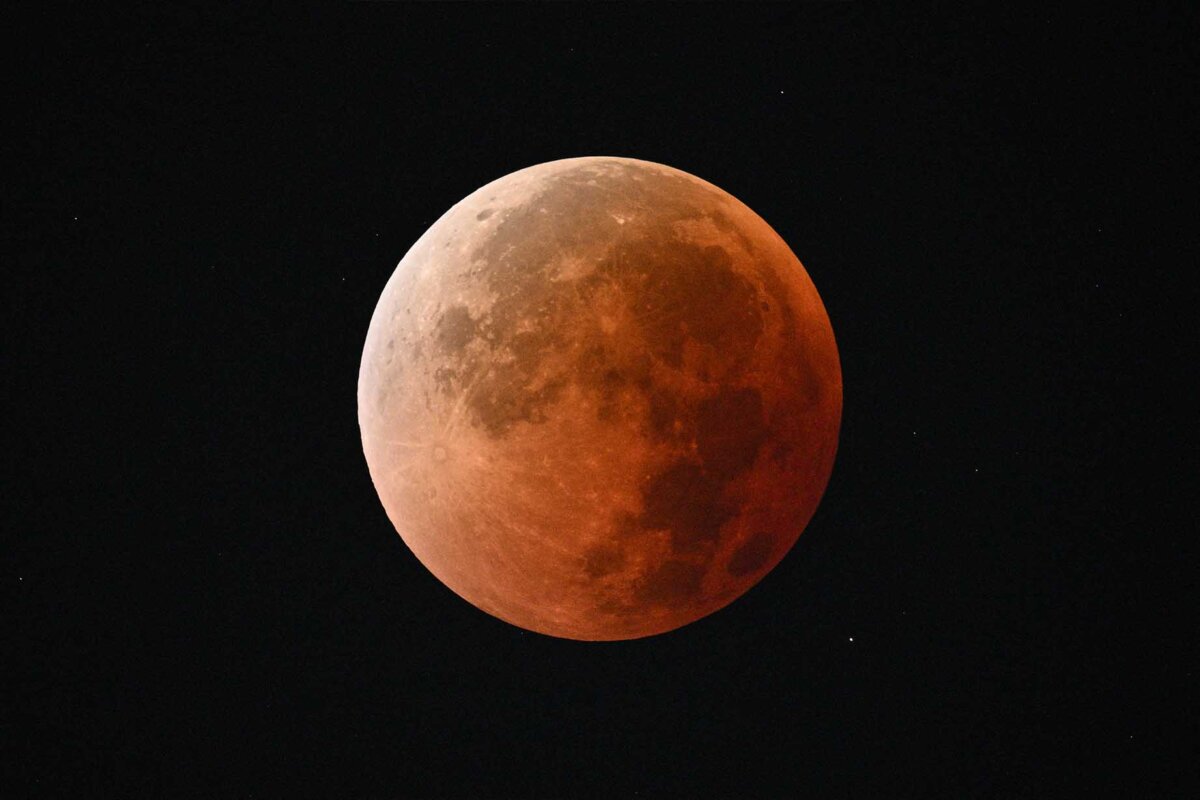
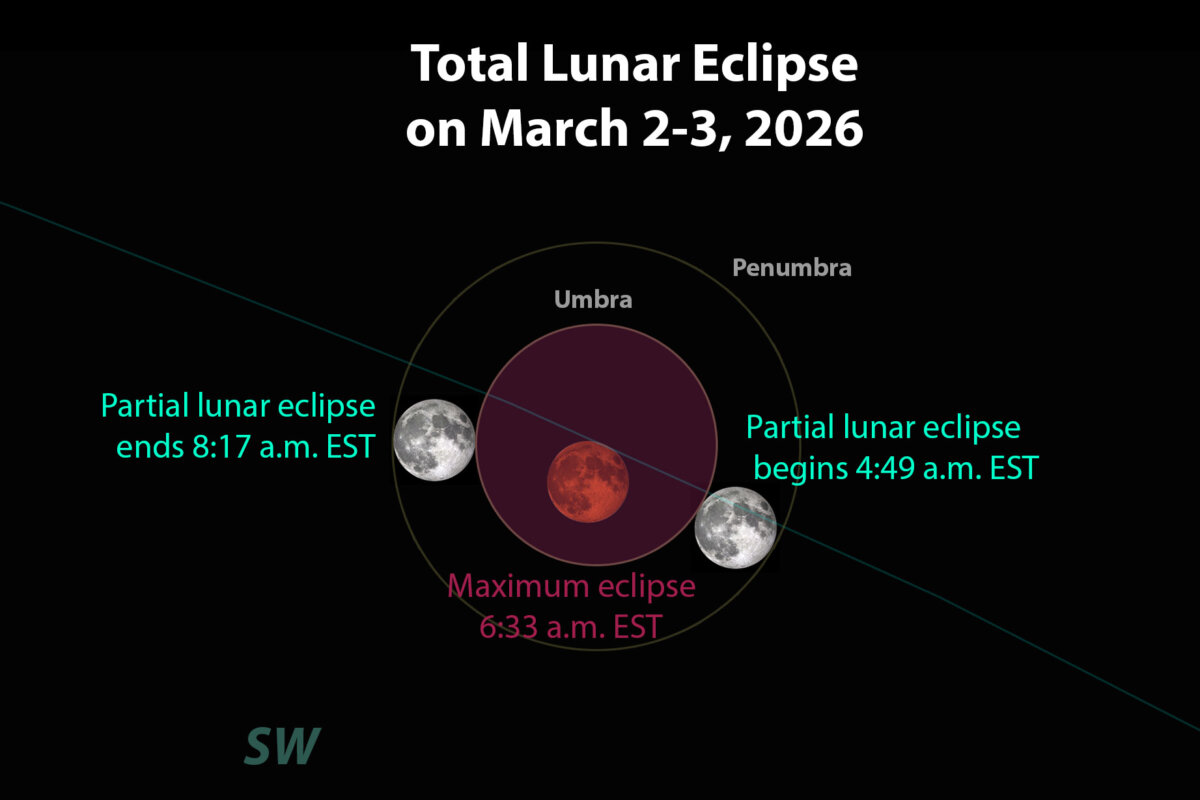
Sky watchers beyond this wider viewing window still might see a nearly imperceptible dimming of the moon minutes before and after the partial eclipse. The Earth also casts a shaded region in space called the penumbra, which is wider than and surrounds the umbra. Here the sun isn’t fully blocked out and some sunrays appear.
Before totality can even begin, the sun must enter this penumbra, so the slight dimming that results is called a penumbral eclipse. Viewers can expect this between 3:43 a.m. and 9:23 a.m. on either side of totality. The last moments of the penumbra eclipse will mark the end of this whole March 3 affair.
Although some 176 million people might see the entire eclipse from start to finish, an incredible 5.6 billion will catch some of the penumbral, partial, or total phases. About 3.3 billion people will see at least some of the blood moon.
As eerie as the name “blood moon” sounds, the next month will make it even weirder. Since March marks the thawing of soil—and the wriggling worms and larvae ushering in spring—Native American tribespeople christened this moon the “worm moon.” When this converges with a total lunar eclipse, it becomes a “blood worm moon.”
This has nothing to do with blood or bloodworms, of course, but refers to rose-tinted hues and the thawing spring season.