



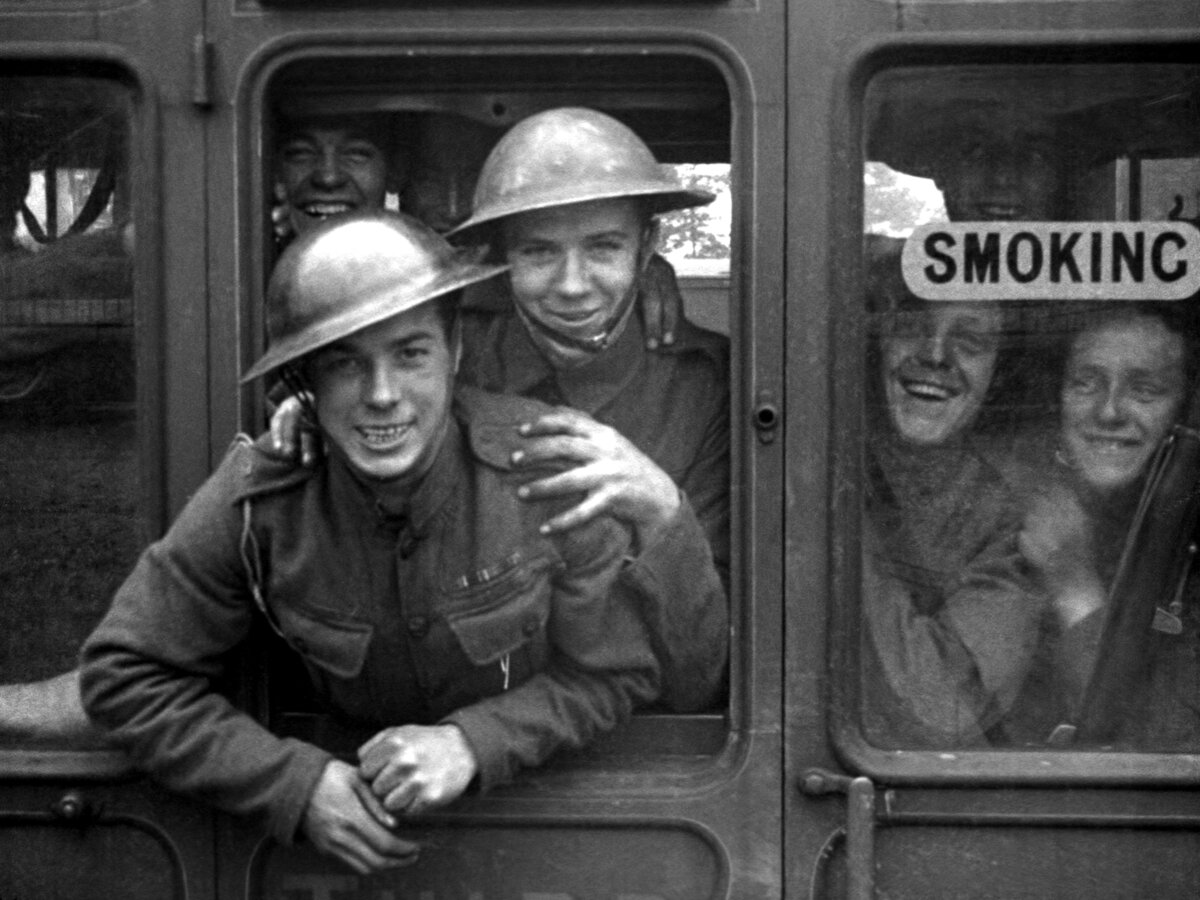
Polish screenwriter-director Maciej Drygas delivers a mesmerizing, if melancholic, masterpiece on the human, not just European, experience.
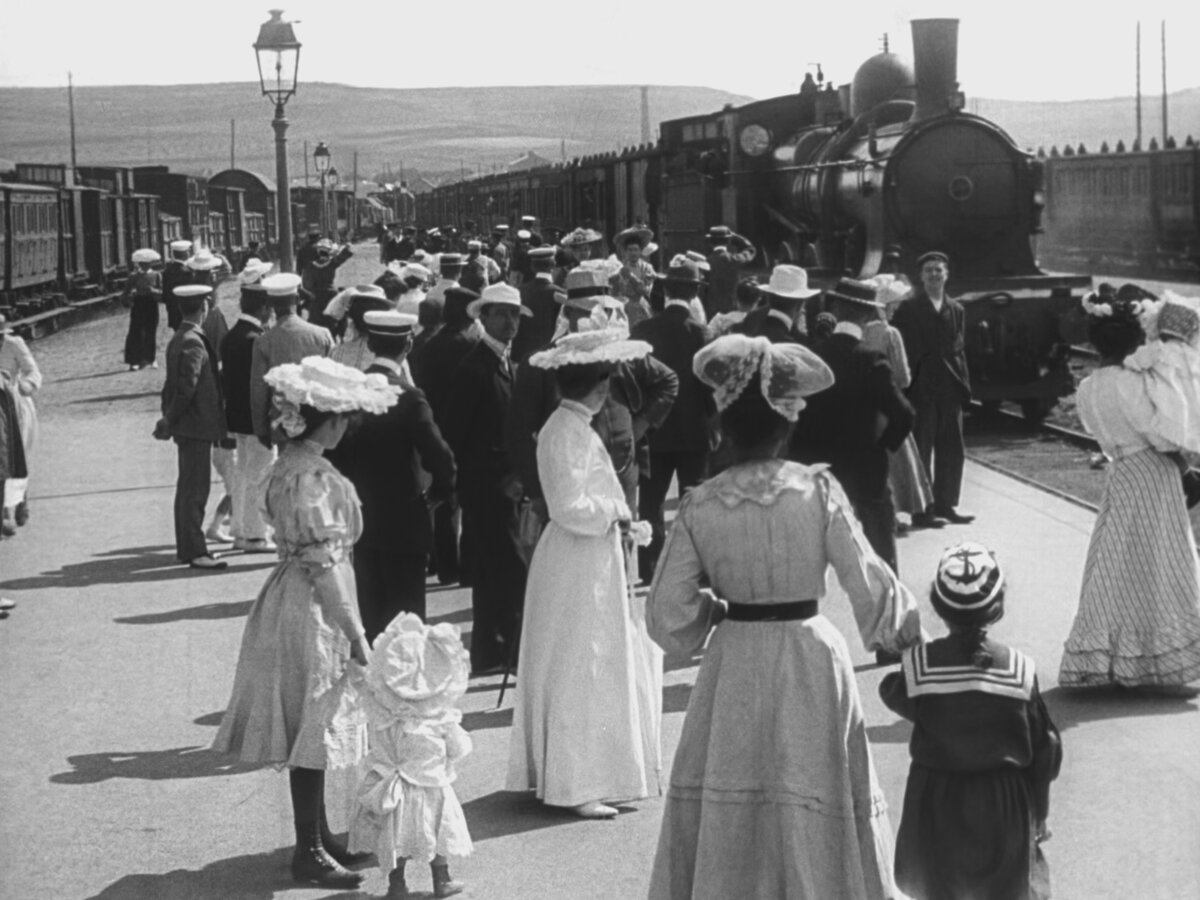
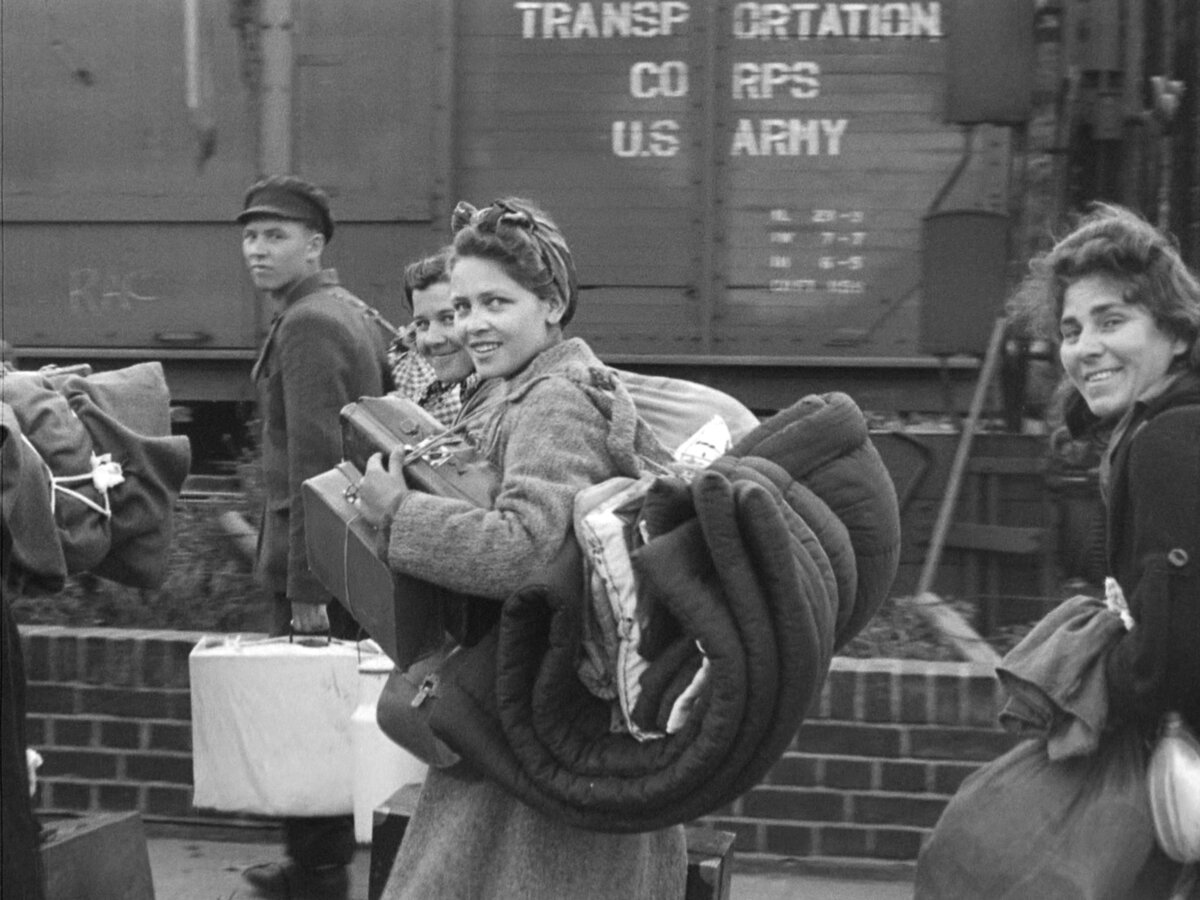
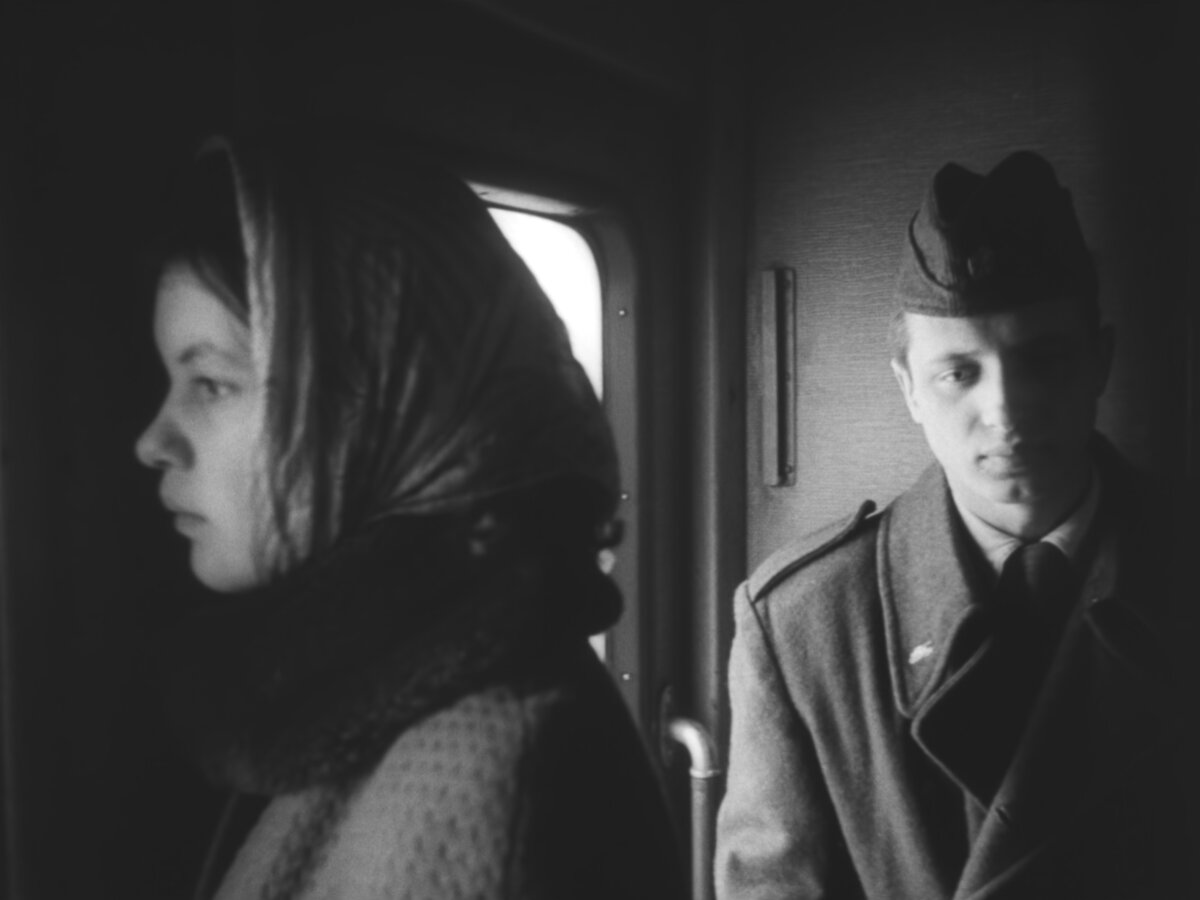
He draws on a sprawling archive of black-and-white shots of life in and around trains, captured across epochs by dozens of videographers worldwide. He sews these humdrum and unconnected snippets into a tapestry, and weaves a story that’s at once inviting and inquiring in its very telling.
Drygas’s opening credits feature the word “Trains” plastered across a black screen like a window, peering past an enveloping darkness. Each hulking letter is framed like a windowpane, through which we fleetingly glimpse a train thundering by.
Like history, the train speeds in only one direction, as if daring us to capture even a shred of its passing. But that’s the point here: to make memorable not just shreds of history but also entire slices, even if parts (such as those between letters) remain lost forever.
Two snapshots emerge. One boasts of humans at their best: creative, constructive, and collaborative. It shows them resilient, sacrificing, and even playful. Another exposes them at their worst: destructive, fearful, and self-absorbed, if not entirely selfish.
Some heartening scenes, in or near trains, include men doffing their hats and women smilingly acknowledging their courtesy. Others depict gentlemen playing cards and ladies bouncing babies on their knees. Some passengers excitedly settle down to sandwiches and tea while eyeing a countryside of lakes and mountains.
Waiters, emerging from the trains’ kitchens, ply passengers with sausages, wine, cigarettes, and cheese. A girl astride the floor of a passing open boxcar playfully sticks her tongue out at the camera, her smile disappearing into the distance.
There are chilling scenes, too. There is footage of soldiers from World War I blinded by shrapnel walking in a row, hands on each other’s shoulders to guide them. From World War II footage, exultant throngs at a platform see off a grinning Adolf Hitler and fawning Nazi top brass. Later, stunned American corporals stumble upon boxcars bursting with dead Jews. Medics whisk away what’s left of the living on stretchers. Still later, young men proudly carry banners of a hammer and sickle and a poster of Joseph Stalin into their boxcar.
Bereft of dialogue, commentary, or a cast in the traditional sense, the film hinges on imagery, sound, and music. For its realism, it relies on railway history consultant professor Wojciech Tomasik and 20th-century history consultant professor Jerzy Eisler. Tomasik is respected for his monographs about the railways in Polish culture, and Eisler for his scholarship on communism in much of Western Europe.
Drygas handpicks material from overwhelmingly British or European archives. He also includes some American sources: the U.S. National Library of Medicine, the United States Holocaust Museum, and the University of South Carolina’s Moving Image Research Collections. The soundtrack contains excerpts from composer Pawel Szymanski’s composition “Compartment 2, Car 7.”
Journeying Outward to Journey Inward
This is just the sort of meditative, distinctly human endeavor that AI with its superhuman aggregation and analysis may thankfully refine but, reassuringly, never meaningfully replace.
It’s unclear exactly how Drygas, cinematographer Andrzej Musial, and editor Rafal Listopad chose and choreographed footage from hundreds of film stocks. Equally, it’s unclear how sound design expert Saulius Urbanavicius and Szymanski crafted the soundtrack. There are hundreds of sound clips of siren-like horns, clanging coupling chains, and pumping pistons.
But the filmmakers’ souls, more than their minds, appear to have made the difference. They use a lower form of art—spontaneous footage—to produce art of an infinitely higher order of symmetry, meaning, and power.
Early scenes salute human self-reliance, ingenuity, and inventiveness. Metal workers sit, small and squat, against giant cutting or pressing machines. That is Drygas clarifying man’s imagination, precision, care, and foresight. These qualities afford man the prowess to build things that dwarf and outlast him, from mighty steam engines to the continental rail networks that bear them.
One scene features young soldiers, no more than boys, smiling at the camera as they settle aboard trains headed toward battle lines. They seem blissfully unaware of what lies ahead, yet they are content in the company of their mates.
Another stirring scene is of expectant families receiving a trainload of returning servicemen. There are mothers welcoming sons, fathers embracing daughters, and husbands hugging wives. In wordlessly expressing how much they’ve missed those they love, they also confess their vulnerability and their interdependence. Anxious before the train halts and relieved as soldiers pour out of it, they’re ecstatic when they behold their boys, now men.
In a matter of seconds, the families relive the agony of years of being apart, as if swearing never to part again. The soldiers themselves seem staggered by how precious they seem to someone else. Poetically, another scene depicts caged pigeons and doves offloaded from cargo trains and suddenly, inexplicably freed. A cloud of wings and feathers cloaks the sky.
Here, the forward movement of trains metaphorically mimics the relentless march of history. It acknowledges what’s around it as a kind of proximate present and a soon-to-be past. But as every new station looms ahead, a currently uncertain, even fuzzy, future in the distance is about to become an indisputably certain present.
It’s as if Drygas is saying that humans, too, may metaphorically start out like mere boxes in a railyard before becoming shiny new trains on tracks, speeding off in a hundred different directions.
Every station in their life’s journey then sees passengers hop on and off like thoughts, feelings, and memories that are both happy and sad. But love, hope, faith, fear, and regret represents passengers’ being and becoming. In discovering other places and other people, the passengers hope, sometimes against hope, to rediscover themselves.
You can watch “Trains” at a special one-night screening at Maysles Documentary Center on Oct. 2, 2025; it opens in New York at DCTV’s Firehouse Cinema on Oct. 3, 2025, before its nationwide release.
‘Trains’
Documentary
Director: Maciej Drygas
Running Time: 1 hour, 21 minutes
Release Date: Oct. 3, 2025
Rated: 5 stars out of 5
What arts and culture topics would you like us to cover? Please email ideas or feedback to features@epochtimes.nyc
Views expressed in this article are the opinions of the author and do not necessarily reflect the views of The Epoch Times.
