



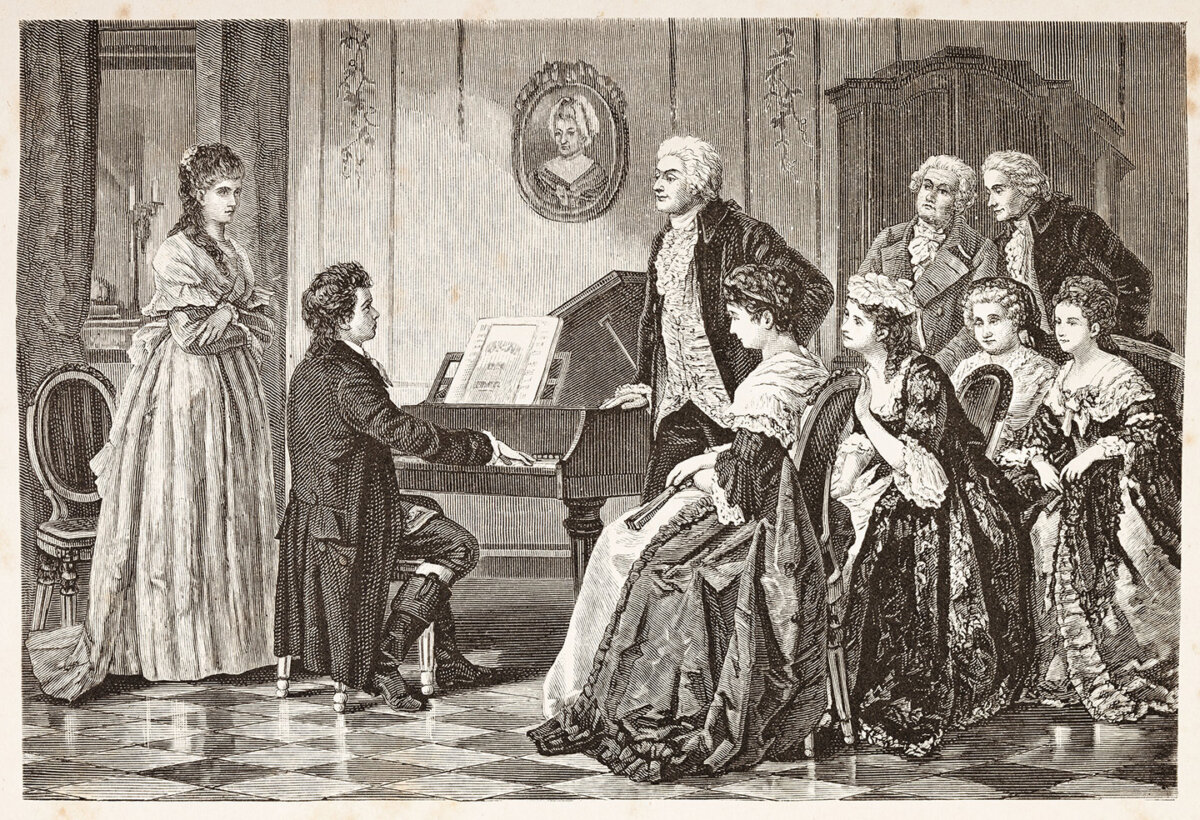
The Classical period, ranging from around 1750 to 1820, gave rise to some of the greatest musical works ever composed. From Joseph Haydn, father of the symphony, to the child genius Wolfgang Amadeus Mozart, the sound of the era was characterized by clarity, ease, and balance. For any aspiring composer seeking validation, these values were paramount.
Nowhere were these values more prized than in Vienna, the indisputable musical capital of Europe. From imperial sponsorship of the arts by the Habsburgs to a growing audience in a rising middle class, there is no mystery behind the nickname “The City of Music.”
The fame naturally attracted many aspiring composers looking to make a name for themselves. One came to Vienna to study with the illustrious Joseph Haydn. His name was Ludwig van Beethoven (1770–1827).
The two had most likely met previously in Bonn, Germany during Haydn’s journey to and from London, with Haydn recognizing the talent of the young pianist. Upon Beethoven’s departure, the Count Waldstein wrote: “You are going to Vienna in fulfilment of your long-frustrated wishes. With the help of assiduous labour you shall receive Mozart’s spirit from Haydn’s hands.”
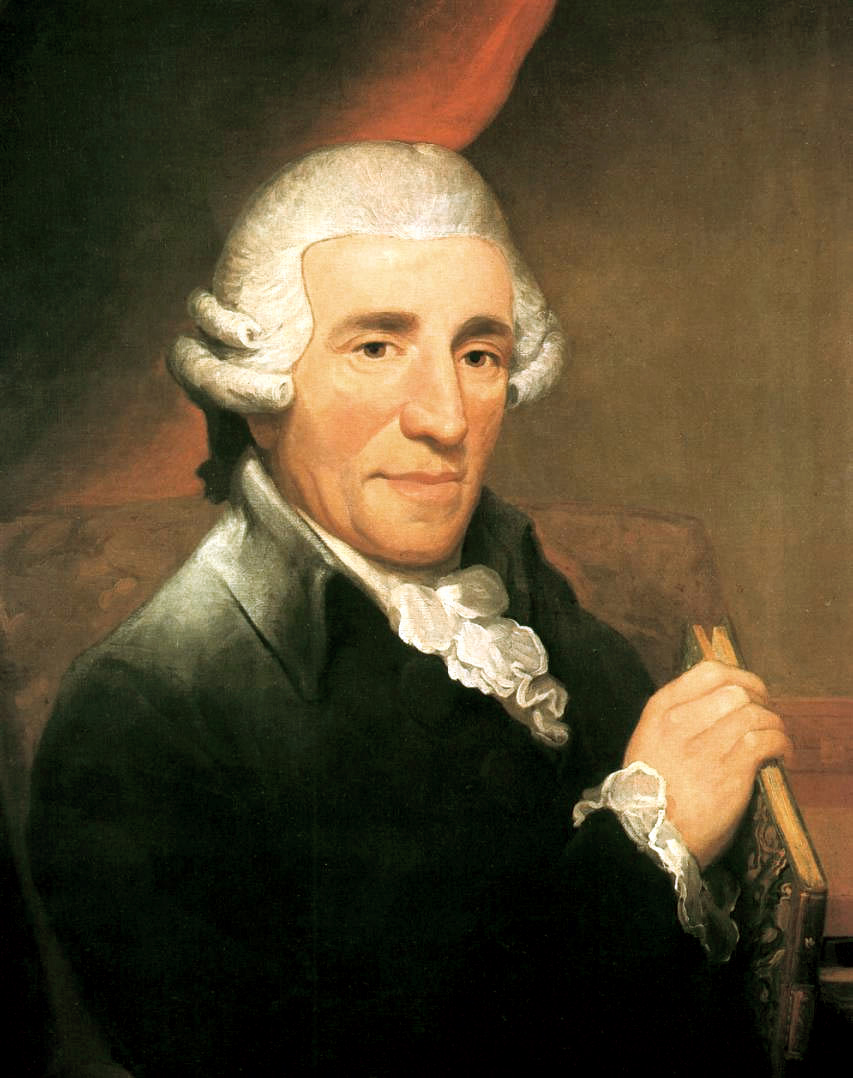 Portrait of Joseph Hadyn by Thomas Hardy, 1791, Royal College of Music Museum of Instruments, London. Franz Joseph Haydn was a calm, peaceful man in a society dominated by quirky, difficult-to-get-along-with composers. (Public Domain)
Mozart had passed away just two years prior, leaving a void on the musical scene. Yet Beethoven didn’t ultimately take up Mozart’s mantle. He blazed his own path instead. Nowhere was this clearer than in the controversy created by Beethoven’s dedication of his Sonata No. 1 in F minor.
After studying with Haydn for a year, Beethoven wrote the words “Dedicated to Joseph Haydn” on his first set of major published piano sonatas. According to accounts, this brief and impersonal upset and wounded dedication Haydn. Though Beethoven acknowledged his mentor, Haydn believed he deserved greater gratitude for his efforts. But Beethoven, unimpressed with his education, allegedly remarked that he “learned nothing from him.”
However, Beethoven’s talent was undeniable. Although the relationship was strained, Haydn praised Beethoven and opened doors for him in his early days in Vienna. Though critical of Haydn’s teaching, Beethoven respected his stature and abilities.
Beethoven went on to be one of the greatest composers of all time, breaking free from the Classical mold and ushering in the Romantic era.
Piano Sonata No. 1
The performance of Beethoven’s Piano Sonata in F minor, Op. 2 No. 1, is performed by Daniel Barenboim. (Listen)
Despite being predominantly Classical, the Piano Sonata in F minor shows hints of the intensity and innovation that define late Beethoven. The choice of F minor was unusual for keyboard works of the time, and the sonata’s four-movement structure—the piece is in four movements: Allegro, Adagio, Menuetto and Trio, and Prestissimo—was equally unconventional.
The breaking of convention doesn’t end there, as Beethoven pushed the intensity of the opening with a “Mannheim Rocket,” a rising arpeggiated figure combined with a sudden crescendo to heighten dramatic tension.
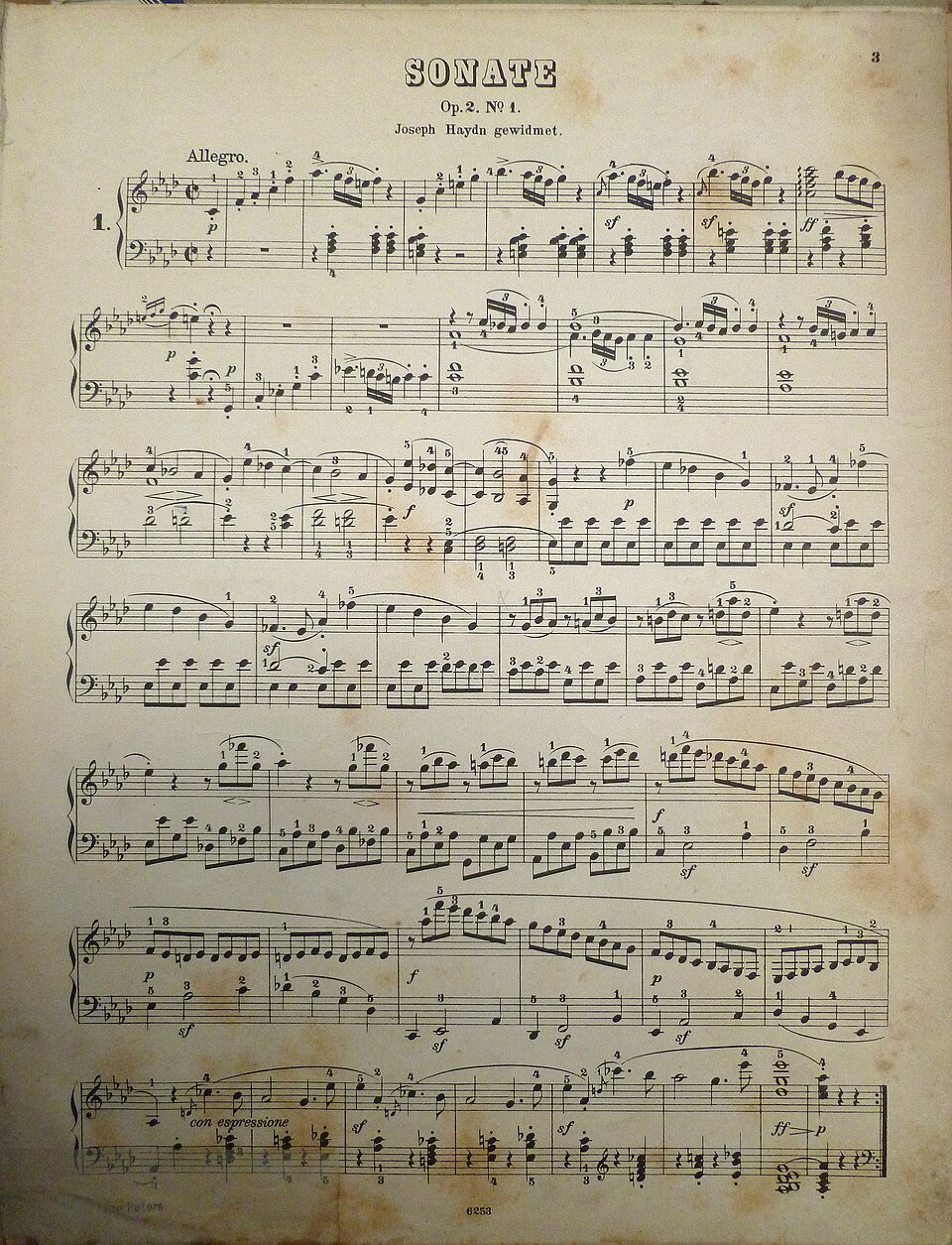 A music sheet of “Sonata No. 1 in F minor,” by Beethoven. (JoJan/CC BY 3.0)
The second and third movements are Beethoven’s nod to tradition, written with a “Mozartian” flair. The second movement is pure and heartfelt, a slow ternary in F Major, while the third movement is abrupt. Sudden pauses and changes in dynamic bring a feeling of restlessness, while syncopated rhythms drive and push the music.
Finally, the Prestissimo is a fast, triplet-filled flurry of a movement, posing a considerable challenge for any pianist. Here, Beethoven showcases his own skills as an instrumentalist, writing rapid runs that scale up and down the keyboard.
What arts and culture topics would you like us to cover? Please email ideas or feedback to features@epochtimes.nyc
