



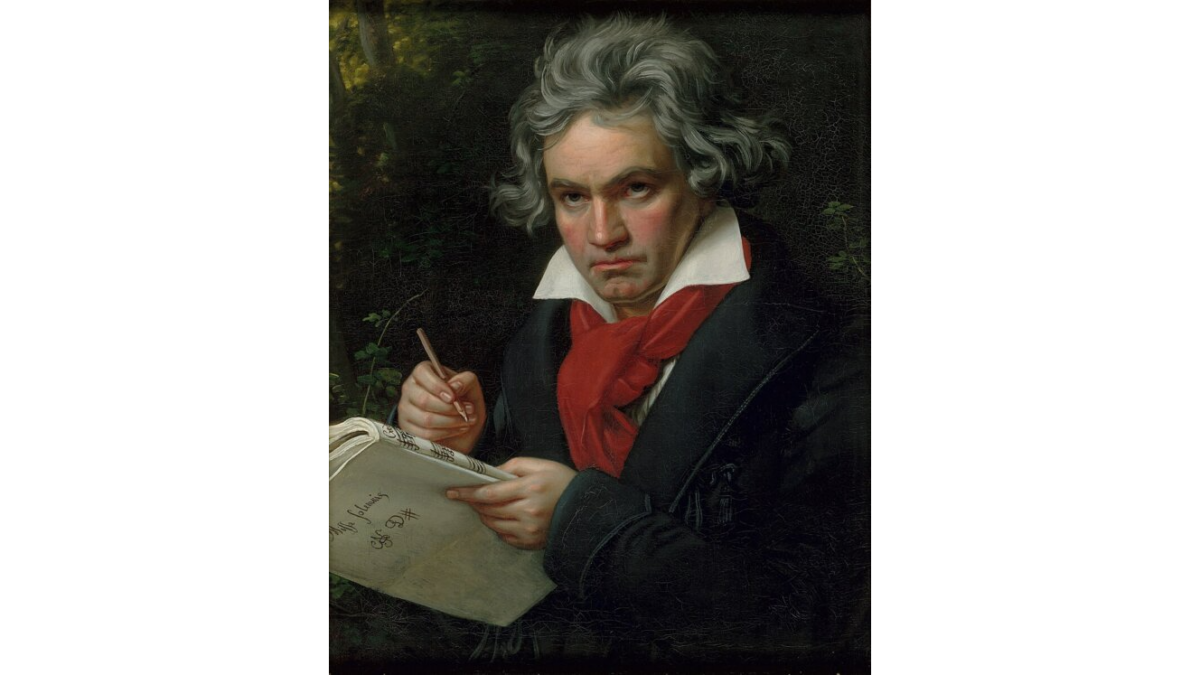
Whither Beethoven? When Lucy questioned Schroeder about the meaning of life in a famous “Peanuts” comic strip, he exclaimed, “BEETHOVEN! Beethoven is IT, clear and simple!! Do you understand?” Cartoonist Charles M. Schulz was certainly privy to music’s greatest obsession. Even today, the classical world finds itself floundering in his wake: Brahms likened Beethoven’s presence to “a giant marching behind you.” When artists ranging from Tolstoy to Lennon tout you as their inspiration, you know you’ve shaped an institution.
It is no surprise, then, that Beethoven has acquired a zealous, untouchable veneer. Even his bust has an unapproachability to it—the fiery glare seems to say “deal with it.” Yet though defined by his monumental works, he also wrote many pieces for beginners. Continuing a tradition of pedagogy that included J.S. Bach with his “The Well-Tempered Clavier,” and Leopold Mozart with his “A Treatise on the Fundamental Principles of Violin Playing,” the great composer expanded his musical tyranny into study pieces for the amateur.
Barely 15 seconds long, the Bagatelle Op. 119, No. 10 for piano is his shortest piece. It was originally conceived as a teaching piece before becoming part of a published collection of 11 bagatelles.
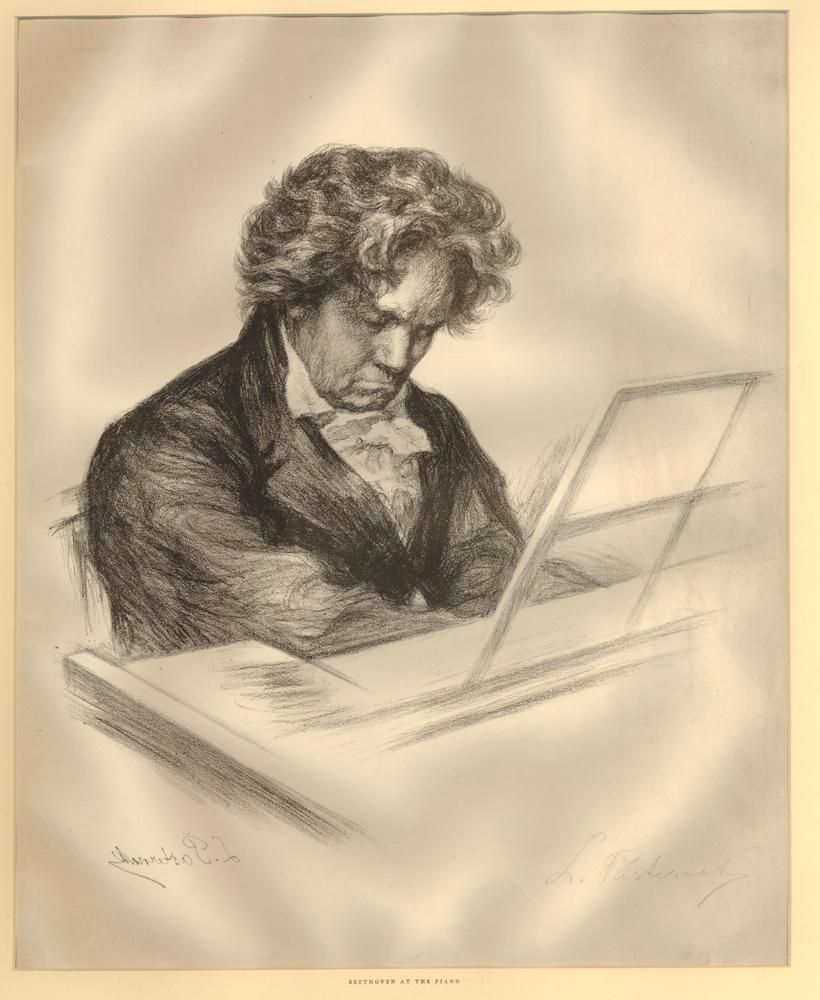
Though translated as a “trifle” or something insignificant, Beethoven’s bagatelles were anything but. Even his most seemingly inane pieces bore a comical amount of drama. Praised for their musical genius, they seemed unable to escape Beethoven’s greatness.
A Trifle
In 1820, in Vienna, Friedrich Starke, pianist and tutor, began preparing a piano method book called “Wiener Pianoforte-Schule” (the Viennese Piano School). He sought pieces that held substance as well as simplicity. Beethoven contributed five short pieces for its third volume—the five pieces eventually becoming Nos. 7-11 of Op. 119. Starke was delighted by their seemingly juxtaposed brevity and depth, and published them in 1820.
Yet while Beethoven is celebrated for his originality, he was also a plagiarist of his own works. Common at the time, he often resold the same piece to different publishers under different names. In 1823, he repackaged the five bagatelles, added six more short pieces (also based on previous works), and presented them to the Leipzig publisher, Carl Friedrich Peters.
Beethoven’s plan backfired, and his collection was rejected. Peters deemed the menagerie of works either too difficult for amateurs or too simplistic for advanced players. He even questioned whether some of the pieces were composed by Beethoven.
Undeterred, Beethoven sent them to his former student Ferdinand Ries. Ries successfully negotiated a deal with publisher Muzio Clementi, and they were eventually released as an 11-piece collection in 1823. In 1851, publishers Breitkopf & Härtel finally gave them their familiar opus number 119.
In today’s recording, Rudolf Serkin plays Beethoven’s Bagatelle Op. 119, No. 10. It runs from 13:02-13:16 and might be shorter than the YouTube ad before it. (Listen)
Beethoven marks it as “Allegramente,” meaning “joyfully” or “merrily.” Existing in a whimsical mouse-like state, the music begins in an anxious frenzy. Its offbeats, combined with the rising pitch, creates an auditory illusion of acceleration—almost like a record player humming into life.
Humorous and lighthearted, his 10th bagatelle seems meant to entertain more than educate. However, a joke from Beethoven is no laughing matter: The technical facility needed to play his 10th bagatelle up to speed is ridiculously beyond most beginners. Though he did not set out to tyrannize the amateur, he certainly did create a piece so fast and fiddly that, if you sneeze, it might be over.
What arts and culture topics would you like us to cover? Please email ideas or feedback to features@epochtimes.nyc.
