“On one stave, for a small instrument, the man writes a whole world of the deepest thoughts and most powerful feelings. If I imagined that I could have created, even conceived the piece, I am quite certain that the excess of excitement and earth-shattering experience would have driven me out of my mind.”—Johannes Brahms, writing to Clara Schumann about Johann Sebastian Bach’s Chaconne for solo violin in D minor.
The next time someone tells you music is just notes, play for them a recording of Bach’s Chaconne for solo violin, the final movement of his Partita No. 2. If they do not surrender their position and admit that music can express the widest possible range of feelings, find someone else to talk with.
One spring day in 1720, Johann Sebastan Bach left his home in Köthen in the company of his employer, Prince Leopold, to visit the spa in Carlsbad, 185 miles away. Transportation then was slow and long-distance communication slower still.
Two months later, Bach returned to Köthen to discover that his wife, Maria Barbara, had died and was already buried. She was in perfect health when he left; no cause of death was ever confirmed.
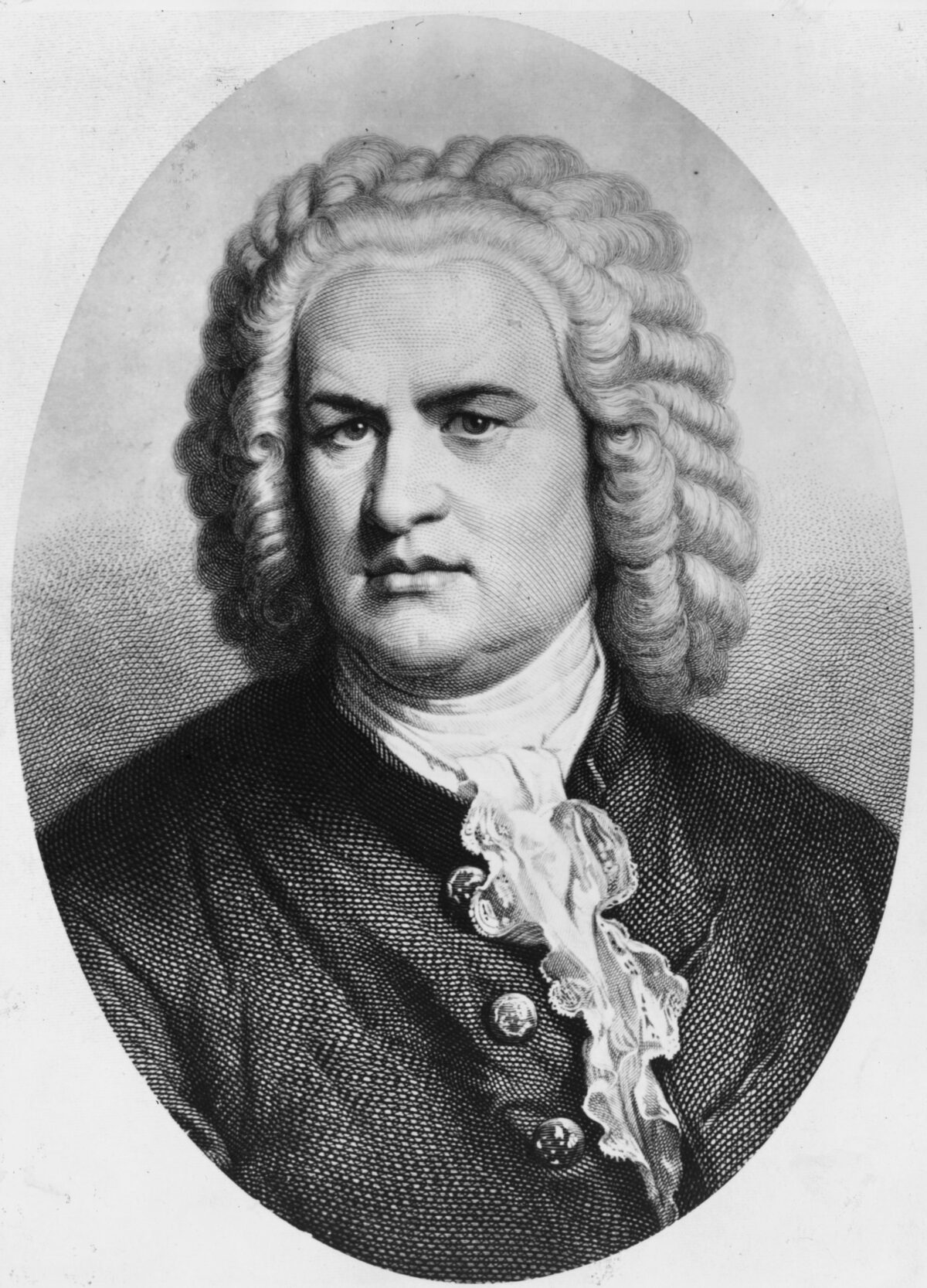
The Bachs had seven children together; as of 1720 four survived, all 12 or younger. Bach was suddenly forced to face his grief while returning to his demanding job as director of music for the prince’s court and adjusting his parental responsibilities at the same time. One imagines the man grappling with this and all the while forming a musical response in his mind. Of course, this is conjecture, but it is conjecture that was long taken as truth.
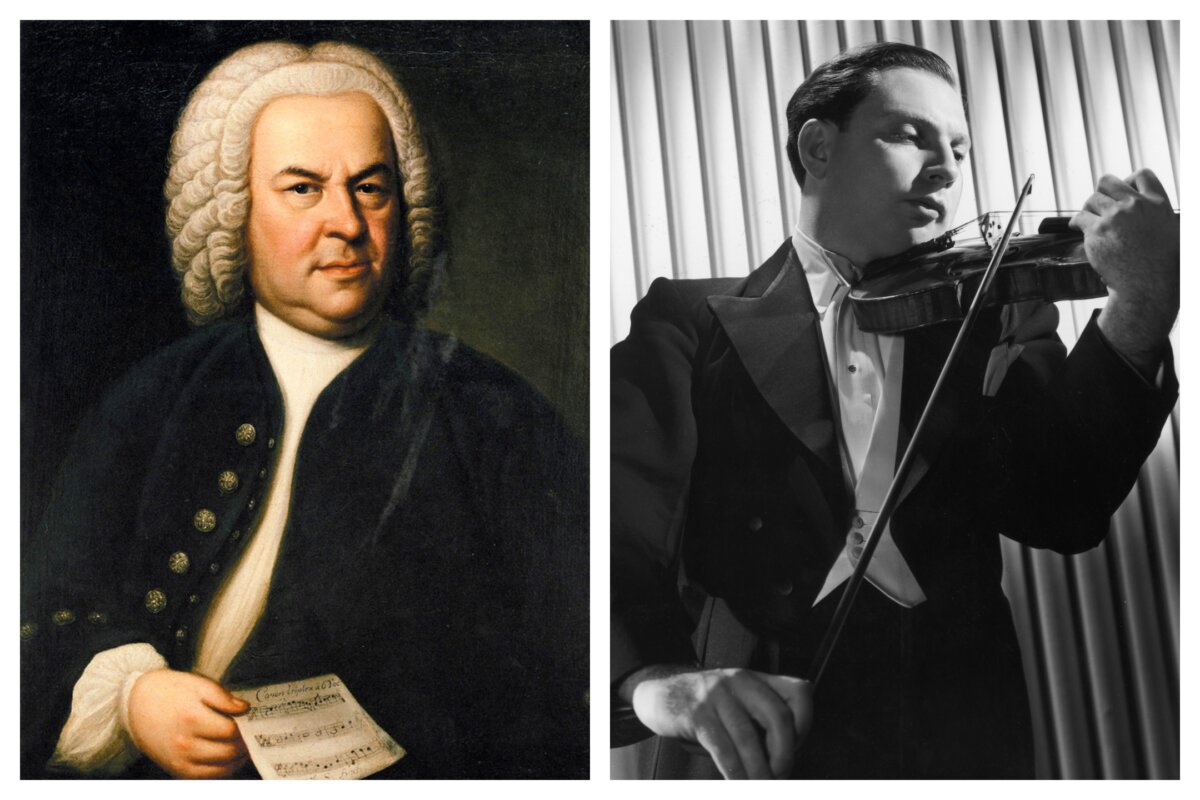
While it is now controversial that Bach composed the Chaconne as a monument to Maria Barbara’s tragic death, and by extension as a statement about grief in general, that belief is of recent vintage. As late as Nov. 23, 1963, the Bach Chaconne was considered a final musical word on grief. On the Saturday after that grief-stricken day, when the world was reeling from news of President John F. Kennedy’s assassination, violinist Isaac Stern was scheduled to perform in Dallas, the very city where Kennedy was shot. Stern announced to the audience that only one piece of music was appropriate to what had just happened. He played the Chaconne and left the stage.
A chaconne is a musical form in which a short chord progression repeats as an accompaniment to a series of variations based on the progression. It began as a Spanish dance in the 17th century, but by Bach’s time had become broad and majestic.
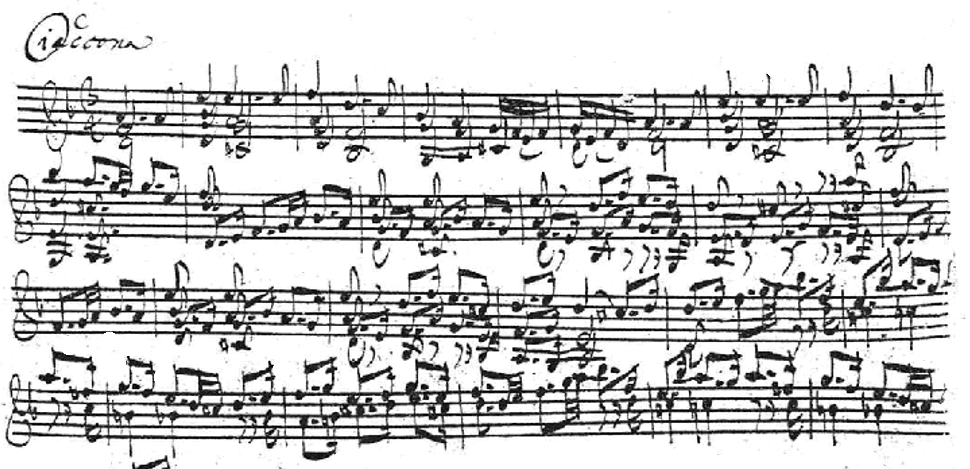
Bach’s only chaconne begins by stating a brief chord progression in D minor twice, then launches into a stream of inventive variations that, by turns, will be intense, angry, meditative, searching, poignant, searing, tender, and anguished. Of contemporary interpretations, Hilary Hahn’s is well regarded: (Listen)
The chordal frame is announced at the head, and the first variation starts at 0:35. No need to itemize every variation: Each one flows to the next, shifting mood as frequently as the feelings of a man shaken by unexpected grief. One change does stand apart from others, though: At 9:02, the key changes from D minor to D major, which is at first comforting, the way a major key has of lightening the darker corners of the minor.
Over the course of five minutes, the comfort grows uncannily unbearable, as if denying the grief at hand only deepens it. At 14:06, we return to D minor and a denouement that brings us eventually to a place of closure and peace.
Alert ears and an open heart will allow Bach’s Chaconne to reveal its every nuance of feeling to you. When it does, you may find yourself agreeing with violinist Joshua Bell, who said of the Chaconne that it is “not just one of the greatest pieces of music ever written, but one of the greatest achievements of any man in history.”
What arts and culture topics would you like us to cover? Please email ideas or feedback to features@epochtimes.nyc.