In 1943, Aaron Copland received a commission through choreographer Martha Graham for a ballet score. The composer had written two previous ballets for different choreographers: “Billy the Kid” (1938) and “Rodeo” (1942). This one would move the action from the Old West to the Appalachian Mountains and the Shaker people who lived there as pioneers in the 19th century.
From Experimentation to a ‘Prairie Sound’
The ballet’s storyline followed a young couple moving into their new house during the spring planting season. Despite this positive premise, Graham reportedly wanted something dark. Copland demurred, composing instead a score of bright optimism framed in sweet melancholy, an ode to a new country and a hopeful people. After all, America was at war in 1943, and it needed to know itself and love itself so it could move forward out of war and depression into the promise of its frontier heritage.
Copland had been moving toward an American populism for some time. Born in 1900, he spent his 20s and early 30s experimenting with new musical ideas emerging from Europe. This was the early avant-garde, and every serious young composer was expected to go there. But beginning with a trip to Mexico that produced a colorful overture called “El Salon Mexico” (1936) and continuing with “Billy the Kid,” Copland established a style he called “plain, singing, comparatively uncomplicated and slightly folksy. Direct and approachable.” In particular, the wide spacing of notes in Copland’s harmonies came to be known as “the prairie sound.”
Leaving the avant-garde came at a cost. Fellow composer David Diamond’s reaction to Copland’s populism—that he had “sold out to the mongrel commercialists”—was typical. Copland’s retort: “The composer who is frightened of losing his artistic integrity through contact with a mass audience is no longer aware of the meaning of the word art.”
Budget considerations forced Copland to score the 1944 premiere of the ballet “Appalachian Spring” for only 13 instruments. It won him the Pulitzer Prize in music. He subsequently fashioned a suite from the score, re-orchestrated for a larger ensemble: pairs of flutes, oboes, clarinets, bassoons, horns, trumpets, and trombones, with harp, piano, and the standard strings, plus timpani and an expanded percussion section including xylophone and glockenspiel.
Leonard Bernstein conducts the New York Philharmonic in recording of it here. (Listen)
A Listening Guide to the Suite
The suite begins quietly, strings softly intoning the note “A.” At 0:05, we hear five notes from a solo clarinet. This is a “head-motif,” a melodic fragment that will be repeated, altered, lengthened, shortened, and otherwise developed throughout much of the next 17 minutes, until a famous folk melody takes over. At 0:51, the violins in their high register intone a simple, short melody reminiscent of the head-motif in shape, if not in notes. The music blossoms as other instruments enter, and it is clear that the sun is rising over the majestic Appalachian landscape. At 2:29, the clarinet repeats the head-motif, followed immediately by a burst of rhythmic energy from the whole orchestra.
The village is awake, and from this point on, Copland presents a series of musical episodes to portray the day, the young couple, the new house, the preacher’s arrival to bless the house, and myriad other events. As listeners to the music and not viewers of the ballet, the particulars are not important. What matters is the musical imagination Copland employs to portray the joy (2:40–3:50), the robust physicality (10:20–11:40), the playfulness (12:59—15:30), and the sense of peace (15:56–17:23) that visit the community that day.
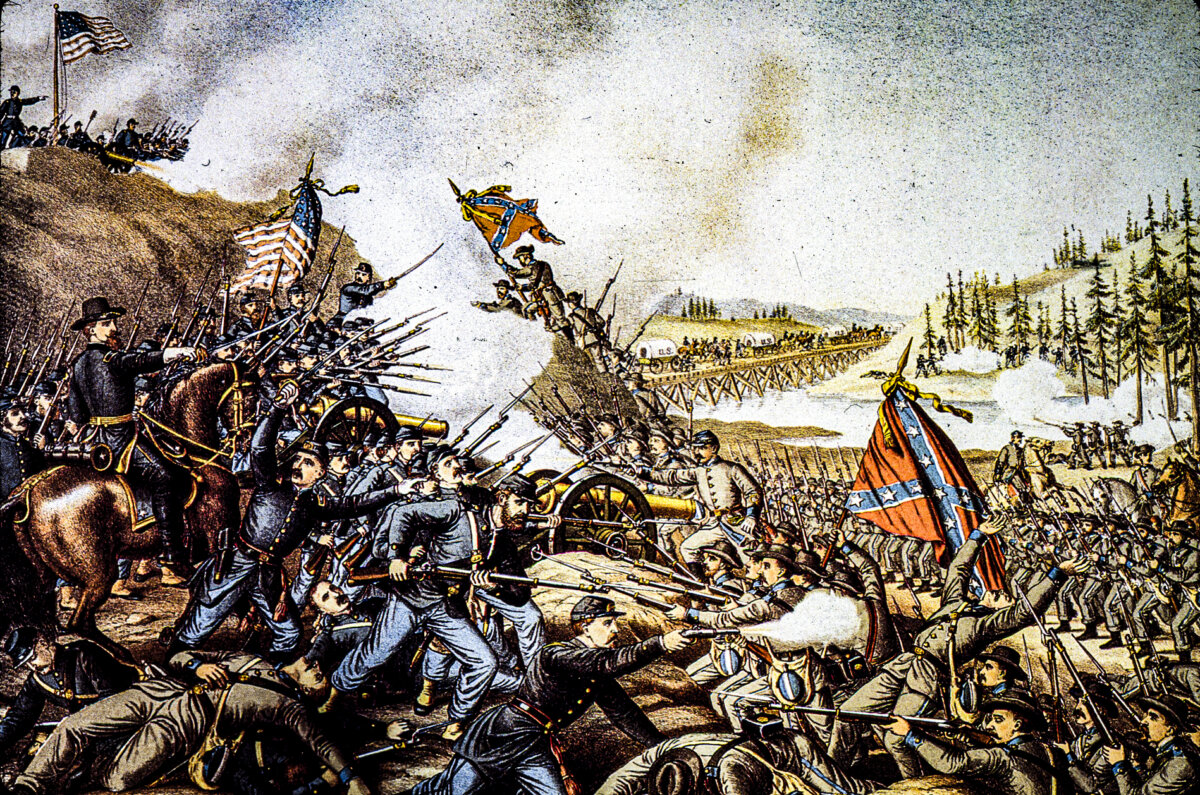
At 6:15 comes the only dark note. The story of the ballet involves a stranger who arrives to tell the community about the horrors of the Civil War unfolding outside their idyllic frontier village. It serves as a contrast with the positive tenor of the rest of the work, a reminder that the world contains suffering even when there is so much to be thankful for.
At 17:23, the clarinet again intones the head-motif and brings things seemingly to a close. Until now, we have had colorful, if disjunct, episodes in wildly different keys, meters, and tempos. Something unifying is required. For this, Copland chose the Shaker hymn, “Simple Gifts.” The words (not heard in Copland’s orchestral music) are:
‘Tis the gift to be simple, ’tis the gift to be free,
‘Tis the gift to come down where you ought to be,
And when we find ourselves in the place just right,
‘Twill be in the valley of love and delight.
When true simplicity is gained,
To bow and to bend we shan’t be ashamed.
To turn, turn will be our delight,
‘Til by turning, turning we come round right.
It is sometimes called a folksong, but in fact, both the text and the music were written by Shaker Elder Joseph Brackett.
The theme is announced at 17:35. A set of variations ensues, culminating at 20:04 in the heroic majesty of the fifth variation. There follows a return to the gentleness of the opening music, marked by Copland “like a prayer,” that concludes the suite with a note of piety.
The ballet is not often performed today, but Copland’s suite is a standard of the orchestral repertoire. Its endurance has something to do, I think, with the feeling it projects that this was once America and could be again.
What arts and culture topics would you like us to cover? Please email ideas or feedback to features@epochtimes.nyc