



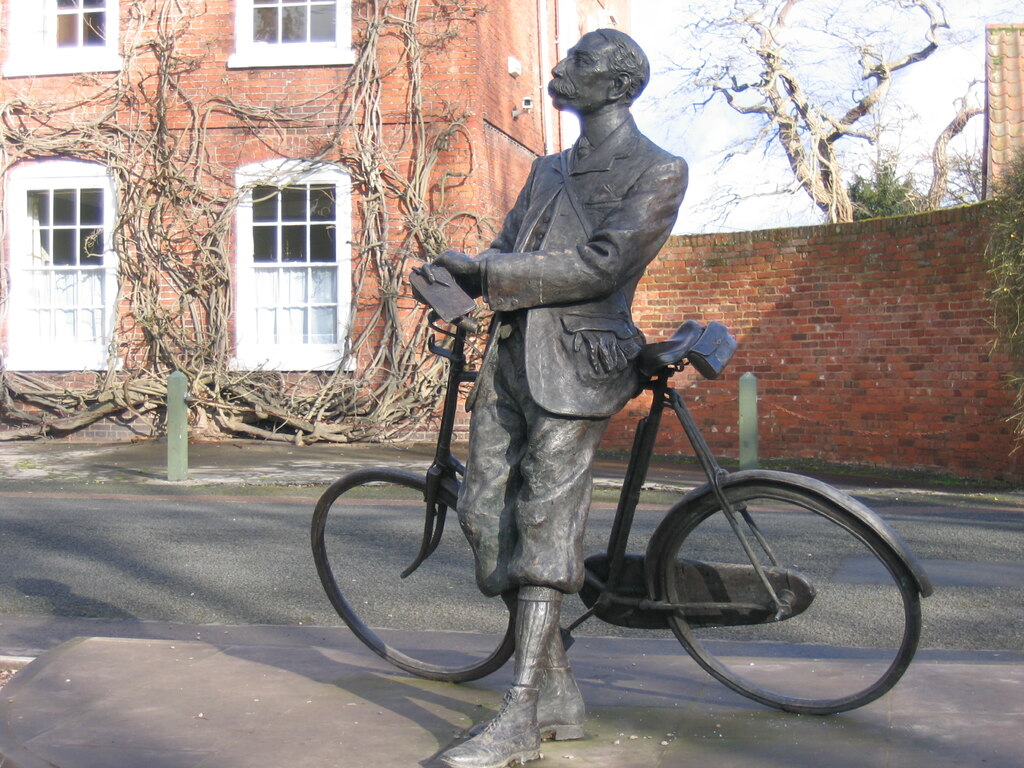
The composer Edward Elgar once said, “There is music in the air, music all around us; the world is full of it, and you simply take as much as you require.” Nowhere is this more true than in the English composer’s “Enigma Variations,” the breakout work that kickstarted his international career. This rich work, which premiered in 1899, drew inspiration from Elgar’s close friends—and even from the composer himself.
The “Variations on an Original Theme,” better known as the “Enigma Variations,” consists of an “Enigma” theme followed by 14 variations, each portraying one of Elgar’s close friends through a musical sketch. Each sketch is identified by a set of initials or a pseudonym, from the first variation “C.A.E.” representing Elgar’s beloved wife Caroline Alice Elgar, to the 10th variation “Dorabella” referencing friend Dora Penny. The work concludes with a self-portrait, with the bombastic finale “E.D.U.” taking its descriptor from “Edoo,” Alice’s affectionate nickname for her husband.
These variations were living musical sketches, each reflecting the character and spirit of Elgar’s friends and the roles they played in his life. As if this weren’t enough to captivate audiences worldwide, Elgar added one final mystery—hidden within the piece lies a secret, an unheard “theme” closely related to the main “Enigma” melody that has never been conclusively uncovered.
Elgar referred to this theme as a “chief character that is never on stage,” some sort of concept that is intertwined with the main melody. Whether this secret is supposed to be a tangible, complimentary musical theme or otherwise has never been discovered.
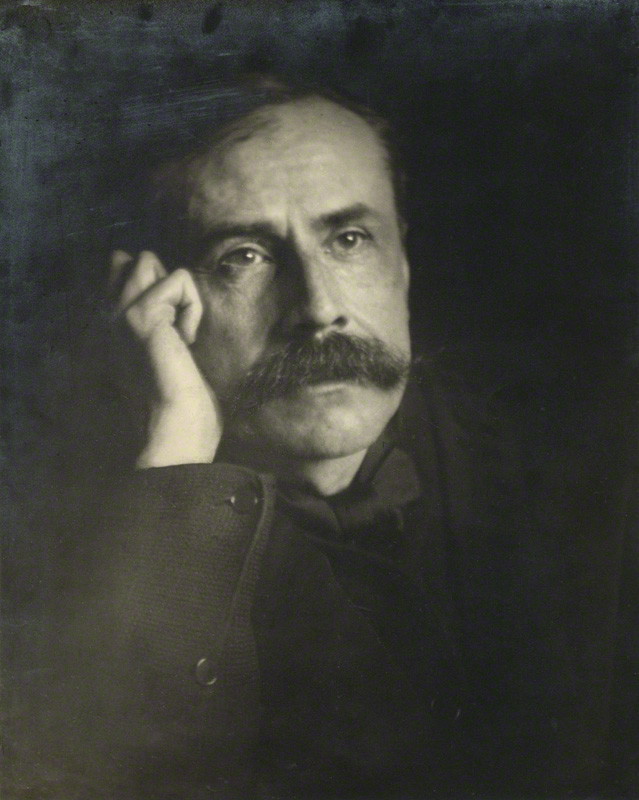 Edward Elgar, circa 1903, by Charles Frederick Grindrod. Bromide print. (Public Domain)
The hunt for the secret theme has confounded scholars to this day. Based on clues from the composer himself, musicologist Julian Rushton argued that any solution to the hidden theme must fulfill four requirements: it must involve a “dark saying,” it must involve a “larger theme” that spans the entire work, it must be well-known, and it must be somehow especially decipherable by Elgar’s friend Dora Penny.
Popular theories suggest a melody in counterpoint such as a modified “Auld Lang Syne,” or the famous “God Save the King.” Other more abstract solutions suggest that the solution isn’t a melody at all, and relates to philosophical ideas regarding friendship or silence. Elgar himself found it “extraordinary no one has guessed” the solution. Yet there has been no conclusive answer since Elgar’s death in 1934, with the solution possibly destined to remain an unsolved enigma.
Elgar’s ‘Enigma Variations’ IX, ‘Nimrod;
This recording of Elgar’s “Enigma Variations” IX, “Nimrod,” is by Sir Georg Solti and the London Philharmonic.
While today’s focus is the ninth variation, Nimrod, the main theme and remaining variations are unquestionably worth exploring. “Nimrod” is a reference to the Old Testament, a biblical figure who is described as a “mighty hunter before the Lord.” Nimrod describes Elgar’s dearest friend August Jaeger, a music editor whose name “Jaeger” is German for “hunter.”
From the main “Enigma” theme that embodied “the loneliness of the artist,” as described by Elgar, comes the Nimrod variation. The quiet, hymn-like melody in E-flat major begins with a whisper in the strings. The noble melody blossoms into a fully fledged orchestral outpouring, an elegiac paean.
The variation refers to one specific moment between the two friends. A few years earlier, when a despairing Elgar was on the verge of giving up composing, Jaeger’s unwavering belief in his friend reignited his will to persevere. Jaeger was always honest with Elgar, and while he occasionally gave him scathing criticisms of his works, the composer often heeded his advice.
Drawing on the example of Beethoven’s perseverance through encroaching deafness, Jaeger consoled his closest friend—and it is this moment of warmth and belief that Elgar immortalized in this majestic eulogy.
What arts and culture topics would you like us to cover? Please email ideas or feedback to features@epochtimes.nyc
