



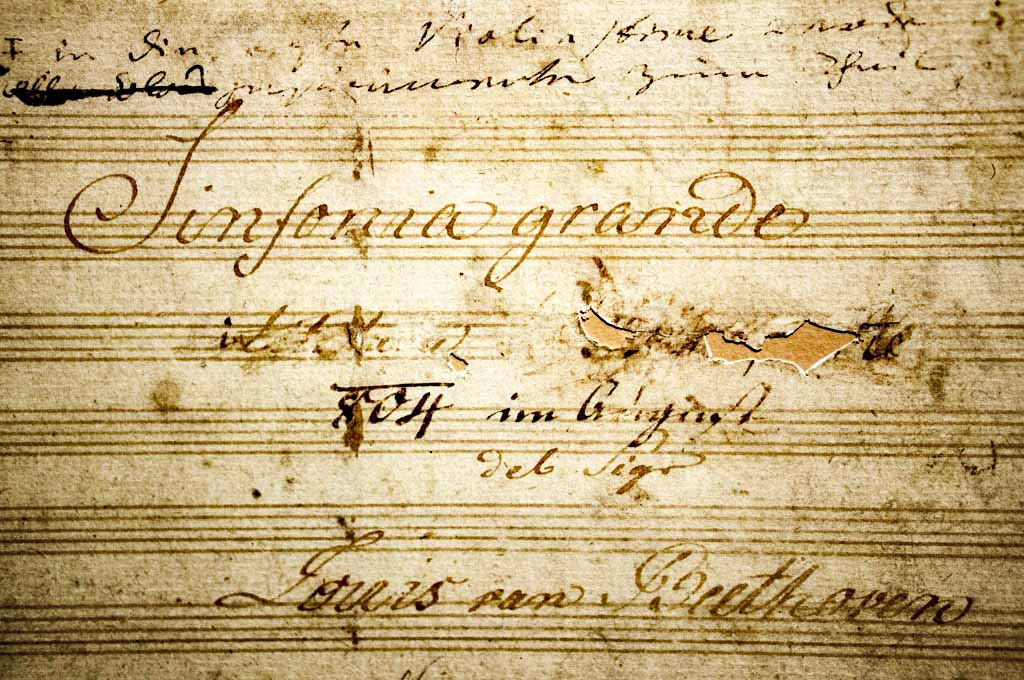
On May 18, 1804, Napoleon Bonaparte was proclaimed Emperor of France.
For the rest of Europe, the event was certainly consequential. The monarch would go on to conquer kingdoms and upend the political order, exporting reforms such as the Napoleonic Code in his wake. Yet for Ferdinand Ries, the declaration was more memorable for its considerable effect on his mentor, Ludwig van Beethoven. Upon hearing the news, the composer flew into a rage. Ries later recalled his hot-tempered employer cursing and bellowing: “So he is no more than a common mortal! Now, too, he will tread under foot all the rights of Man, indulge only his ambition; now he will think himself superior to all men, become a tyrant!”
To many admirers, Napoleon initially appeared as a champion of the ideals of the French Revolution and a liberator from the old aristocratic order. Among those impressed by the First Consul of France was none other than Beethoven, who held him in the highest esteem. He admired Napoleon so much that he even considered dedicating his Third Symphony to him. When the decision might have cost him, he gave the dedication to his patron Prince Lobkowitz and instead titled his newest masterpiece “Bonaparte,” the words beautifully “inscribed at the very top of the title-page.”
But this very score soon became the object of Beethoven’s fury. Ries said that the composer seized the fresh manuscript from the table, tore the title page, and threw it to the ground. While the story has been dramatized and exaggerated, one fact remains certain. According to biographer Edmund Morris, “A copyist’s score of the symphony does survive with the Emperor’s name erased so fiercely that a hole is worn through the paper.”
Now, the Symphony No. 3 bears a new name, Eroica. When published in 1806, it bore the title, “Heroic Symphony, composed to celebrate the memory of a great man.”
Symphony No. 3 ‘Eroica’
Today’s recording of the first movement, Allegro con brio, of Beethoven’s Symphony No. 3 in E-flat major, “Eroica,” is by the Berliner Philharmonic and Herbert von Karajan. (Listen)
The Third Symphony by Beethoven represents what many historians refer to as Beethoven’s “Heroic Period.” Unlike the “Early Period,” Beethoven’s music evolves beyond the mold of Haydn and Mozart, becoming more expansive. Just listen to the dramatic opening chords of the movement, bold and declaratory.
Immediately, a foreboding melody follows, played by the low strings. This “hero’s motif” is the movement’s core idea, but it ends with a twist. Note the chromatic C-sharp at 0:12, which gives an unfinished touch to the melody. The music was certainly unprecedented in terms of scope; the first movement alone is close to the length of entire early classical symphonies.
Just take the dramatic tension of the section at 5:32. The heavy chords are emphasized by the pulsating dissonances that arrive on every offbeat. Throughout the entire movement, the music’s “hero” undergoes tribulations that test his character.
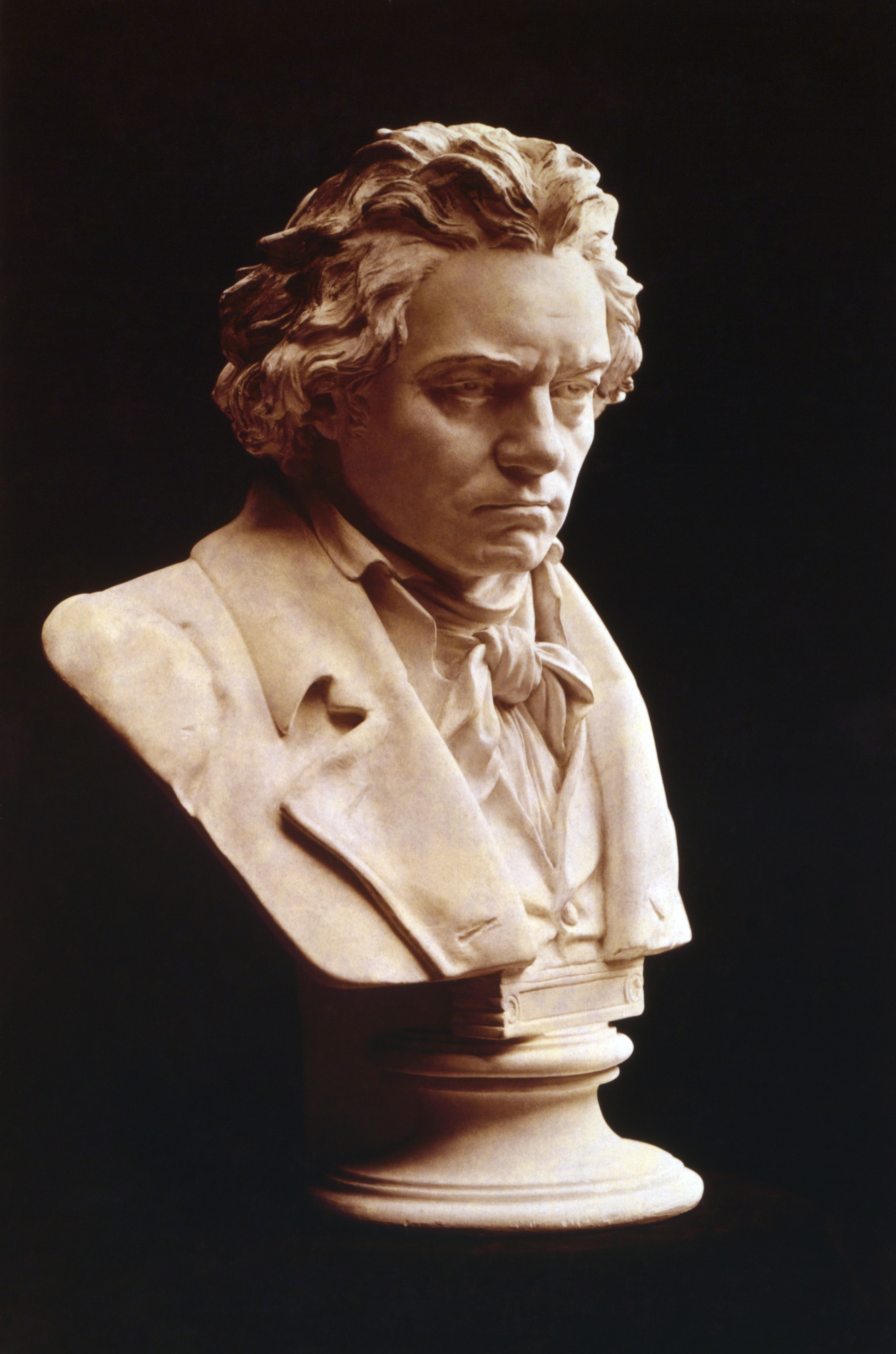 Ludwig van Beethoven bust by Hugo Hagen, circa 1892, based on life mask by Franz Klein, created in 1812. (Library of Congress)
The originality of the work is captured by a particularly inspired compositional decision. Start listening at 7:56—before the ultimate moment of the hero’s theme return—to the hushed whispering of strings. An errant horn appears amid the texture of the motif, seemingly by mistake. In fact, the entrance was so startling that Ferdinand Ries, in attendance for the initial rehearsal of the work at Lobkowitz Palace, got out of his seat and exclaimed, “[That] horn player! Can’t he count? It sounds terribly wrong.”
Beethoven turned around and glared at his student. The addition was intentional.
Ries’s outburst was understandable. He had heard Beethoven play the symphony on the piano several months earlier, and even then, he sensed that the work was something extraordinary. Ries recalled that, in Beethoven’s “own testimony, it is the greatest work he has yet written. … Heaven and earth will tremble at its performance.”
What arts and culture topics would you like us to cover? Please email ideas or feedback to features@epochtimes.nyc.
