



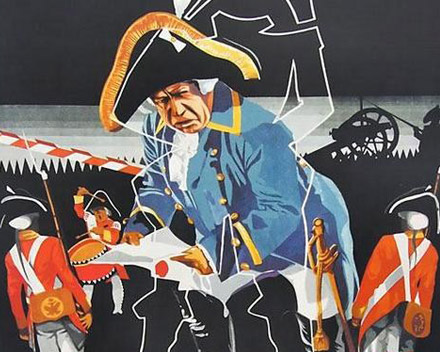
When the clerk of Tsar Paul I makes a silly mistake on his military roster, he hesitates to correct it, quietly convincing himself that the consequences cannot possibly be severe. The slip of the pen has merely created a fictitious soldier named “Kije,” whom the clerk hopes will remain unnoticed. Unbeknownst to the clerk, the Tsar has just been angrily woken from bed by a loud shriek. The next day, he demands to know the culprit. When his eyes are drawn to the strange-sounding name on the military roster, the court officials conveniently blame the imaginary “Kije.”
Thus, the events of the film “Lieutenant Kije” are set into motion.
The film, based on a satiric novella of the same name was, in turn, based on an anecdote from the reign of Paul I. The film premiered in 1934 and was one of the early sound films made in the Soviet Union.
The composer of the film’s soundtrack was Sergei Prokofiev. Following a commission from the Moscow Radio Symphony Orchestra, Prokofiev arranged the soundtrack into a suite with five movements. This “Lieutenant Kije Suite” has since become one of his most popular works, referenced famously in the finale of Woody Allen’s “Love and Death.”
Prokofiev wasn’t an obvious choice as composer for the soundtrack. He had never composed for a film before and didn’t seem interested. In retrospect, Prokofiev’s language of musical irony and vivid orchestration proved to be perfect for the “absurdist comedy.”
The story gets only more preposterous after the punishment of Lt. Kije. After Kije was supposedly flogged and sent to Siberia, the real culprits of the Tsar’s nightly disturbance are caught. Kije is pardoned and promoted, now to the rank of colonel. At this point, the court officials are in over their heads and can do nothing but continue the charade. Lt. Kije has a wildly successful career. He’s elevated to army general, and he even marries the princess Gagarina. After an extravagant hoax wedding and numerous bequests of land and riches, the Tsar finally insists on meeting the decorated commander. However, the officials have one last trick up their sleeves.
The great general has perished in battle! The nation mourns, and a grand funeral is held. When the Tsar asks for Kije’s fortune to be returned, the court officials report that the general has spent it all. Furious, the Tsar posthumously demotes the general to private Kije.
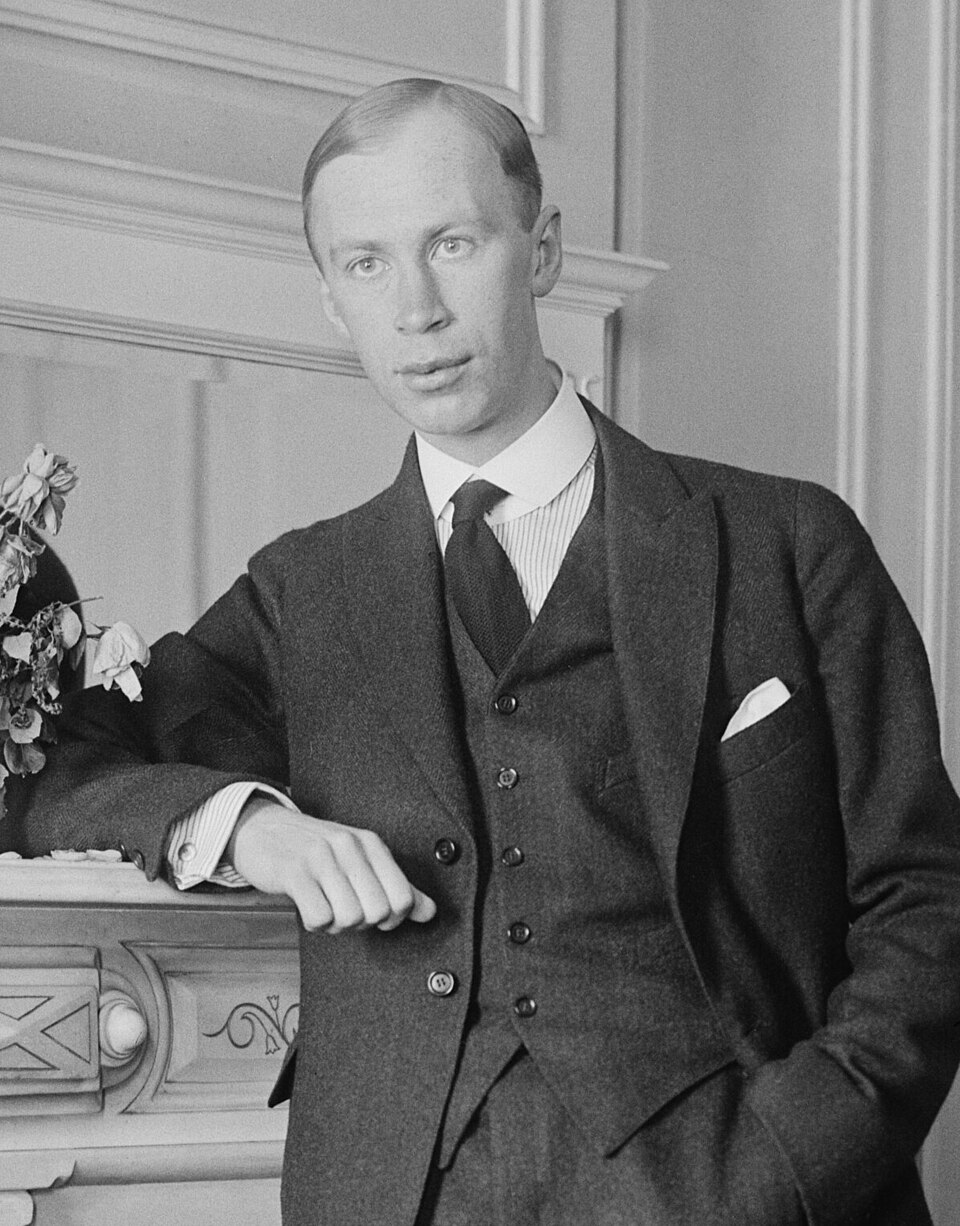 Composer Prokofiev in about 1918, in New York City. (Public Domain)
Lieutenant Kije Suite
The piece contains five movements illustrating events from the film: “The Birth of Kije,” “Romance,” “Kije’s Wedding,” “Troika,” and “The Burial of Kije.” This recording of Prokofiev’s “Lieutenant Kije Suite” Op. 60 is by Fritz Reiner and the Chicago Symphony Orchestra. (Listen)
“The Birth of Kije” begins with a solitary cornet solo. A snare drum comes rattling in with a military march, a piccolo whistling on top. One minute in we hear the “theme” of officer Kije, played by the oboe. The theme remains a constant presence, appearing in later movements in different sections of the orchestra. Continuing to 1:50, a heroic trumpet fanfare blares, with a cascade of strings flowing underneath. The movement ends with the return of the solitary cornet solo, which bids farewell to our improbable hero.
The second movement, “Romance,” begins with a sardonic melody played in the high register of the double bass. This melody is based on the old Russian folk song “The Dove is Cooing.” The theme is taken over eventually by a saxophone, before lustrous strings enter.
The third movement, “Kije’s Wedding,” begins with a cymbal clash and a fanfare of brass. Bouncy offbeats precede a lively trumpet solo. The melody is a playfully exaggerated variation of the “Kije” motif, alluding to the comedic nature of the faux wedding.
The fourth movement, “Troika,” is the most famous of the movements, beginning at 11:42 with boisterous sleigh bells and string pizzicato. “Troika” evokes a festive Russian three-horse sled ride.
The final movement “The Burial of Kije” is a mix of all the previous movements, ending with a wistful, distant rendition of the opening fanfare.
What arts and culture topics would you like us to cover? Please email ideas or feedback to features@epochtimes.nyc
