In 1896, Norwegian composer Edvard Grieg (1843-1907) composed a piece in commemoration of the 25th anniversary of his marriage to the former Nina Hagerup, a lyric soprano. The pair had wed in 1867, parenting a daughter who died in childhood. Though they had no more offspring, the couple enjoyed musical collaboration through the decades. Nina premiered many of her husband’s vocal works and is said to have inspired the composer’s best-known large-scale composition, the Piano Concerto in A minor.
It’s unclear why the observation of their 25th anniversary took place four years after the fact (1892 was the actual year of their 25th anniversary). Perhaps it took that long to assemble all the parts of what was, by all accounts, a huge celebration. In any case, the event and the musical piece written in its honor came round in 1896.
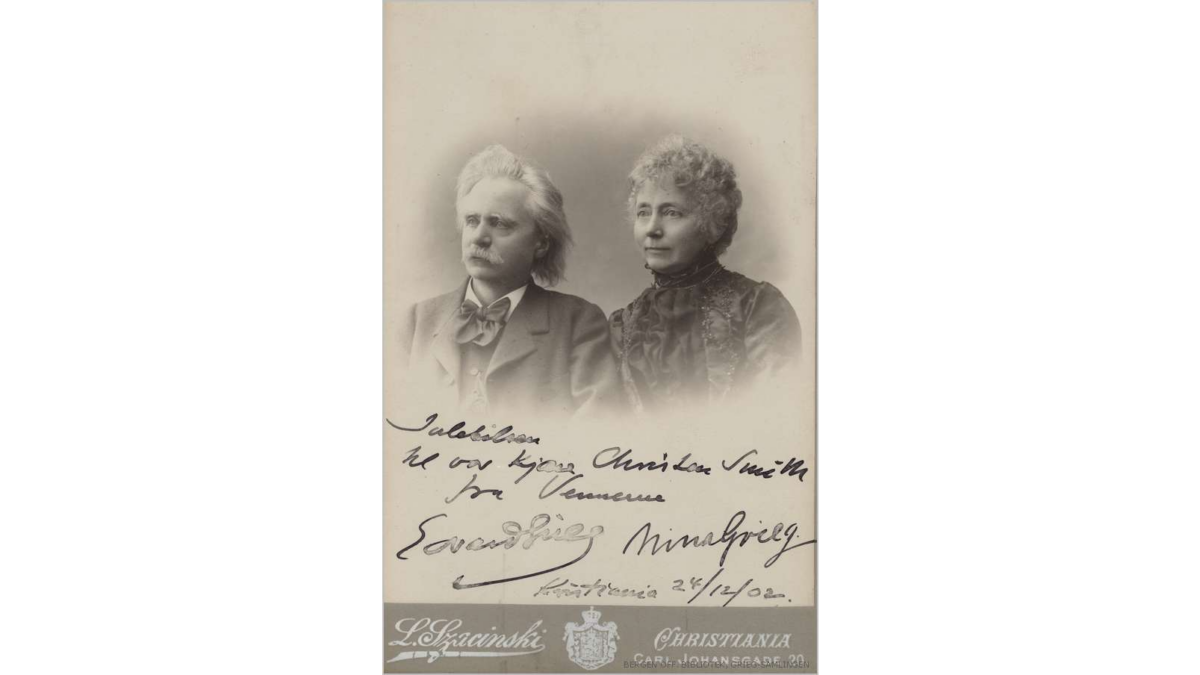
The composer surely knew this couldn’t be just any piece. It needed to convey almost 30 years of love and collaboration in a score for solo piano, his most-explored genre. By 1896, Grieg had composed many of the 66 short pieces for solo piano collected in seven books and labelled “Lyric Pieces.” By turns piquant, ruminative, earthy, nostalgic, mournful, and almost every other adjective you might consider, each “Lyric Piece” traversed a single mood or emotion. But marriage is a blossoming plant with myriad blooms. A short piece commemorating 25 years of life together had to be bigger without being significantly longer.
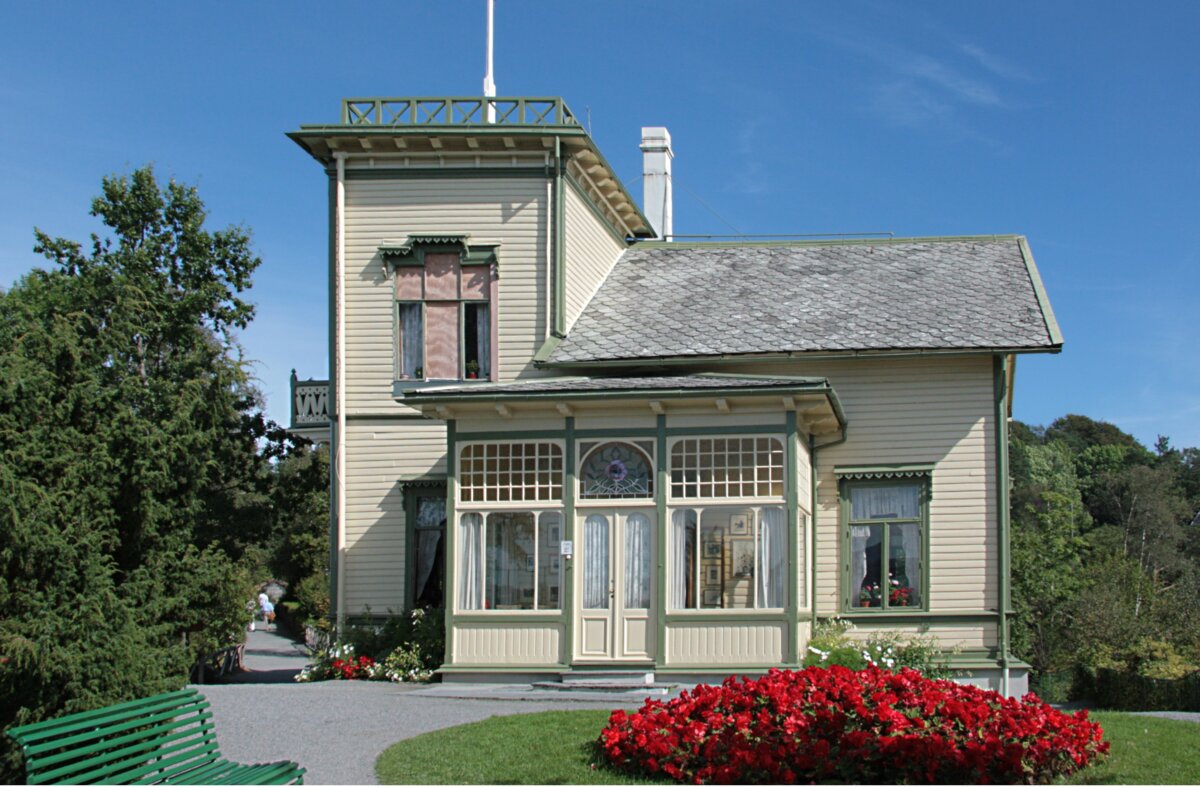
The result, known today as “Wedding Day at Troldhaugen,” resounds with an unparalleled joy in its outer measures and an unequaled calm in the middle section. “Troldhaugen” is the building in Grieg’s hometown of Bergen, Norway, where he and Nina made their home. Literally “troll hill,” Grieg named it after the belief of local children that trolls lived in the valley below the hill upon which the building stood.
A note about the title: Grieg originally called the piece “Gratulanterne kommer” (“The well-wishers are coming”) but changed it to “Bryllupsdag pa Troldhaugen” or “Wedding Anniversary at Troldhaugen.” Somewhere down the line the English was shortened to “Wedding Day at Troldhaugen,” which is inaccurate, as Troldhaugen had not yet been built when the couple wed.
A Listener Favorite
This recording of Grieg’s “Wedding Day at Troldhaugen” is by Gabriele Tomasello on piano. (Listen)
It starts out as a bold march in 4/4. (Warning: music theory talk coming up.) The key of D major is announced forthrightly, but immediately, Grieg introduces a non-key note (G-sharp) that pulls magically to B minor, then swiftly through E major to A major, the dominant chord of the home key, D major.
Translation: The piece opens up like a flower to every conceivable tonal relationship. You can hear it from 0:07 to 0:10 and again from 0:25 to 0:28. You are excused from ridicule if it makes you smile. It does that to me every time.
The opening subject is developed in a relaxed fashion until 1:01, where Grieg introduces some rapid-fire passage work that evolves into massive, concerto-like chords. At 1:30, the opening subject returns in virtuosic majesty. This concludes what we’ll call section A. At 1:46, the key changes to G major, and the mood shifts to contemplation as a simple, repeated rhythm is played out over a handful of peaceful measures (section B). Section A returns at 3:19 in a note-for-note repetition, capped by a short coda.
The exuberant joy of the A section and the serenity of B are perfect complements.
Published in 1897 as part of Grieg’s Lyric Pieces, Book VIII, Op. 65, “Wedding Day at Troldhaugen” has become a favorite of pianists and of audiences in search of a short composition packed with meaning.
What arts and culture topics would you like us to cover? Please email ideas or feedback to features@epochtimes.nyc