



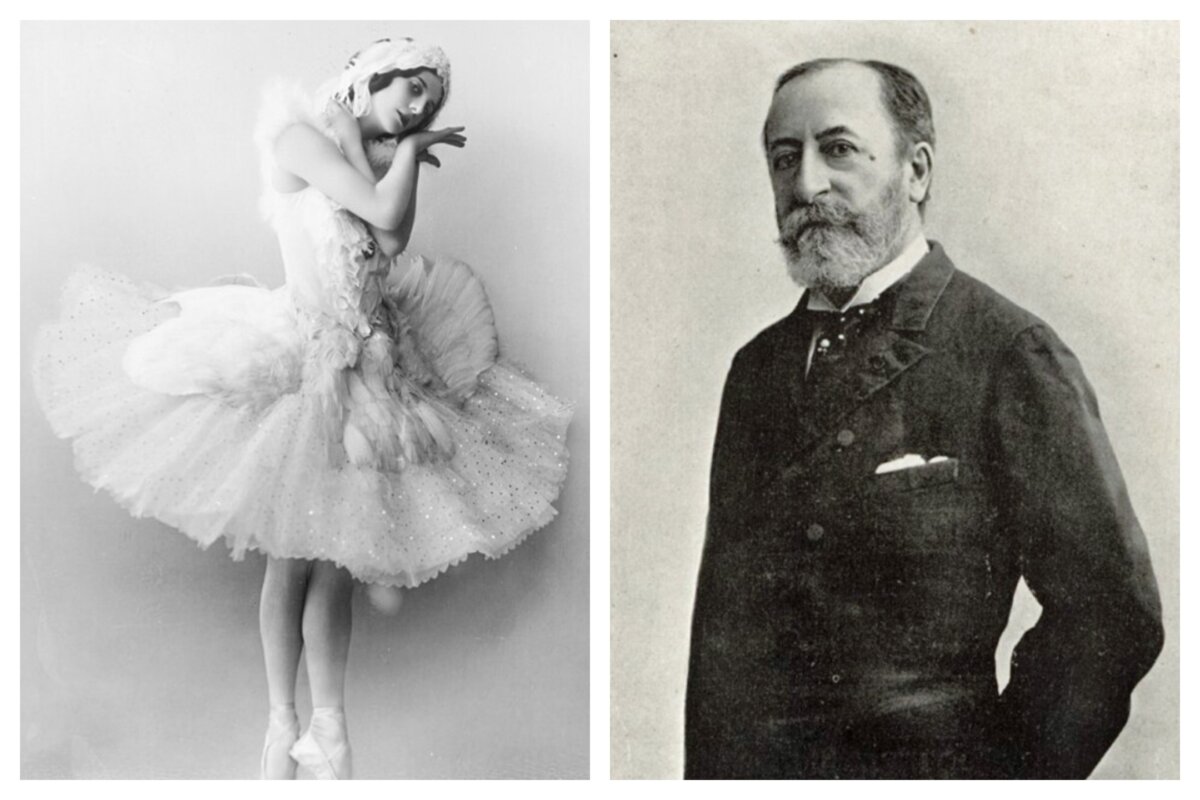
Camille Saint-Saëns (1835-1921) was one of the great French composers of the 19th century, composing five symphonies and over a dozen operas. He was a child prodigy on the piano, debuting in 1846, and a formidable organist. Through an illustrious career as a soloist, he was well liked, even revered by his colleagues. Richard Wagner admired his dazzling piano technique; Franz Liszt thought him the finest organist alive.
In short, Camille Saint-Saëns perfectly fit the image of the 19th-century Romantic composer: distinguished, gifted, and dignified. Yet all was not what it seemed, as this most august musician had a secret. This secret was in fact an unpublished composition, a roughly half-hour-long work that was banned from public performance during his lifetime—with the exception of one movement.
Who prohibited public exposure of the work? None other than Saint-Saëns himself.
This confidential work was first performed in private in March 1886. A second, semi-private performance was given for the chamber society La Trompette. Liszt wished to hear it, so he attended a performance at the home of opera singer Pauline Viardot.
The reception was enthusiastic, in part due to the strange circumstances behind the performances. The musicians often performed masked, disguised with the heads of various animals. Despite the positive acclaim, the performances were always kept private, with the true nature of the music withheld from the world.
‘The Carnival of Animals’ and ‘The Swan’
This mysterious work was Saint-Saëns’s “The Carnival of Animals.” Despite the unusual performance quirks at its premiere, there is nothing macabre about the music. On the contrary, it is a humorous and whimsical work embodying the best of Saint-Saëns: witty, rich in texture, and melodically satisfying.
Why did Saint-Saëns forbid publication of “The Carnival of Animals”? He feared damage to his reputation should the work become public.
The origin of the work came from a whim. While he was staying in a small Austrian village, Saint-Saëns decided to amuse himself and his guests at an upcoming Mardi Gras party by composing a humorous fantasy of animals. In it, we hear wild donkeys, pecking hens, and even a pair of “pianists”—the most primitive animal of all!
Yet despite its color and beauty, Saint-Saëns feared the lighthearted nature of the work would undermine his reputation as a “serious” composer. Thus, the fantastical sounds of this zoological fantasy remained dormant during his lifetime, only to emerge after his passing as one of his most beloved works.
However, there was one movement of the work that was made public before his death. That movement is called “The Swan” and is one of the most beautiful works in all of classical music. Composed originally for cello and two pianos, now it is commonly performed with one piano or with harp and orchestra. Below are two fantastic recordings.
A modern classic is Yo-Yo Ma’s recording with Kathryn Stott. (Listen)
My personal favorite is an arrangement for cello and orchestra by Boris Mersson, featuring Pierre Fournier and Jean-Marie Auberson conducting the Orchestre des Concerts de Paris. (Listen)
What arts and culture topics would you like us to cover? Please email ideas or feedback to features@epochtimes.nyc
