



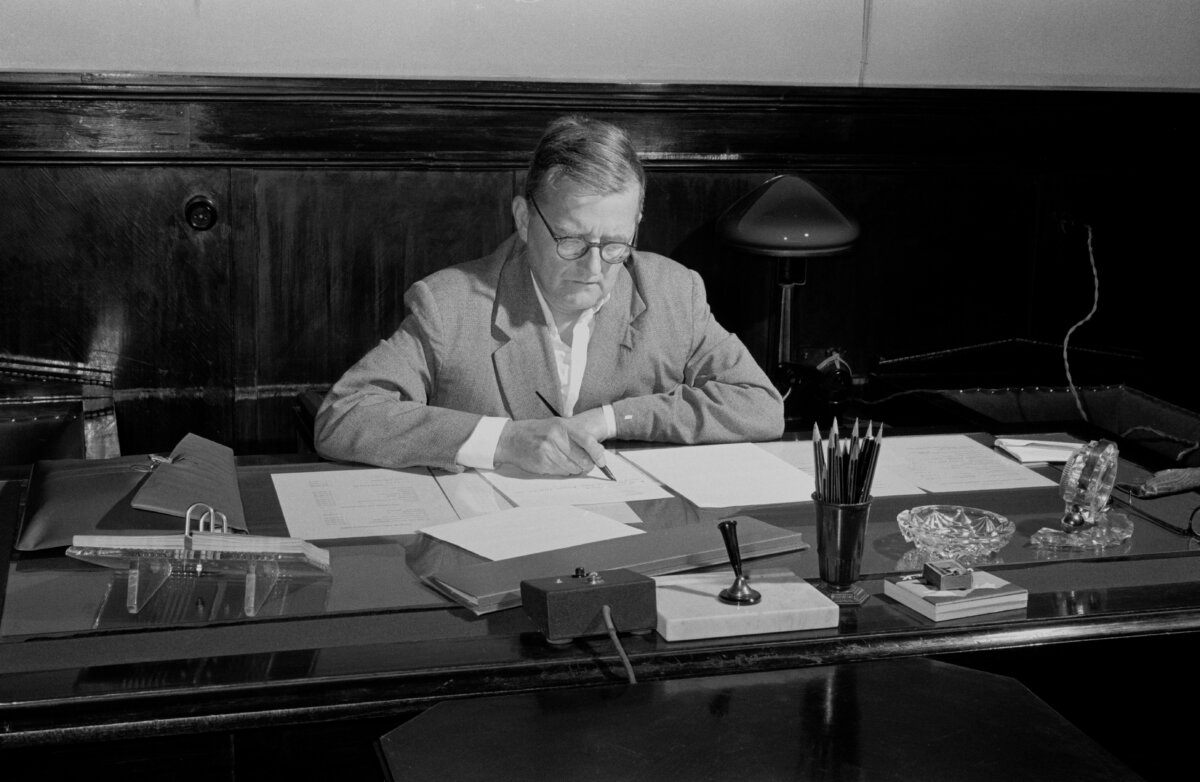
In the book “Testimony: The Memoirs of Dmitri Shostakovich,” author Solomon Volkov recorded the following words from the composer:
“It didn’t matter how the audience reacted to your work or if the critics liked it. All that had no meaning in the final analysis. There was only one question of life or death: how did the leader like your opus. I stress: life or death, because we are talking about life or death here, literally, not figuratively.”
The quote paints a vivid image of the life of an artist under the Soviet system. One such artist was Dmitri Shostakovich, who produced his entire creative output under scrutiny and political pressure, often composing under “ideological expectations.” As a result, the chronically anxious composer was famous for hiding behind a figurative mask. But did Shostakovich actually say these dissenting words, or are they the product of later interpretation?
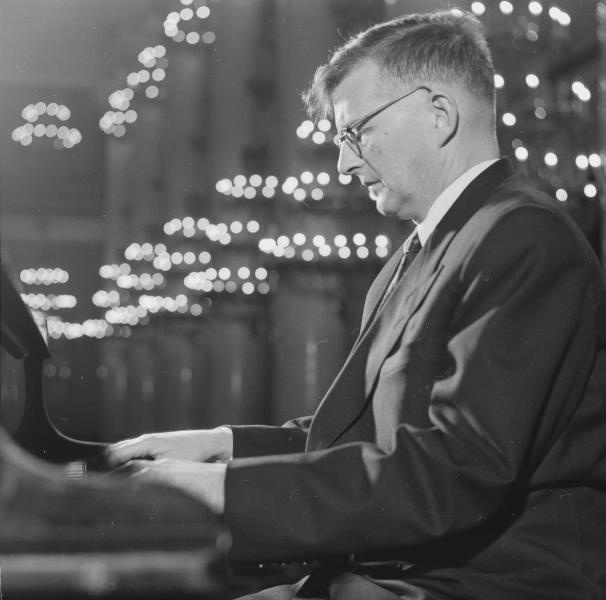
Volkov’s “Testimony” is one of the most controversial documents in music history. Published in 1979, four years after Shostakovich’s death, its contents have undoubtedly reshaped interpretations of his musical legacy. The composer, once thought of as compliant with the regime, is claimed to have been a secret dissident, encoding his music with hidden anti-government messages.
Yet almost immediately after publication, questions were raised about its authenticity. Volkov, who claimed that the composer had dictated the memoir to him over a series of meetings, said he had “misplaced” the original manuscripts, which included pages signed by Shostakovich that have not since been independently verified. Moreover, the tone and content of the memoir shift markedly from section to section, leading musicologists such as Laurel E. Fay, in her “Shostakovich: A Life,” to describe it as largely unreliable.
Although the authenticity of “Testimony” may never be confirmed, it nonetheless presents a powerful interpretation of his life. Biographer Elizabeth Wilson believes it may be a genuine depiction, building a compelling account through interviews and oral testimonies. According to accounts of friends and family, the composer adapted psychologically to survive, becoming increasingly withdrawn and guarded in response to events such as the Zhdanov Decree, a critical condemnation of Soviet composers in 1948. There is no public record of dissidence; in such a system, overt dissent would likely have been met with suppression and silencing.
What is certain is that Shostakovich lived a divided life, in which his private beliefs and public persona were often in tension with one another. While Shostakovich’s true thoughts may forever remain a mystery, his music remains a lasting source of insight into his inner world.
‘Festive Overture’
Today’s recording of Dmitri Shostakovich’s Festive Overture Op. 96 is conducted by Andris Nelsons with the Boston Symphony Orchestra.
This celebratory work was written under a three-day deadline on a commission from the Bolshoi Theatre. Shostakovich’s friend Lev Lebedinsky, present during the composition process, watched in awe as the composer swiftly and effortlessly put notes onto paper, writing while making “jokes … simultaneously, like the legendary Mozart.” As he finished each page of the score, couriers arrived and took the page to music copyists for the performance.
From the exuberant brass fanfare to the joyful melodies of the celli and winds, this celebratory work has become representative of Shostakovich’s ability to produce outwardly optimistic music within the constraints of Soviet cultural expectations.
What arts and culture topics would you like us to cover? Please email ideas or feedback to features@epochtimes.nyc.
