Good poems invite interpretation. A single poem read by 10 different people will likely be voiced 10 different ways. The simplest line is open to countless ways of being recited. “Nothing is so beautiful as spring” may be read flatly, or with a rising and falling arc, or emphasizing one word over others. This in turn affects the meaning we bring to the words.
“Art song” is the setting of poems to music. A composer fashions music for a singer and accompaniment (usually piano) to fit the prosody and mood of a given poem. The result is the composer’s interpretation of the poem.
Art songs have been composed in English, French, Italian, and other languages, but German boasts by far the best-known; the genre is often referred to by its German name, “lieder.” The form reached a peak in the 19th century with composers Franz Schubert, Robert Schumann, Johannes Brahms, and Hugo Wolf. Not coincidentally, this was the era in which composers were most inclined to use literary sources in their music.
Only, what is the purpose of art song? Why add music to an already finished work of art? A poet has already pronounced his work finished. “Open to interpretation” is one thing, but an art song creates an entirely new work of art incorporating an earlier work of art. There are as many answers as there are art song composers, but in general I think motivation to compose art songs springs from the same place that moves people to read poetry in myriad ways. The composer wields a tool the general reading public lacks: music. A composer uses musical phrasing to shape a line and at the same time imbues the line with emotional content specific to melody and harmony.
‘A Poet’s Love’
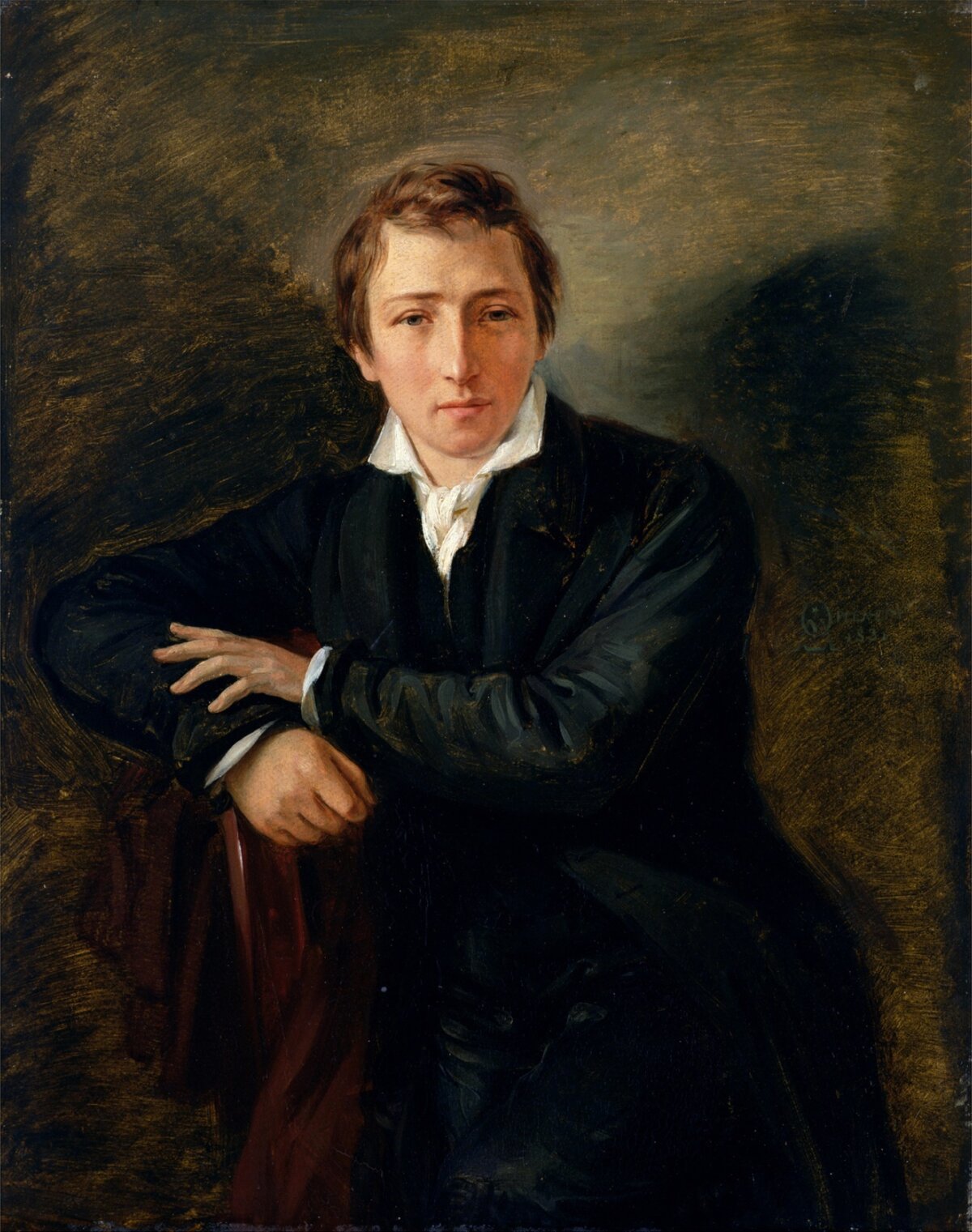
Consider the song by Robert Schumann (1810-1856), written in 1840, that heads his song cycle, “Dichterliebe” (“A Poet’s Love”). The poem, by Heinrich Heine, is a simple, almost clichéd pair of quatrains about young love. Here’s the German:
‘Im wunderschönen Monat Mai’
Im wunderschönen Monat Mai,
Als alle Knospen sprangen,
Da ist in meinem Herzen
Die Liebe aufgegangen.
Im wunderschönen Monat Mai,
Als alle Vögel sangen,
Da hab’ ich ihr gestanden
Mein Sehnen und Verlangen.
And here is an English translation by Richard Stokes:
‘In the Wondrous Month of May’
In the wondrous month of May,
When all the buds burst into bloom,
Then it was that in my heart
Love began to burgeon.
In the wondrous month of May,
When all the birds were singing,
Then it was I confessed to her
My longing and desire.
Read the poem first (in either language) in whatever manner you wish and let it suggest to you whatever feelings may emerge. Then, a performance by tenor Peter Schreier and pianist Norman Shetler. (Listen)
You can’t miss what the composer has done to impose his musical interpretation on the words. For each of the quatrains, he sets the first two lines as a very gentle melody, while in the third and fourth lines, the melody rises, then rises again even higher and more dramatically, ending on a high note that is expressive but not conclusive.
In Schumann’s interpretation, May, with its birds and blossoms, is just a backdrop for the love declaimed in notes that reach for a seemingly unattainable goal. It’s a 90-second snapshot of romantic love waiting to be fulfilled. Schumann created the sense of yet-to-be-realized love by placing in proximity two notes that don’t usually “go together,” in this case a G-sharp and a G-natural.
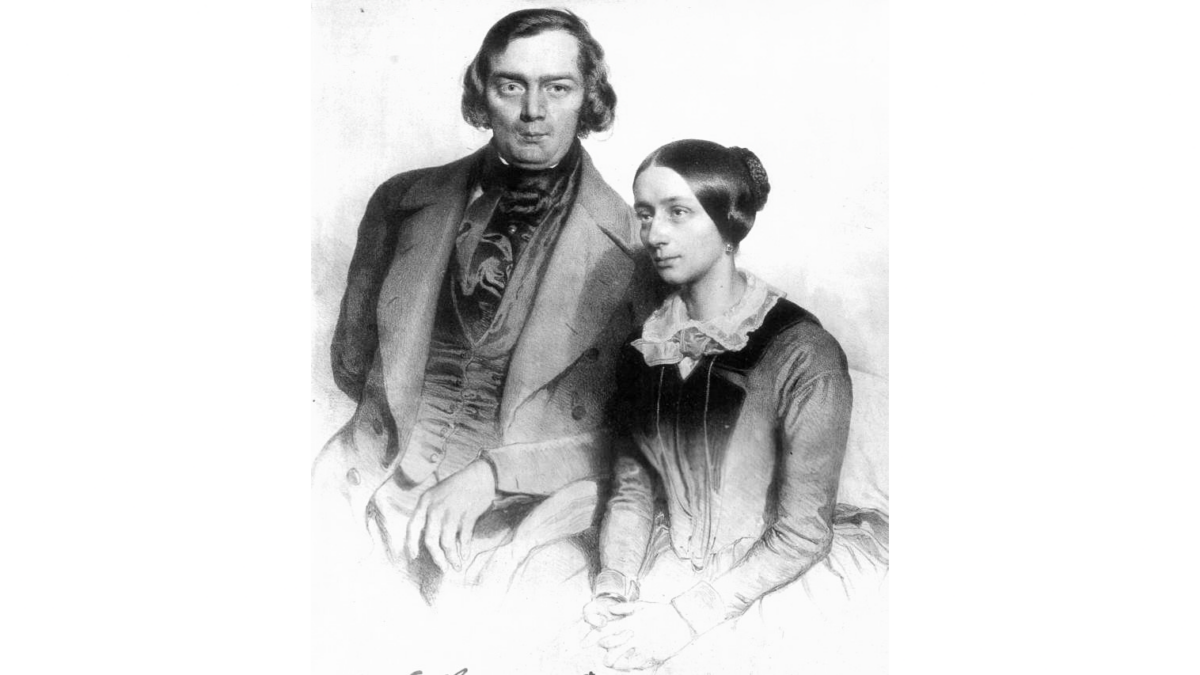
The passion of this song comes from the composer’s personal life. Prior to 1840, Schumann composed only for solo piano while courting the woman he loved, pianist Clara Wieck. Her father strenuously objected to the marriage, but in 1840 the pair were at last married, and Schumann responded with a flood of lieder in what is called his “year of song.” Poetry had come into his life, and the best way he knew to express it was through music.
What arts and culture topics would you like us to cover? Please email ideas or feedback to features@epochtimes.nyc