



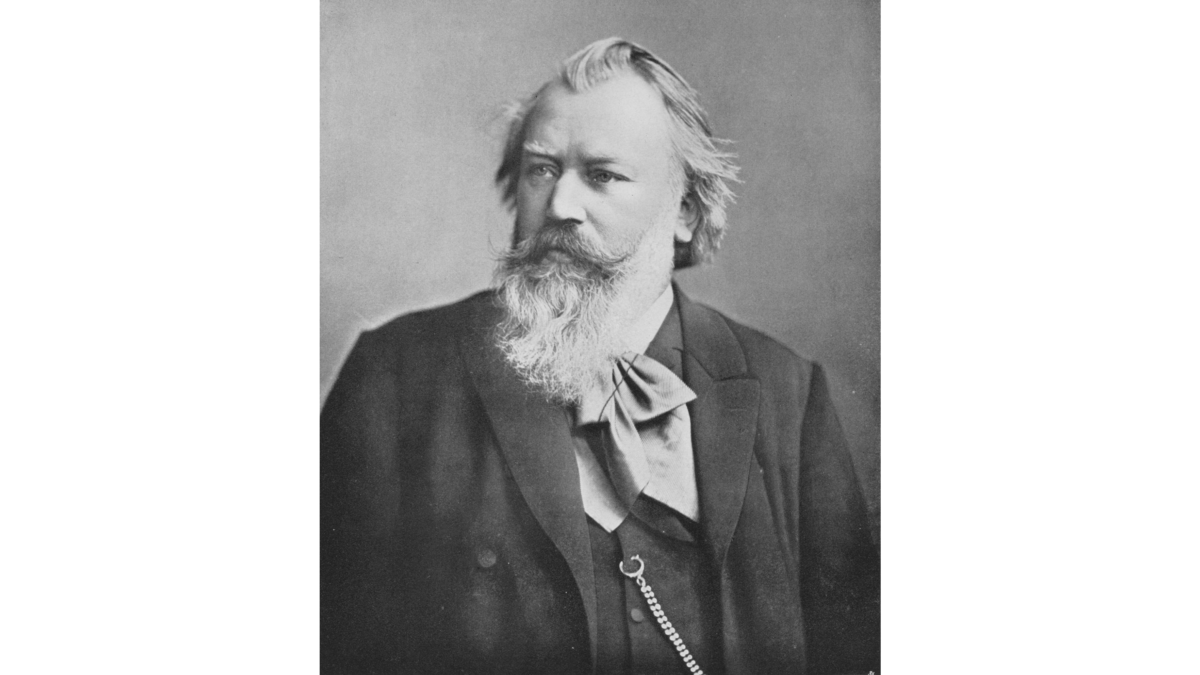
When asked to orchestrate his “Sixteen Waltzes” for piano, Johannes Brahms laughed at the idea. In his response to publisher Rieter-Biedermann, he joked: “Are the little waltzes to be [performed] in the Exhibition Palace with many bass drums and trombones?”
From Domestic Piano to Grand Ballroom
His collection of short vignettes for piano four-hands, published in 1866, had become surprisingly popular. Brahms himself didn’t expect much success from the music, but by January 1867, four impressions of the score had already reached 1,200 copies. Rieter-Biedermann, understandably impressed, saw an opportunity to take the quaint and domestic piano tunes and market them to concert-hall patrons.
Rieter-Biedermann had a great business plan and a very willing audience. This was Vienna in the 1860s, and the Viennese waltz was flourishing. Case in point: The Strauss family had taken the native dance of their home and turned it into music for grand entertainment. By the time Brahms tried his hand in the genre, the waltz had become inextricably tied to the expansive ballroom.
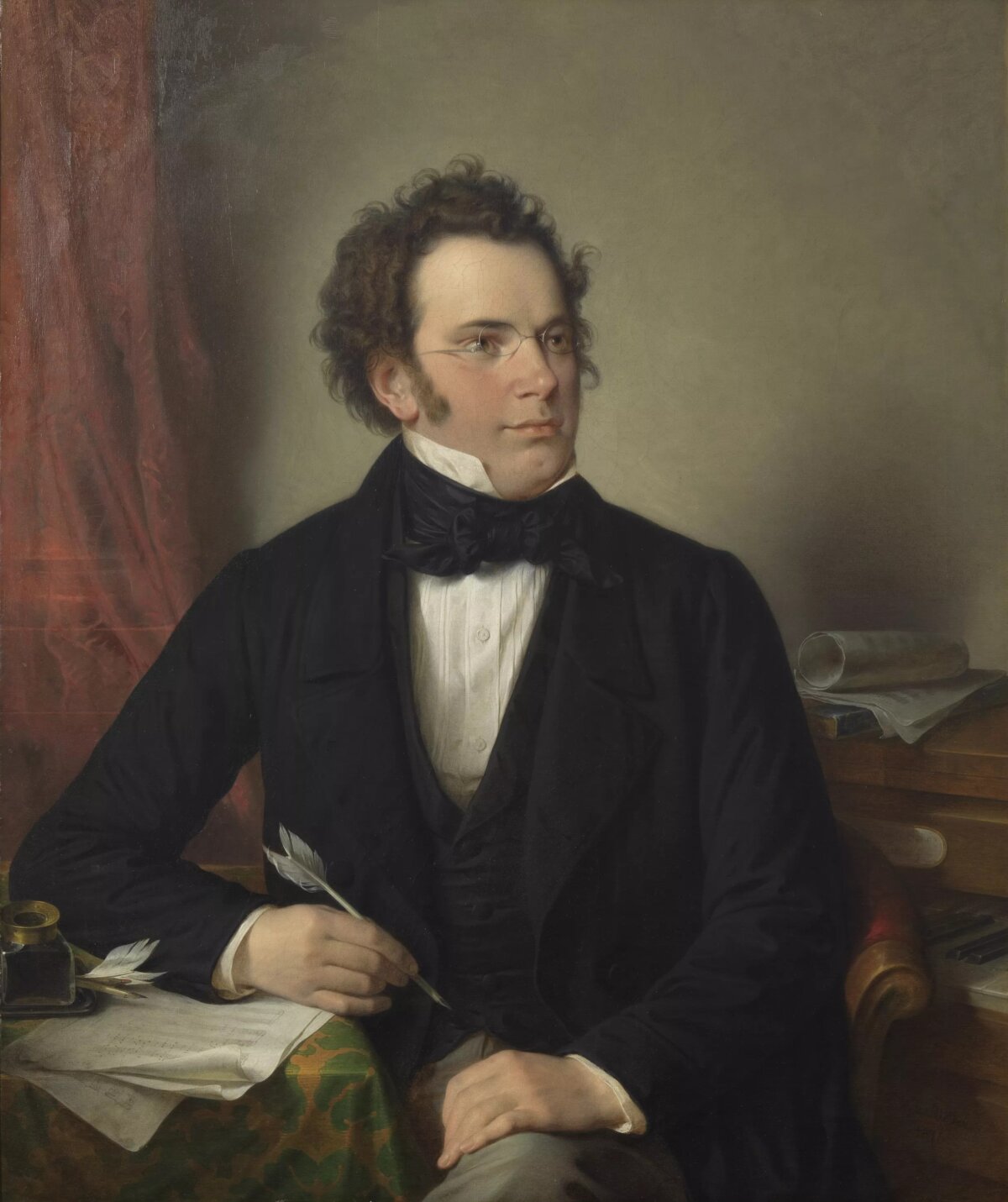
Why did Brahms laugh at the idea of turning his humble piano work into an orchestral fanfare? While he respected the music of composers like Johann Strauss, Brahms found inspiration for his waltzes in the “unknown Schubert.” At the time, Schubert’s music was being rediscovered and entering the repertoire. Brahms grew fascinated with his music and, according to historian David Brodbeck, particularly his “12 Landler” (D. 790).
Unlike the ballroom “waltzes” popular at the time, Brahms wrote economically. While the large-scale waltzes of the time featured literal repetitions of lush melodies arranged in sophisticated thematic relationships, Brahms took an old-school approach. His twist was his use of “developing variation.” Characteristic of much of his music, Brahms refreshed his melodies through subtle changes of harmony, register, rhythm, and accompaniment.
So, amid the public trend towards large, grandiose entertainment music, Brahms produced a product of intimacy and exquisite beauty. The music journal Leipziger allgemeine musikalische Zeitung wrote in August 1866 that “the various waltzes are of various characters, sometimes showy and fervid, sometimes softly swaying, sometimes tender, sometimes wild like gypsy music—but always original.” In the hands of Brahms, one “forgets the lowly rank of the genre.”
Johannes Brahms Waltz in A Major Op. 39
Today’s recording of Johannes Brahms’s Waltz in A major No. 15 is an arrangement for violin and piano, played by Kaja Danczowska and Janusz Olejniczak. (Listen)
The 15th of the 16 waltzes, the Waltz No. 15 in A major, has become beloved for its nostalgic mood. As in his later lullabies, Brahms employs a swaying, rocking melody that tugs at the heartstrings. Underneath is the defining characteristic of a waltz, an “oom-pah-pah” rhythm in 3/4 that evokes a gentle dance.
What arts and culture topics would you like us to cover? Please email ideas or feedback to features@epochtimes.nyc.
