



The trumpet is one of the most beautiful of all musical instruments. Instantly recognizable for its brilliant sound, this gleaming golden brass tube—looped into sinuous coils and capped with three stately valves—has become one of music’s most familiar symbols. Today, the trumpet is an indispensable part of every orchestra and band, capable of portraying everything from songful melodies to forceful exclamations.
Yet the trumpet didn’t always occupy an esteemed position among instruments. In fact, it was only around the mid-19th century when the valve trumpet we know today developed and became a standard addition to orchestras. Prior to that, the trumpet was almost an entirely different instrument. This most popular of brass instruments was actually birthed from earlier, limited prototypes.
Haydn, Weidinger, and the ‘Key’ Invention
The predominant trumpet of the 18th century was the “natural” trumpet: It was a single length of brass tubing—effective, but primitive. Given its ancient roots, it was long associated with battlefields and royal courts. Without the combination of valves and tuning slides that adorn the regal modern trumpet, the natural trumpet looks bare without its contemporary augmentations.
The differences aren’t just cosmetic; the natural trumpet could only play a limited number of notes. Without the ability to change the length of the tube easily, only overtone notes could be played. Essentially, it was only capable of playing notes spaced far apart in the lower register, with scales being possible only in the upper.
Thus, trumpet music of the early classical period was limited, at least compared to the feats modern virtuosi can achieve. The player would typically rattle off a sequence of arpeggios in fanfare fashion at the climax of a symphony, being relatively ill-suited for any melodies that required step-wise motion in lower registers.
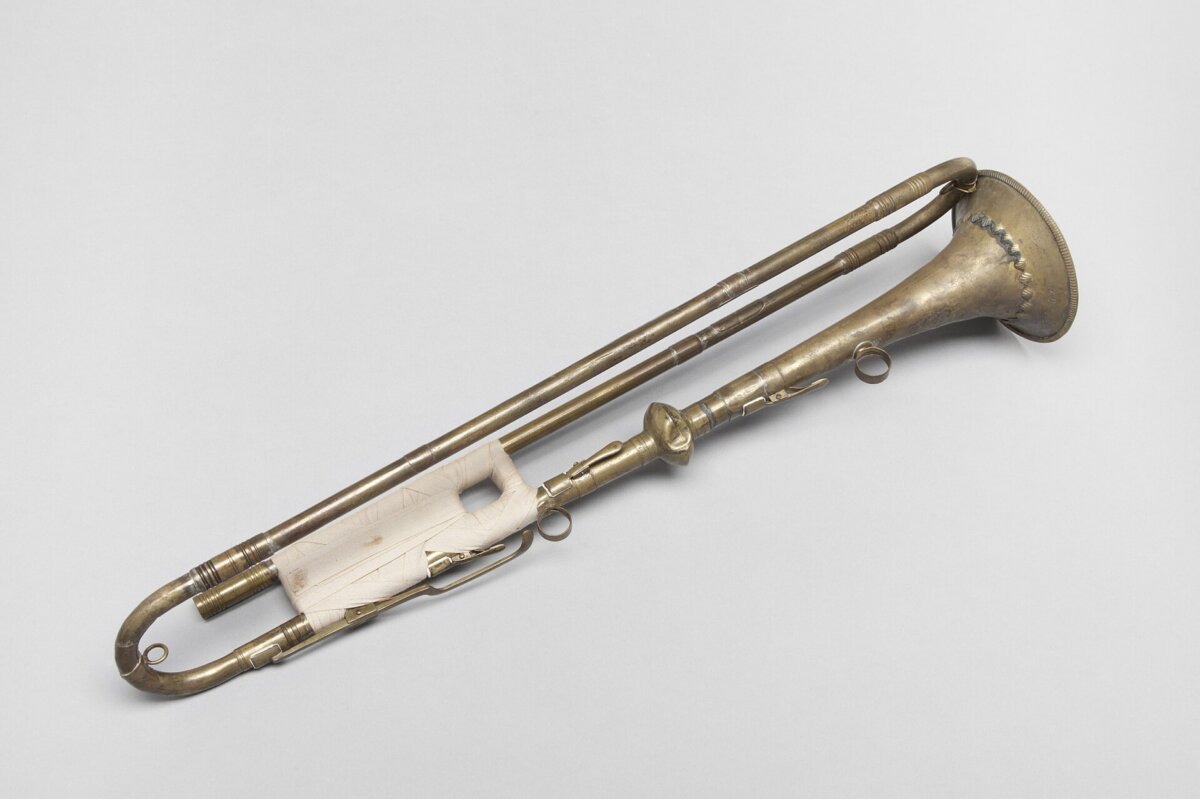
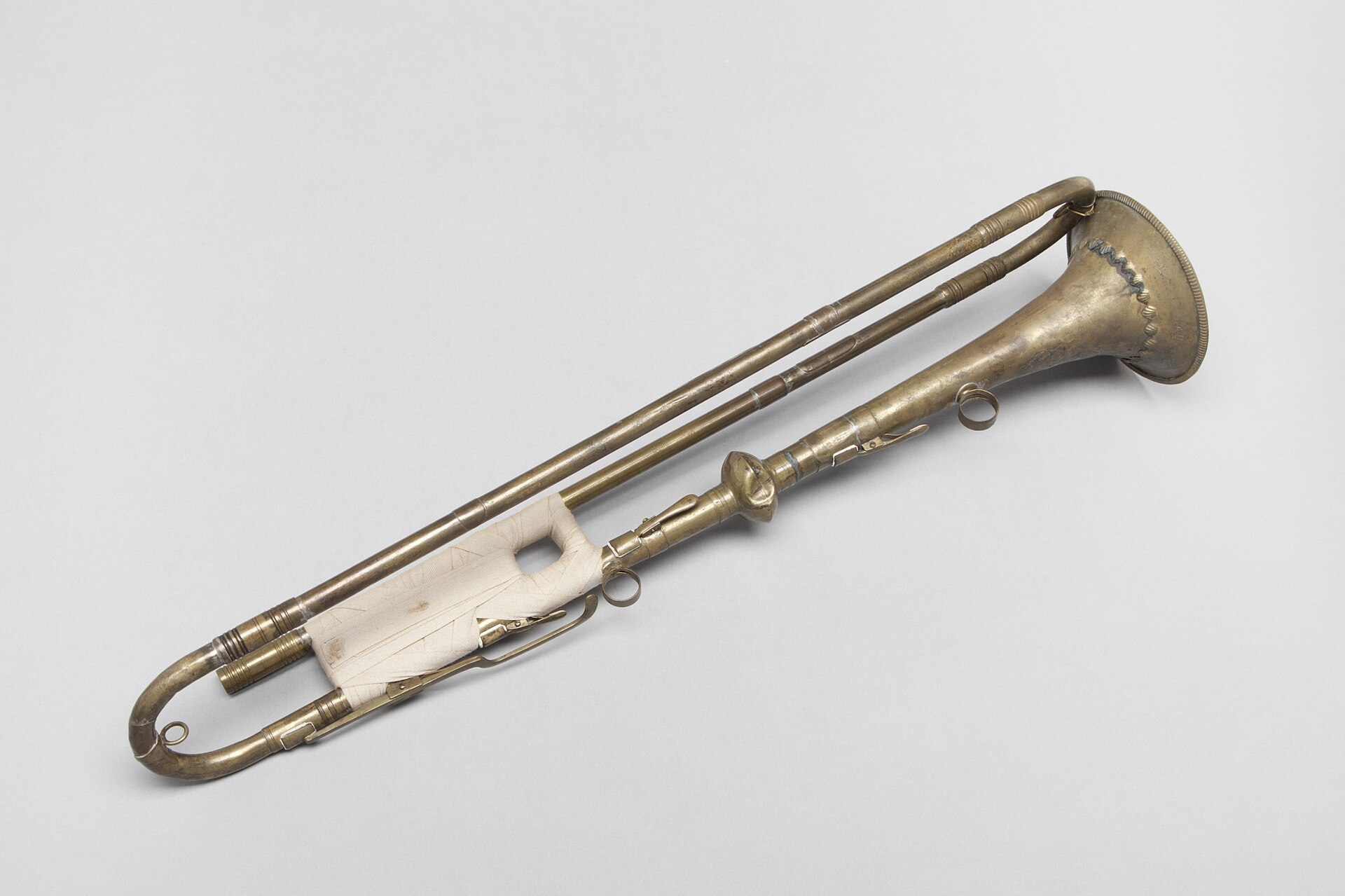 A keyed trumpet, built in 1817 by I. Bauer, Prague. State Institute of Musical Research, Berlin. (Simon Schnepp/CC BY-SA 4.0)
The status quo was finally shaken up due to the efforts of innovator Anton Weidinger, for whom Joseph Haydn wrote a trumpet concerto. Haydn had never written any solo music for trumpet before this moment, but Weidinger had been working on a novel invention which may have inspired the composer.
Weidinger, an Austrian trumpet virtuoso, is credited with the popularization of the invention known as the keyed trumpet. Like the keys of woodwind instruments such as the flute, the addition of keys to the brass trumpet enabled it to play chromatically. This was an advancement which opened up countless possibilities for the instrument. No longer would the trumpeter blare predictably from the tonic note to dominant back to tonic—now they could play melodies!
While the concept of a keyed trumpet was not entirely new, the idea of a seemingly impossible trumpet concerto piqued Haydn’s interest. The composer completed the concerto in 1796, but it actually took four more years before Weidinger premiered the work. In his own advertisement for the premiere, Weidinger claimed he spent “seven years of hard and expensive labor” refining the instrument.
Nonetheless, the keyed trumpet became an important stepping stone in the development of the instrument. Weidinger was later responsible for a trumpet concerto from Johann Nepomuk Hummel, making him the impetus of two foundational works of the classical trumpet repertoire. The keyed trumpet, after enjoying a brief period of glory, was eventually rendered obsolete by the invention of the valve trumpet. But for the few audience members who heard Weidinger play at that lonely premiere, the notes of the magical trumpet offered a prelude to future possibilities.
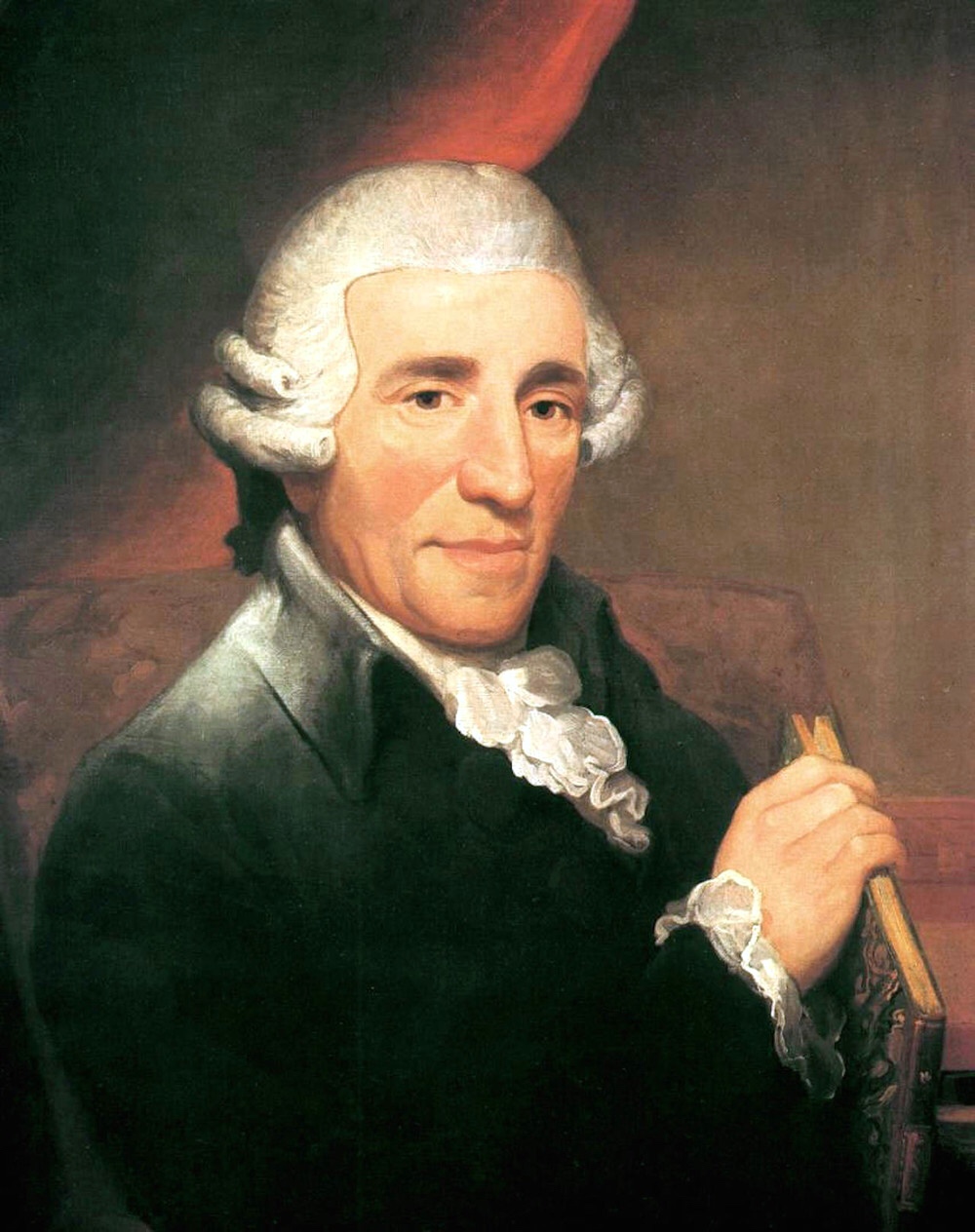 “Portrait of Joseph Haydn,” 1791, by Thomas Hardy. (Public Domain)
 Haydn’s Trumpet Concerto
Today’s recording of the first movement of Haydn’s Trumpet Concerto in E-flat Major, Allegro, is by Maurice André, accompanied by the Münchener Kammerorchester led by Hans Stadlmair. (Listen)
The movement begins with an elegant introduction by the orchestra. The main theme, a melodic ascending scale figure, seems deceptively simple. However, when the trumpet enters at 1:11, echoing the same tune, this unremarkable passage would have surprised audiences in Haydn’s time, as the trumpet takes the role of main melody line.
Haydn follows up with trills from the soloist at 1:57, a graceful application of a virtuosic ornament. After the development and reinstatement of the main theme, the soloist enters with a cadenza at 5:20. In a classical concerto, this signifies the end of the movement as the entire orchestra pauses, giving the soloist his or her time to shine.
The soloist here showcases the full range of the modern valve trumpet. Unlike the keyed trumpet, whose keys could produce unevenness in tone and response, the valve trumpet offers a more consistent sound across its range while retaining the ability to play chromatic passages. Here, the instrument sings beautifully from the lowest register to the very highest. The soloist finishes with a dramatic flurry of 16th notes, concluding the movement.
What arts and culture topics would you like us to cover? Please email ideas or feedback to features@epochtimes.nyc.
