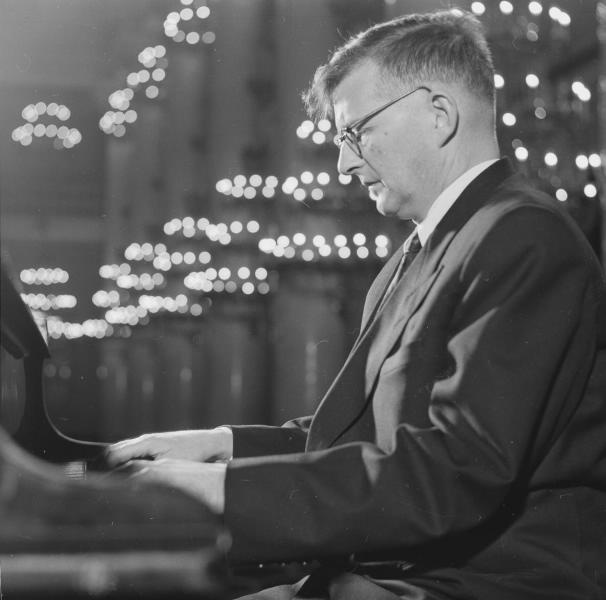
He composed 15 symphonies and as many string quartets, among them towering scores of great length and complexity, plus concertos for piano, violin, and cello; operas and operettas; dozens of choral and solo vocal works, solo piano and miscellaneous chamber compositions, and more than 30 film scores. Yet Russian composer Dmitri Shostakovich (1906–1975) is known today by most listeners for one simple, innocuously titled little piece, “Waltz No. 2.”
A Composer Under Communism
Shostakovich spent most of his life under the watchful eye of Soviet dictator Josef Stalin, who took a keen interest in the composer’s talents. On Jan. 28, 1936, Shostakovich picked up a copy of the newspaper Pravda and found he had been labeled anathema to the Soviet Union. His music was cacophonous, Pravda proclaimed, infected with cynicism, and lacking folk tunes. If Comrade Shostakovich did not change his ways, the article concluded, things could end badly.
Shostakovich had been handed a public death threat. His capital crime: “aesthetic formalism.” Of course, no one knew what constituted “formalism.” All that was known for certain was that a formalist was an artist disliked by Stalin, and that was not a good thing.
For much of the rest of his life, Shostakovich slept in his clothes and kept a packed suitcase by the door in case the KGB came in the middle of the night to haul him to the Gulag. Musically, he charted a careful course between the music he wished to write and music that would not offend Stalin.
When Stalin died in 1953, it must have felt to Shostakovich that a vice grip on his very life had been relaxed. His music after this time tends to be lighter, even whimsical, such as the playful array of quotations from other composers that dominates his “Symphony No. 15.”
The Waltz’s Life
“Waltz No. 2” dates from early in the post-Stalin years. It appears in the 1956 film, “The First Echelon,” and was later made the seventh selection (and second waltz) in a suite of eight pieces called Suite for Variety Orchestra No. 1, arranged by Levon Atovmyan with the composer’s permission. The term “variety orchestra” is used to signify an orchestra with instruments not generally found in the standard symphonic group, including saxophone and accordion.
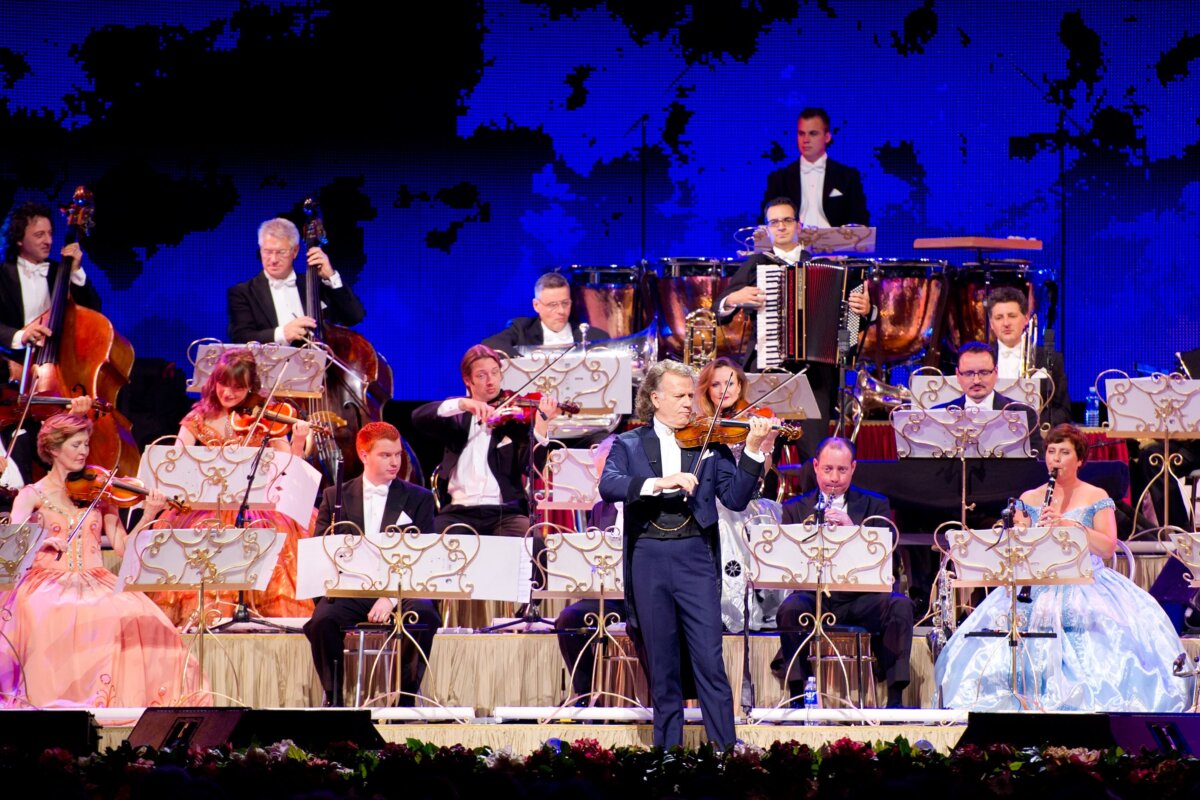
Here is André Rieu and the Johann Strauss Orchestra performing Waltz No. 2. (Listen)
Though the initial melody is in a minor key, it nonetheless projects a feeling of bonhomie and carefree attitude. At 1:26, when the middle section explodes into major-key exuberance, the effect is irresistible. Whatever the composer’s original intentions, and whatever the context of the waltz as a cue in “The First Echelon,” “Waltz No. 2” is now an anthem of easygoing bliss, so much so that the planet’s best-known classical pops ensemble, Andre Rieu’s Johann Strauss Orchestra (heard in the performance cited), has made it a mainstay of its lighthearted repertoire since at least 1994. Rieu, for some reason, prefers to call it “The Second Waltz.”
The vagaries of a given composition’s popularity are nowhere better exemplified than in the case of Waltz No. 2. The piece suddenly exploded into the global Pops repertoire after director Stanley Kubrick included it in his final film, ‘Eyes Wide Shut’ (1999). It then entered the global pop repertoire, where it has remained and flourished ever since.
Kubrick, who used pre-composed music in his films rather than original scores, had previously popularized Strauss’s “Thus Spake Zarathustra” in “2001: A Space Odyssey” and Schubert’s “Piano Trio in E-flat major” in “Barry Lyndon,” did it again with “Waltz No. 2.” It is played during the opening credits and the domestic scene that immediately follows, plus during a collage of domestic scenes later on and during the closing credits.
After all that struggle with Stalin and the Gulag, Shostakovich composed a piece that has come to symbolize the very essence of a joyful normalcy.
What arts and culture topics would you like us to cover? Please email ideas or feedback to features@epochtimes.nyc