



At the age of 37, Gioachino Rossini completed the opera “Guillaume Tell.” The work has now become representative of a unique moment: one of the most astonishing retirements in music history. For although Rossini lived for another 40 years, he would never write another opera.
Life in Paris
The year was 1829, and Rossini was living in Paris. A few years earlier, Rossini had entered into a lucrative arrangement with the Paris Opéra under the patronage of the French monarchy and was enjoying the pleasures of life in the French capital. German composer and conductor Ferdinand Hiller writes in “Briefe an eine Ungenannte” (“Letters to an Unknown Woman”) that, during his time in Paris, Rossini had become “excessively corpulent, the consequence of much macaroni and much sleep, for he had a passionate fondness for his bed.”
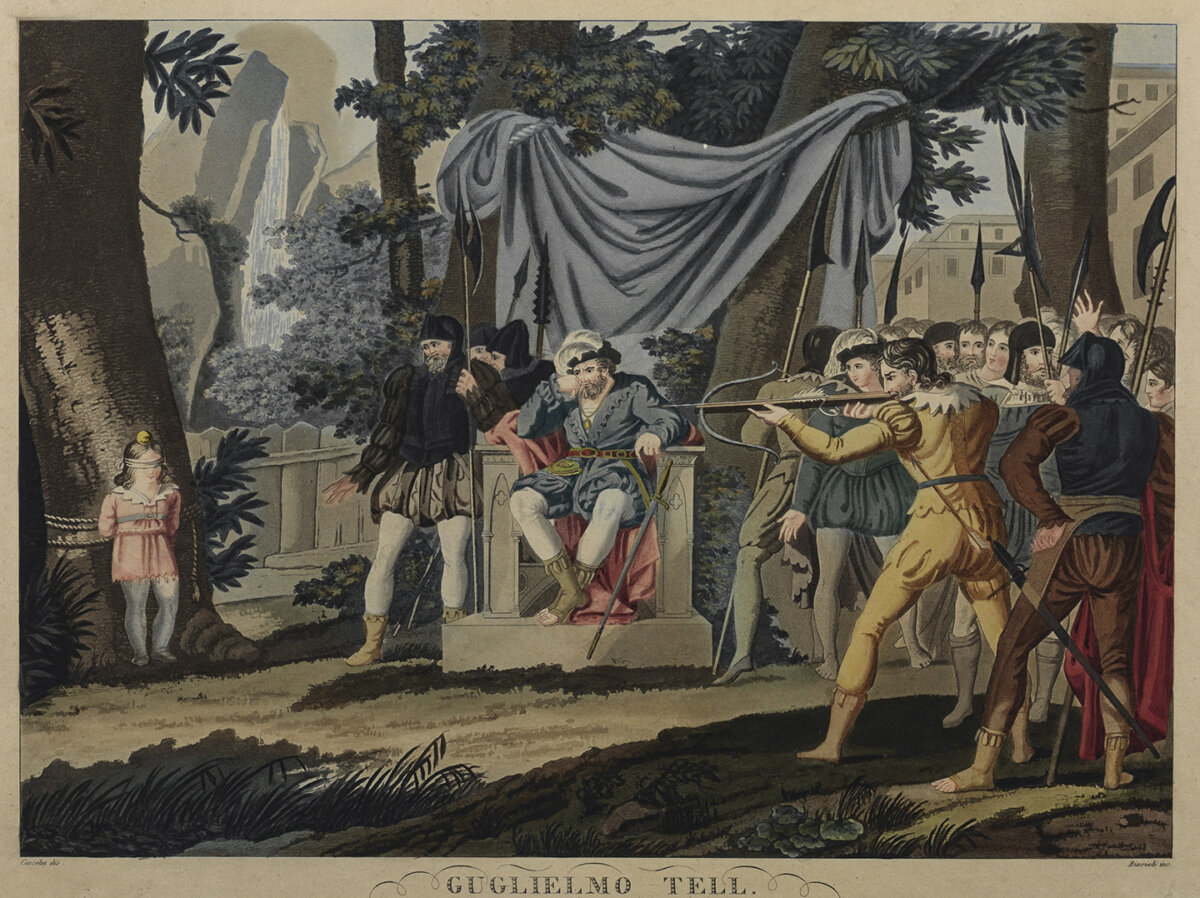
After finishing his comic opera “Le comte Ory” in 1828, Rossini had begun working on a new project. “Guillaume Tell,” or “William Tell,” was to be a French grand opera based on a play by Friedrich Schiller, with the libretto by writers Etienne de Jouy and Hippolyte-Louis-Florent Bis.
The opera follows the legendary Swiss marksman William Tell, a figure said to have led a rebellion to free Switzerland from Austrian oppression in the 14th century. When he and his son, Jemmy, refused to acknowledge the authority of the Austrian Governor Gessler, Tell performs the famous feat of shooting an apple off his son’s head to stave off execution.
Tell eventually defeats the governor, with Switzerland seizing liberty soon afterwards. Rossini, inspired by the pastoral and picturesque setting of the story, wrote an opera which ran almost five hours long in its original form. The composer uses the orchestra in an almost programmatic fashion, evoking everything from storms to the rhythms of rural life.
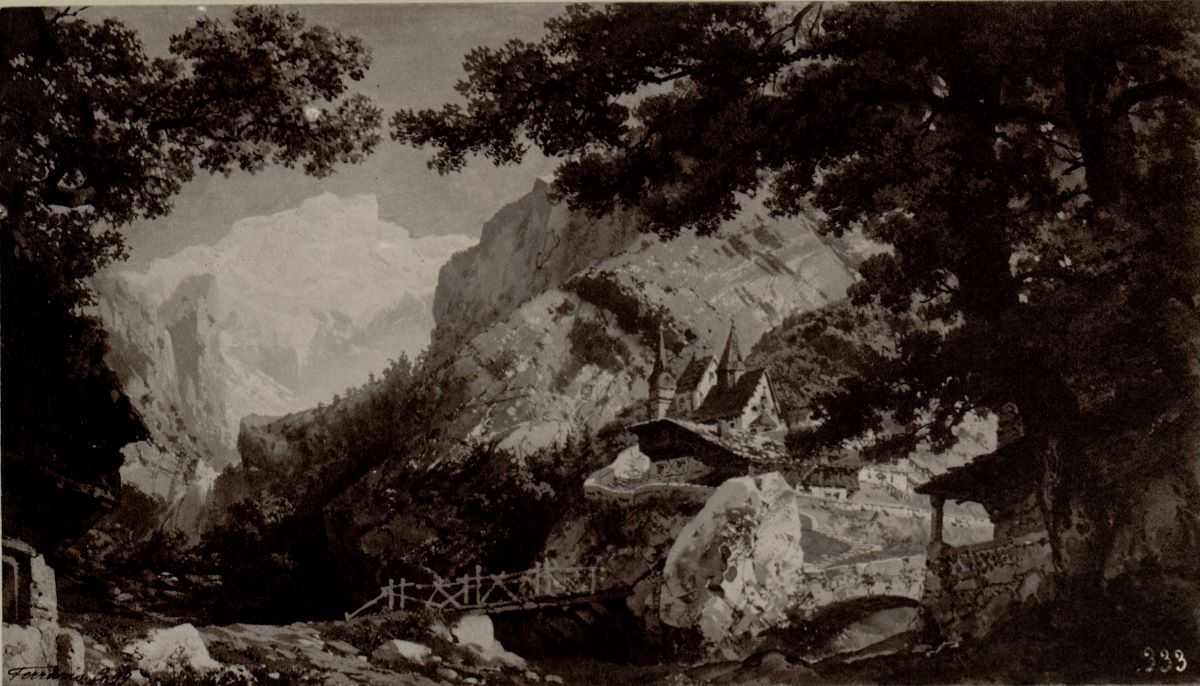
Indeed the colorful orchestration of the opera was evocative; the work, which premiered on Aug. 3, 1829, was a success. Rossini had even managed to secure a lifetime annuity from Charles X a few months prior. For a composer at the height of his fame, all seemed well.
Indeed, no one could have suspected that Rossini would never compose another opera again.
‘The Great Renunciation’
The critic Francis Toye, in a 1934 study of the composer, writes: “Is there any other artist who thus deliberately, in the very prime of life, renounced that form of artistic production which had made him famous throughout the civilised world?”
The “retirement” of Rossini remains one of the most interesting turns in music history. Toye used the term “The Great Renunciation” to describe the phenomenon, adding that it was an event “difficult to parallel in the whole history of art.”
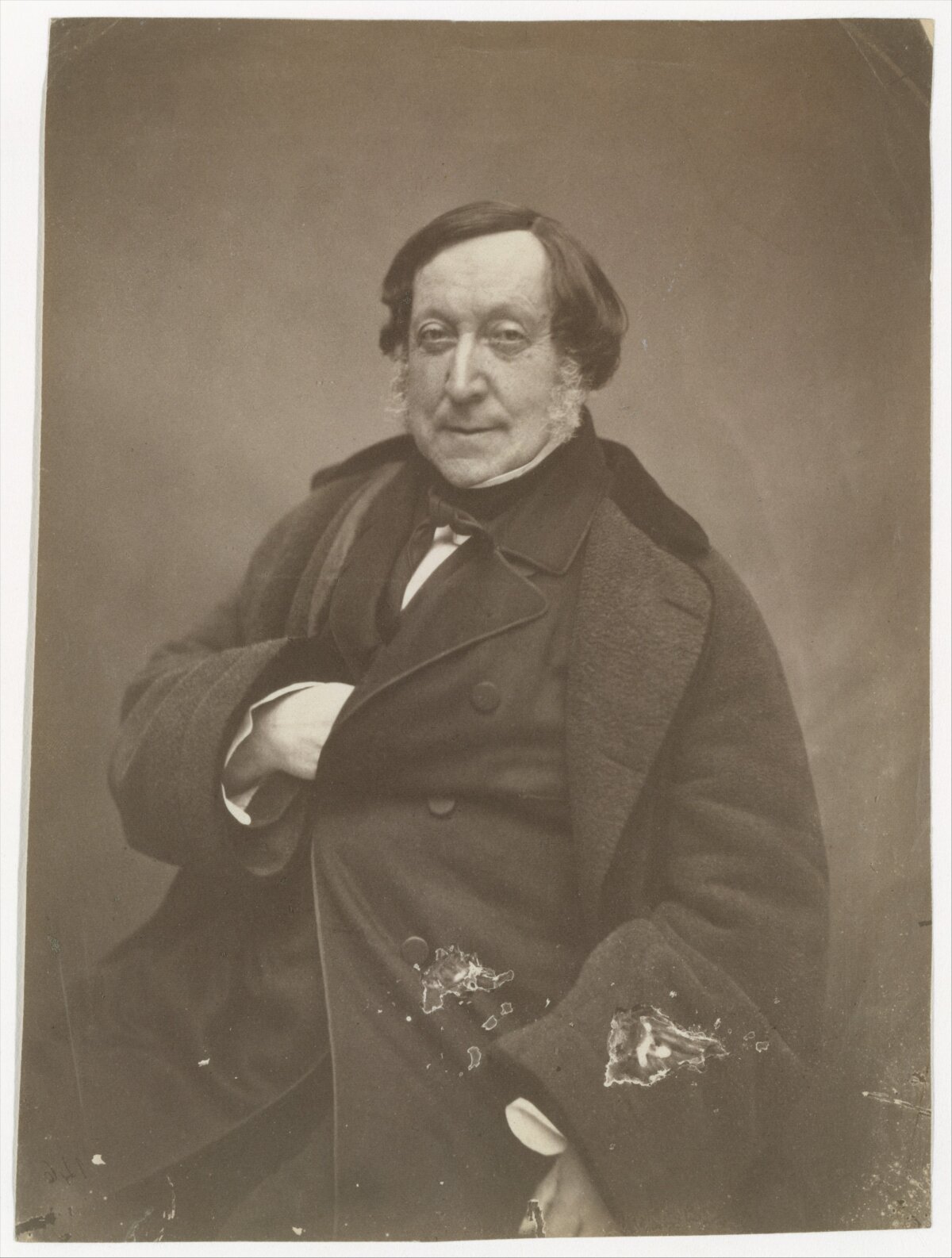
Of course, over the next 40 years of his life, Rossini did occasionally compose some vocal and sacred music. Yet it is undeniable that, at the peak of his popularity and fame, the composer had simply stopped writing the music which had made him a household name.
Historians have offered a wide array of explanations for this extraordinary decision. A romanticized portrayal of events suggests that the composer had simply realized he had fulfilled his musical potential. Rossini could be fairly modest, bordering on self-deprecating, at least in his comparisons to his idol Mozart. Edgar Istel details link in “Rossini: A Study” how the composer thought he “could never hope to equal … the master of ‘The Marriage of Figaro,’ compared with which (so he himself opined) his ‘Barber of Seville’ was a mere farce.”
Did Rossini, upon deciding his “technical faculty was incapable of further development,” reach an insurmountable artistic cliff? Recent scholarship serves a less quixotic interpretation. A year after Rossini signed his contract with Charles X, the monarch was overthrown in the July Revolution of 1830, with Rossini’s financial support cut off. Some biographers have suggested that, already wealthy and no longer bound by his original obligations to the French court, Rossini may simply have decided to call it quits.
Regardless of the reason—whether financial, artistic, or even related to his failing physical health—the decision has mythologized Rossini’s life in a singular way. Through the music he left behind, perhaps listeners can at least fantasize, if not glean, about the possibility that Rossini himself knew he was composing a final testament.
William Tell Overture
Today’s recording is of the “Overture” of Rossini’s opera “William Tell.” The Frankfurt Radio Symphony is led by conductor Christoph Eschenbach. (Listen)
The music opens with the prelude, “Dawn.” A lone cello sings from a resonant low note, prompting a quartet of celli to respond. This is the first part of the overture, brought to life by Rossini’s imaginative orchestration. Through just the celli, basses, and timpani, the composer brings to life a mysterious atmosphere in the key of E major. The timpani foreshadow the next part, the dynamic storm section, with an ominous rumble.
At 2:59, we enter “The Storm.” The shivering tremolo of the violins build tension as the woodwinds dart in and out of the texture. The storm comes in full force at 3:55, as the brass and percussion unleash the music’s most powerful outburst. The storm eventually winds down, with a curious flute peeping out like a bird from cover.
When the English horn enters with a mellow tune at 5:44, we are introduced to the third section, titled “Call to the Cows.” The relaxing melody brings to mind the image of the idyllic Swiss countryside. The English horn and the flute then unite in a wonderful display of counterpoint.
Just as the music winds down, the famous finale of the overture arrives, heralded by the trumpet at 8:25. Titled “March of the Swiss Soldiers,” this “exhilarating galloping” has become one of the most famous passages in classical music. Its famous theme has appeared everywhere from “The Lone Ranger” to Soviet composer Dmitri Shostakovich’s “Symphony No. 15,” becoming the staple of concert halls around the world.
What arts and culture topics would you like us to cover? Please email ideas or feedback to features@epochtimes.nyc.
