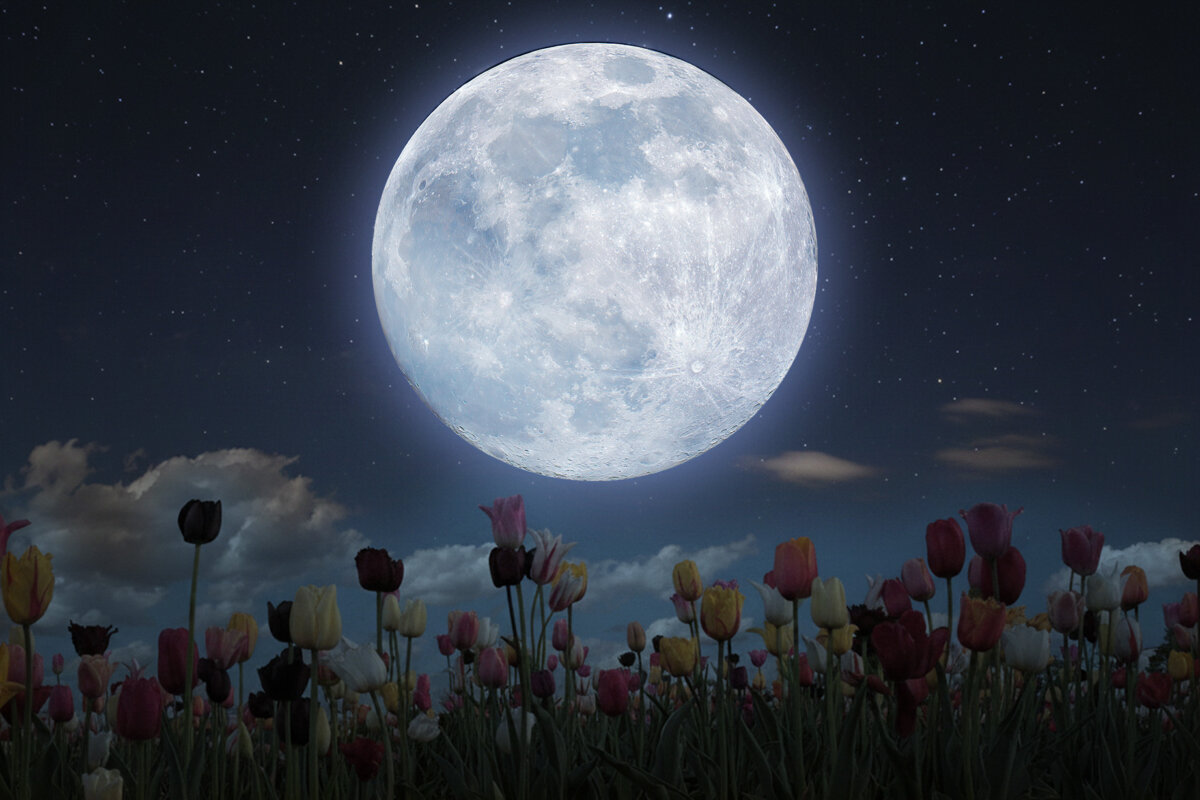
There’s a good chance you won’t notice the bizarre behavior of the full moon next month. Strangely, there will be two full moons squeezing into May, instead of the usual one: the traditional “Flower Moon,” followed by a rare “blue” moon, which will have shrunk to a micro size.
But unless you know what to look for, all the lunar weirdness might escape you.
The first full moon, on May 1, will be the Flower Moon, honoring the blooming blossoms of this springtime month. It reaches peak illumination at 1:23 p.m. Eastern though it will be below the horizon for North American viewers. However, it will still look full on the nights before and after, so you can spot it hanging in constellation Libra the Scales near the bright-red star Antares.
‘Blue’ Moon
The second full moon, on May 31, will be far stranger than the first; the fact that there is a second full moon in the same month can only happen when one occurs right at the start of the month and the other at the end. And that’s called a blue moon, which not every year is fortunate enough to even have. It will reach peak illumination at 4:45 a.m. Eastern time and appear in Scorpius.
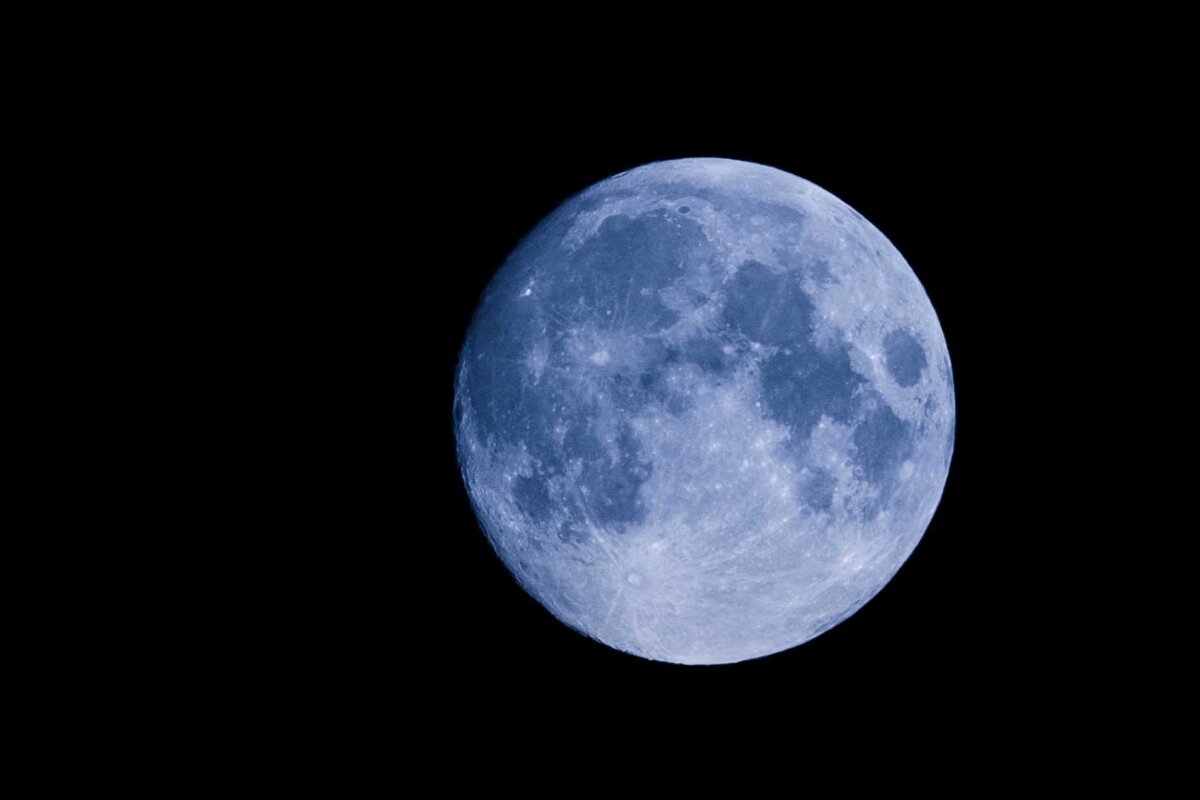
It’s called a blue moon not because it’s blue (which it isn’t), but when it’s the second full moon in a given month. The anomaly of a second moon is where the idiom “once in a blue moon” comes from, the absurdity of which—similar to “when pigs fly”—signifies something very rare or impossible. They’re not astronomically rare, though, occurring once every two and a half to three years.
What’s a Micromoon?
This moon will be made rarer by the fact that it’ll be a micromoon. It will be up to 7 percent smaller and around 15 percent dimmer than normal, because it will actually be farther from the Earth than average. This is because the moon’s orbit isn’t exactly round but is elliptical, so the moon can be either closer or farther away depending where it is along its orbital path.
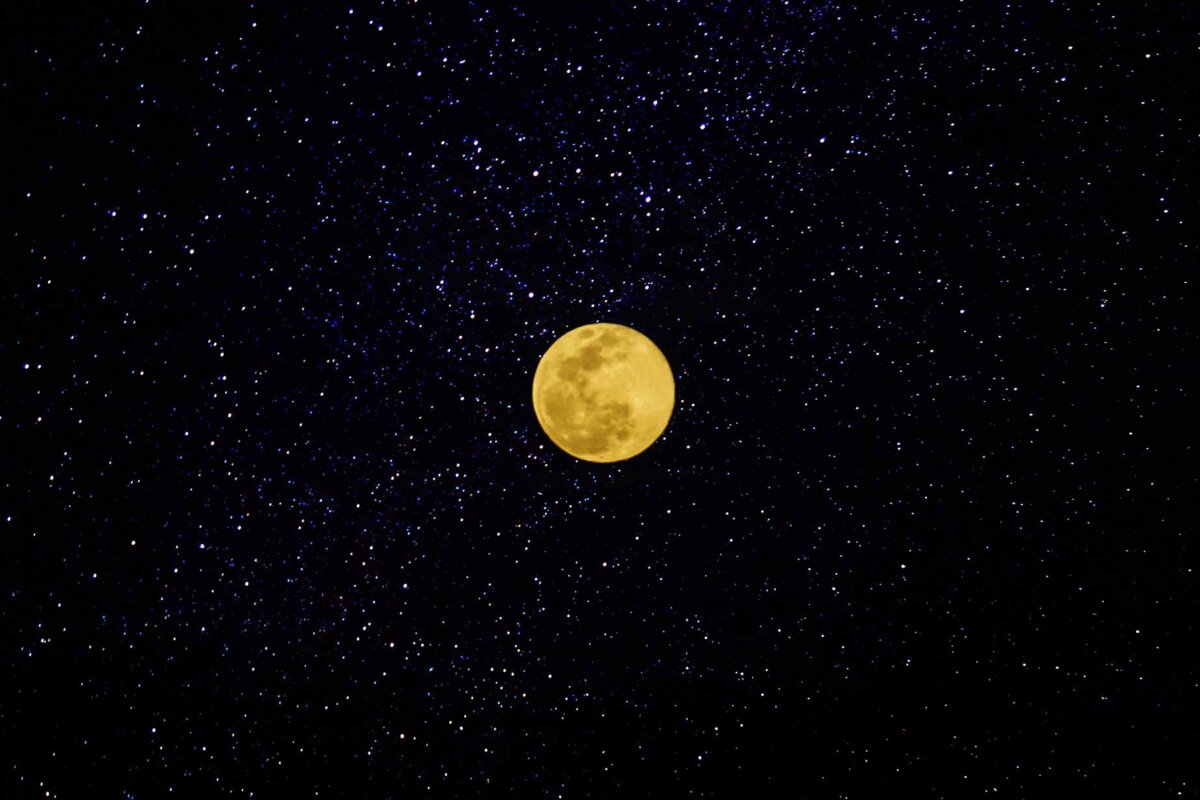
On May 31, the full moon will be very close to its furthest point from Earth, or apogee, which it will reach on June 1. But astronomers say it will be close enough to technically qualify it as a micromoon—the definition is not rigid. Any full moon within the proximity of the apogee is called a micromoon while a full moon close to its nearest point to Earth, or perigee, it’s a supermoon. Neither type is extremely rare, both occurring twice or three times a year.
For people viewing the micromoon, the difference in size probably won’t jump out you, unless if you’re specifically looking for it. It’s not that noticeable to the naked eye, though it will still be fun to check out. A strange second moon doesn’t happen every day.
The Full ‘Flower’ Moon
Lately, you’ve probably noticed the thawing weather after this year’s deeply cold winter. The changing seasons have connections with moons in the lunar calendars of many cultures, dating to Colonial times and Native American tribes. The “Month of Flowers,” or Flower Moon, was noted by the early explorer Jonathan Carver in his 1798 record “Travels Through the Interior Parts of North America, in the Years 1766, 1767, and 1768.” Carver mingled with the Dakota people while exploring the Great Lakes and regions around upper Mississippi and gathered volumes of Native cultural insights, such as the moon names they used.
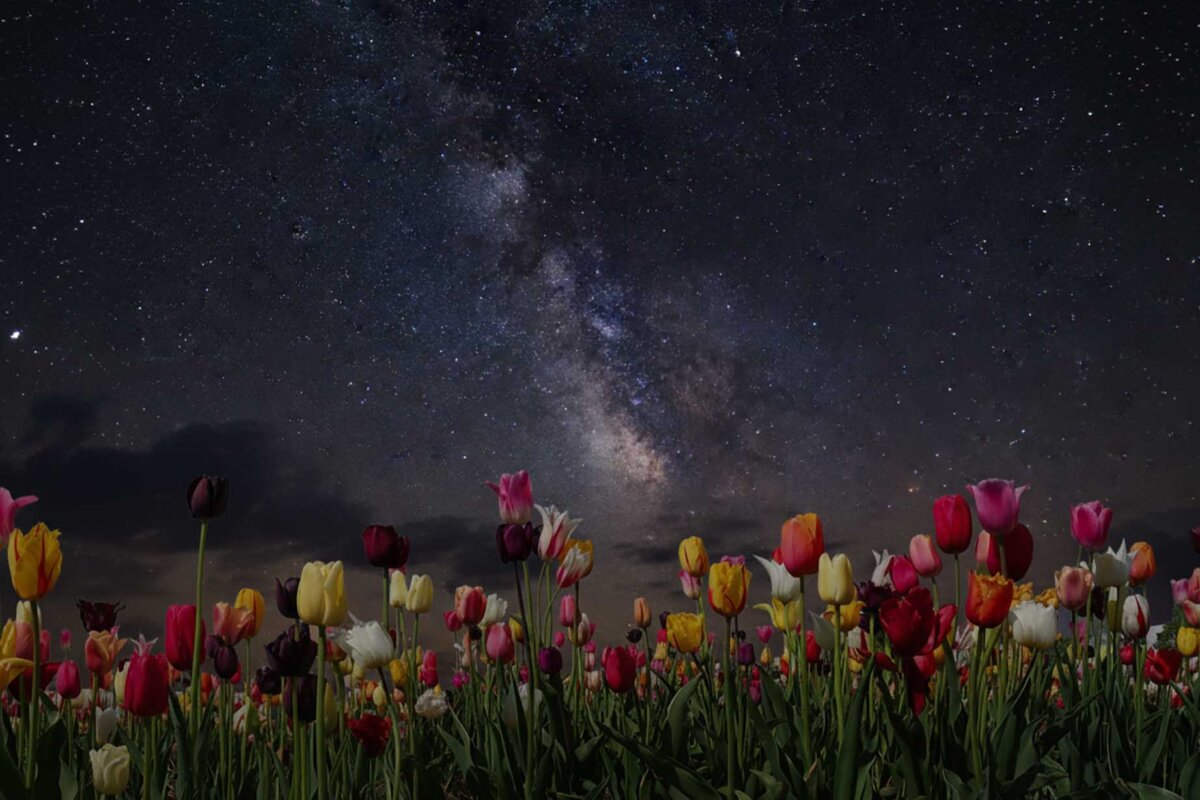
And with countless other tribes once populating the continent, it’s not all that surprising to imagine innumerable other names for May’s full moon. Europeans, Asians, and other cultures around the world surely would have names for it in their calendars, too.
Certainly, the Apache tribes would have looked outside at the thawing landscape and seen exactly what we see each spring, thus they named the May moon “The Season When the Leaves Are Green.” The Choctaw called it the “Mulberry Moon” after the fruit trees that fed them and supplied wood for making hunting bows. Europeans called it the “Milk Moon” and “Hare Moon.”
Signs of spring are flourishing again, though we see them every year; a blue moon, however, is not something that’ll always appear.