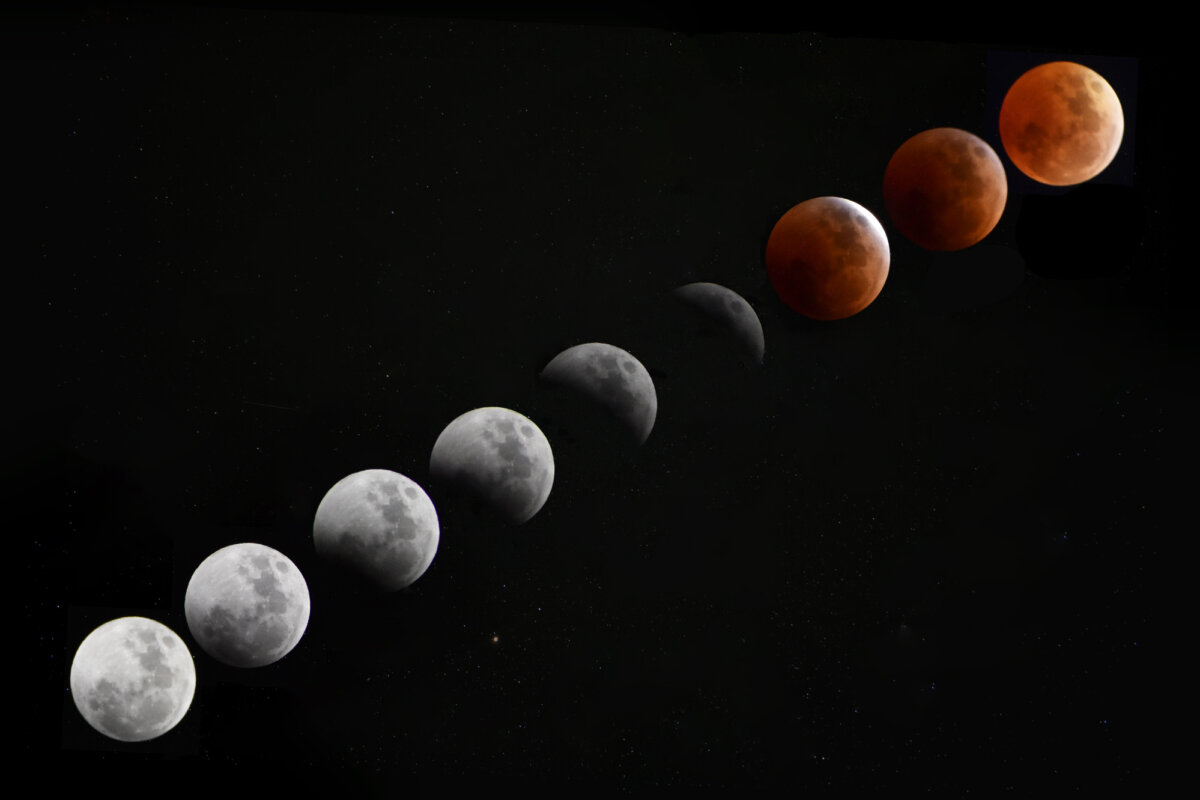
If things go the way astronomers say they will, an estimated 5.8 billion people will be able to witness the moon go dark on the night in between Sept. 7–8, then glow an uncanny rusty-red hue.
As the world enters eclipse season this month, a full 76 percent of the population across five continents may observe a total lunar eclipse. However, the September event will absolutely favor the eastern hemisphere while bypassing the Americas entirely. Parts of Europe and Africa, Asia, Oceania, and Antarctica, as well as the East Atlantic and West Pacific, may view at least some, if not all, of this eclipse.
On Sept. 7, at exactly 2:11 p.m. Eastern Time, the moon will reach maximum totality. The axis of the moon’s shadow will nearly align with the center of the Earth. That will happen during daylight hours in the Americas where the moon will be below the horizon. The time will be 9:11 p.m. in Moscow and 3:11 a.m. in Tokyo, where viewing the eclipse will be easy.
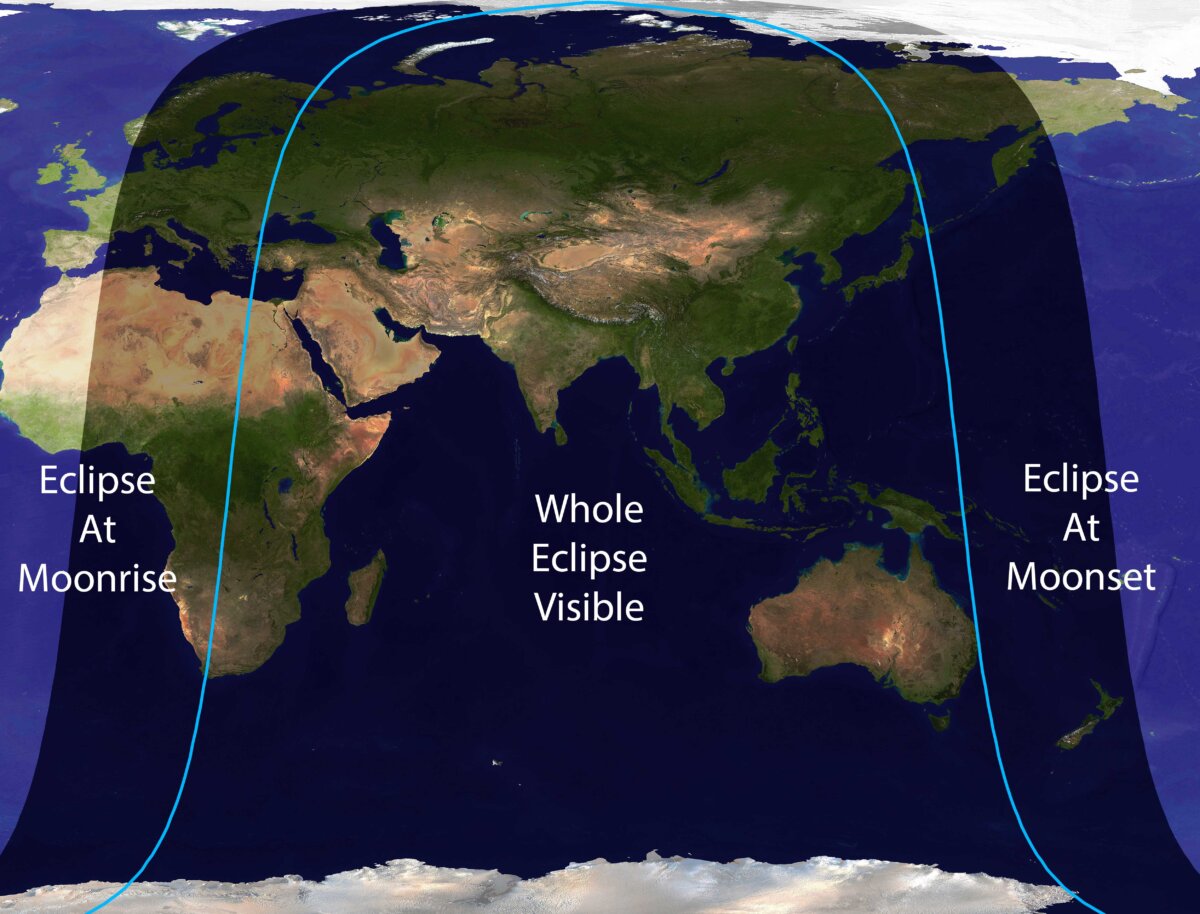
Unlike solar eclipses, lunar eclipses happen all at once and are seen wherever the moon is visible, as opposed to total solar eclipses, which travel across the globe and appear along a very narrow strip where the moon’s shadow falls.
The timeline for the total lunar eclipse on Sept. 7–8 will go something like this:
- 11:28 a.m. EST: Penumbra eclipse begins
- 12:26 p.m. EST: Partial eclipse begins
- 1:30 p.m. EST: Totality begins
- 2:11 p.m. EST: Maximum eclipse
- 2:53 p.m. EST: Totality ends
- 3:56 p.m. EST: Partial eclipse ends
- 4:55 p.m. EST: Penumbral eclipse ends
The duration of totality will be about 83 minutes.
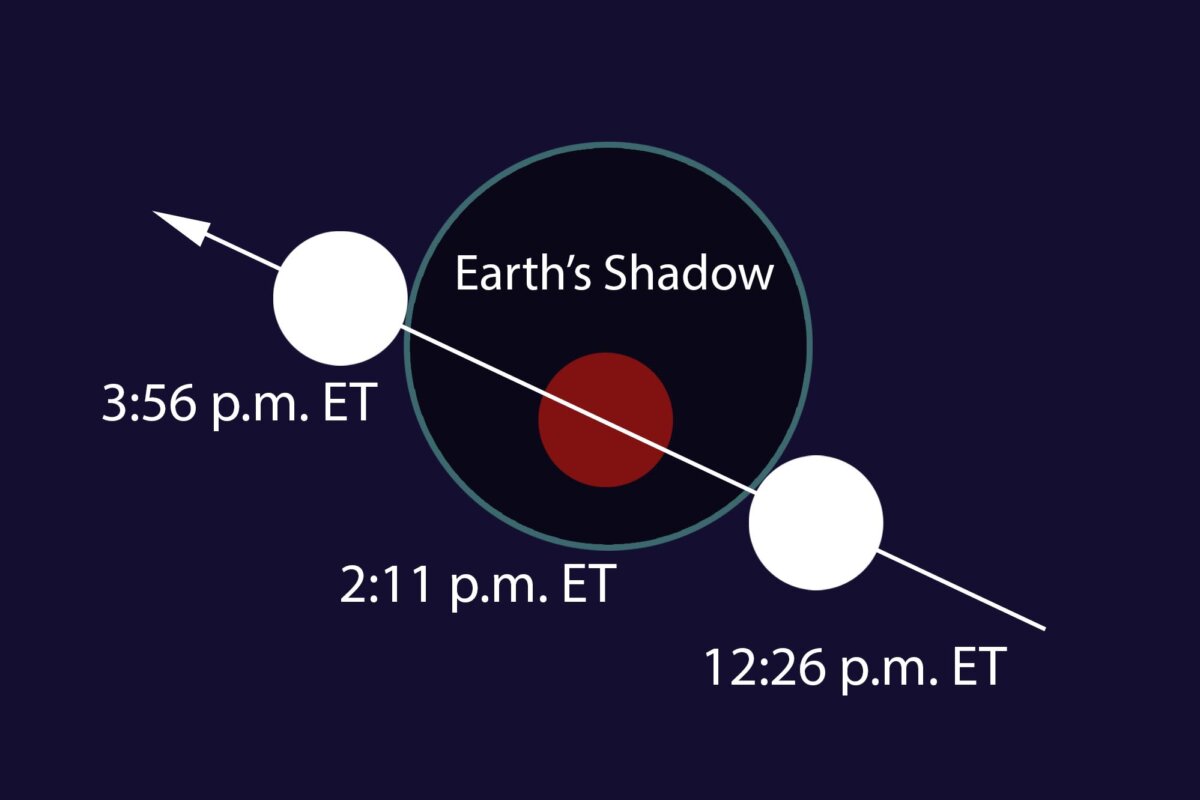
How a lunar eclipse works is the sun casts Earth’s shadow upon the surface of the full moon at night, darkening it, whereas in solar eclipses the moon blocks out the sun, and the moon’s shadow is cast upon the Earth. In both cases, however, the sun, Earth, and moon must line up perfectly straight (or nearly so), though in lunar eclipses Earth is in the middle instead of the moon, and the moon is always full.
There are also differences between total lunar eclipses and partial or penumbral lunar eclipses. In a total lunar eclipse, the moon is fully enveloped in shade. It will enter the darkest part of Earth’s shadow, a conical region called the umbra, inside which absolutely no sunlight is visible. This will dim the moon dramatically and cause it to glow reddish once fully enshrouded.
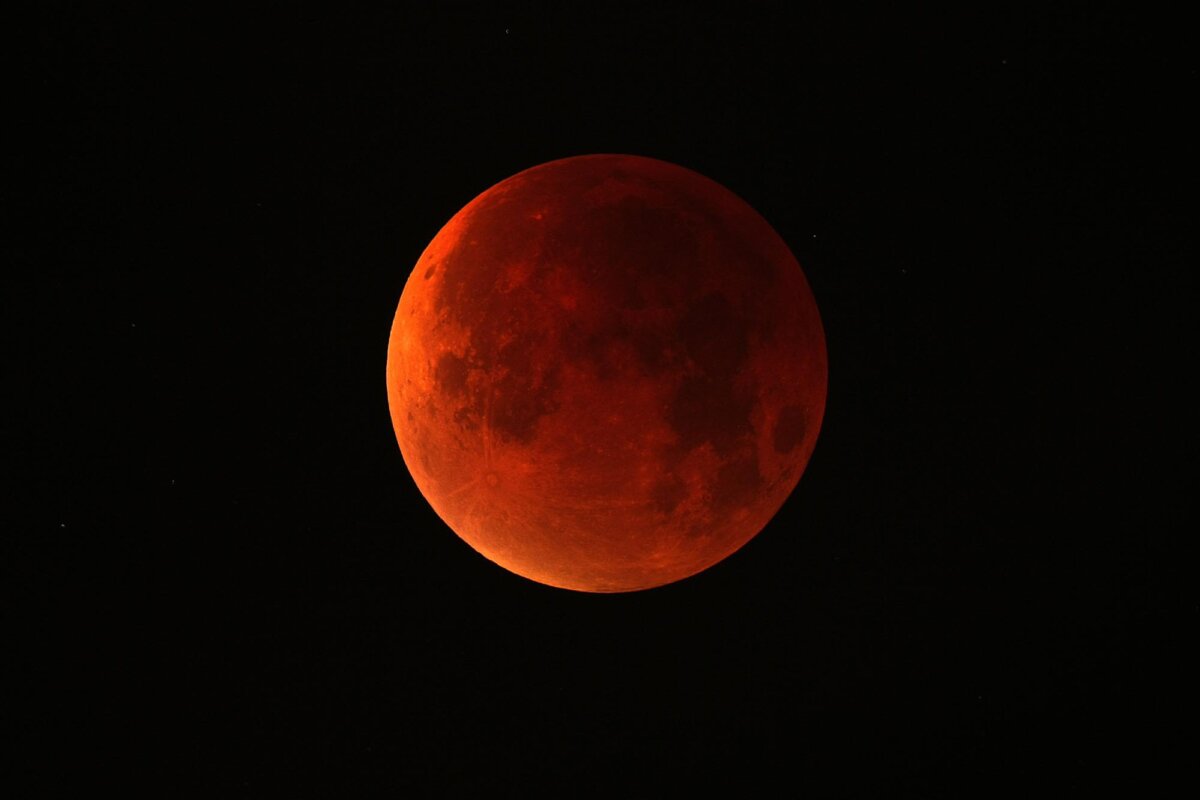
Moons displaying this eerie red glow are called blood moons. They’re caused by Rayleigh scattering, where sunlight filters through Earth’s atmosphere, causing shorter, blue wavelengths to scatter while longer, red wavelengths pass freely, bathing the moon in crimson. It’s as if all the sunsets and sunrises on Earth shone on the moon all at once, but this only occurs at the moment of totality in total lunar eclipses. Many may witness a blood moon on Sept. 7–8.
The other types of lunar eclipses are way less dramatic. In a partial lunar eclipse, only part of the moon dips into the umbra, darkening one lunar limb. It might look like a shadowy bite mark taken out of a big cookie.
Penumbral lunar eclipses are even fainter. The moon won’t touch the umbra at all but only a portion of Earth’s shadow, called the penumbra, wherein the planet partially blocks the sun at all times but some sunlight is always visible. The naked eye can’t easily detect penumbral eclipses; a casual observer would probably miss it.
The millions gazing up at the moon on Sept. 7–8 will not need eye protection at all. Unlike solar eclipses, lunar eclipses are perfectly safe for viewing. You may use binoculars or a telescope to enhance viewing, though all you really need is your naked eye. You’ll find the eclipse in the constellation Aquarius. Many photographers will want to capture iconic landmarks as a foreground for the blood moon.
Though most of the Eastern Hemisphere will be privy to the entire event, areas on the outskirts will not. The UK, Spain, and West African countries will miss out entirely, while parts of France and Siberia will see only part of the eclipse at moonrise and moonset, respectively.
Whenever eclipse season rolls around, it’s inevitable that we’ll get at least two and possibly three eclipses. Because the Earth, moon, and sun are aligned, it’s guaranteed they’ll cross paths at least a couple times before falling out of sync.
On Sept. 21, a partial solar eclipse is in store but will only be seen by a very few, namely those in New Zealand, regions of the South Pacific, and Antarctica.
Americans will have to wait until March 2–3 to view the next lunar eclipse. It will be another total lunar eclipse and will appear over much of most of North and Central America, Asia, Antarctica, Oceania, Russia, and Alaska.