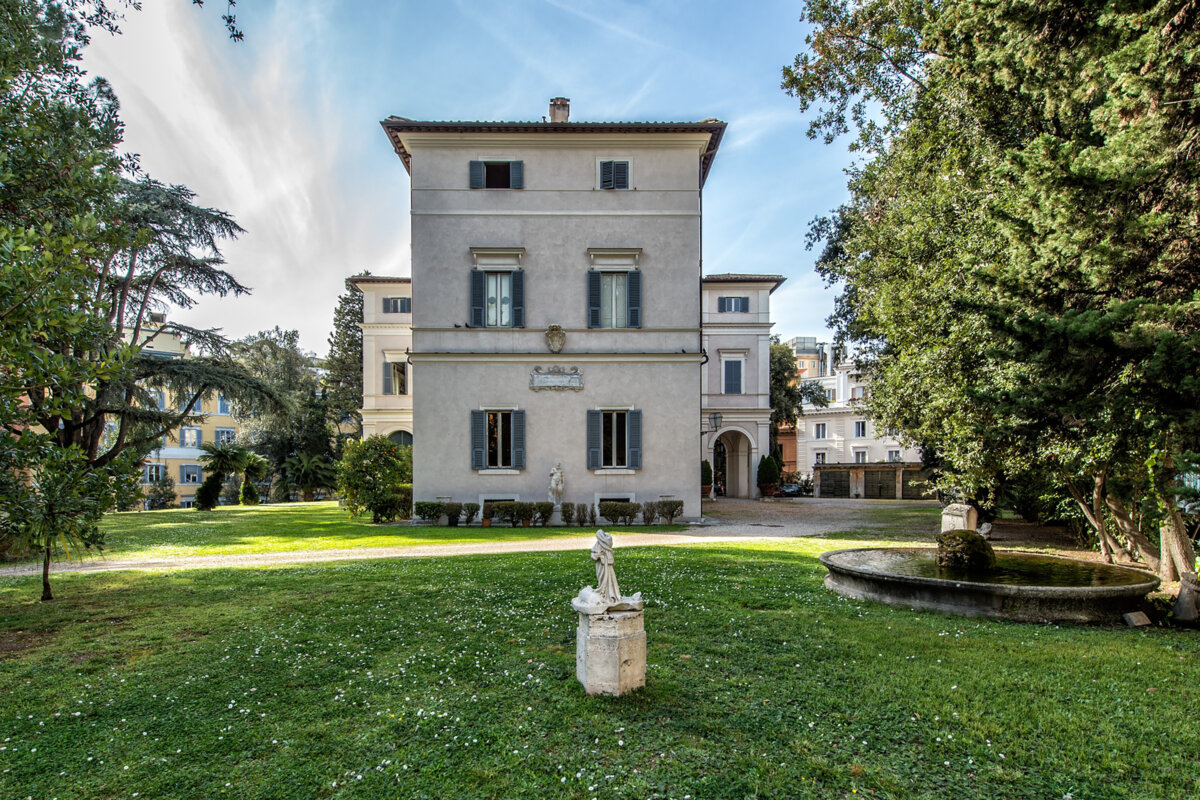
The straight-forward, stucco exterior of Casino di Villa Boncompagni Ludovis, also known as Villa Aurora, belies the exceptional art on display within. A terracotta-tiled hip roof, green-painted window shutters, and simple crosshead moldings over first and second-floor windows are the only embellishments conveyed in this view of the palace. (Courtesy of HSH Princess Rita Boncompagni Ludovisi)
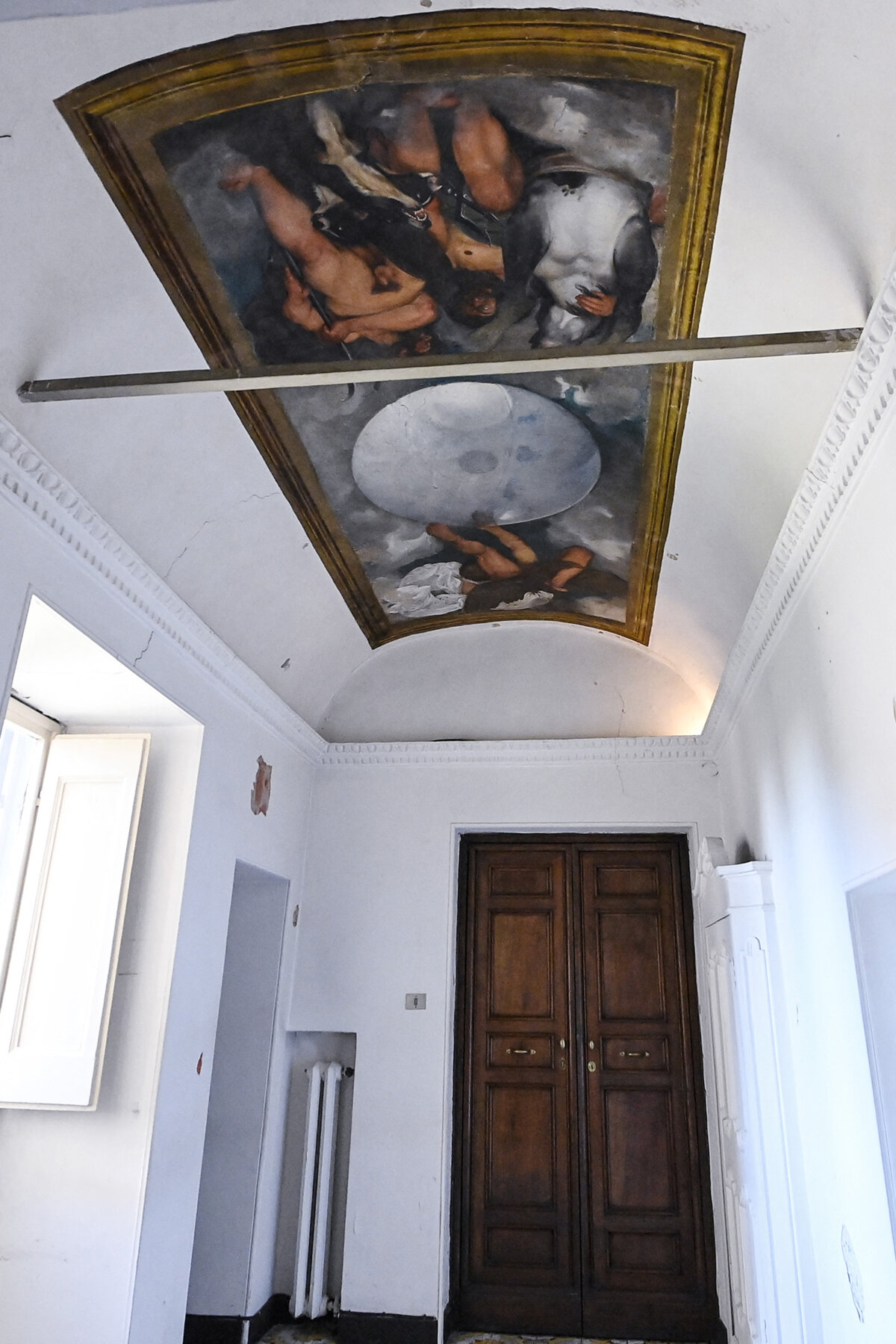
Although its official name is Casino di Villa Boncompagni Ludovis, Villa Aurora gained its more commonly used title due to its main reception hall, frescoed with murals featuring the Roman mythological goddess Aurora. The mansion, built in the 16th century on the highest point in Rome, in fact exhibits several murals on its ceilings and walls by notable Italian painters such as Guercino, Pomarancio, and Caravaggio. By the latter artist is a world-recognized work titled “Jupiter, Neptune, and Pluto,” completed in the late 1500s, that is the only ceiling mural he ever painted.
While the official definition of the word “villa” is a country estate, Villa Aurora, at more than 30,000 square feet and featuring lavish rooms and valued artwork, is often considered palace-like.
The reason Villa Aurora is dubbed the world’s priciest property is that the private estate had a $580 million price tag when it went on the market a few years ago. Architecturally Renaissance-style, with a plethora of Renaissance-era paintings, the mansion is surrounded by manicured gardens containing several statues, including one by Michelangelo: Pan, the god of fertility.
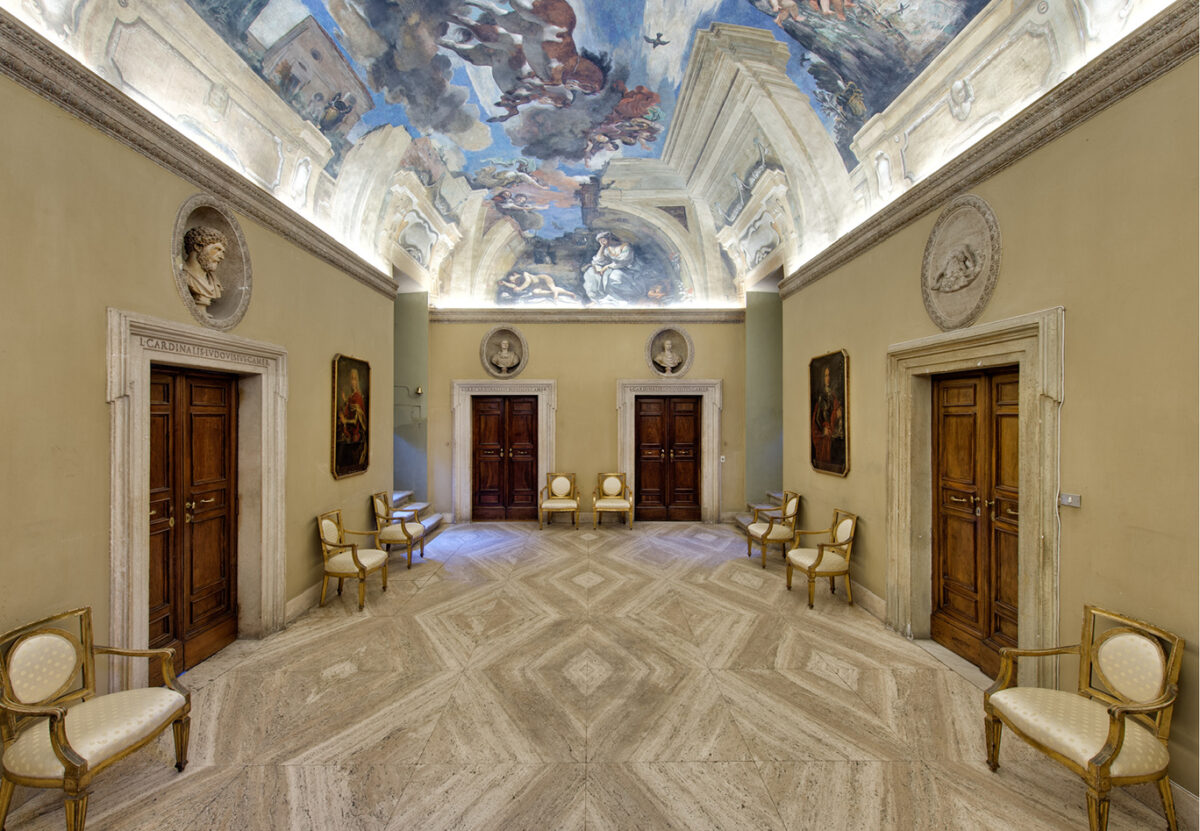
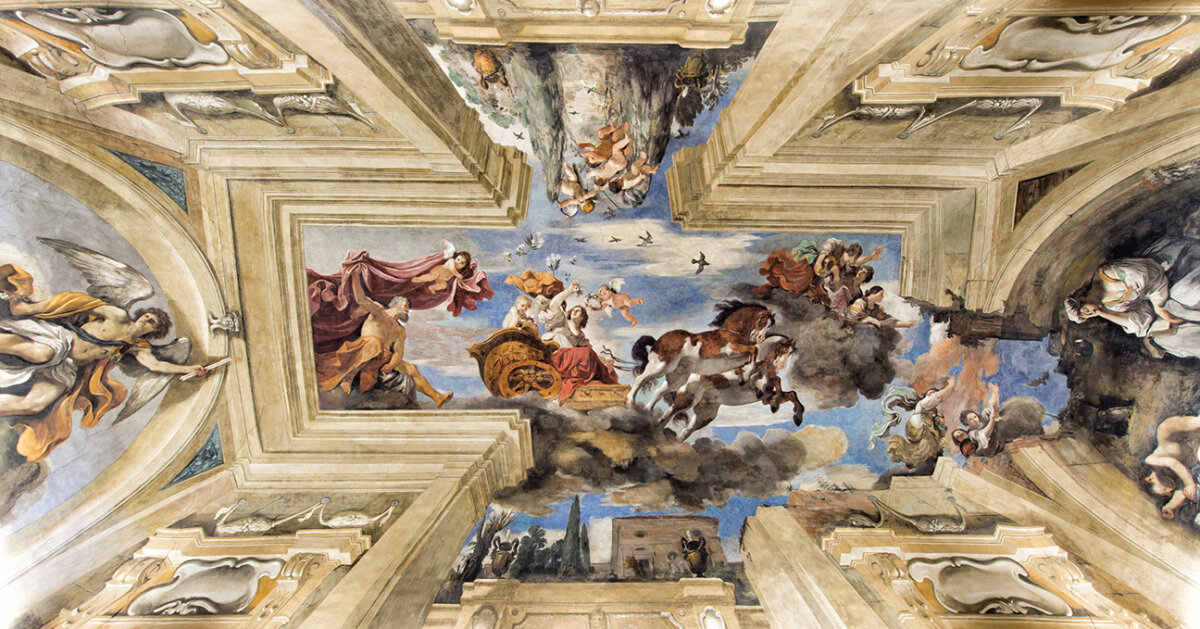
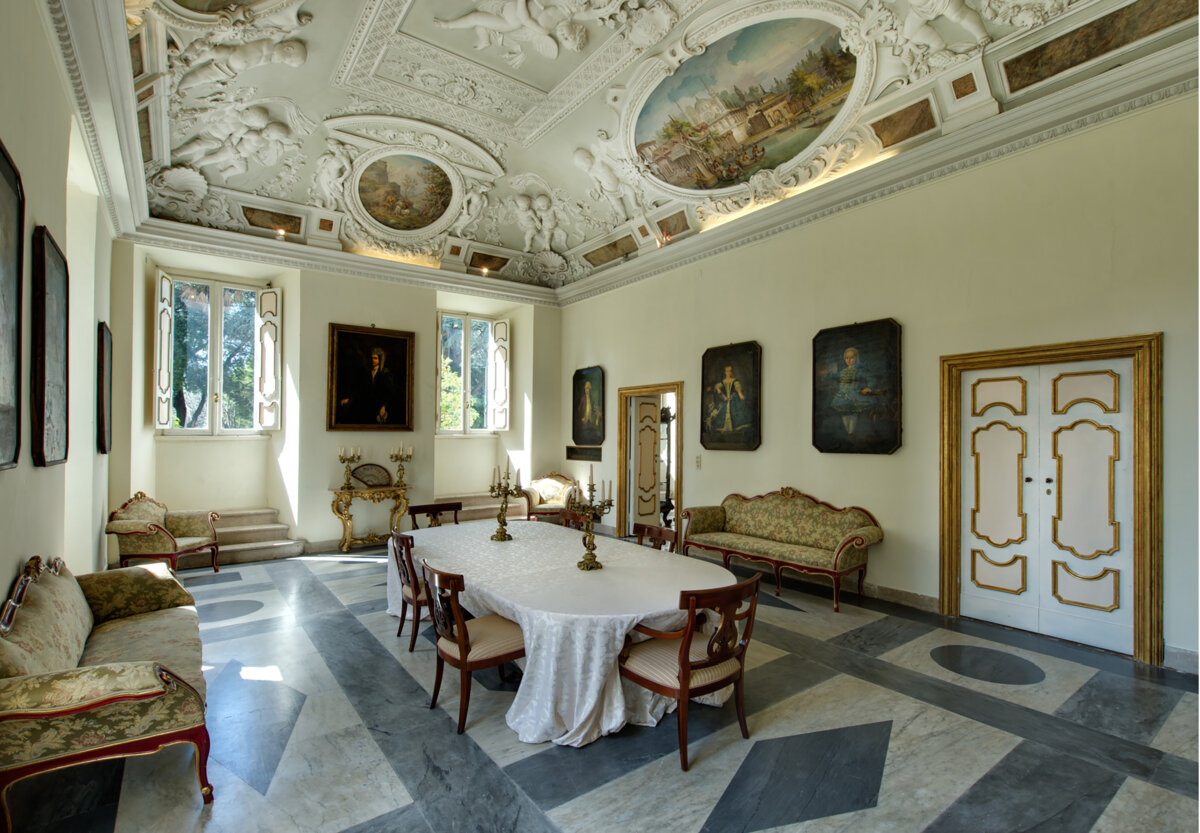
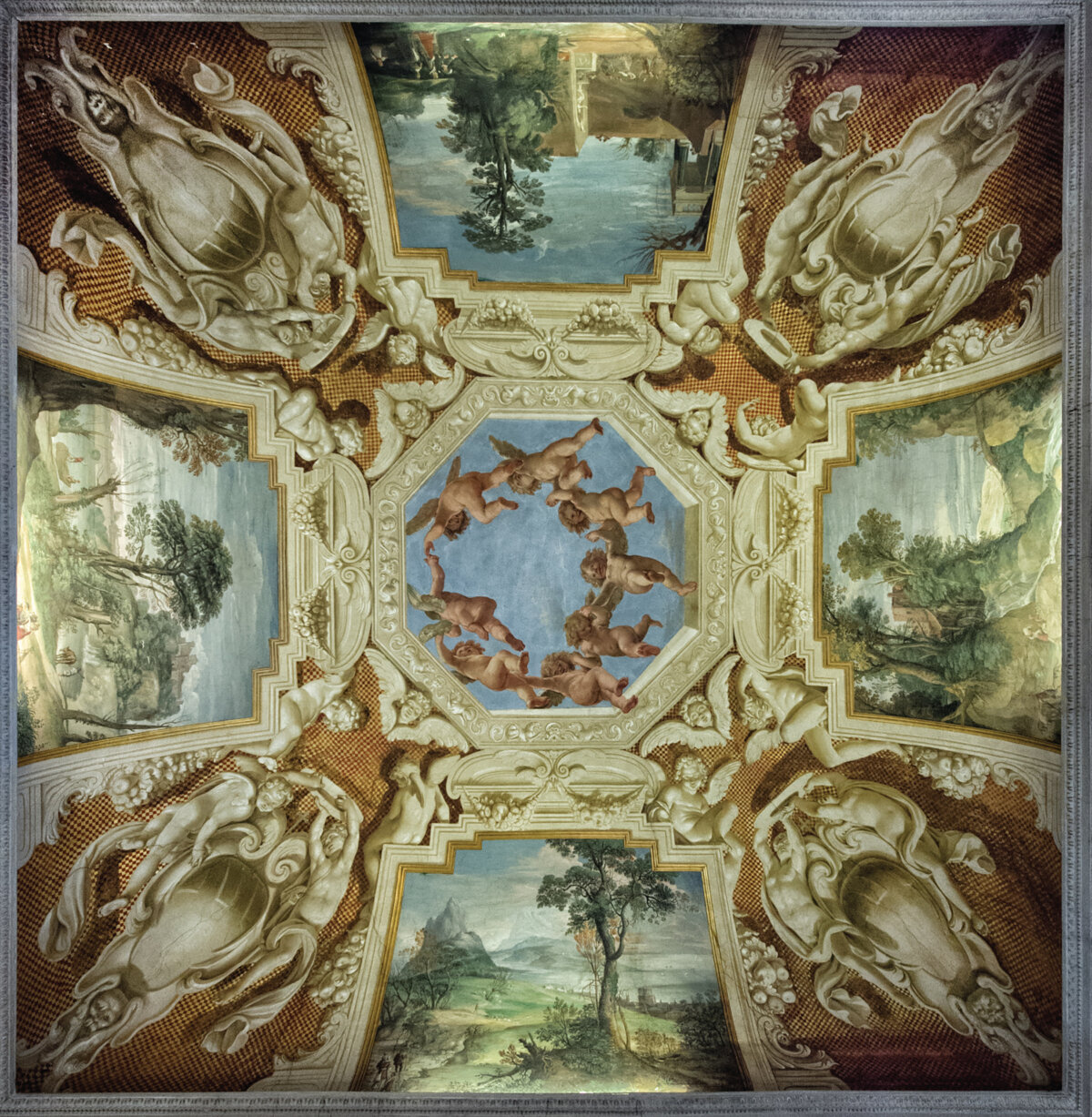
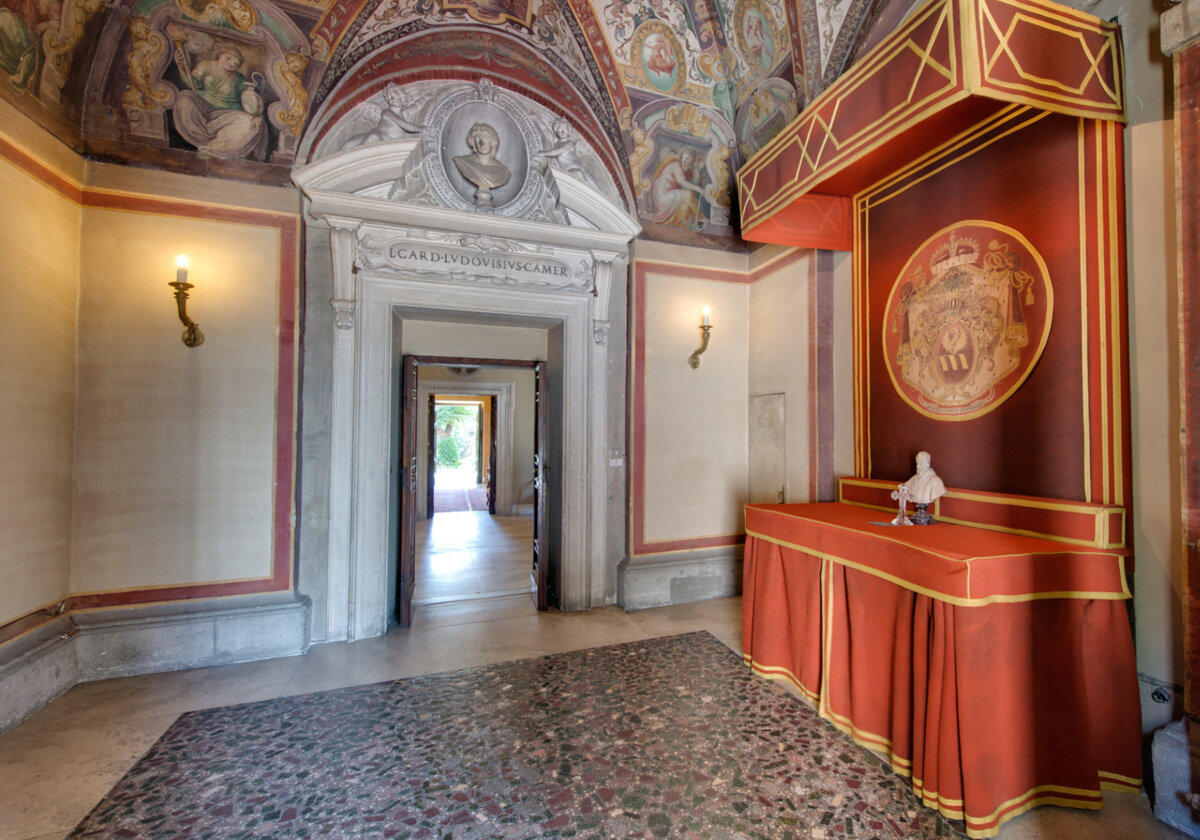
The main floor’s central hall is called the Aurora Room. Wide, hand-carved double doors framed by decorative carved stone casings are complemented by ornate crown molding. Above each set of doors is a niche displaying a bust of a historic figure or a bas-relief. The crowning achievement in this room is the fresco adorning the expansive ceiling. (Courtesy of HSH Princess Rita Boncompagni Ludovisi) Guercino’s ceiling fresco in the Aurora Room depicts Aurora arriving early in the morning in a chariot. Guercino incorporates trompe l’oeil—an optical illusion technique using painted columns and arches to create architectural depth. (Courtesy of HSH Princess Rita Boncompagni Ludovisi) As is the case in several rooms in the palace, the dining room’s ambiance is dominated by the ceiling ornamentation of high reliefs and framed oval and round fresco scenes; these are by master artist Gagliardi. The flooring is a pattern of variegated marble inset with geometric shapes. The doors and window shutters are embellished with gilded moldings. (Courtesy of HSH Princess Rita Boncompagni Ludovisi) Rivaling the Aurora Room’s ceiling is the presentation in what is called the Landscapes Room. Various master painters contributed to the scenes of dancing cherubs within a trompe l’oeil octagonal center-point frame, framed nature landscapes, and trompe l’oeil high-relief moldings. Some of the artists whose works are featured in this room are Guercino, Bril, Viola, and Zampieri. (Courtesy of HSH Princess Rita Boncompagni Ludovisi) Guests to Villa Aurora step onto a pebble mosaic floor surrounded by terrazzo, a precast, stone-like material made from small chips of materials such as marble, granite, and even glass. The stone entryway features a broken pediment and corbels as well as a bas-relief sculpture of the bust of an unidentified man. The frame around the bust is supported by cherub bas-relief sculptures. Frescoes adorn the ceiling. The red-and-gold fabric baldachin, or canopied altar, is decorated with a heraldic symbol. (Courtesy of HSH Princess Rita Boncompagni Ludovisi) Measuring about 10 feet by 6 feet, the Villa Aurora’s masterpiece is located in one of the corridors. The mural is the only known ceiling painting by the Italian master Caravaggio. He painted the ancient Roman gods Jupiter, Neptune, and Pluto with oil paint on dry plaster—a technique distinct from the traditional fresco method (water-based pigments on wet plaster). Interestingly, the faces are supposedly all self-portraits of the artist, while Pluto’s three-headed dog, Cerberus, reportedly is modeled on Caravaggio’s own pet. The one-of-a-kind painting is inset into a barrel-vaulted ceiling. (Riccardo Antimiani/Getty Images)
What arts and culture topics would you like us to cover? Please email ideas or feedback to features@epochtimes.nyc.
A 30-plus-year writer-journalist, Deena C. Bouknight works from her Western North Carolina mountain cottage and has contributed articles on food culture, travel, people, and more to local, regional, national, and international publications. She has written three novels, including the only historical fiction about the East Coast’s worst earthquake. Her website is DeenaBouknightWriting.com