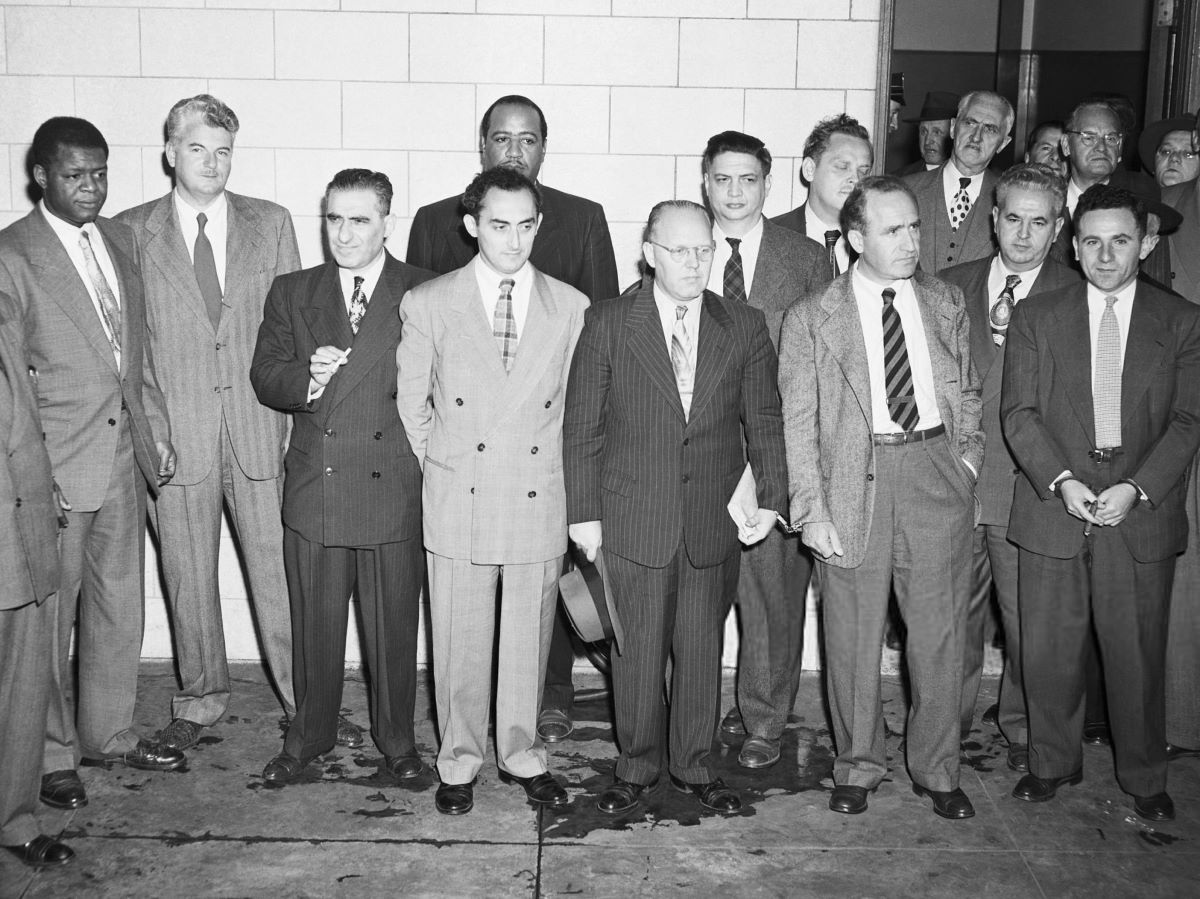
On April 2, 1917, President Woodrow Wilson stood before a joint session of Congress requesting a declaration of war against Imperial Germany. Citing Germany returning to unrestricted submarine warfare and its attempt to ally Mexico against America, the president, who had recently won his second term on the campaign slogan “He Kept Us Out of War,” now found himself asking America to enter it.
“It is a fearful thing to lead this great peaceful people into war, into the most terrible and disastrous of all wars, civilization itself seeming to be in the balance,” Wilson stated to Congress.
“But the right is more precious than peace, and we shall fight for the things which we have always carried nearest our hearts—for democracy, for the right of those who submit to authority to have a voice in their own Governments, for the rights and liberties of small nations, for a universal dominion of right by such a concert of free peoples as shall bring peace and safety to all nations and make the world itself at last free.”
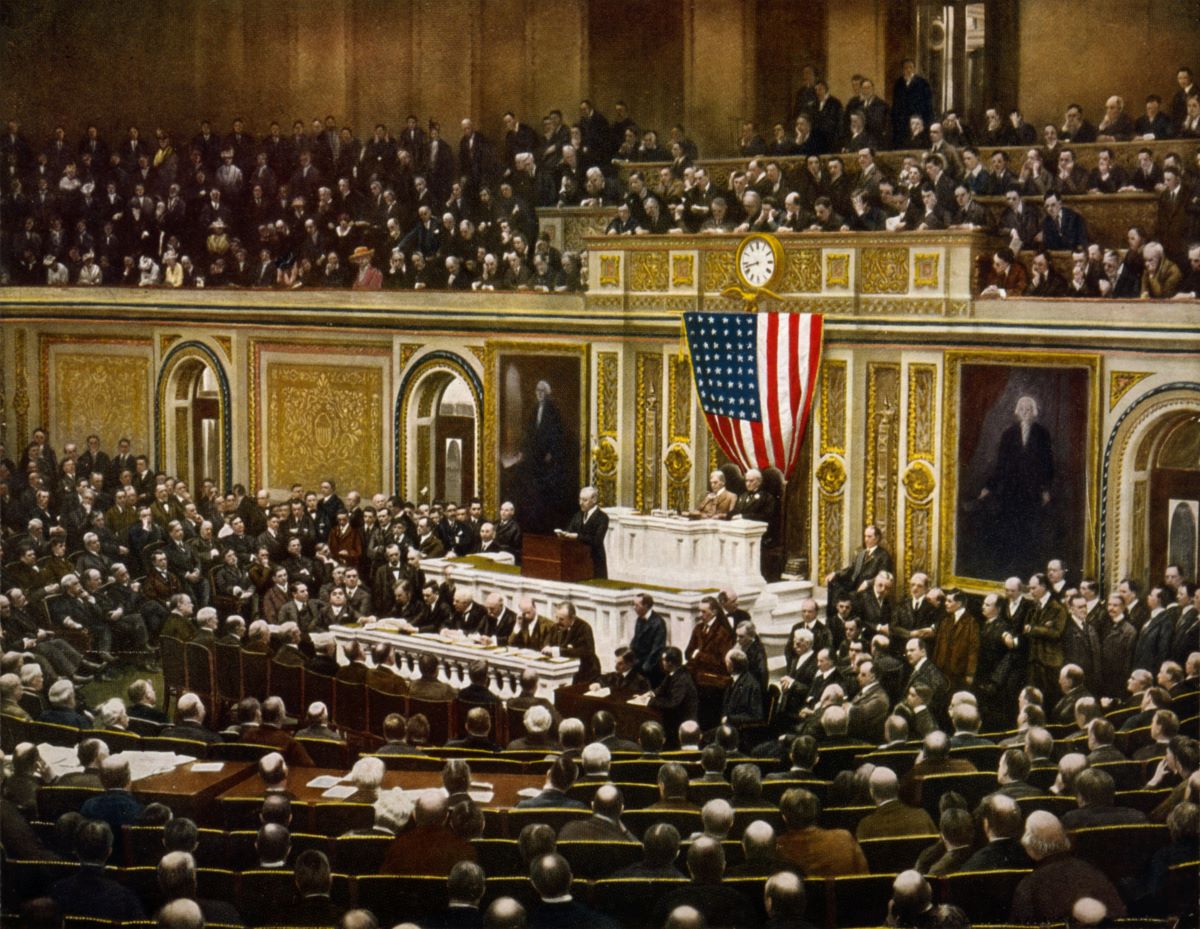
Two days later on April 4, the Senate passed its resolution to enter World War I by a vote of 82 to 6. In the early morning hours of April 6, the House of Representatives voted in favor of the resolution 373 to 50. War with Germany had begun.
Recruiting Soldiers
At the moment of declaration, the United States had a standing army just north of 125,000. The numbers paled in comparison to the major European powers involved in the war. The United States needed more soldiers.
On May 18, Congress passed the Selective Service Act, requiring men between the ages of 21 and 30 (later extended to 45 and 18) to register for the draft. By war’s end, more than 24 million men registered. When Gen. John Pershing, commander of the American Expeditionary Force (AEF), arrived in Paris in June 1917 with a small provisional division, he messaged the U.S. War Department, informing them he hoped to send “over at least one million men by next May.”
A month after passing the Selective Service Act, Congress hoped to forestall any attempts to hinder the war effort by passing the Espionage Act. Part of the Act prohibited anyone who “shall wilfully cause or attempt to cause insubordination, disloyalty, mutiny, refusal of duty, in the military or naval forces … or shall wilfully obstruct the recruiting or enlistment service of the United States.”
Violators faced a fine of “not more than $10,000 or imprisonment for not more than twenty years, or both.”
‘A Clear and Present Danger’
Two months later, on Aug. 13, the Executive Committee of the Socialist Party in Philadelphia authorized the printing of 15,000 leaflets arguing that the Selective Service Act was an infringement on the 13th Amendment, which prohibited involuntary servitude. The leaflets were received and delivered a week later to men who had recently been drafted.
Charles Schenck, the general secretary of the Socialist Party, and Elizabeth Baer, who had taken the minutes for the party’s Aug. 13 leaflet resolution, were arrested. The two claimed their First Amendment rights had been breached, but the courts found them guilty of conspiracy to violate the Espionage Act, conspiracy to commit an offence against the United States, and unlawful use of the mail system.
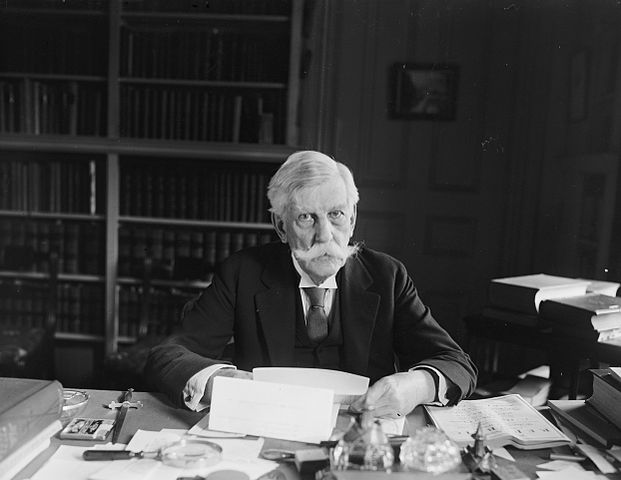
The case, known as Schenck v. United States, was argued before the Supreme Court on Jan. 9 and 10, 1919, with all nine judges ruling unanimously against Schenck and Baer. Justice Oliver Wendell Holmes Jr. wrote the opinion of the court. Holmes wrote:
“We admit that in many places and in ordinary times the defendants in saying all that was said in the circular would have been within their constitutional rights. But the character of every act depends upon the circumstances in which it is done. The most stringent protection of free speech would not protect a man in falsely shouting fire in a theatre and causing a panic.”
Holmes continued:
“The question in every case is whether the words used are used in such circumstances and are of such a nature as to create a clear and present danger that they will bring about the substantive evils that Congress has a right to prevent. It is a question of proximity and degree. When a nation is at war many things that might be said in time of peace are such a hindrance to its effort that their utterance will not be endured so long as men fight and that no Court could regard them as protected by any constitutional right.”
The opinion established a new test for courts to gauge whether freedom of speech was being impinged. The “clear and present danger” test would remain in effect for several decades.
The Smith Act
Two decades later, the world was at war again. Although, in 1940, America had not entered the war, it didn’t stop people immigrating from their war-torn countries. Just as Congress took the legislative step to curb sedition during WWI, it took another step, this time directed toward immigrants.
The Alien Registration Act of 1940 was enacted “to prohibit certain subversive activities; to amend certain provisions of law with respect to the admission and deportation of aliens; to require the fingerprinting and registration of aliens; and for other purposes.”
The Act also became known as the Smith Act due to Rep. Howard Smith of Virginia writing a section that focused on subversive activities (that is, advocating for the overthrow of a state government or the federal government).
By the summer of 1941, the Smith Act was put to the test when FBI agents raided the Minneapolis and St. Paul offices of the Trotskyist Socialist Workers Party. Using the confiscated communist literature as evidence for advocating the overthrow of the U.S. government, the Justice Department indicted 29 individuals, and, by use of the “clear and present danger” test, 18 were convicted and sentenced between 12 and 16 months in prison.
The Communist Party USA (founded the same year as the Schenck trial) actually supported the convictions of the socialists specifically because the Nazis had invaded the Soviet Union that summer. The Smith Act was used against subversives of both fascist and communist stripe, and most notably against Nazi sympathizers during the Great Sedition Trial of 1944. When World War II ended and, therefore, Germany’s Nazi Party, the focus of the Smith Act turned directly to the communists.
The Gravity of Evil
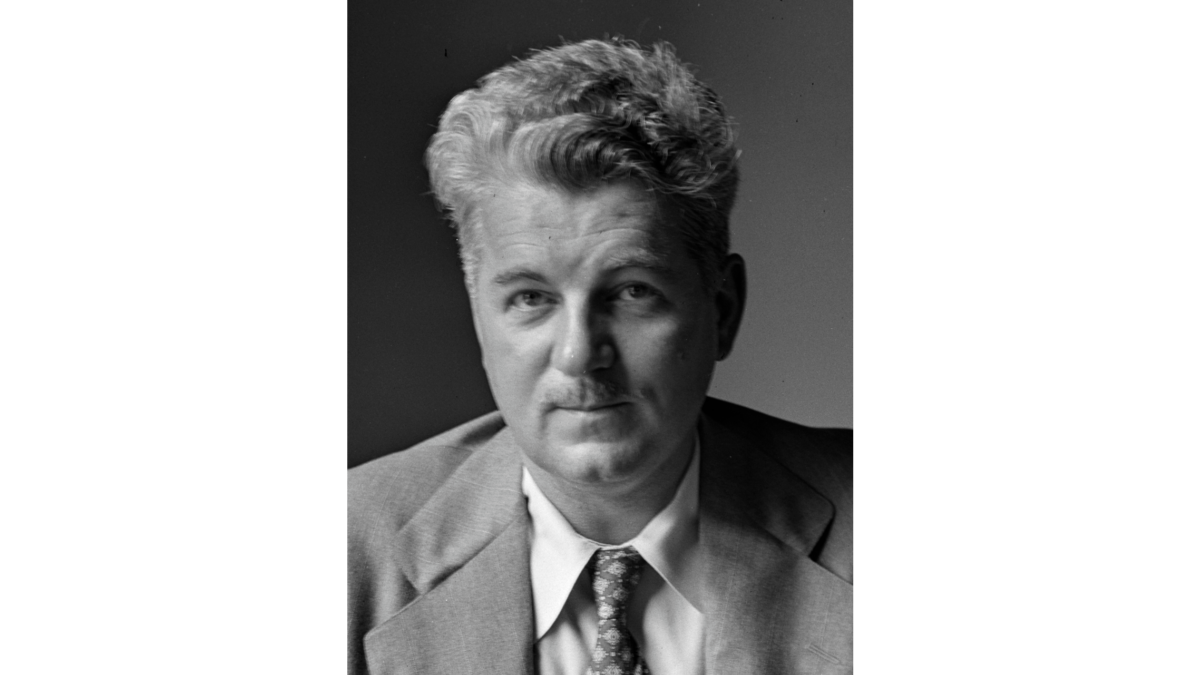
Arguably the most famous of what became known as the Smith Act Trials took place when the general secretary of the Communist Party USA, Eugene Dennis, and 11 other party members, were arrested and charged with advocating the overthrow of the U.S. government in 1948. The unruly trial, which lasted 10 months in a Manhattan courtroom, was often characterized as a circus. Again, the communist literature proved a battering ram for the prosecution, as it claimed the Marxist-Leninist doctrine advocated the violent overthrow of the government.
It was during this week in history, on Oct. 14, 1949, that the 11 members of the Communist Party USA were convicted in the trial known as Dennis v. United States, each fined $10,000 and sentenced to five years in prison. Holding to the claim that their First Amendment rights had been infringed, the defendants appealed.
The case came before the Second Circuit Court of Appeals. Again, the “clear and present danger” test was applied, but this time it was refined by Judge Learned Hand. Hand believed that Communism did pose “a danger of the utmost gravity and of enough probability to justify its suppression.”
The judge utilized the elements of gravity, probability, and suppression to formulate a method to better gauge a “clear and present danger.” His method, by concluding “whether the gravity of the ‘evil,’ discounted by its improbability, justifies such invasion of free speech as is necessary to avoid the danger,” became known as the “gravity of the evil” test.
An Evolving View
Ultimately, the court of appeals upheld the lower court’s decision. Dennis appealed to the highest court in the land, and unlike the 1941 Trotskyist case, the Supreme Court decided to review it. The court utilized both Holmes’s and Hand’s tests. The case was argued before the court on Dec. 4, 1950, but the Supreme Court would not issue its decision until June 4, 1951.
In a 6 to 2 decision, the lower courts’ decisions were upheld. Chief Justice Frederick Vinson considered the Smith Act applicable “where there is a ‘clear and present danger’ of the substantive evil which the legislature had the right to prevent.” Justice Hugo Black dissented, writing in the minority, “No matter how it is worded, this is a virulent form of prior censorship of speech and press, which I believe the First Amendment forbids.”
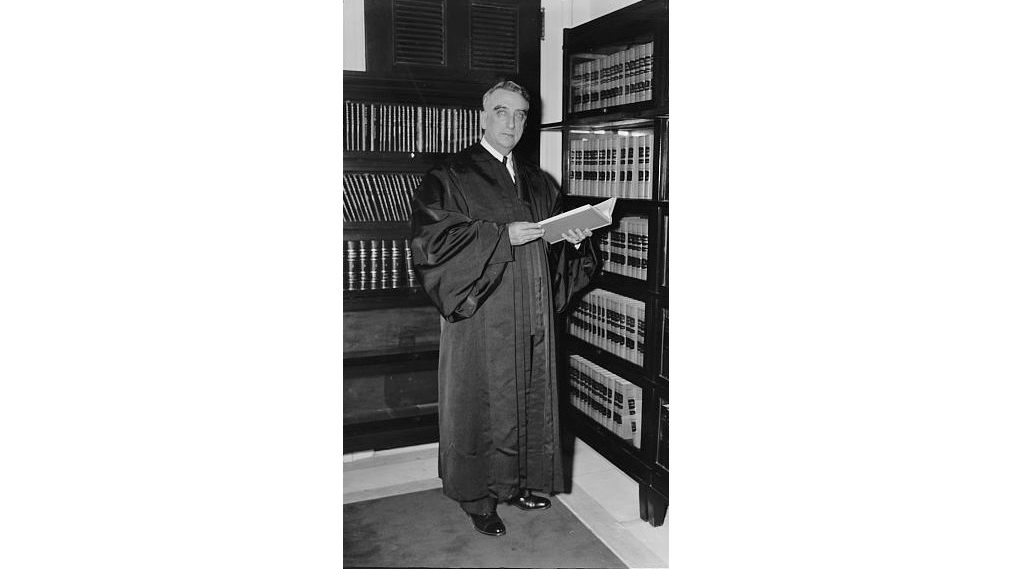
By 1957, the Supreme Court had concluded in a different, but similar case, that teaching anti-American ideas was not the same as actively planning the overthrow of the government. It was ultimately concluded that membership in the Communist Party, or membership within any ideologically driven group no matter how anti-American, did not meet the threshold of a “clear and present danger” and was therefore not enough to restrict one’s freedom of speech.
Never miss a This Week in History story! Sign up for the American History newsletter here.
What arts and culture topics would you like us to cover? Please email ideas or feedback to features@epochtimes.nyc