



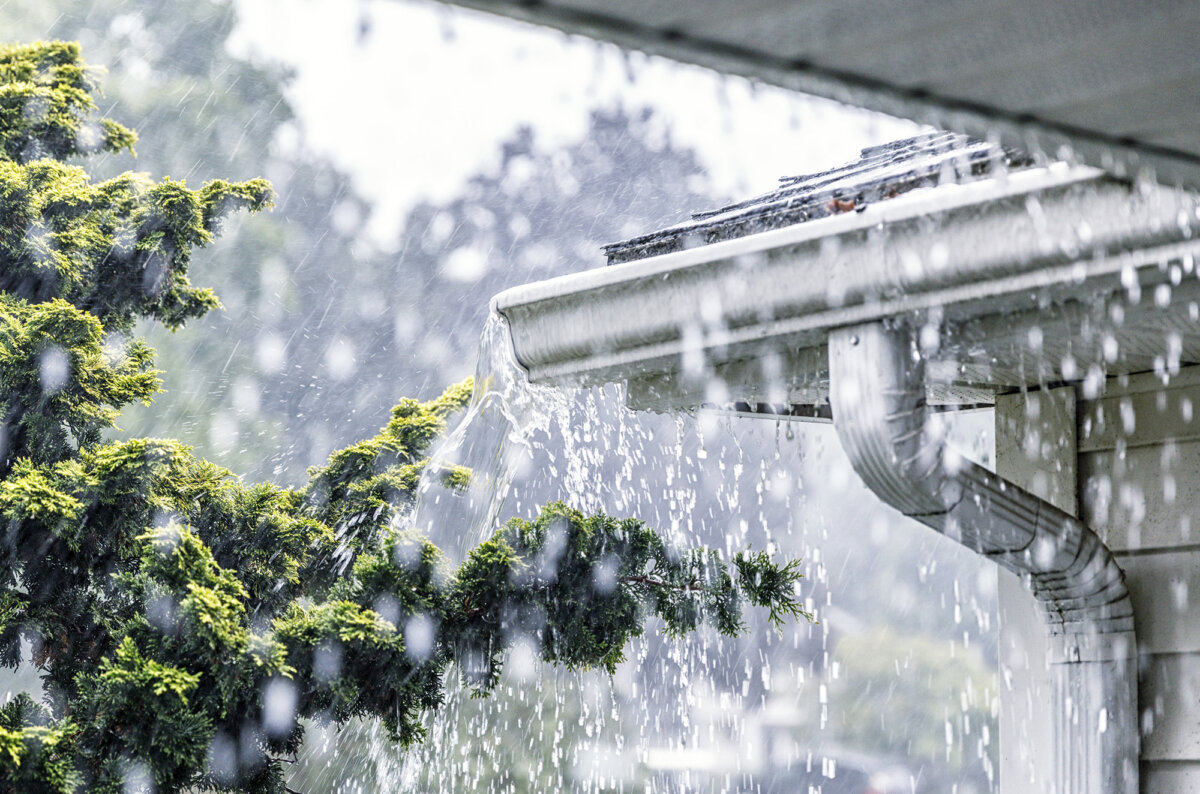
Dramatic floods may make the news, but water can enter the home through ice dams on the roof, driving winter rains, and sewer backups. Rather than paying the insurance deductible for repairs, let’s use that money for proactive measures.
Start by heading off any storm-caused leaks by sealing gaps, cracks, holes, and crevices with high-quality caulk or a foam sealant appropriate for your home’s exterior, whether that’s wood, vinyl, cement board, or stucco. Those in temperate locations can buff up this protection even more by painting the house with a flexible, waterproof elastomeric coating. Northerners may need to wait until next spring to paint, but there are other preemptive measures that can be taken now.
Rising Water
Not all floods happen in flood zones. Flooding can occur whenever rainwater runs toward the house without being diverted into drainage.
First, look at the gutters. Gutters with downspouts too close to the house can cause flooding and may be fixed with inexpensive downspout extensions. If that doesn’t resolve the problem, look at the lay of the land.
The ultimate fix is to regrade the yard so the water flows away from the home, but this isn’t possible for all homes—particularly if one is on a slope. Another way to improve drainage is to remove some impervious surfaces (concrete and asphalt) and replace them with permeable green space, such as a rock garden, to increase water absorption. Another DIY solution is to install a French drain or other underground drainage system that routes accumulated water away.

Sandbag Savvy
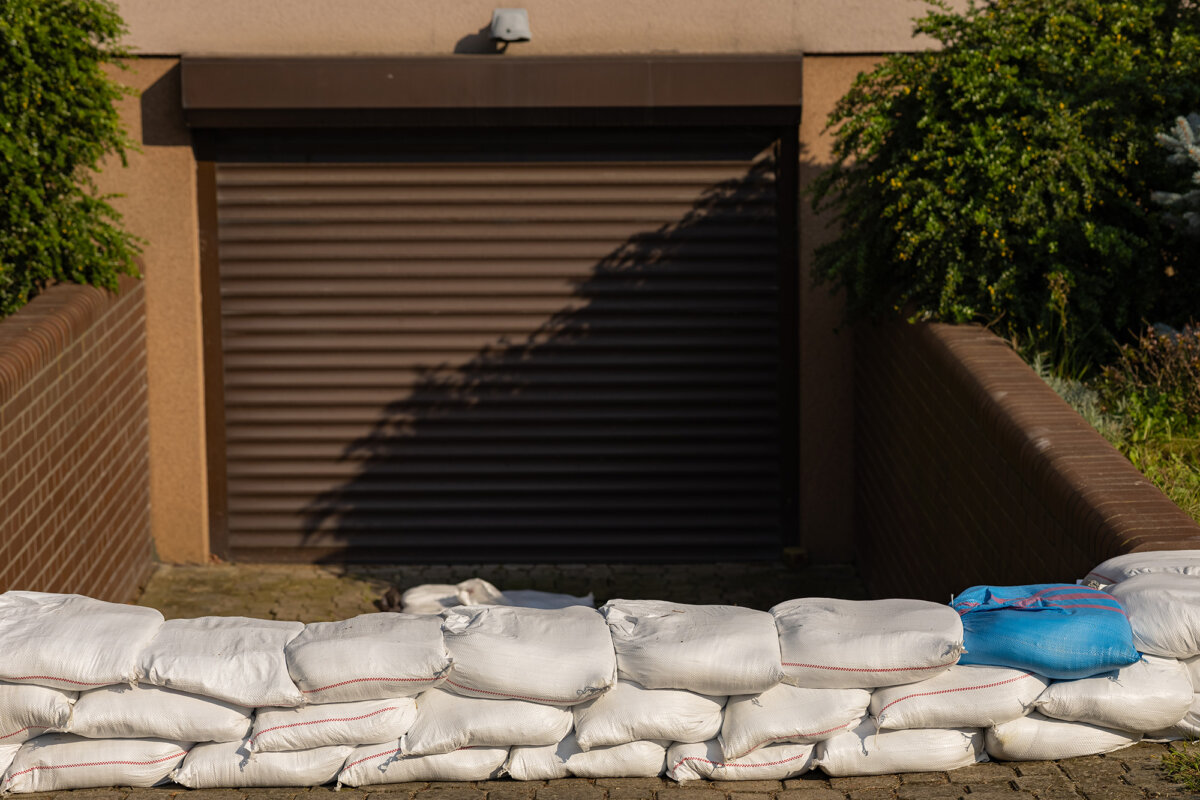
Available in burlap, polypropylene, polyethylene, or nylon, sandbags are heavy and ugly, but they get the job done. They’re also less expensive than other solutions. Fill them 2/3 full so they’re easier to lift and flexible enough to make a tight seal. For added protection, first lay a piece of plastic sheeting at least six millimeters thick across the doorway, window, or wall being protected.
Self-inflating “sandbags” and long, snakelike door blockers contain a highly absorbent material that expands when they come into contact with water. All you have to do is lay them out. They are easy to store before the first use, offer near-instantaneous protection, and are reusable several times if dried out properly. However, in a flash flood, they could be washed away before they can inflate, and so it is advised to pre-soak them for five to 10 minutes. Another downside is that they don’t work with salt or brackish water or chlorinated water, such as overflowing pool water.
Go Bigger
Water-filled coffer dams (flood tubes) cost more than sandbags, but with proper care, they can last a decade or more and offer serious protection, which is why they’re the choice of many municipalities. They can be used as a barrier to route water away from the home. They come in sizes ranging from six inches tall and the width of a doorframe up to 24 inches tall and 100-plus feet in length to protect entire properties.
Simply fill them with a garden hose. Be sure to leave plenty of time to fill them up ahead of time. When the threat has passed, drain them, roll them up, and store them in a dry place to prevent mildew.
Quick Deployment
For higher water levels, there are DIY and professionally installed flood barrier panels that slide into tracks that are permanently attached to the home and water-resistant smart vents to replace existing foundation and garage door vents. They’re costly, but worth it if the budget allows.
A less intrusive option is an expandable flood dam from Dam Easy that features a rigid center (that is first set in place) and side tubes that are expanded to make a watertight seal on door and garage door openings.
Stopping Sewage
Most stormwater is Category 1 “clean water” (rain or melting ice/snow) or potentially slightly more contaminated Category 2 “gray water.” Sewage is Category 3 “black water” and can contain pathogens, toxins, and other harmful agents.
Whether there’s a threat of a flood or not, a backflow preventer should be installed on every home sewage line to prevent it from entering the house through tubs, showers, sinks, or toilets. These flap/floater systems remain open when no backflow is detected. When the floater senses sewage backup, it closes the protective flap. Since improper installation can block proper sewage flow, it’s recommended to leave this one up to a licensed plumber.

Below Ground
Basements are particularly vulnerable, and while they will benefit from all the above protections, they should also feature a high-quality sump pump (or two for an oversized basement) with a battery backup.
Consider sealing the walls and floors with a waterproof coating. Install window well covers and window well drains that route to a footer drain (if the house has one), a landscape drainage system, or the sump pump. Also, get an inexpensive flood sensor alarm; it can mean the difference between a fast cleanup and a major mess.
______________________
Ice Dam Intervention
When a ridge of ice builds up at the edge of a roof, it prevents melting snow from running off. This water has to go somewhere—and often starts leaking into the house.
The Science
Heat loss inside the home warms the roof and causes the snow to melt. When it reaches the eaves, where there is no heat loss, it refreezes, damming up the melting snow behind it. Check local building codes for proper R-values, and add to or replace the existing attic insulation.
Adequate Ventilation
While checking the building code, look at ventilation requirements. Properly sized and installed soffit and ridge vents will release warm air before it becomes trapped and accumulates. This works hand in hand with the insulation’s recommended R-value.
Leaks From Below
Insulating attic access panels or pull-down stairs will not only keep the attic cooler but will also help save on the heating bill. You should also seal air leaks around ceiling lights, ceiling-mounted HVAC vents, and other interior penetrations to the attic.
